Quick answer
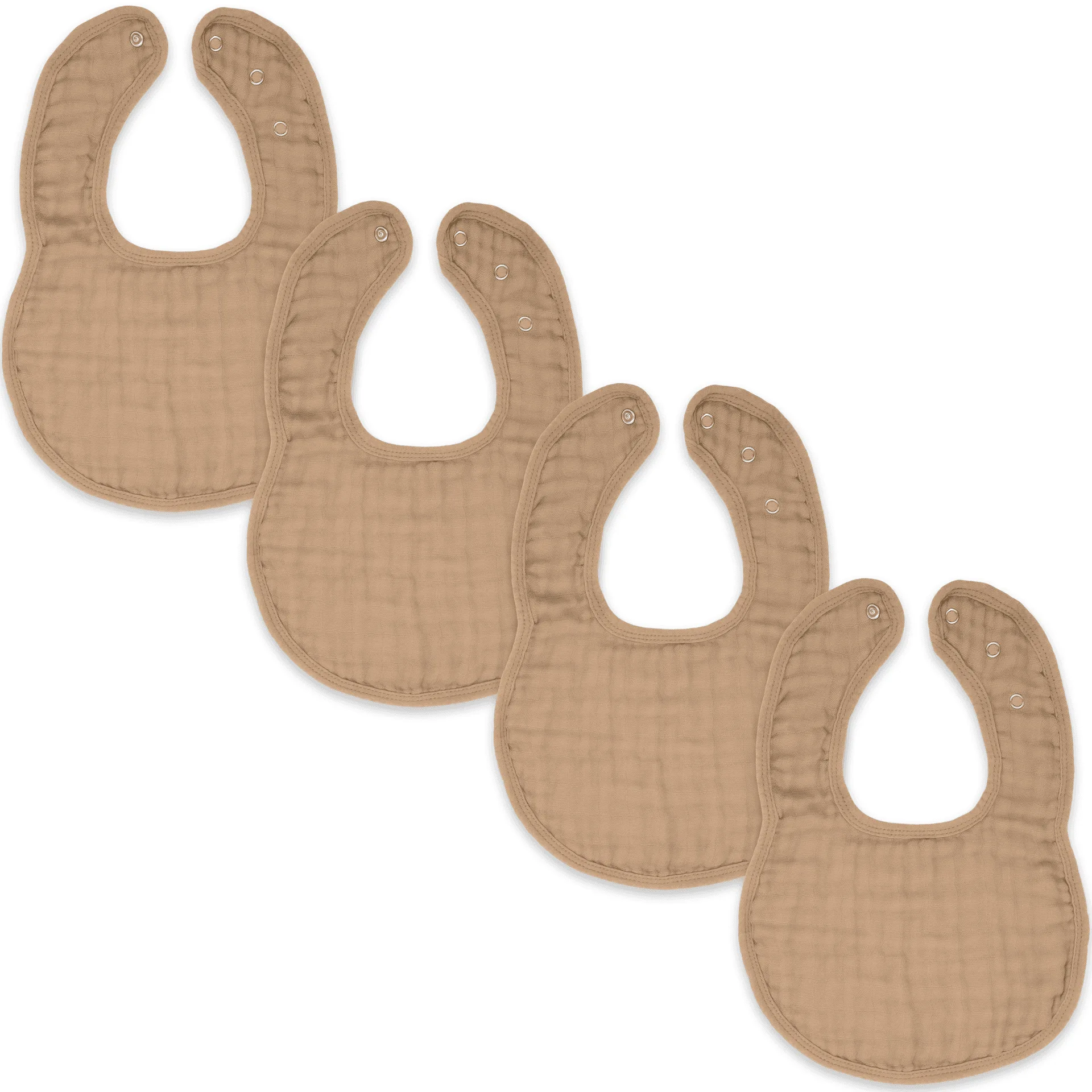
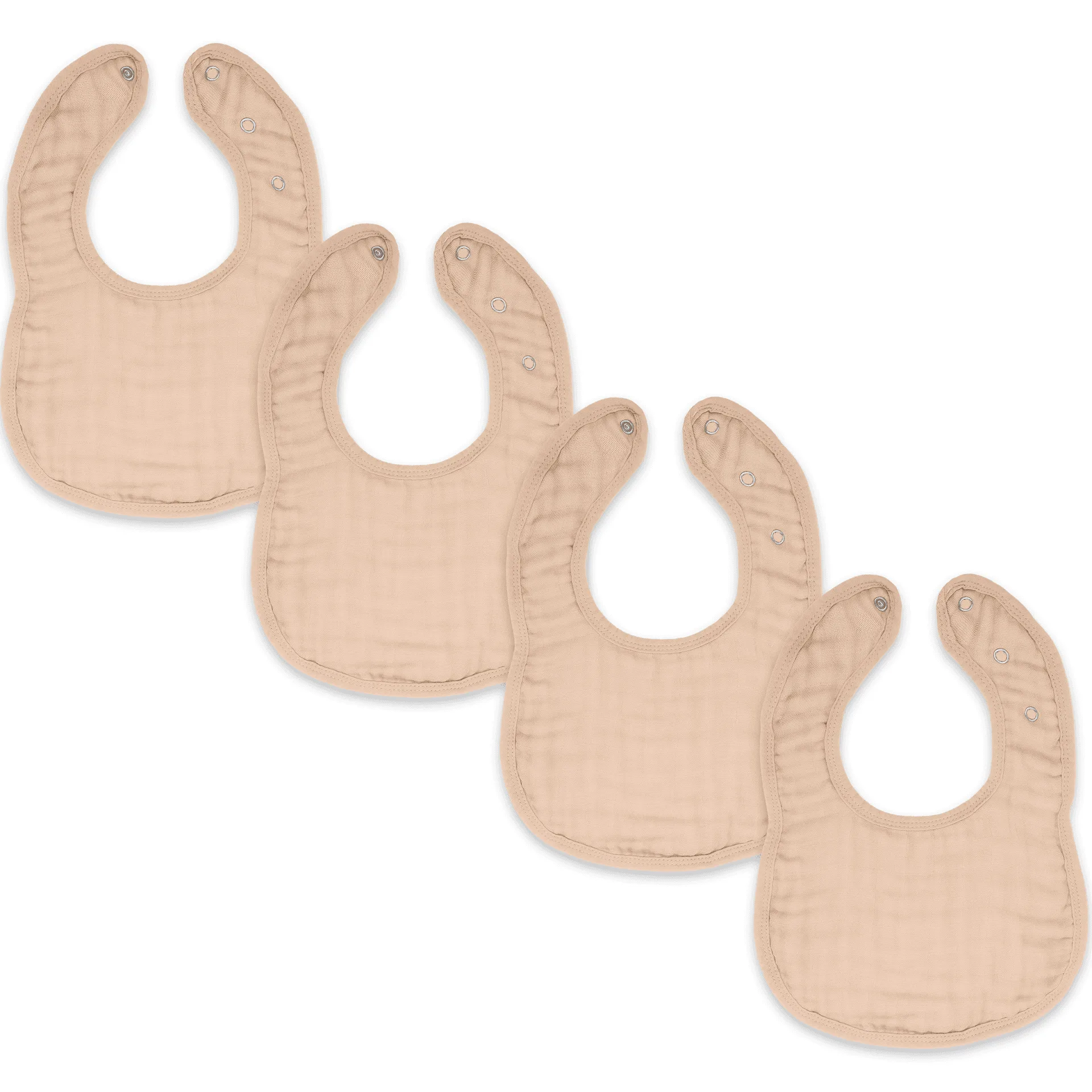
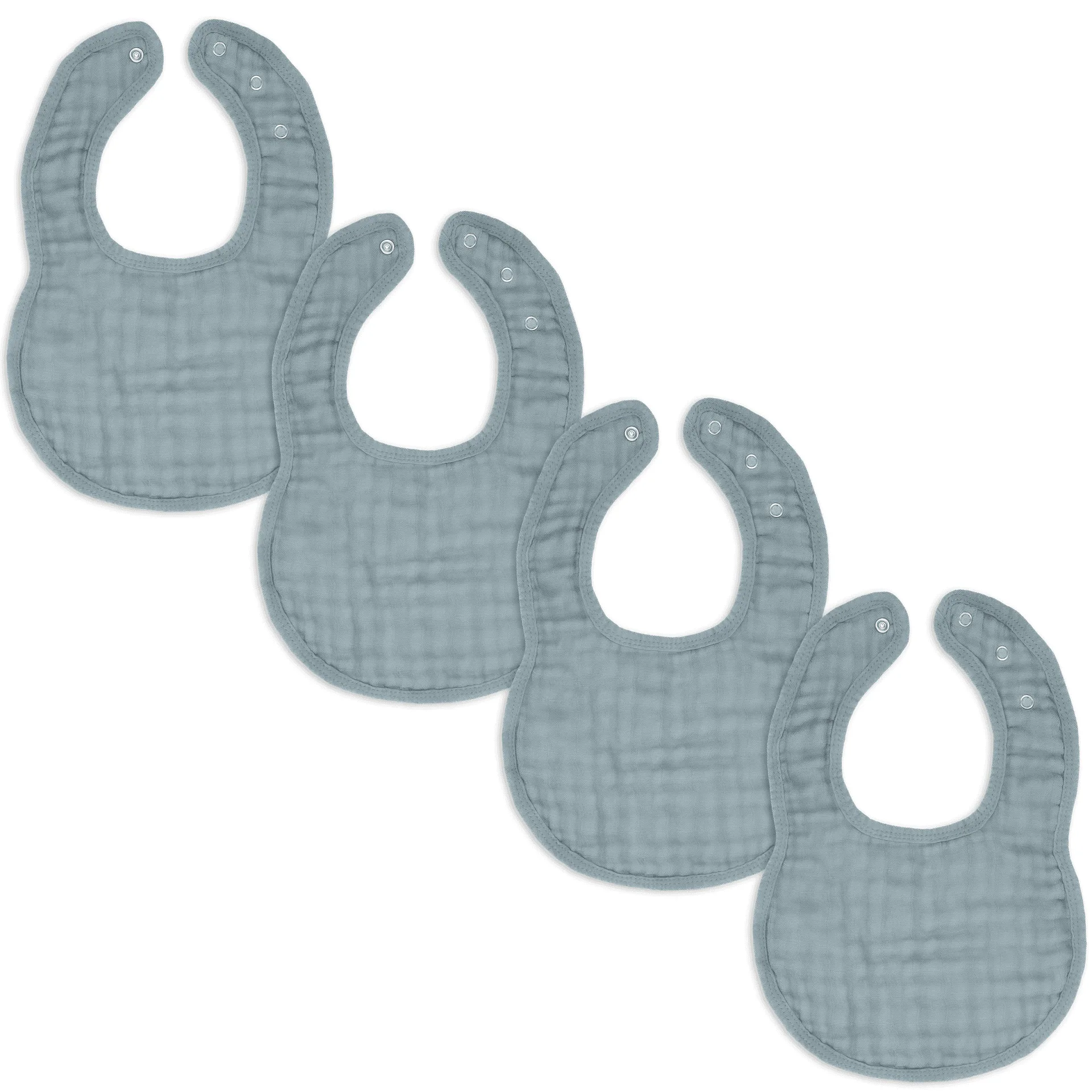
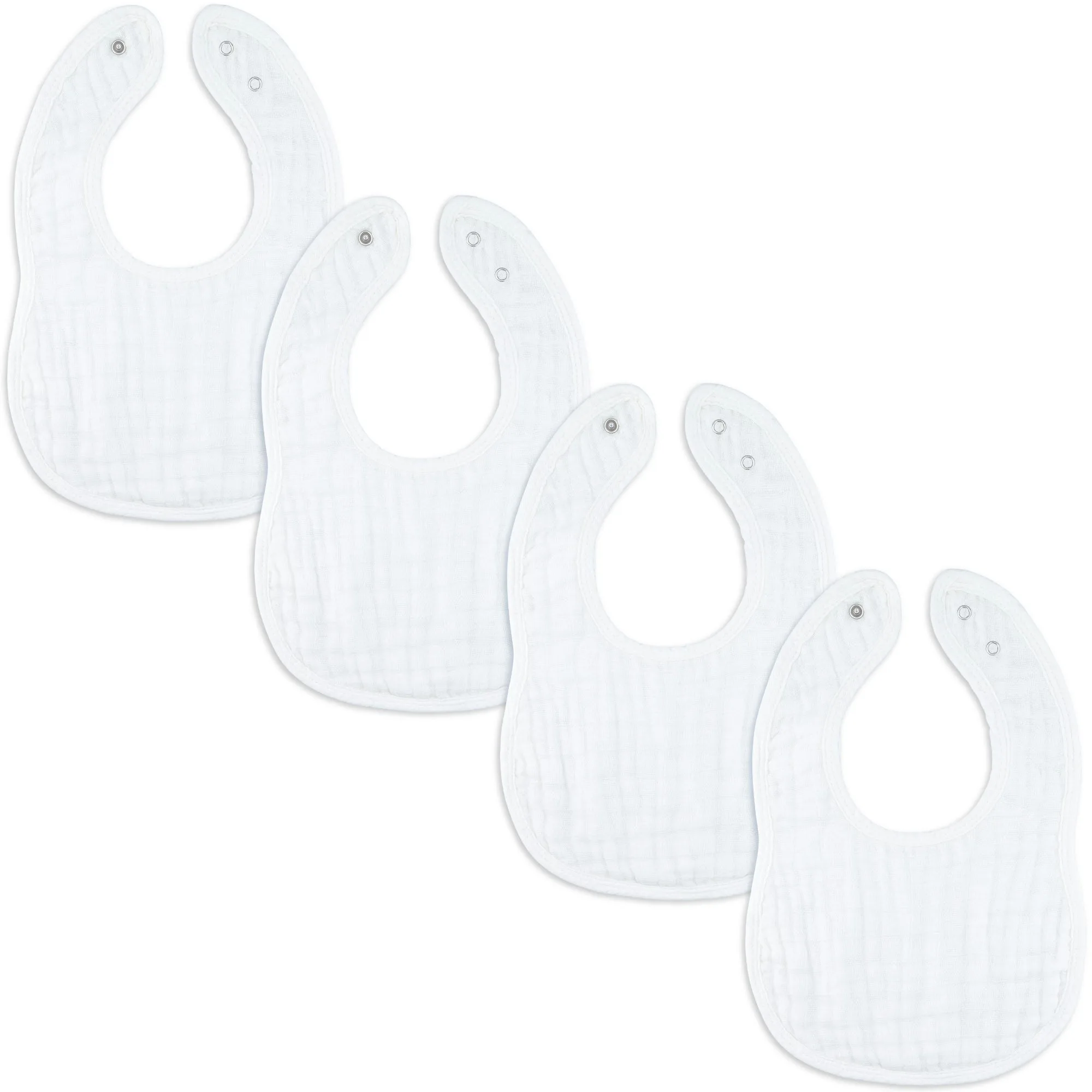
A bib only holds liquid until its fabric is saturated, and once it is, moisture travels through to the onesie underneath. Check three things in order: whether the bib is soaked through, whether the fabric has lost absorbency from detergent residue or wear, and whether the bib fits closely enough to catch drool before it runs down the neck. If the bib is soaked within a short stretch of normal drooling, switch to a thicker, more absorbent muslin layer rather than adding more thin bibs.
Symptom check: is the bib wet, or is the shirt wet?
Start by separating the two problems. A bib that feels damp on the outside but dry underneath is working normally and just needs changing. A bib that feels wet on the outside and leaves a matching wet patch on the onesie has wicked moisture through, which means the fabric is saturated or the barrier has failed. Press a dry finger against the inside of the bib while it is still on your baby. If your finger comes away wet, the liquid has already crossed the fabric and the bib is no longer protecting the shirt.
Cause 1: the fabric is fully saturated
Every bib fabric has a limit. Thin single-layer cotton or lightweight knit bibs can feel dry for a few minutes and then pass moisture straight through once they hit that limit. This is the most common reason for wet clothes under a bib during a long feeding or a heavy drooling stretch. The fix is not to layer three thin bibs, which just creates more wet layers against the chest. Instead, change the bib as soon as it feels damp on the outside, or use a bib with more fabric layers so it takes longer to reach saturation.
Cause 2: detergent residue and fabric softener
If your bibs used to hold up and now soak through quickly, the fabric may be coated. Liquid fabric softener and dryer sheets leave a waxy film on fibers that blocks water absorption, so liquid sits on the surface and then runs off or wicks sideways instead of being pulled into the fabric. The same can happen with too much detergent in a high-efficiency washer. Wash bibs with a normal amount of free-and-clear detergent, skip softener and dryer sheets entirely, and run an extra rinse if the fabric still feels slick. If the bibs have been washed this way for months, the coating may not fully reverse, and replacement is the practical answer.
Cause 3: fit and coverage gaps
A bib that gaps at the neck lets drool run underneath and soak the collar directly, which looks like the bib failed when it never caught the liquid in the first place. Check the neck opening while your baby is wearing it: you should be able to slide one finger under the edge, not a whole hand. Bibs that are too small ride up and expose the chest; bibs that are too large bunch and create channels where liquid pools. Adjust the closure or size before assuming the fabric is the problem.
When to stop troubleshooting and switch
If you have ruled out saturation, residue, and fit, and your baby still soaks through within a short window, the bib is simply not absorbent enough for your baby's output. Heavy droolers and babies in the middle of a feeding transition often need a thicker muslin layer rather than more frequent changes. At that point, stop buying thin cotton bibs and move to a muslin option built for absorption. If your baby is also pulling the bib off, that is a separate fit problem, not an absorbency one, and it needs a different fix.
Diagnosis: match the symptom to the fix
- Bib is wet on both sides within minutes: The fabric has reached saturation. Change to a dry bib immediately and consider a thicker, more absorbent muslin layer for long feeds or heavy drool periods. If this happens every time, the bib is too thin for your baby's output.
- Bib repels liquid instead of absorbing it: Fabric softener, dryer sheets, or excess detergent have coated the fibers. Rewash with free-and-clear detergent, no softener, and an extra rinse. If the coating persists, replace the bibs. Coated fabric cannot be fixed by washing more often.
- Shirt is wet at the collar but the bib center is dry: Liquid is running under the bib because the neck opening is too loose or the bib is too small. Tighten the closure or size up so the bib sits flat against the chest. Fix the fit before buying more bibs.
- Bibs are changed often and still soak through: You have ruled out saturation, residue, and fit. This is an absorbency limit, not a user error. Switch to a muslin bib or burp cloth designed for extra absorption. Stop troubleshooting and change the fabric type.
Product facts that matter for wicking
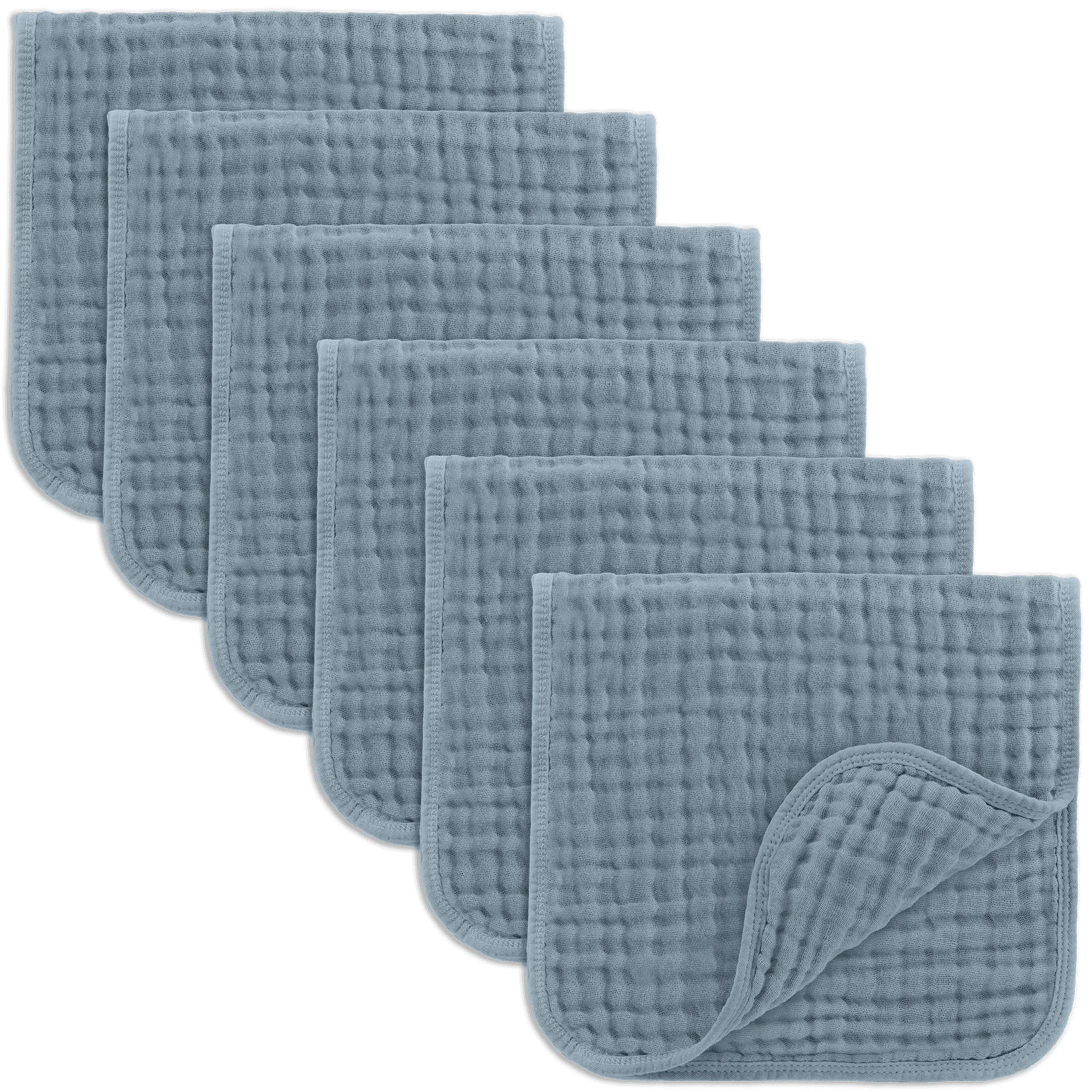
- Muslin Burp Cloths in Heather Blue: Super-soft, extra absorbent muslin burp cloths described as an essential for feeding, changing, or cleaning baby. Extra absorbency is the direct answer to wicking: a cloth that holds more liquid takes longer to reach the saturation point where moisture crosses to clothing.
- Muslin Burp Cloths in Pacific Blue: Muslin burp cloths in Pacific Blue, also described as super-soft and extra absorbent, with a unisex design and gift-ready bow. If you need a second absorbent layer on hand for heavy drool days, having more than one color or style means you can rotate while the other is in the wash.
- Baby Muslin Blanket in Blush: Baby muslin blanket in Blush made with high-quality muslin cotton, described as soft, warm, and supportive of sensitive skin. A muslin blanket is a useful backup for burping and lap feeding when a bib alone is not enough coverage, and the same muslin cotton construction explains the softness against skin.