Dropping is usually a grip or coordination problem, not a drinking problem
When a baby keeps dropping the sippy cup, the first question is whether they can drink from it at all. If they can take a few sips but let go mid-drink, the issue is often hand strength, cup weight, or the transition from bottle to cup. If they refuse to drink entirely, that is a different problem and may need a different cup or a check-in with your pediatrician.
For babies around 6 months, a first sippy cup should be small enough to hold with two hands and light enough that dropping it does not end the attempt. A heavy cup with a hard spout can make a baby give up before they get a good grip.
Common reasons a baby drops the cup
- The cup is too heavy or too wide for small hands: A baby with limited palm strength may drop a full cup simply because they cannot support the weight. Try a smaller cup or start with less liquid.
- The spout or lid is hard to seal around: If the baby has to work hard to get liquid, they may release the cup out of frustration. A softer spout or a simpler lid can reduce that struggle.
- They are still learning to coordinate both hands: Many 6-month-olds can hold a cup but not yet bring it to their mouth and tip it without losing grip. This is a skill that builds with practice.
- They are experimenting with cause and effect: Around this age, dropping things is also a game. If the cup always comes back, dropping may become part of the routine.
- The cup is slippery when wet: A smooth surface can be hard to hold once saliva or water is on the outside. Textured grips or a slightly tacky silicone surface can help.
What to try before buying a new cup
Start with the cup you already have. Fill it only partway so it is lighter, and see if the baby can hold it with two hands while you guide the base. If they still drop it, try a cup with a simpler design and fewer parts.
Offer the cup at times when the baby is calm and not overly hungry. A tired or frustrated baby is more likely to throw the cup than practice with it. Short, low-pressure sessions work better than long ones.
A simple practice routine for a baby who drops the cup
- Start with a small amount of liquid: A half-full cup is lighter and easier to control. This also reduces the mess when it does get dropped.
- Guide the first few sips hand over hand: Help the baby bring the cup to their mouth and tip it slightly. Let them feel the motion before you let go.
- Keep the cup within reach but not in the hand constantly: Place it on the tray between sips so the baby can choose to pick it up again. This builds the habit of reaching for the cup rather than holding it nonstop.
- Pause if the baby drops it on purpose: If dropping has become a game, set the cup aside for a minute and try again later. Reacting with a big response can make the game more fun.
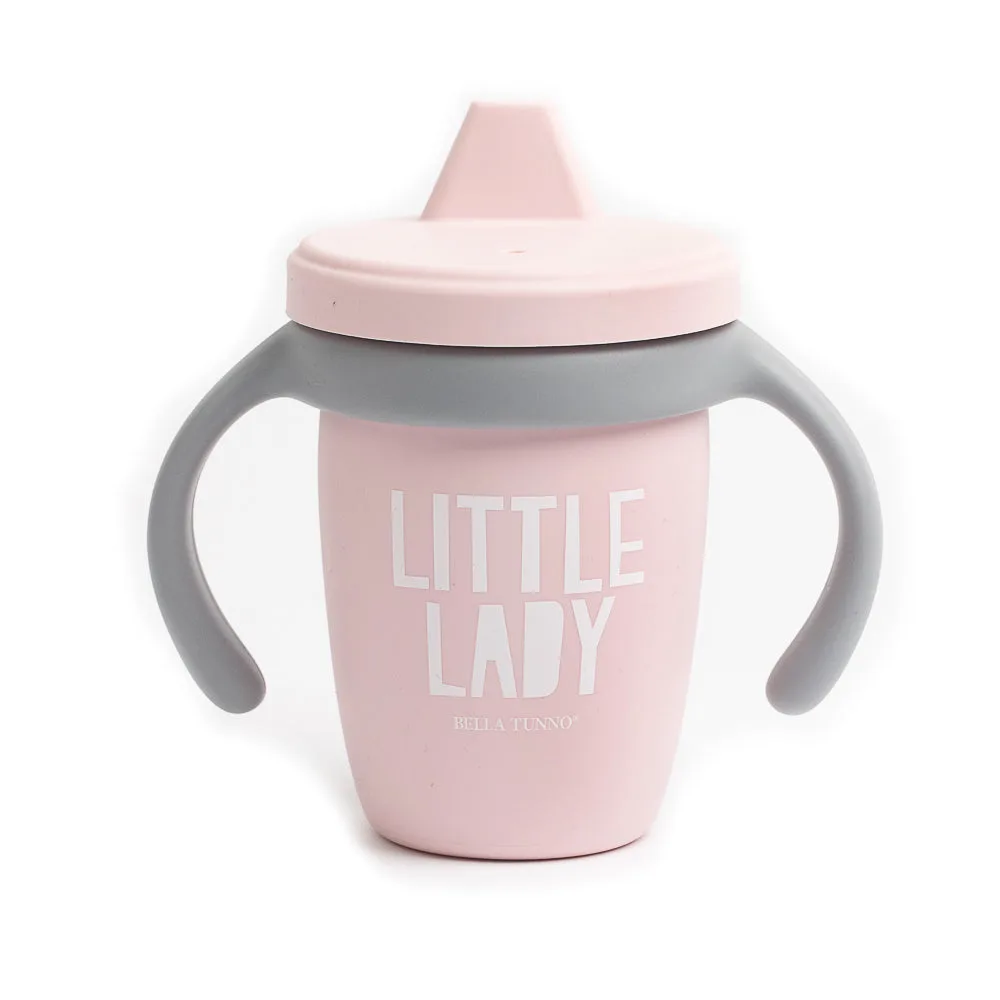
- Check the grip surface: If the cup is slick, a silicone sleeve or a cup made of food-safe silicone may be easier to hold. The Happy Sippy Cup is one option with a simple silicone body.
What the Happy Sippy Cup offers for grip and cleaning
-
Hello Sunshine Happy Sippy Cup: Made entirely of food-safe silicone with a simple 3-piece design A silicone body can be easier to grip than a hard plastic cup, and fewer pieces mean fewer places for residue to hide.
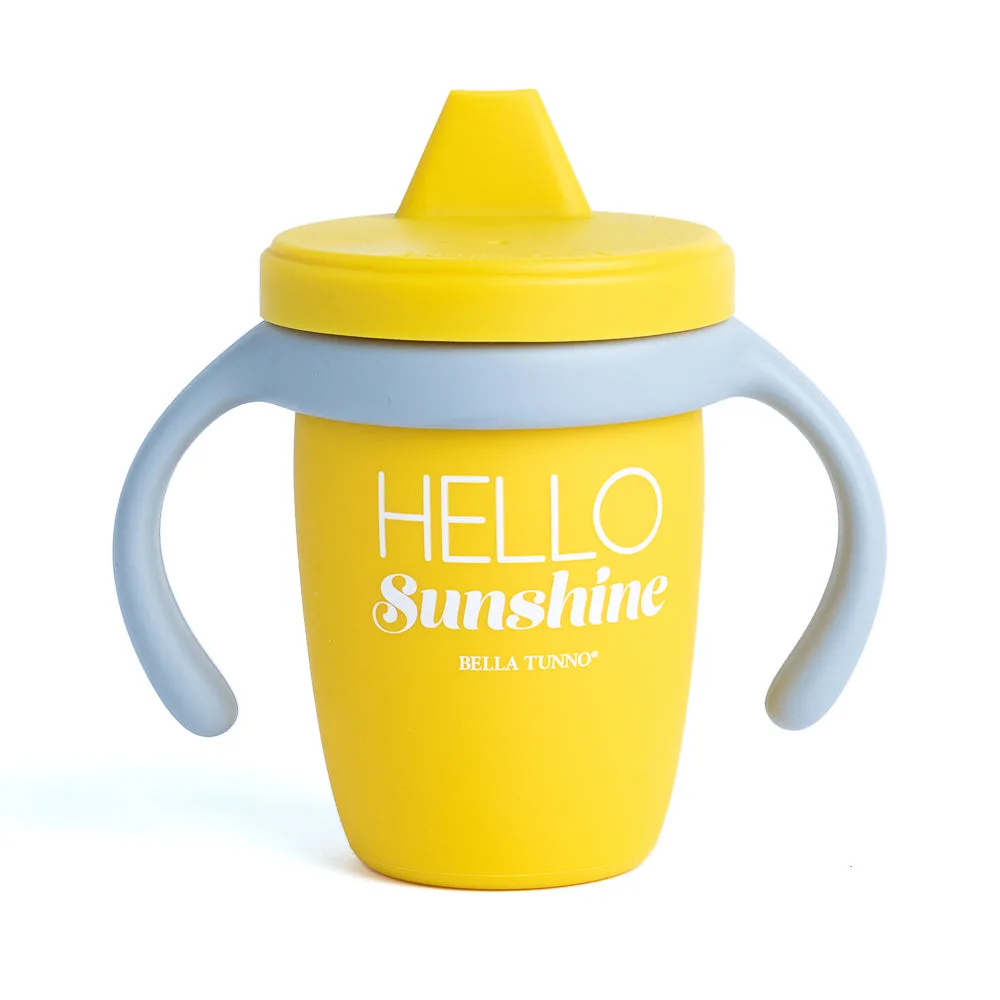
Hello Sunshine Happy Sippy Cup
-
Hello Sunshine Happy Sippy Cup: Durable, unbreakable, and mold-resistant If the cup gets dropped repeatedly, an unbreakable material removes one worry. Mold-resistant construction also simplifies cleaning.
-
Hello Sunshine Happy Sippy Cup: Grow-with-me design with handles available Handles give a 6-month-old more to hold onto, which can reduce dropping during the early learning stage.
How to clean a sippy cup when it gets dropped often
A cup that hits the floor several times a day needs a cleaning routine that is easy to keep up with. Take the cup apart fully after each use, including the lid and any handles or valves. Rinse all parts under warm water, then wash with dish soap and a bottle brush. Pay attention to the inside of the spout and the grooves where the lid meets the cup.
If the cup is mold-resistant, that does not mean it never needs deep cleaning. Let all parts air-dry completely before reassembling so moisture does not get trapped. Check the manufacturer's instructions for whether the parts are dishwasher-safe; if that information is not provided, hand washing is the safer default.
Common questions about babies dropping the sippy cup
Is it normal for a 6-month-old to drop the sippy cup?
Yes. At 6 months, many babies are still building the hand strength and coordination to hold a cup. Dropping is common and usually improves with practice.
Should I switch to a different cup if my baby keeps dropping it?
Not always. Try making the current cup lighter or easier to grip first. If the cup is heavy, hard to hold, or has a complicated lid, a simpler cup may help.
Can a silicone cup help with dropping?
A silicone cup like the Happy Sippy Cup may be easier to grip than a smooth plastic one, and it is unbreakable if dropped. It is not a guarantee, but it removes two common barriers: slipperiness and fear of breakage.
How often should I clean the sippy cup if it gets dropped?
Clean it after every use, and especially after it has been on the floor. Take it apart, wash all parts, and let it dry fully before putting it back together.