Quick answer
If your backflow incense burner isn't smoking, the problem is usually one of four things: the cone isn't centered over the hole, a draft is pulling the smoke away, the cone is damp or old, or the burner's internal channel is clogged with resin. Fix placement and airflow first, then clean the channel. If the cone still won't produce a downward flow after those steps, the burner's design or the cone type may be the real limit.
Check cone placement before anything else
A backflow cone only works when its hollow tip sits directly over the burner's air hole. If the cone is off by even a few millimeters, smoke rises instead of cascading. Set the cone down gently, then look from the side to confirm the tip is centered. Never press or twist the cone into place, because that can break the tip or block the opening with ash.
- Center the cone tip over the hole, not the cone base.
- Light the cone and let it burn for 30-60 seconds before judging the flow.
- If smoke rises, lift the cone and reset it once before troubleshooting further.
Rule out drafts, temperature, and humidity
Backflow smoke is heavy and cold, so it follows the path of least resistance. A ceiling fan, open window, air conditioner, or even a nearby radiator can push the smoke sideways. Move the burner to a still corner and test again. High humidity also slows the burn and makes the smoke feel heavier and less visible, so a dry room gives the clearest result.
- Turn off fans and close windows during a test burn.
- Keep the burner away from heating and cooling vents.
- On humid days, expect a slower, denser flow rather than no flow.
Inspect the cone itself
Backflow cones are denser than standard incense cones, and they absorb moisture from the air. A cone that has been open for months may burn unevenly or stop producing a downward stream. Try a cone from a freshly opened pack. If you only have standard cones, they will still burn and scent the room, but they usually won't create the waterfall effect because their smoke is warmer and lighter.
- Use backflow cones for the waterfall effect; standard cones won't reliably cascade.
- Store cones in a sealed bag or jar to keep them dry.
- If a cone burns out in under 10 minutes, it may be damp or poorly formed.
Clean the smoke channel and hole
Resin and ash build up inside the burner's internal channel, narrowing the path the smoke needs. This is the most common cause of a burner that used to work and now doesn't. Let the burner cool completely, then use a dry pipe cleaner, skewer, or soft brush to push loosened resin out of the hole and channel. Avoid water on ceramic burners unless the maker says it's safe, because trapped moisture can crack the piece or ruin the finish.
- Clean after every 5-10 cones, or sooner if the flow weakens.
- Never scrape with metal tools that can chip ceramic.
- If the channel is deeply clogged, a wooden toothpick works better than a brush.
Diagnosis: symptom, cause, fix, and when to stop
- Smoke rises instead of flowing down: The cone tip is not centered over the air hole, or a draft is pulling the smoke upward. Reset the cone and move the burner to a still spot. If it still rises, the cone may not be a true backflow cone.
- Smoke flows for a minute, then stops: The internal channel is partially clogged with resin, or the cone is damp. Clean the channel with a dry tool and try a cone from a freshly opened pack.
- No smoke at all, even with a new cone: The burner's hole or channel is fully blocked, or the piece was not designed for backflow. If cleaning doesn't restore flow, stop troubleshooting and choose a burner with a clear backflow design rather than modifying the one you have.
Products that match these fixes
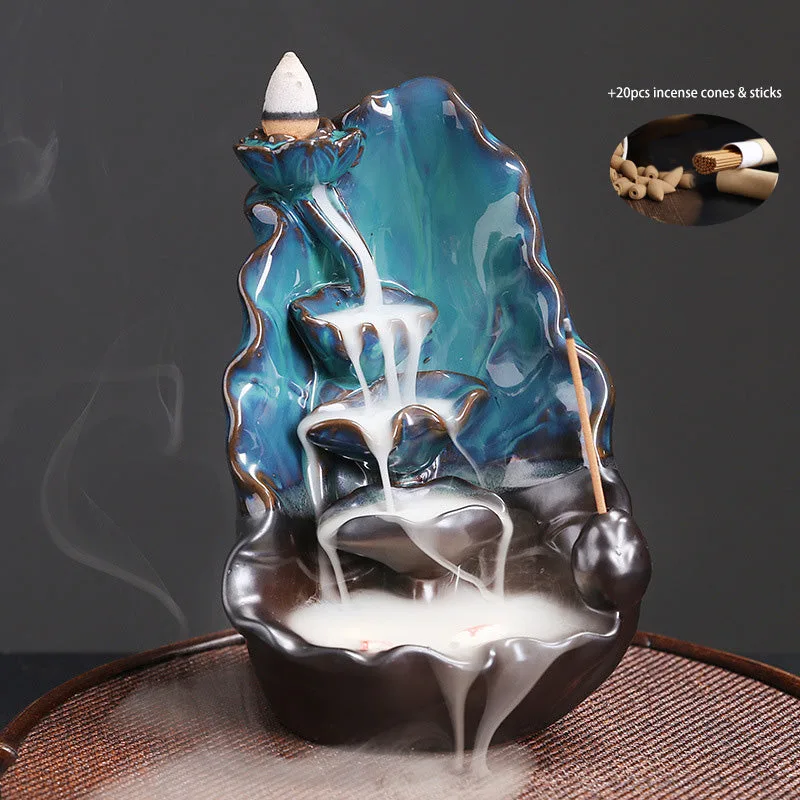
- Waterfall Backflow Incense Burner with 20pcs Incense Cones & Sticks: Ceramic waterfall backflow burner, 11 x 11 x 20 cm, includes 20 backflow cones and 20 incense sticks. The included backflow cones let you test placement and airflow immediately without buying a separate pack.
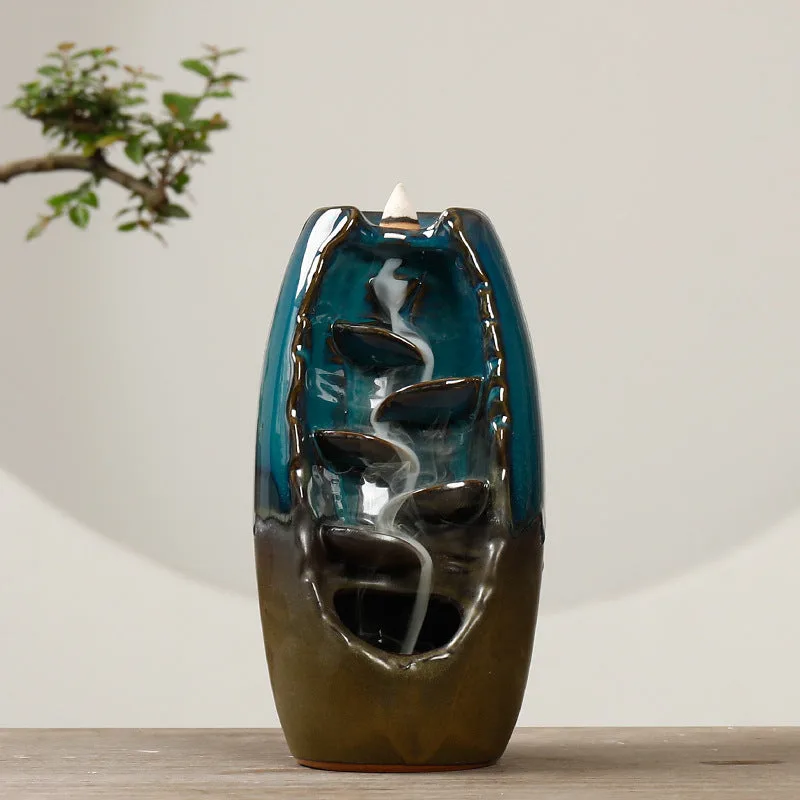
- Backflow Waterfall Incense Burner with 20pcs Incense Cones & Sticks: Ceramic backflow waterfall burner with 20 incense cones and 20 incense sticks; designed so thick smoke flows like water for a tranquil waterfall effect. A dedicated backflow design with a clear internal channel is easier to keep unclogged than a decorative piece with a narrow or hidden path.
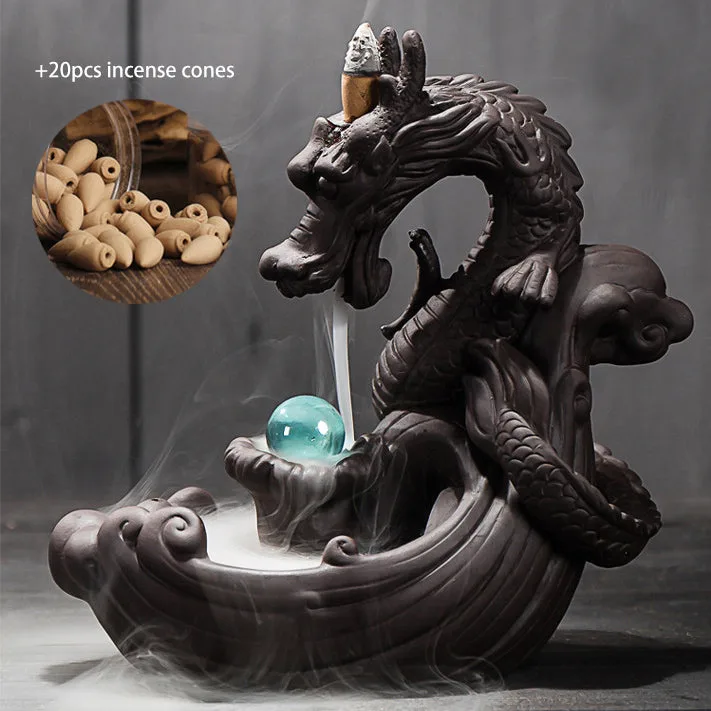
- Dragon Ceramics Incense Waterfall Burner with 20pcs Backflow Incense Cones: Dragon ceramic backflow incense burner, 19 x 10 x 20 cm, includes 20 backflow incense cones. The wider footprint gives the smoke more room to travel, which can make the waterfall effect more visible in a still room.