Quick answer
Baking sheets warp mainly because of sudden temperature changes and uneven heating, especially in thin or lower-quality pans. To stop it, avoid extreme temperature swings, preheat gradually, and choose heavier aluminum pans. Hand wash and dry promptly to maintain flatness.
What Warping Looks Like and Why It Happens
Warping shows up as a pan that suddenly pops, buckles, or rocks in the oven. The cause is thermal expansion: metal expands when heated and contracts when cooled. If one part of the pan heats faster than another, or if the pan goes from a hot oven straight into cold water, the uneven stress forces the metal to bend. Thin pans are more prone because they have less mass to absorb heat evenly.
How to Prevent Baking Sheet Warping
Prevention comes down to gentle temperature transitions and choosing the right pan. Let a hot pan cool on a trivet or stovetop before washing. Avoid putting a cold pan into a preheated oven if you can help it; instead, place it in as the oven preheats. When baking, use parchment or a silicone mat to distribute heat and reduce hot spots. Hand wash with warm, not hot, water and dry immediately.
- Never submerge a hot pan in cold water.
- Preheat the oven with the pan inside when possible.
- Use parchment or a silicone baking mat.
- Hand wash and dry promptly to avoid rust and stress.
Choosing Pans That Resist Warping
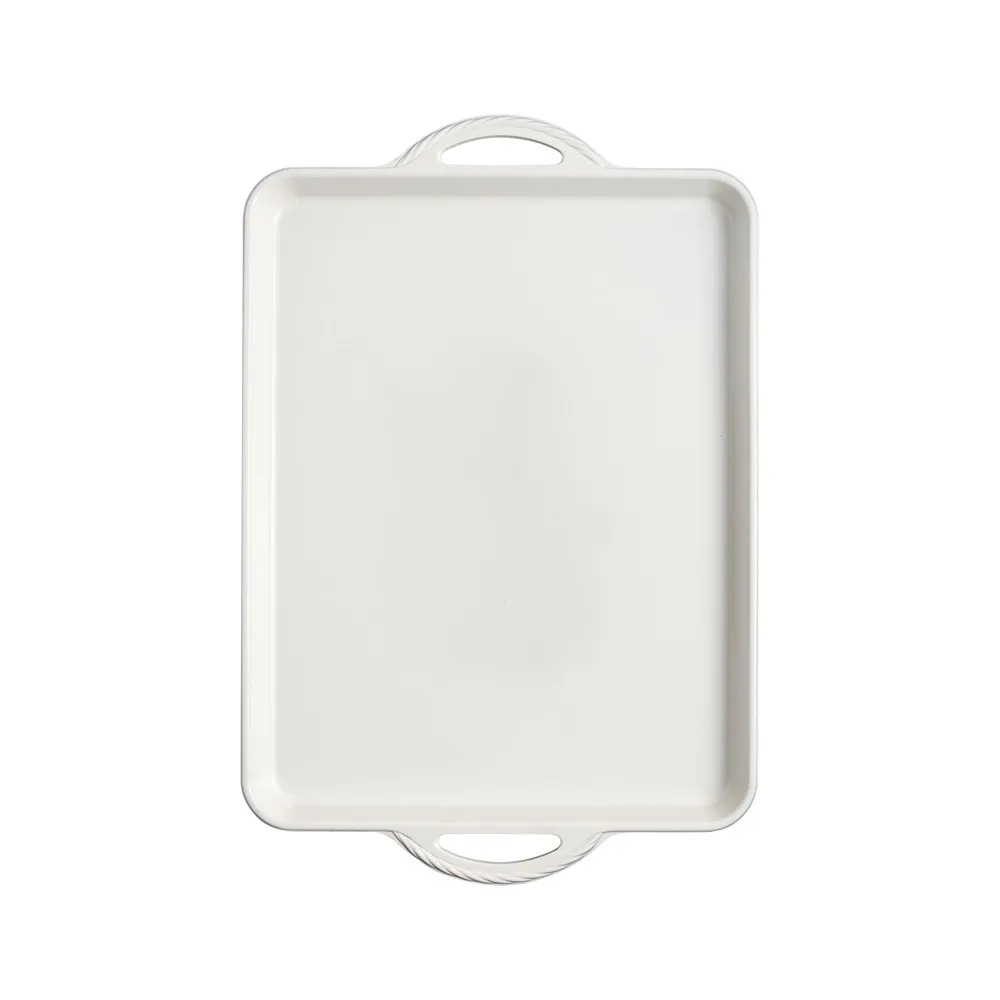
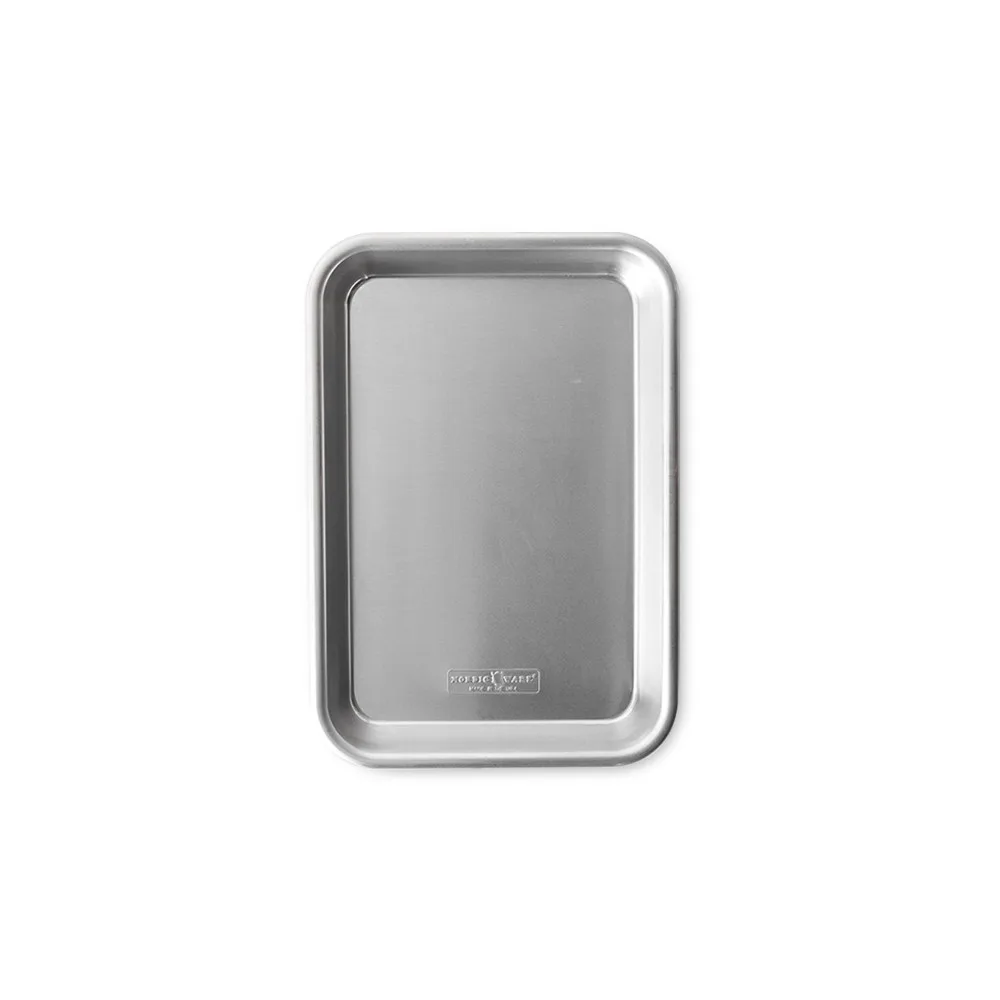
Heavier aluminum pans resist warping better than thin steel or dark nonstick pans because they spread heat more evenly. Look for pans with rolled edges or reinforced corners, which add rigidity. If you bake often, a half sheet pan made from heavy-gauge aluminum is a workhorse. For small batches, a sturdy eighth sheet pan can handle high heat without buckling. Nordic Ware's Naturals® Eighth Sheet Pan is made of aluminum and sized for small tasks, which means less surface area to expand unevenly.
When to Stop Using a Warped Pan
A pan that warps slightly may still bake evenly, but if it rocks, spills batter, or has a visible bend, it's time to replace it. A severely warped pan can cause uneven baking and may not sit flat on the oven rack, leading to accidents. If the pan is thin and warps repeatedly despite careful handling, it's a sign to upgrade to a heavier pan. For most home bakers, a dedicated small pan like the Naturals® Eighth Sheet Pan is a low-cost way to test whether a smaller pan suits your routine.
Diagnosis: Why Your Pan Warped and What to Do
- Symptom: Pan pops and buckles in the oven: This usually happens when a cold pan hits a hot oven or when the pan is thin and heats unevenly. Next time, place the pan in the oven as it preheats, or let it come to room temperature before baking.
- Symptom: Pan warps after washing: Thermal shock from submerging a hot pan in cold water causes sudden contraction. Always cool pans completely before washing, and use warm water.
- Symptom: Pan remains bent even after cooling: The metal has been stressed beyond its elastic limit, so it won't return to flat. If the bend affects baking or safety, replace the pan. Consider a heavier aluminum pan that resists warping.
Product facts
- Naturals® Eighth Sheet Pan | Small Aluminum Baking Sheet: These are perfect for smaller batches of cookies or heating up leftovers in the oven. Have also used them for serving trays while grilling. Go U.S.A The small size and aluminum construction mean less thermal mass, so it heats and cools quickly, reducing the chance of uneven expansion that causes warping. It's a practical choice for small tasks where a full sheet pan would be overkill.