Quick Answer
Most bra discomfort that builds through the day comes from one of three things: a band that is too loose and rides up, wires that sit on breast tissue instead of around it, or straps doing work the band should be doing. Before you buy anything, check the band first. A band that stays level and snug at your underbust carries about 80 percent of the support, which takes pressure off your shoulders and ribs. If the band is right and you still hurt by evening, the cup shape or wire width is the next thing to examine.
Why Discomfort Builds Through the Day
A bra that feels fine at 8 a.m. and unbearable by 6 p.m. is usually not a mystery. Fabric relaxes slightly with body heat, posture shifts as you sit and stand, and any small fit error gets repeated hundreds of times until it becomes pain. The three most common patterns are: the band creeping up your back (which means it is too loose, not too tight), red marks or stinging under the wires (usually a wire sitting on tissue), and shoulder grooves or headaches (straps tightened to compensate for a loose band).
The fix depends on which pattern you have. Tightening straps is the most common mistake because it treats the symptom and makes the root cause worse. If your band rides up, tightening straps pulls the back of the band even higher.
How to Test Band Tension in 60 Seconds
Fasten the bra on the loosest hook. The band should sit level all the way around, not angled up in the back. You should be able to slide two fingers flat under the band at your back, but not a whole hand. If you can pull the band more than an inch away from your ribcage, it is too loose. If it leaves deep red grooves that last more than an hour after you take it off, it is too tight.
One useful trick: try the bra on backward with the cups at your back, fastened in front. This isolates the band from the cups. If the band feels comfortable this way but uncomfortable when worn normally, the cups or wires are the problem, not the band.
Wire and Cup Issues That Cause Rib Pain
Wire pain usually means the wire is sitting on breast tissue rather than in the crease under it. After scooping your breast tissue into the cup, the wire should rest flat against your ribcage and fully enclose the breast. If the wire floats away from your body at the center, the cup is too small. If the wire pokes your armpit, the cup is too shallow or the wire is too tall for your torso.
Cup shape matters as much as size. A plunge bra with a lower center gore can relieve pressure if you have close-set breasts, while a full-cup style distributes weight more evenly if you have a fuller bust. Neither is universally better; the right one depends on where your discomfort is concentrated.
When to Adjust vs. When to Replace
Adjust first: loosen straps by one finger-width, move to a tighter hook if the band has stretched with wear, and re-scoop your tissue into the cups. If the bra is more than a year old and the band has lost its snap, no adjustment will fix it because the elastic itself is done.
Replace when the band rides up even on the tightest hook, when wires have bent out of shape, or when you feel pain in the same spot every time you wear that specific bra. Pain that is consistent and localized is a fit signal, not something to push through.
Evening Bra Discomfort Diagnosis
- Band rides up in back, straps dig into shoulders: The band is too loose and the straps are compensating. Fasten on a tighter hook and loosen straps by one finger-width. If the band still climbs, the elastic has stretched out and the bra needs replacing. Fix the band before touching the straps.
- Red marks or stinging under the wires: The wire is likely sitting on breast tissue. Scoop all tissue into the cup and check that the wire rests in the crease. If it still presses, the cup is too small or too shallow. If the wire floats at the center gore, size up in the cup.
- Aching shoulders or neck by mid-afternoon: Straps are carrying weight the band should carry. Check band tension first. If the band is snug and shoulders still ache, the cup may be too small, pushing weight onto the straps. Shoulder pain that persists after band and cup checks means the style is wrong for your shape.
- Pain in the same spot every time you wear one specific bra: This is a fit or construction issue with that bra, not your body. Stop wearing it. No amount of adjusting fixes a wire that is the wrong shape for your ribcage. Consistent localized pain is your signal to stop, not to push through.
Bras That Address Common Discomfort Points
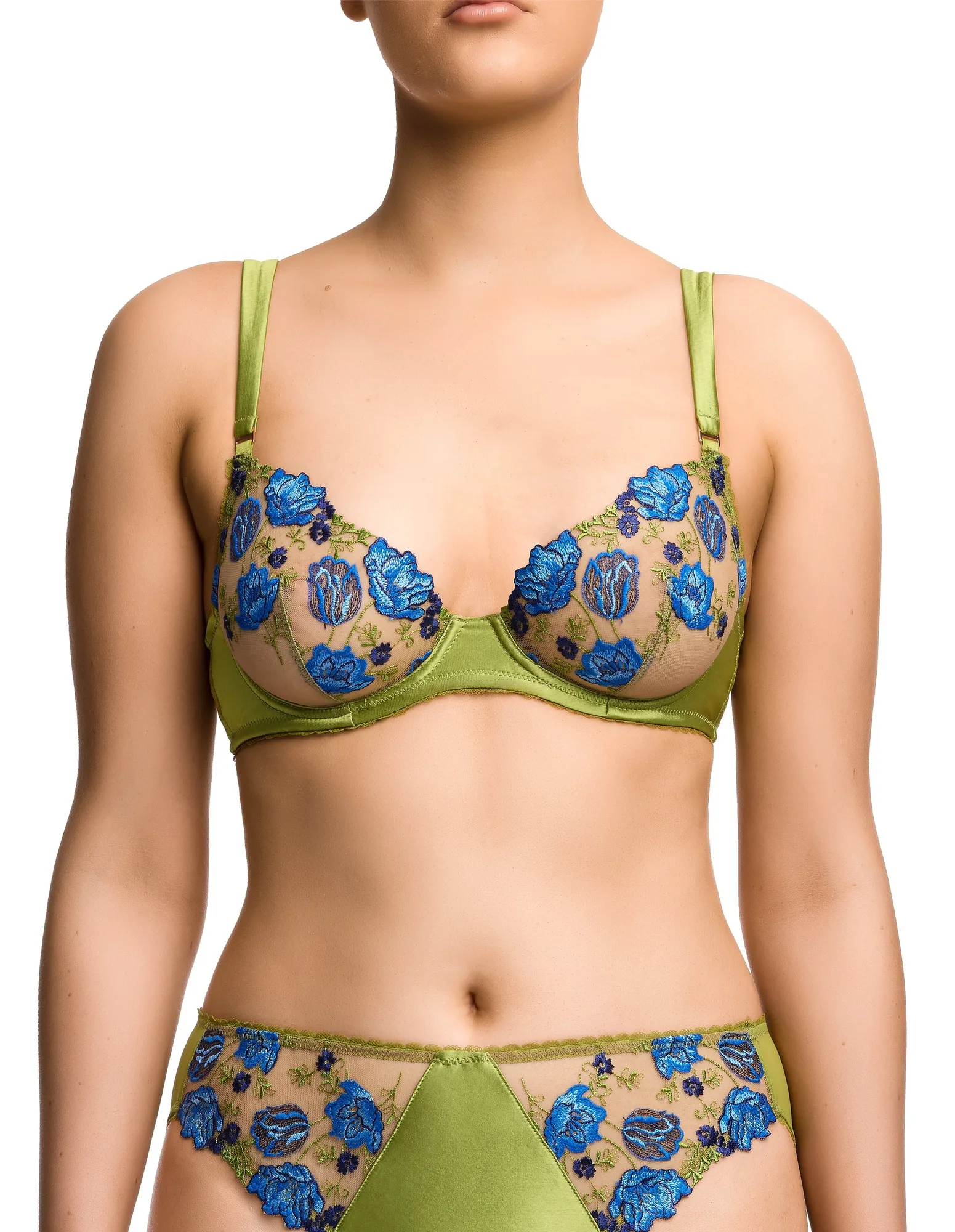
- Anita Plunge Bra: Non-padded plunge bra with bold floral embroidery on soft sheer stretch tulle, plus a hidden mesh support sling. The stretch tulle moves with you instead of fighting your ribcage, and the hidden support sling adds lift without a padded cup pressing on tissue.
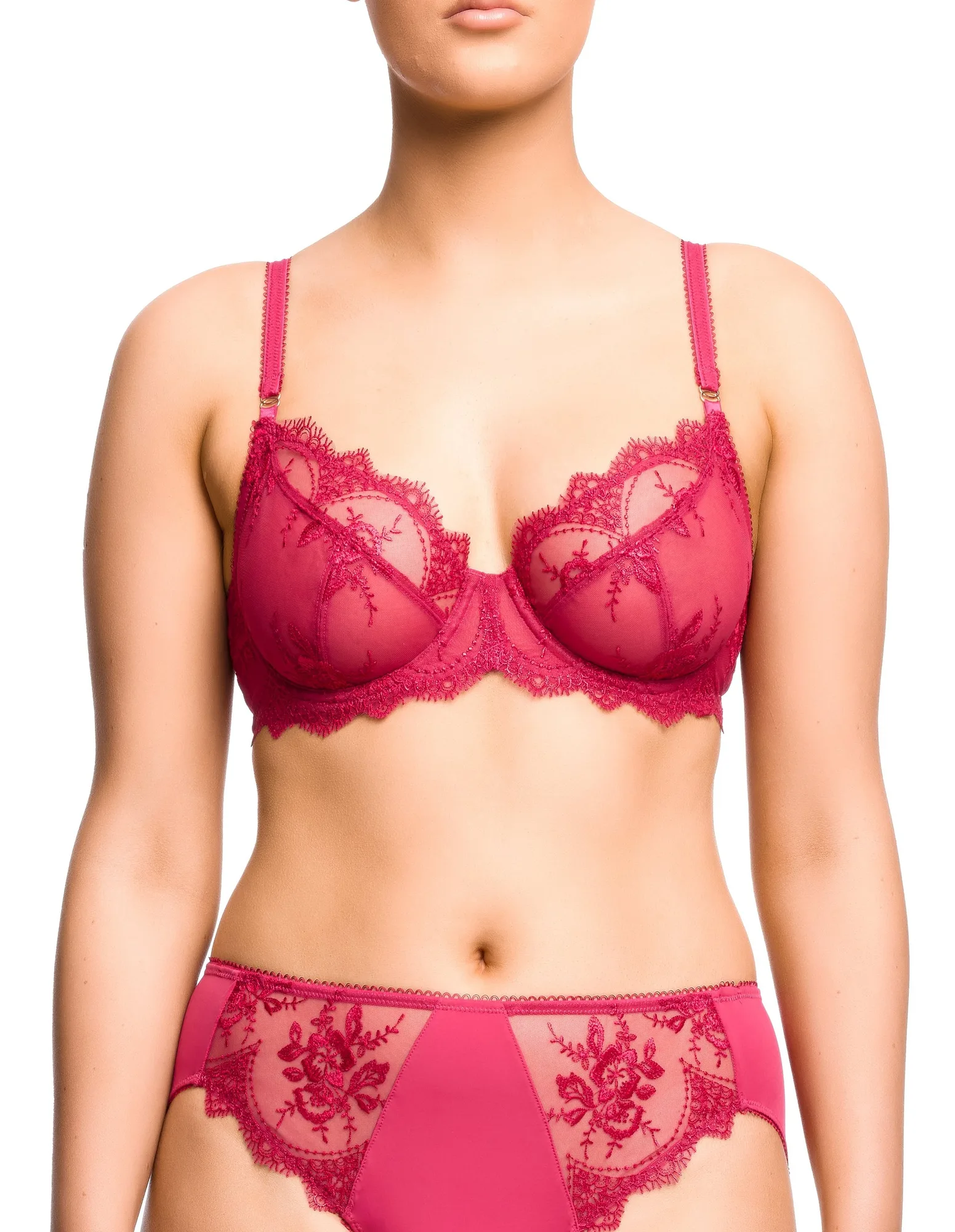
- Lucinda Full Cup Bra: Non-padded full-cup bra with soft stretch embroidery, light lining in the bottom of the cups, and soft bra wings designed to support without cutting in. If your discomfort is rib digging from a narrow band, the wider, smoothing wings spread pressure over more surface area. The light bottom lining adds shape without bulk.