The Short Answer
Tarnish is a surface reaction, not a defect. Silver, copper and brass darken when they meet sulfur, moisture and skin oils, and plated pieces fade when the thin top layer wears through or reacts with the same triggers. Keep jewelry dry, store each piece in a tarnish-resistant pouch or box with a strip, and put jewelry on last, after perfume, lotion and hairspray. If a piece is already discolored, a gentle polish or a jeweler's cleaning can often restore it.
What Actually Causes the Discoloration
Tarnish is a chemical reaction on the surface of the metal. Sterling silver reacts with sulfur compounds in the air and on skin, forming a dark layer. Copper and brass do the same. Gold-filled and plated jewelry can also discolor, but for a different reason: the base metal under the plating reacts once the plating is scratched, worn, or exposed to moisture. That is why two pairs of earrings can behave completely differently even when they look similar.
The triggers are consistent: humidity, sulfur, salt, chlorine, perfume, hairspray, sunscreen, lotion, and your own skin's acidity. The more of these a piece meets, the faster it changes. This is why jewelry worn on bare skin in summer often tarnishes faster than jewelry worn over clothing in winter.
How to Store Wedding Jewelry So It Stays Bright
Air and moisture are the two biggest enemies in storage. A jewelry box that sits open on a dresser lets humid air circulate around every piece. Instead, store each item separately in a small zip pouch or a lined box with a tarnish-inhibiting strip. Keep the box in a dry, cool drawer away from bathrooms and kitchens, which are the most humid rooms in a home.
Do not store different metals together. Silver and copper can transfer tarnish to each other when they touch, and a loose chain can scratch the plating on earrings or a pendant. If you have a bridal necklace with a delicate finish, give it its own pouch. For earrings, keep the backs attached so they do not rub against the posts.
A Daily Routine That Prevents Most Tarnish
The order you get dressed matters more than any single product. Apply perfume, lotion, sunscreen and hairspray first, let them dry completely, then put on your jewelry. Those products contain alcohols, oils and chemicals that sit directly on metal and speed up discoloration.
At the end of the day, wipe each piece with a soft dry cloth before storing it. This removes skin oils and invisible residue. Once a month, give frequently worn pieces a quick polish with a jewelry cloth. For plated jewelry, avoid ultrasonic cleaners and harsh dips, which can strip the top layer. A soft cloth and mild soapy water are usually enough.
When to Repair, Restore, or Replace
If a piece is lightly discolored, a jeweler can often polish it back to life. If the plating has worn through to the base metal, re-plating is possible but may cost more than the piece is worth. For sentimental bridal pieces, restoration is usually worth it. For inexpensive fashion earrings, replacement is often the practical choice.
Freshwater pearls need different care from metal. They are porous and can be damaged by harsh cleaners, so wipe them with a soft damp cloth and dry them immediately. Do not soak them. If pearls look dull, that is usually surface residue, not tarnish, and gentle wiping restores their luster.
Tarnish Diagnosis: Symptom, Cause, Action, Stop Point
- Dark film or black spots on silver: This is classic silver tarnish from sulfur exposure. Polish with a silver cloth or a mild silver cleaner, then store in a tarnish-resistant pouch. If the cloth comes away black but the metal underneath is bright, the piece is fine. If the metal itself is pitted, stop polishing and see a jeweler.
- Yellow or copper showing through on plated jewelry: The plating has worn away and the base metal is exposed. You can slow it with a clear protective coating, but you cannot polish it back. If more than a small edge is showing, re-plating usually costs more than replacing the piece. Choose replacement unless it is sentimental.
- Dull or cloudy pearls: Pearls do not tarnish. Dullness is usually residue from skin oils, perfume or hairspray sitting on the surface. Wipe with a soft damp cloth and dry immediately. If wiping does not restore luster, the pearl surface may be scratched. Do not use metal polish or ultrasonic cleaners on pearls.
What to Look For in Pieces Built to Last
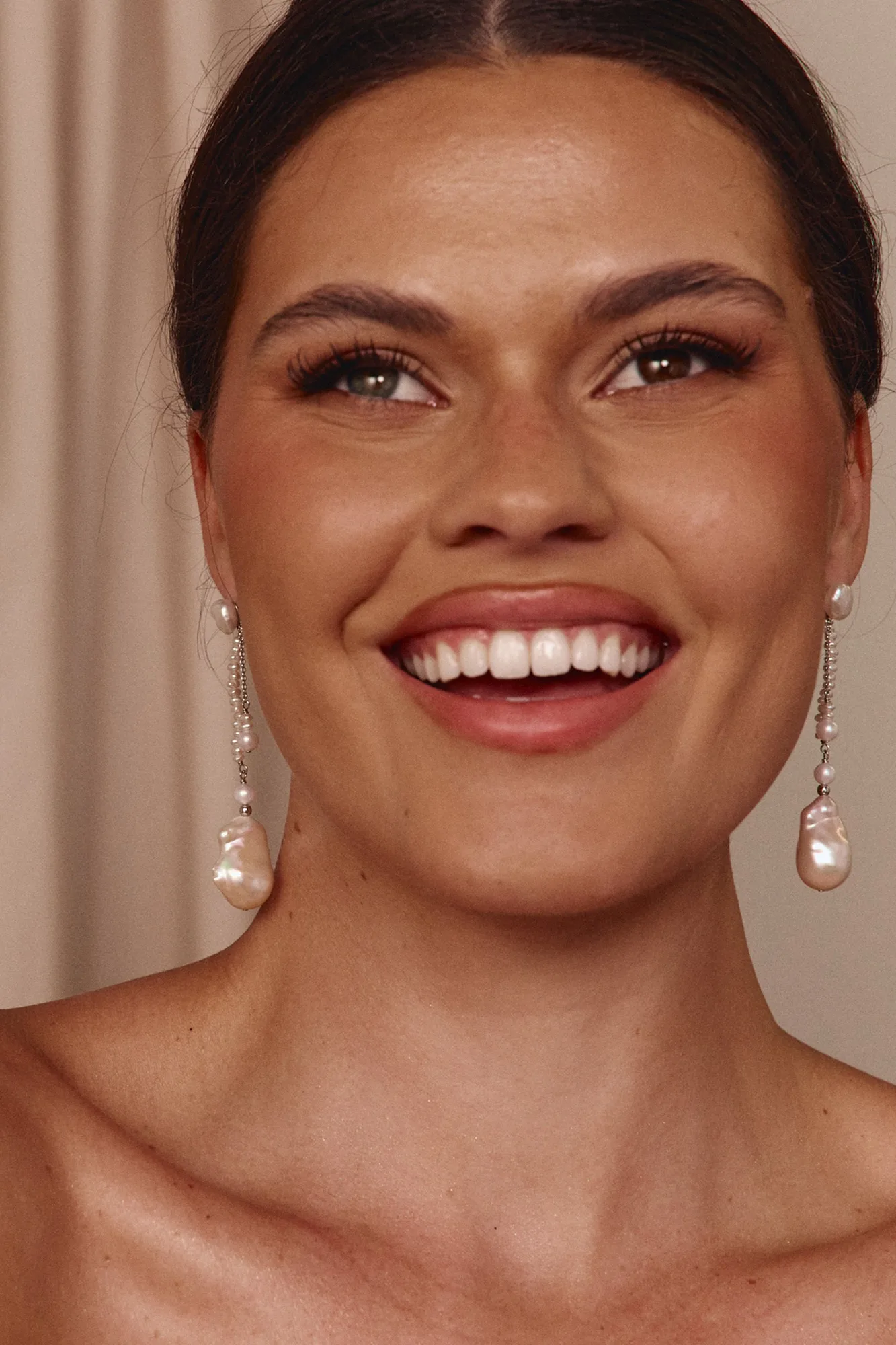
- Seren Pearl Earrings: Seren Pearl Earrings are designed with cascading freshwater pearls and luminous baroque drops, with an iridescent, one-of-a-kind finish. Freshwater pearls are a natural material, not a plated metal, so they do not tarnish the way silver or brass does. They still need dry storage and gentle wiping, but they avoid the plating-wear problem entirely.