Quick answer
Most CNC spiral bits break because of deflection from too much stick-out or too aggressive a pass, poor chip evacuation that packs the flute, or a feed and speed mismatch that overheats the edge. Fix the setup before you buy a replacement: reduce stick-out, clear chips, and dial in chipload. If the bit is very small and the reach is long, switch to a shorter or down-cut tool instead of pushing the same bit harder.
Read the break pattern before you blame the bit
A spiral bit that snaps cleanly near the collet usually points to deflection or a loose hold. A bit that breaks mid-flute often ran hot or hit a chip pack. A tip that chips while the shank survives usually means the tool was fed too slowly and rubbed instead of cut. Match the break location to the likely cause before you change anything, because each pattern has a different fix.
Deflection: the most common cause of spiral bit snapping
Deflection is bending under cutting force, and it grows fast as you increase stick-out. A 1/16'' bit with a long reach is far more flexible than the same diameter in a short tool, so it will snap if you push the same feed and depth as a stubby bit. Reduce the length of cut and reach where possible, take lighter axial and radial passes, and keep the tool as short in the collet as the job allows.
- Shorten stick-out to the minimum that clears the material and fixture.
- Reduce depth of cut and stepover before you reduce feed, because feed keeps the edge cutting rather than rubbing.
- Use a shorter reach tool for the same diameter when the geometry permits.
Chip evacuation and heat: why bits break mid-flute
Spiral flutes move chips up or down, and if the chip load is too light the chips become dust that packs the flute and insulates heat. Heat softens the carbide edge and accelerates failure. On down-cut bits the chips are pushed into the cut, so you need a clean path out or a shallower pass. If you see discoloration or a burned smell, stop and correct chip clearance before running the next part.
Feed and speed: the numbers that keep a spiral bit alive
Feed and speed on CNC bits are not a single setting you copy from a chart. Start from the manufacturer's chipload range for the material, then adjust for the actual depth of cut and the rigidity of your machine. If the bit sings or chatters, increase feed slightly or reduce depth. If the edge dulls quickly, you are likely rubbing. Keep the collet clean and torqued to spec, because a slipping bit can break as easily as a deflecting one.
When to stop and choose a different bit
If you have shortened stick-out, cleared chips, and set a sensible chipload and the bit still breaks, the tool geometry is wrong for the job. A long-reach 1/16'' bit is not the right choice for deep, fast cuts in hard material. Step up to a larger diameter, use a compression bit for clean top and bottom edges on laminated stock, or move to a down-cut bit when the top surface finish matters more than speed.
Breakage diagnosis
- Snapped near the collet: Deflection or a loose collet. The bit bent under load and fatigued at the weakest point. Reduce stick-out, lighten the pass, and re-torque the collet before running again.
- Broke mid-flute with discoloration: Heat and chip packing. The flute could not clear chips, so the edge rubbed and softened. Increase chipload slightly, improve extraction, and reduce depth of cut.
- Chipped tip, intact shank: Too slow a feed or an interrupted cut. The edge rubbed instead of shearing. Raise feed within the chipload range or switch to a geometry suited to the material.
- Repeated breaks after setup fixes: The tool is wrong for the reach and diameter. A long-reach small bit has a hard limit. Step up to a larger diameter, a compression bit for laminated edges, or a down-cut bit for top-face finish.
Bits that reduce breakage risk
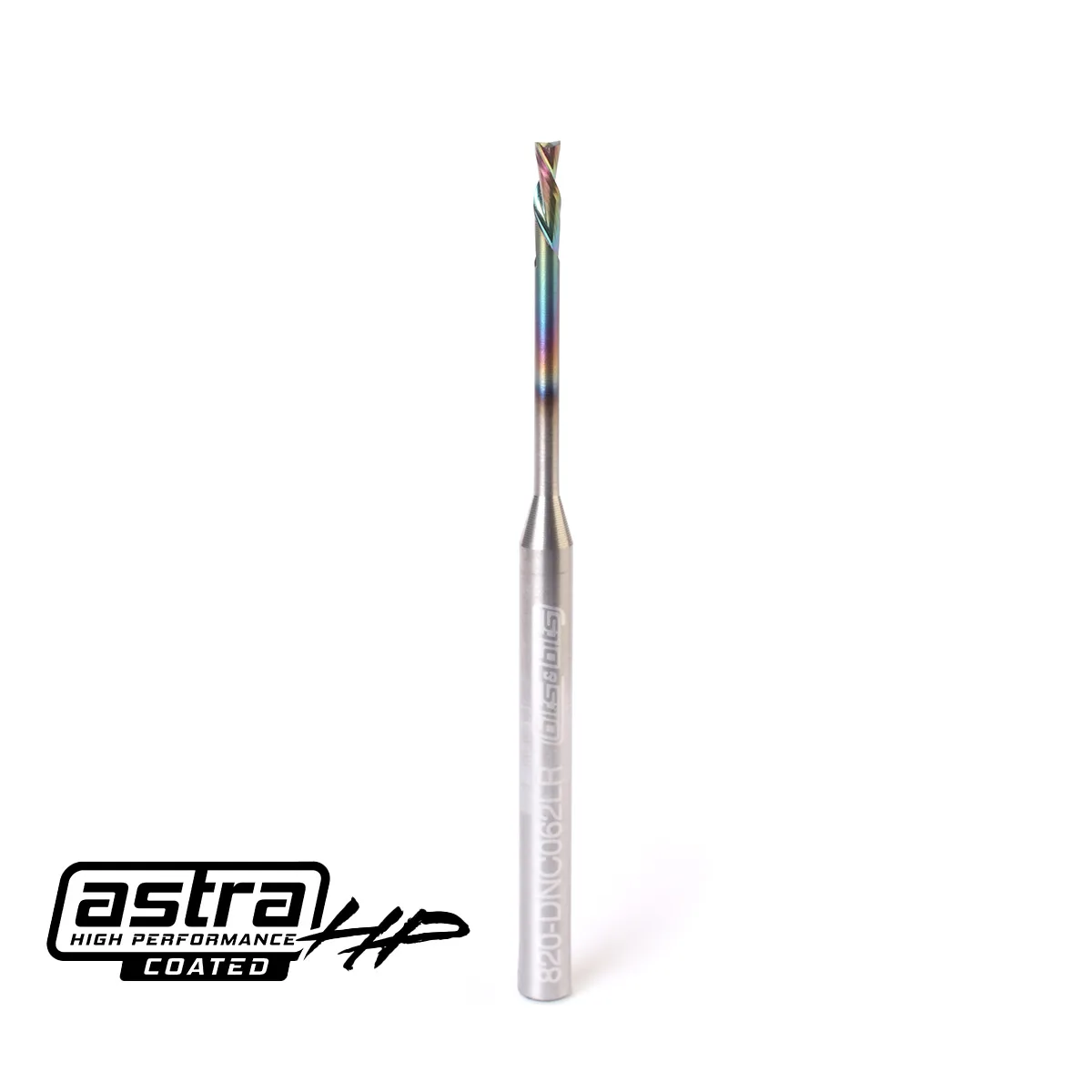
- 1/16″ Long-Reach Down-Cut Spiral Bit – 1/8″ Shank (AstraHP Coated): AstraHP Coated Solid Carbide with a 1/16'' tip diameter, 1/8'' shank, 3/16'' length of cut, and 3/4'' length of reach. The short 3/16'' length of cut limits deflection on shallow detail work, but the 3/4'' reach means you must keep passes light and stick-out minimal to avoid snapping.
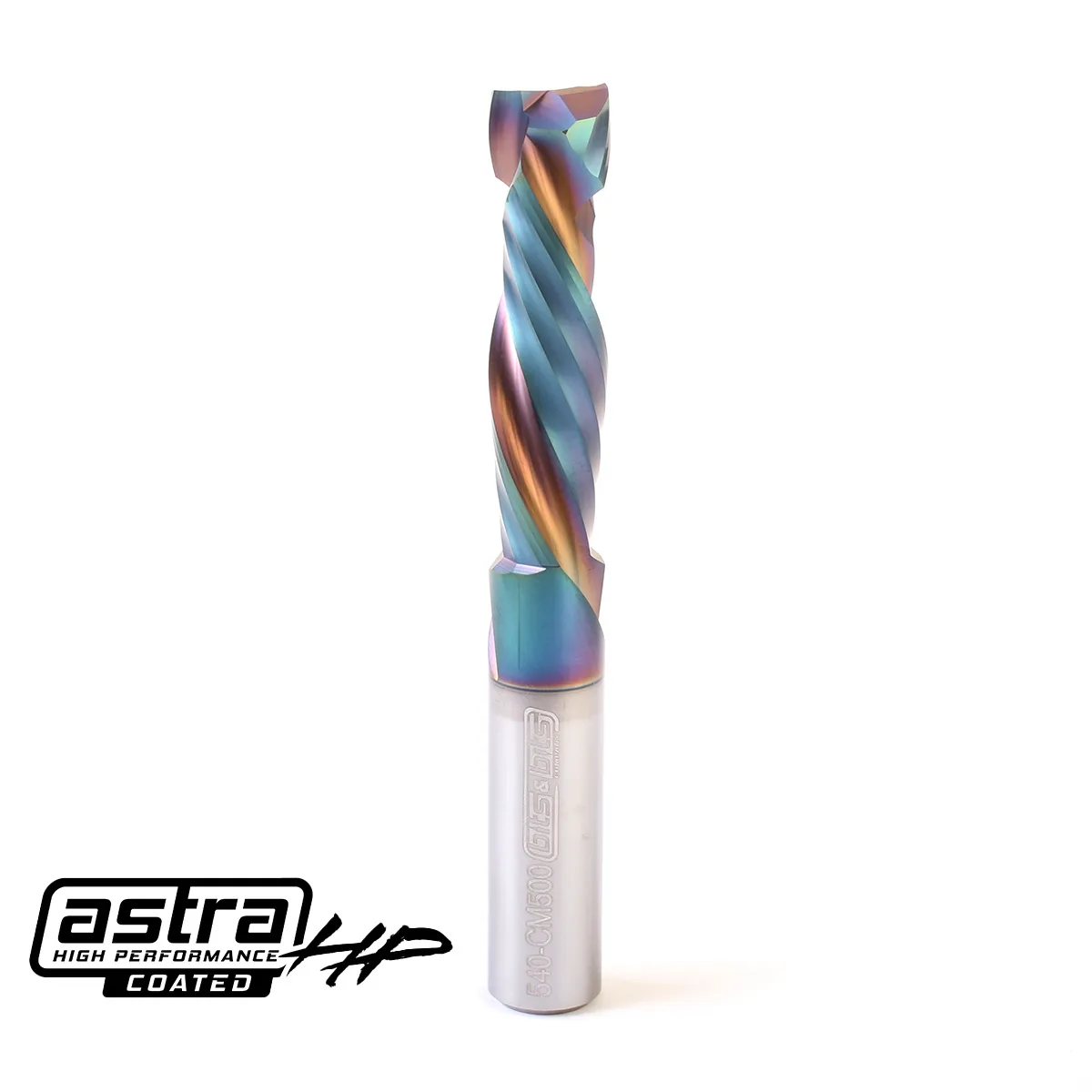
- 1/2″ Compression Spiral Bit – 2″ Cut – Router & CNC (AstraHP Coated): AstraHP Coated Solid Carbide compression bit with a 1/2'' tip diameter, 2'' length of cut, and 0.375'' spiral change. The larger diameter and compression geometry handle deeper cuts with less deflection and minimize tear-out on both faces, which lowers the load that causes breakage in the first place.
- 5 Piece Engraving/Diamond Drag Tool Kit for Metals and Acrylic: Five-piece kit including a diamond drag engraving bit, 1/4'' and 1/16'' up-cut spirals, a 3-flute aluminum end mill, and a 45-degree V-bit. Having the right tool for each operation keeps you from overloading one spiral bit, which is a common reason bits snap during mixed-material jobs.