The weak cup is usually a brewing problem
When decaf coffee tastes weak, the first suspect is rarely the decaffeination process itself. More often, the cup is under-extracted: too little coffee for the water, a grind that is too coarse, water that is not hot enough, or a brew that finishes too quickly. Those are variables you can change on the next pot.
That does not mean every decaf is identical to its caffeinated counterpart. It means the honest starting point is your recipe and technique, not a blanket assumption that decaf is inherently bland.
Four decaf brewing myths worth retiring
These claims circulate often. Some contain a grain of truth, but none justify accepting a weak cup without checking your method first.
- Myth: decaf beans are always weaker, so you need less coffee: The logic is backwards. If a cup tastes thin, the usual fix is more coffee or a finer grind, not less. Start with your normal dose and adjust from there.
- Myth: decaf needs a coarser grind because it brews faster: Grind size should follow your brew method and the taste in the cup. A coarser grind can speed water through the bed and leave you with a weak, sour cup. Adjust grind only after you have checked your ratio.
- Myth: decaf coffee is bland by nature, so flavor notes do not apply: Catalog flavor notes describe the blend's intended character. They are a direction, not a guarantee, but they are still the best starting point for choosing a decaf that suits your taste.
- Myth: you cannot make decaf taste stronger without adding milk or sugar: You can change strength through dose, grind, water temperature, and brew time. Milk and sugar change the drink, not the extraction.
What the catalog confirms about Crazy Goat
Crazy Goat is a complex blend described with notes of roast, caramel, and cocoa. Those are deep, sweet-leaning flavors rather than delicate floral ones, which makes the blend a useful reference point when you are diagnosing a weak decaf cup: if caramel and cocoa are not showing up, the brew is likely under-extracted rather than the coffee being flavorless.
The catalog does not list decaffeination method, roast level, origin components, or recommended brew ratios for this blend. That absence is a real limitation when you are trying to predict exactly how it will behave, so treat the flavor notes as a starting direction and let your own tasting guide the adjustments.
Crazy Goat at a glance
-
Crazy Goat: Crazy Goat is a complex blend with notes of roast, caramel, and cocoa, named after the founding myth of goats finding coffee in Ethiopia. The caramel and cocoa direction gives you a clear target: a well-extracted cup should taste sweet and rounded, not thin or hollow.
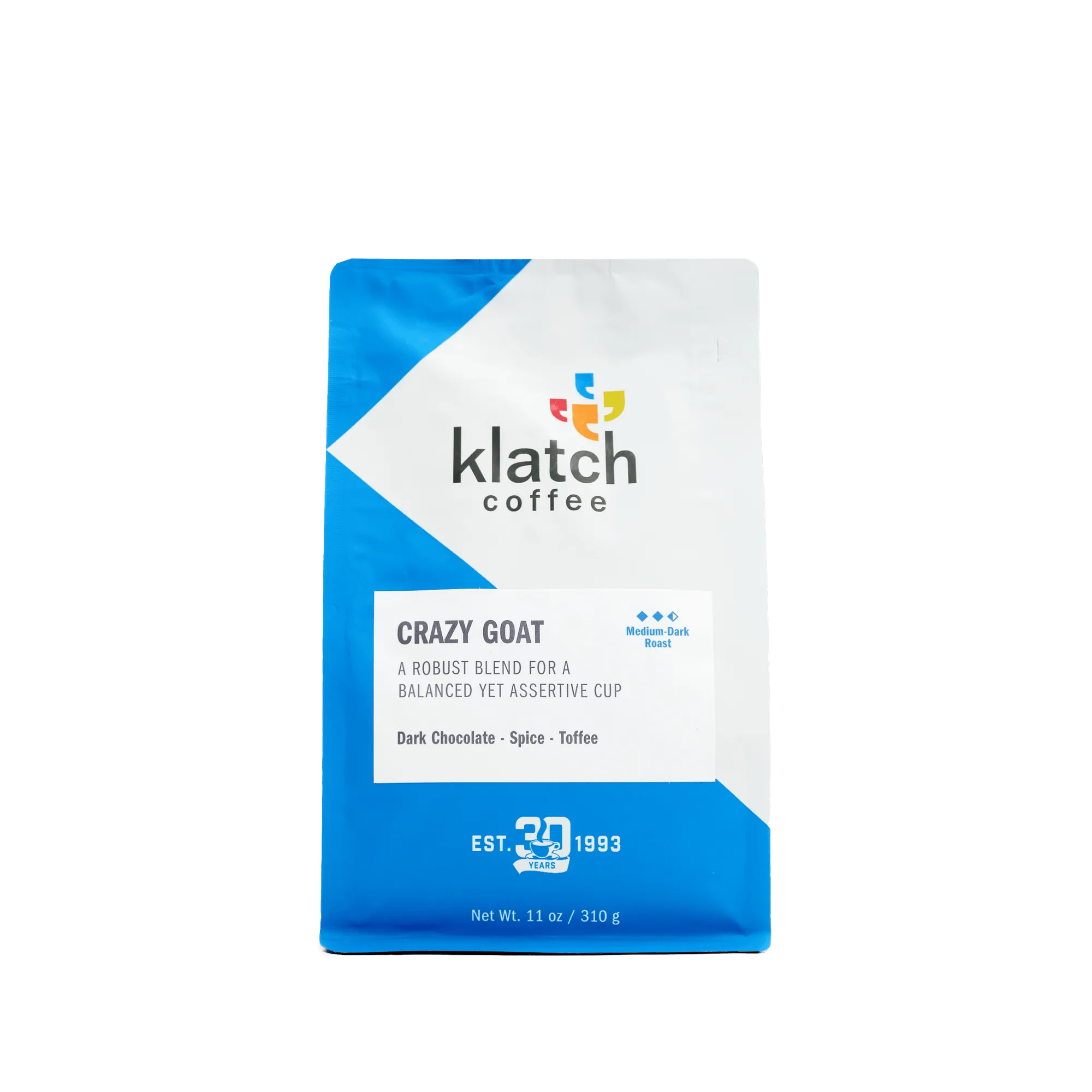
Crazy Goat
-
Crazy Goat: Crazy Goat is available in a Standard Bag and a Big Bag. If you are dialing in a decaf recipe, the smaller Standard Bag lets you experiment without committing to a large amount.
How to make decaf taste stronger: a practical order of adjustments
Work through these one at a time so you can tell which change made the difference. Change one variable per brew.
- Check your coffee-to-water ratio: If the cup tastes weak and watery, increase the amount of coffee before changing anything else. Keep the water volume the same so you can compare.
- Adjust grind size for your brewer: If the cup is weak and sour or finishes too fast, try a finer grind. If it turns harsh or bitter, back off. Grind size is a dial, not a fixed rule.
- Confirm your water temperature: Water that is not hot enough under-extracts coffee. Use the temperature your brewer or method calls for, and make sure your kettle or machine is actually reaching it.
- Watch brew time: A brew that finishes too quickly can taste thin. If your method allows, extend contact time slightly and taste again.
- Taste before adding anything: Milk and sugar can mask a weak cup. Taste black first so you know whether the problem is extraction or preference.
Decaf grind size: start from your brewer, not the label
There is no universal decaf grind size. The right setting depends on your brew method, your basket or filter, and the taste in the cup. A grind that works for a drip machine will not suit a pour-over or a French press.
The practical approach is to start with the grind you use for regular coffee in the same brewer, then adjust finer if the cup tastes weak. Because the catalog does not supply a recommended grind for Crazy Goat, your own tasting is the only reliable guide here.
What the catalog does not settle
The supplied information for Crazy Goat does not include decaffeination method, roast level, origin breakdown, or brewing instructions. It also does not confirm storage guidance or shelf life. Those gaps mean you should not expect the catalog to tell you exactly how this blend will extract in your kitchen.
What the catalog does give you is a flavor direction and two bag sizes. Use the flavor notes as a target, adjust your brewing variables one at a time, and let your own taste decide when the cup is strong enough.