Quick Answer
Most dice roll off the table because of three fixable things: a hard, slick rolling surface, too much throw force, or sharp-edged dice that keep momentum instead of settling. The fastest fix is a lipped dice tray with a leather or fabric inlay, which catches dice and slows them down. If your dice still escape, change how you throw before you buy anything else.
You roll a d20, it skitters across the battle map, clips a soda can, and disappears under the couch. Everyone laughs, you crawl on the floor, and the tension of the scene evaporates. This is one of the most common tabletop dice problems, and it almost never has anything to do with luck.
Dice rolling off the table is a physics problem you can diagnose. The surface, your throw, and the shape of your dice each play a role. Work through the causes below in order, apply the matching fix, and you will stop dice falling without changing how you play.
Symptom: Dice Slide Off a Bare Table Every Single Roll
If dice leave the table on nearly every throw, even gentle ones, the table itself is the problem. Smooth laminate, glass, and polished wood give dice almost nothing to grip, so they keep their momentum and slide straight off the edge. This is the clearest case for a dice tray solution: a raised rim catches the dice and a softer inlay absorbs the energy of the roll.
Before buying anything, test the surface. Roll a single d6 across the table by hand. If it travels more than a foot without slowing, the surface is too slick for loose rolling. A tray or a dedicated rolling mat fixes this instantly, and it also protects the table from scratches.
- A lipped tray with a leather inlay gives dice a smooth landing while keeping a satisfying sound
- Felt or fabric mats work too, but they slide unless they have a grippy backing
- If your table is already scratched, a tray protects it going forward
Symptom: Dice Fly Off Only When You Throw Hard
If dice stay on the table during casual rolls but launch off when you really put your arm into it, the throw is the cause. Extra force does not make a roll more random—it just adds distance. The fix costs nothing: drop the dice from a few inches above the surface instead of hurling them, or cup both hands and let them tumble out.
Sharp-edged dice are especially sensitive to throw force. Their flat faces and crisp edges let them keep rolling longer than rounded casino-style dice, so a hard throw sends them further. If you love the look of sharp-edged sets, pair them with a tray and a gentler release.
- Roll from six to eight inches above the surface, not across it
- Keep your wrist loose; flicking adds spin and distance
- A short, cupped drop is enough for a fair roll
Symptom: Only One or Two Dice Keep Escaping
When most of your set behaves but one die is a repeat offender, check the die itself. A chipped corner, a rounded edge from wear, or a noticeably lighter d20 will roll differently from the rest. Inspect the die under good light and compare its edges to a stable die from the same set.
If a die is damaged, retire it. A cracked die can also be unbalanced, which affects fairness as well as distance. This is a good moment to check whether the rest of your set is due for replacement, especially if you have been rolling the same polyhedral set for years.
- Look for chips, cracks, or flattened corners along the edges
- Compare the suspect die's weight and feel against its siblings
- Retire damaged dice rather than trying to repair resin
Symptom: Dice Escape Even With a Tray
A tray with a low rim or a hard, bouncy base can still let dice hop out. If your dice bounce off the inlay and over the wall, the tray is too shallow or too stiff. Look for a tray with a raised lip and a leather or fabric inlay, which deadens the bounce instead of amplifying it.
Tray size matters too. A tray that is too small for your throw style forces dice against the walls at speed, and they pop out. If you roll a full 7-piece set at once, give the dice room to spread. If you roll one die at a time, a compact tray is fine.
- Choose a tray with a rim tall enough to contain a bouncing d20
- Leather inlays slow dice more than hard wood or metal bases
- Match tray size to how many dice you roll at once
When to Stop Diagnosing and Just Change the Setup
If you have tried a gentler throw and the dice still leave the table, stop troubleshooting. At that point the table, the dice, or both are working against you, and the practical answer is a proper rolling station. A dedicated tray plus a set of dice that suits your table is usually cheaper than replacing a scratched table or losing dice under furniture.
This is also the point to consider whether your dice collection matches your play style. Sharp-edged iconic sets look striking and roll with more randomization, but they need a contained surface. If you play on a bare table, either commit to a tray or choose dice you are comfortable rolling gently.
- Two failed fixes means the setup, not the technique, needs to change
- A tray is the single highest-impact purchase for this problem
- Buy dice that match your table, not just your character sheet
Dice Escape Diagnosis: Symptom, Cause, Fix, and Stop Point
- Dice slide off on every roll, even gentle ones: The table surface is too slick. Add a lipped tray with a leather or fabric inlay, or a rolling mat with a grippy backing. If a hand-rolled d6 travels more than a foot without slowing, buy the tray.
- Dice fly off only on hard throws: Throw force is the cause. Drop dice from six to eight inches with a loose wrist instead of hurling them across the table. If a gentler throw keeps dice on the table, you do not need to buy anything.
- One or two specific dice keep escaping: Inspect those dice for chips, cracks, or rounded edges. Damaged or unbalanced dice roll unpredictably and should be retired. If the die is damaged, replace it rather than adjusting your table.
- Dice still escape from inside a tray: The tray rim is too low or the base is too hard. Switch to a deeper tray with a leather inlay and size it to how many dice you roll at once. If dice bounce out of a deep, leather-lined tray, the throw is still too hard.
- Nothing has worked after two fixes: Stop diagnosing and rebuild the rolling station: a proper tray plus dice suited to a contained surface. This is cheaper than replacing furniture or losing dice. At this point, the setup is the problem, not your technique.
Dice and Trays That Address the Problem
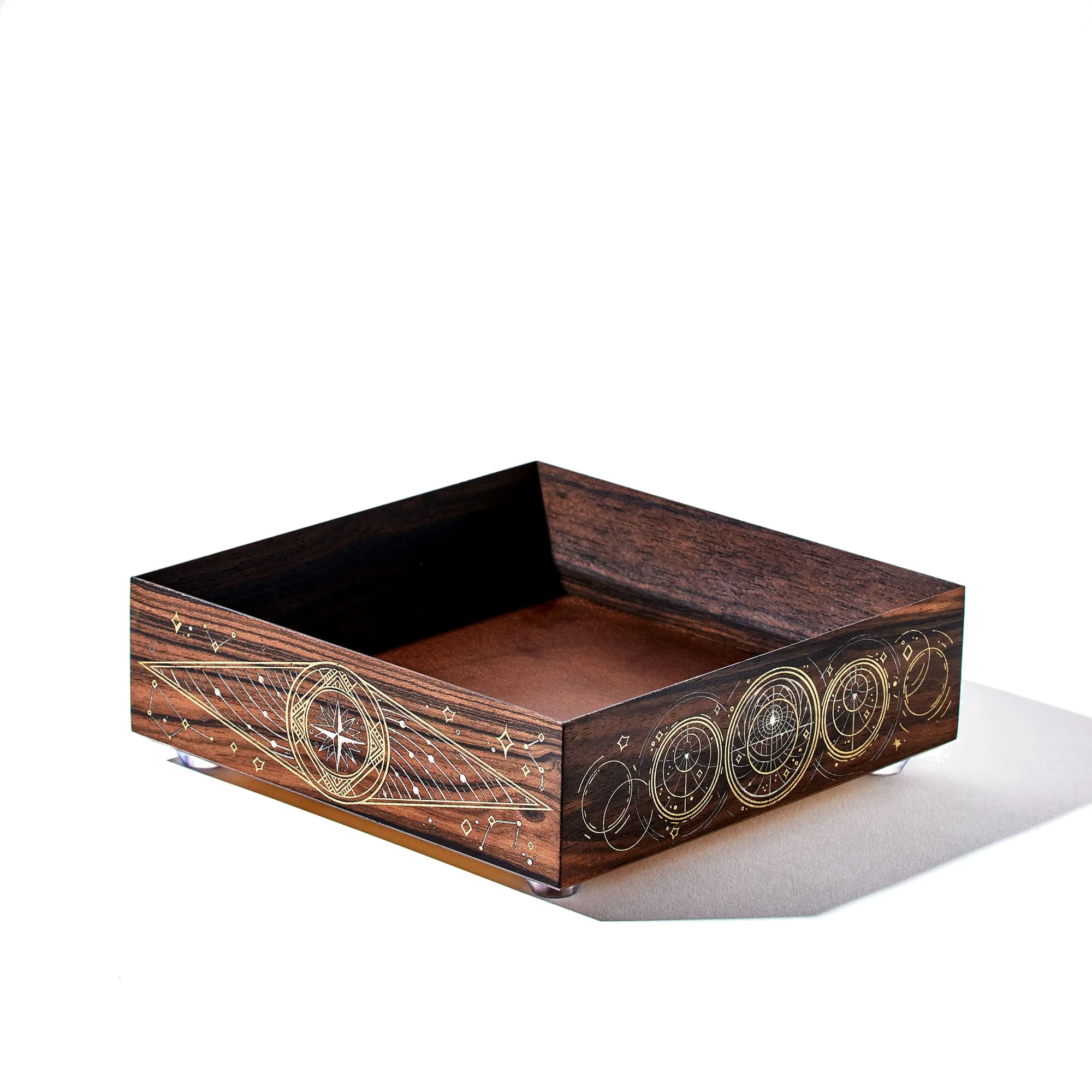
- Dispel Dice x LaserOx Endless Horizons Tray: Handcrafted in Ziricote wood with a premium leather inlay, made to order by Dispel and Laserox. The leather inlay gives dice a smooth landing while maintaining a satisfying sound, and the raised wooden rim contains bounces that would otherwise send dice off a bare table.
- Dispel Dice x Laserox "Be Not Afraid" Dice Tray in Zircote Wood: Made of Ziricote wood with ash embellishments, an opalescent and gold effect resin inlay, and a leather lining. If you want a tray that doubles as a gift for a DM, this one is built for the table and looks the part, while the leather lining still slows dice on impact.
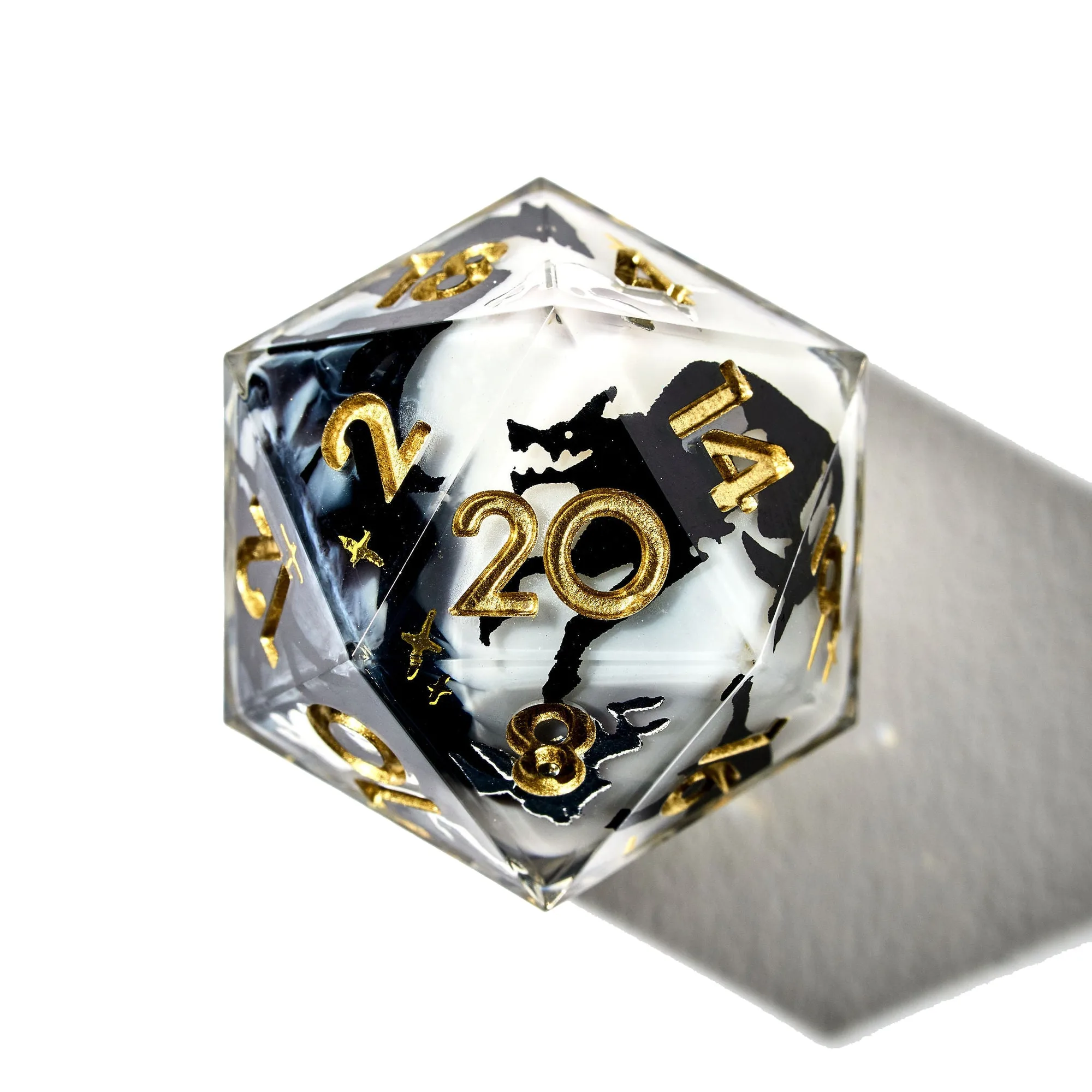
- Devour 7-Piece Iconic Dice Set: A sharp-edged 7-piece set with a black, transparent gray, and white core, including one D4, D6, D8, D10, D%, D12, and D20. Sharp-edged construction allows for more randomized rolls, but those crisp edges also keep momentum longer, so this set benefits most from a lipped tray and a gentler throw.
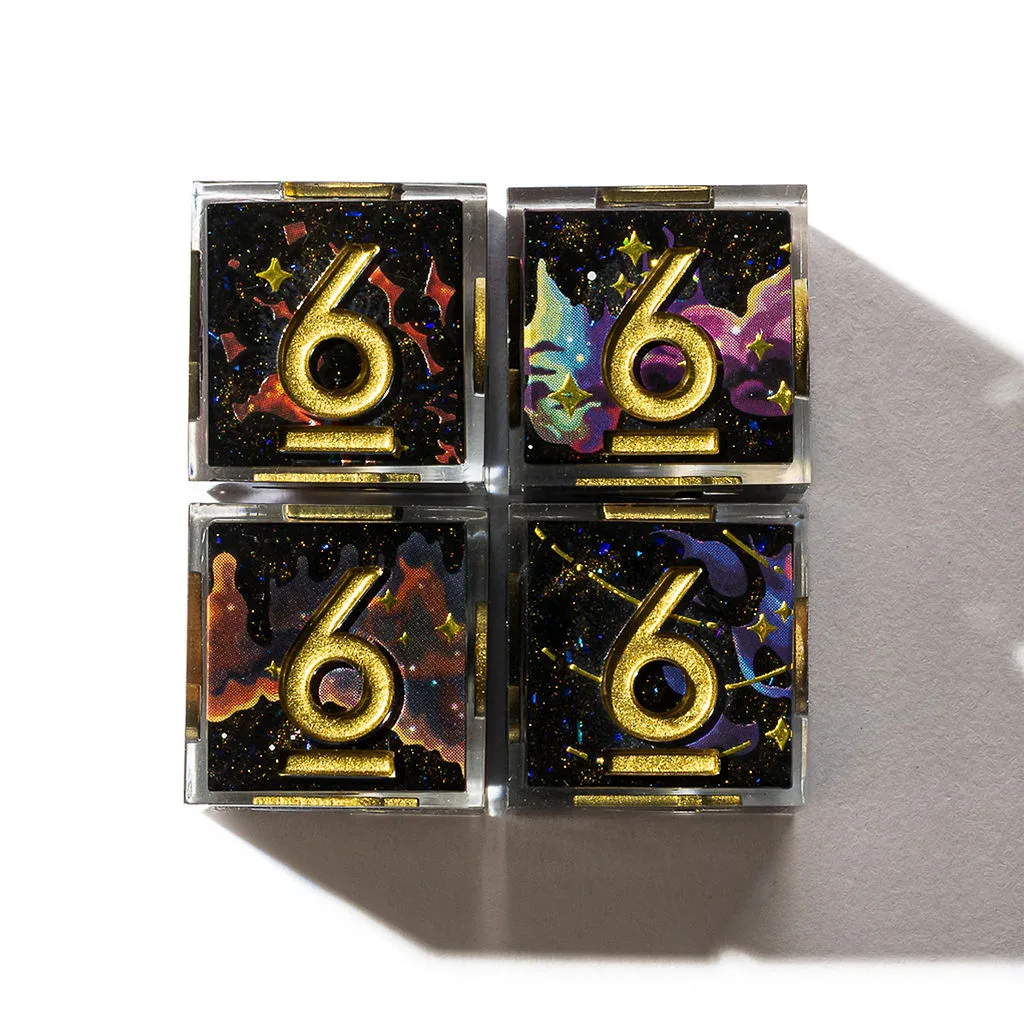
- Cosmic Storm 4-Piece D6 Dice Set: Four sharp-edged D6 dice with a space-black resin base, red and black cosmic decals, and gold-inked numbers. If your problem is specifically d6s scattering during games that use dice pools, a dedicated 4-piece set plus a tray keeps the whole pool contained.
Dice rolling off the table is a solvable problem, not a personality trait of your dice. Check the surface, soften your throw, inspect damaged dice, and add a lipped tray with a leather inlay if dice still escape. Fix the cause that matches your symptom, and you can stop crawling under the table for good.