Quick answer
Most dimmer buzzing comes from the dimmer module and the lamp disagreeing about how to handle the load. Start by swapping the lamp for a dimmable LED, then check the module's minimum load and compatibility. If the noise persists after both, replace the module or move to a retractive toggle switch paired with a compatible smart dimmer.
What the buzz is actually telling you
A dimmer does not just lower voltage; it chops the mains waveform many times a second. That switching makes lamp filaments and LED driver components vibrate at the same frequency, which you hear as a hum or buzz. The noise is not automatically a fault, but it is a signal that the dimmer, the load, or the wiring is working harder than it should.
Two different sounds matter here. A soft hum from the switch plate itself usually points to the dimmer module. A louder buzz from the lamp or ceiling rose usually points to the lamp or its driver. Listen before you touch anything, and note whether the noise changes when you adjust the dial.
Check the lamp before you blame the switch
The fastest test is to replace the lamp with a known dimmable LED or a traditional incandescent lamp of similar wattage. If the buzz disappears, the original lamp was the problem. Many LEDs sold as dimmable still buzz on trailing-edge dimmers, so try a different brand or model rather than assuming the dimmer is faulty.
If you have a multiway or smart dimmer setup, confirm the lamp is compatible with that specific dimmer. Compatibility lists are not universal, and a lamp that works silently on one module can buzz on another.
Match the load to the module
Every dimmer module has a minimum and maximum load. Below the minimum, the module may not switch cleanly and can buzz or flicker. Above the maximum, it runs hot and the noise often gets worse as the dial turns down. Add up the wattage of every lamp on the circuit, not just the one you can see.
If your total load sits near the bottom of the range, adding a single dimmable lamp or a compatible load correction device can quiet the circuit. If it sits near the top, split the circuit or choose a higher-rated module. Never guess the rating; check the module documentation.
When the fix is a different switch
If the lamp is dimmable, the load is within range, and the buzz remains, the module is the weak point. This is common with older leading-edge dimmers running modern LED loads. A trailing-edge or smart dimmer module usually solves it because it handles low loads more gently.
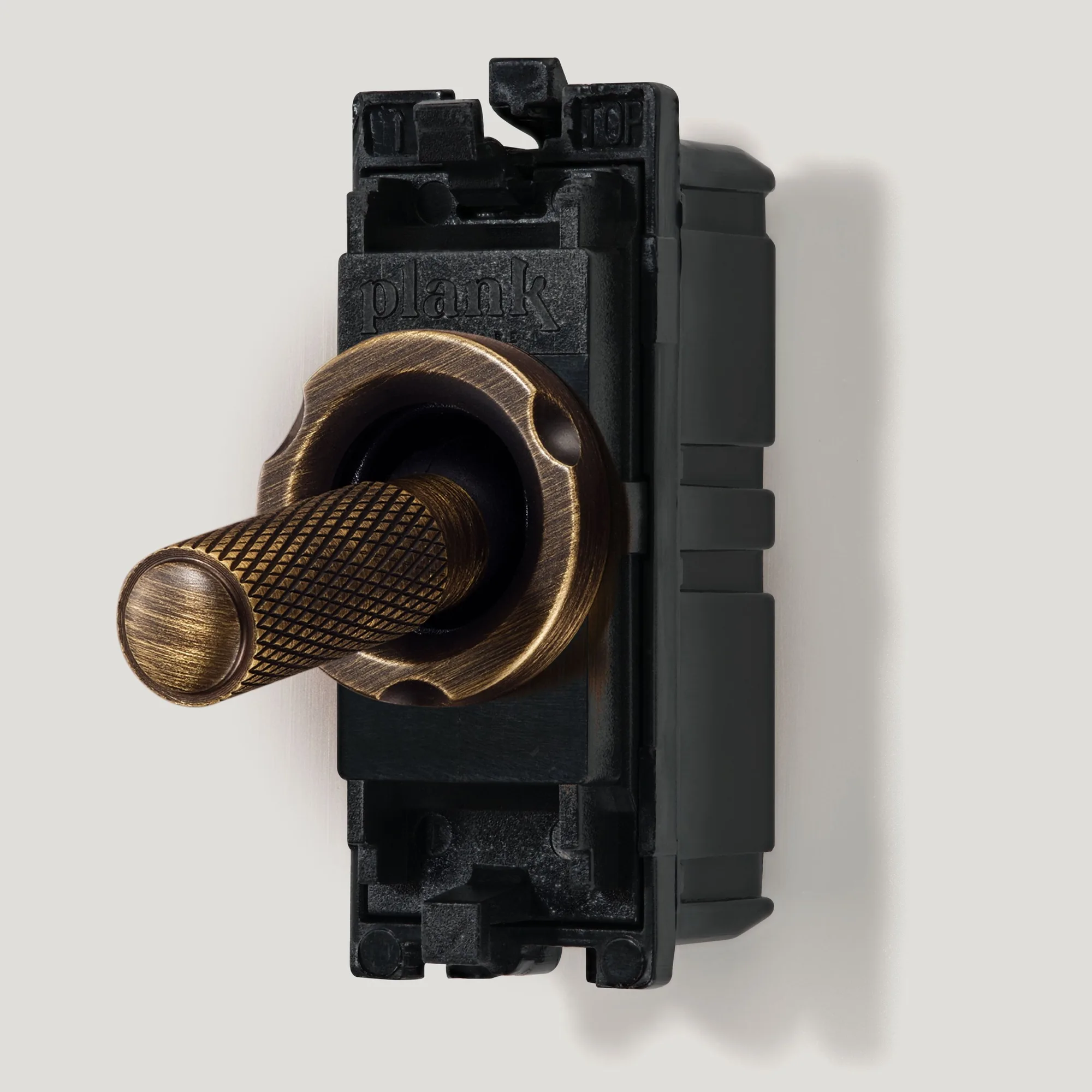
For a decorative finish that still gives you dimming control, a retractive toggle switch can send short presses for on and long holds for brightness to a compatible smart dimmer. The KEPLER Knurled Retractive Toggle Switch in Antique Brass is designed for exactly that: it returns to neutral when toggled and works with smart dimmers and multiway systems. It is a switch, not a dimmer module, so the dimming intelligence lives in the module behind it.
What not to do
Do not open a dimmer module or bypass it to stop the noise. Mains voltage is present even when the switch is off, and a modified dimmer can overheat or fail. Do not assume a buzz is harmless because it has been there for months; heat and vibration shorten the life of both the module and the lamp.
If you are unsure whether the noise comes from the switch or the lamp, hire a qualified electrician to test the circuit. That is cheaper than replacing a module twice.
Diagnosis: symptom, cause, action, stop point
- Soft hum from the switch plate: The dimmer module is vibrating as it chops the waveform. This is most common with leading-edge modules on low LED loads. Swap to a trailing-edge or smart dimmer module rated for your load.
- Loud buzz from the lamp or ceiling rose: The lamp or its driver is the noise source, often because a supposedly dimmable LED is not compatible with the dimmer. Replace the lamp with a different dimmable model and retest before changing the switch.
- Buzz that worsens as you dim down: The load is likely below the module's minimum, so the module cannot switch cleanly at low output. Add load or fit a module with a lower minimum rating.
- Noise continues after lamp and load checks: The module itself is the remaining variable and is probably incompatible with the load. Stop troubleshooting and replace the module or move to a retractive toggle with a compatible smart dimmer.
Product facts
- KEPLER Knurled Retractive Toggle Switch - Antique Brass: Compatible with smart dimmers and multiway systems, the knurled retractive switch returns to neutral when toggled. Press briefly to turn on and hold to adjust brightness. Lets you keep a decorative toggle on the wall while the dimming is handled by a compatible module, which is often the cleanest fix for module-related buzzing.
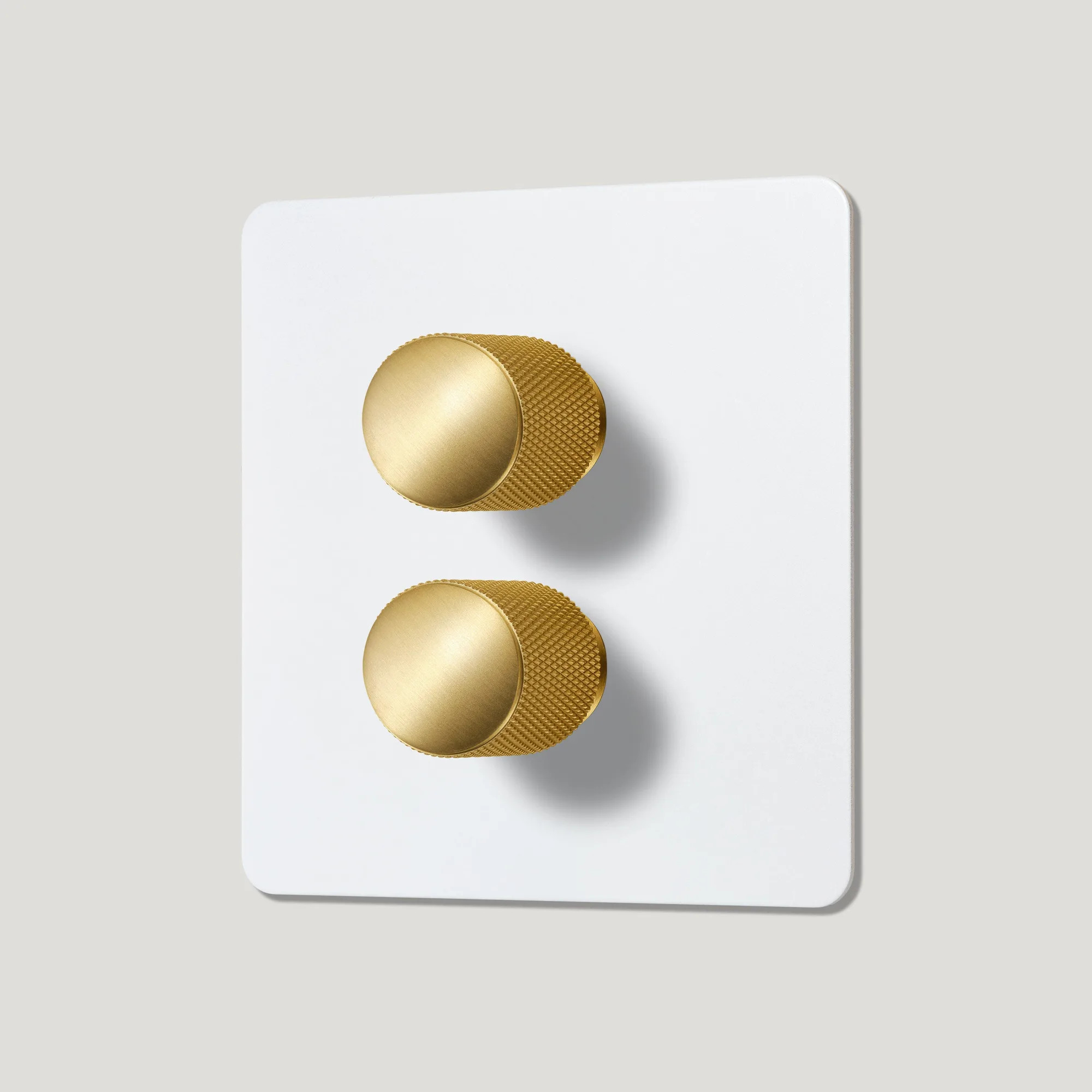
- KEPLER 2G Paintable Dimmer Switch - Brass: A 2-gang paintable dimmer light switch with a paintable plate and a tactile knurled dial in solid brass. The plate is primed white ready to paint into any wall colour, while the solid brass dial stays unpainted. Useful if the buzzing circuit is on a two-gang wall and you want to replace the whole dimmer rather than just the module.
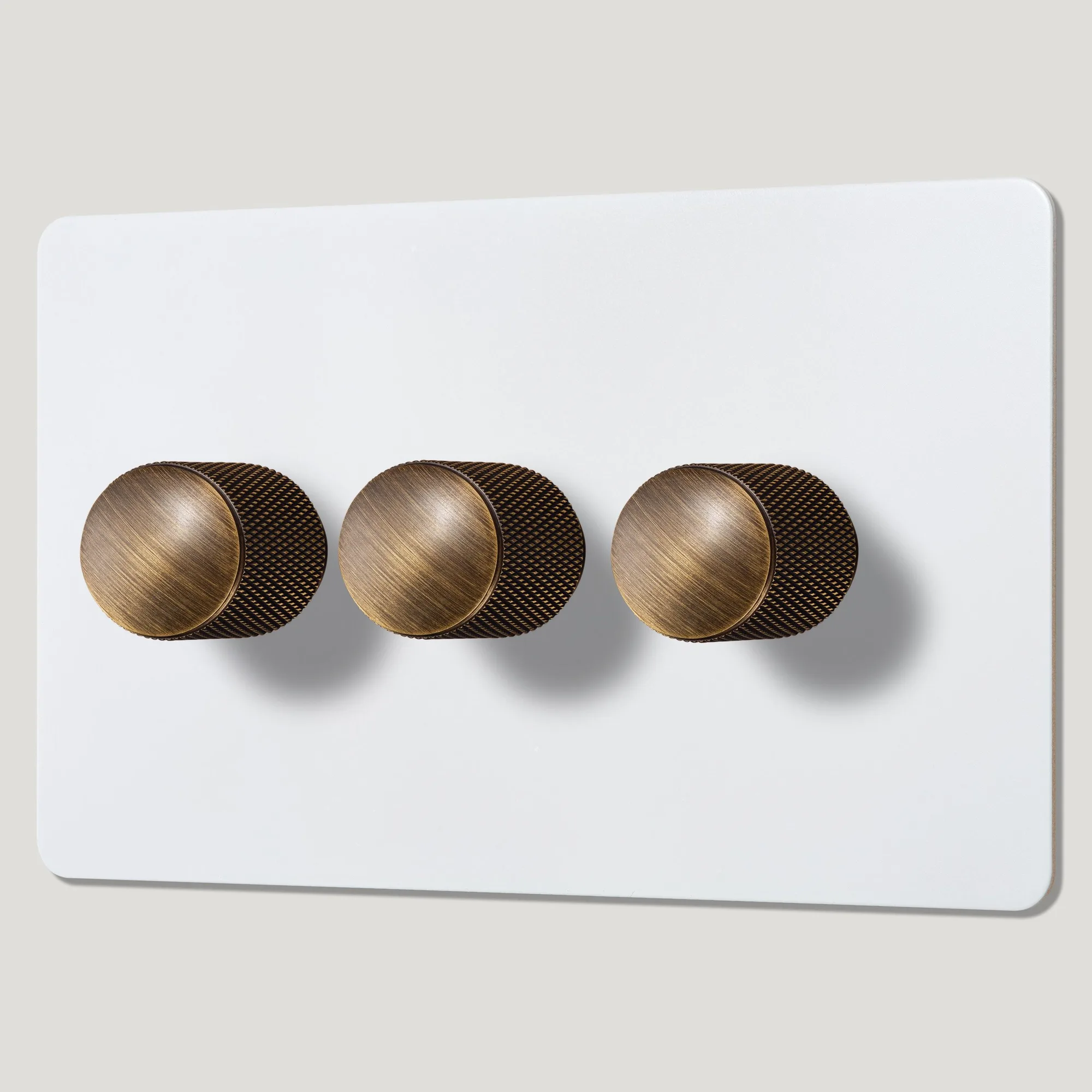
- KEPLER 3G Paintable Dimmer Switch - Antique Brass: A 3-gang paintable dimmer light switch with a paintable plate and a tactile knurled dial in solid brass with an antique-brass finish. Suits a three-gang wall where you want matching dimming control and a decorative finish after resolving the noise.