Quick answer
Socket cap screws loosen primarily from vibration and insufficient thread locking. Use nylon pellet locking or a thread-locking compound, and apply correct torque to prevent fastener loosening.
Why vibration is the main cause
Socket cap screws rely on friction between threads to stay tight. Under cyclic vibration—common in machinery, jigs, and precision assemblies—this friction breaks down, allowing the screw to rotate backward. Even correctly torqued fasteners can loosen over time without additional locking.
The role of finish and material
The Alloy Steel Thermal Black Oxide finish on many socket cap screws provides some corrosion resistance and a slightly rougher surface than plain steel, which can increase initial friction. However, it does not replace the need for a locking mechanism. The black oxide layer is thin and will not prevent loosening on its own.
Diagnosis and corrective action
- Symptom: Socket screw backs out or loses torque after a few hours of operation. You may hear rattling or see the screw head no longer seated flush.
- Likely cause: Cyclic vibration breaks the static friction between threads. Without a locking aid, the screw rotates loose. Insufficient initial torque or incorrect thread engagement can accelerate this. Check that you are using the correct thread size (e.g., 1/2-20) and that the mating threads are clean.
- Corrective action: Apply a nylon pellet locking element to the screw threads before installation, or use a medium-strength thread-locking compound. Tighten to the manufacturer’s torque specification. Re-torque after the first few thermal cycles if the assembly operates at varying temperatures.
- When to stop or choose another option: If the screw must be removed frequently for maintenance, avoid permanent thread-locking compounds. Use a removable nylon pellet or a low-strength thread locker instead. If loosening persists, consider a mechanical lock such as a lock washer or a castellated nut.
Product facts
-
1/2-20 X 1-1/4" Socket Cap Screws | Hex Socket Drive | Nylon Pellet | Fully Threaded | Alloy Steel Thermal Black Oxide (50 / Pkg.): These 1/2-20 x 1-1/4" socket cap screws are manufactured from Alloy Steel Thermal Black Oxide with a hex socket drive, suited to machinery, tooling, jigs, and precision assemblies. The black oxide finish adds mild corrosion resistance and surface friction, but for vibration-prone applications you still need nylon pellet locking or a thread-locking compound to prevent loosening.
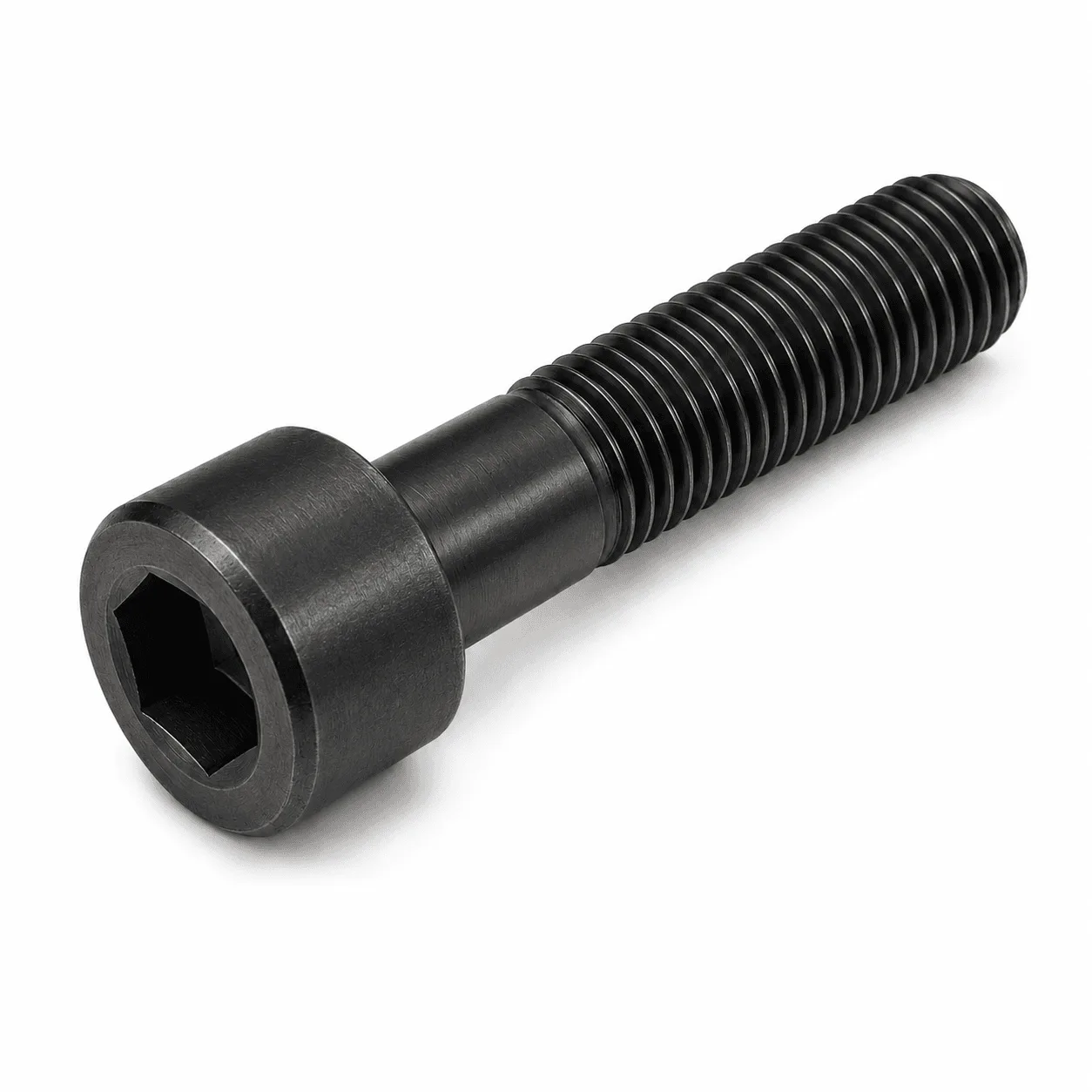
1/2-20 X 1-1/4" Socket Cap Screws | Hex Socket Drive | Nylon Pellet | Fully Threaded | Alloy Steel Thermal Black Oxide (50 / Pkg.)