Quick answer
A sewer smell in your bathroom is almost never from the toilet itself—it is usually a dry P-trap, a blocked vent pipe, or a broken wax ring. Febreze Small Spaces eliminates the odor while you fix the underlying cause.
Why masking won't fix a sewer smell
Candle or spray air fresheners cover the smell for a few minutes, but the cause remains. A sewer odor comes from methane or hydrogen sulfide gas seeping through plumbing gaps. Until you stop the leak, any fragrance is just a temporary bandage. Febreze Small Spaces works differently—it actually traps and neutralizes odor molecules in the air, so the smell disappears even before you find the source.
How to diagnose a bathroom sewer smell
- Symptom: A foul, rotten-egg or sewage odor that appears suddenly or worsens after heavy rain or when the bathroom hasn't been used for a few days. Check if the smell is strongest near the shower drain, toilet base, or sink overflow hole.
- Likely cause: A dry P-trap is the most common culprit. The curved pipe under your sink or shower holds water that blocks sewer gas. If you haven't run water in that fixture for a week or more, the water evaporates and gas escapes. Run cold water for 30 seconds in every drain. If the smell disappears, the P-trap was dry.
- Corrective action: If running water doesn't help, check the toilet wax ring (wax ring leak) or the roof vent pipe (blocked by leaves or debris). For a wax ring, tighten the toilet bolts or replace the ring. For a blocked vent, call a plumber. If you smell gas near the toilet base, stop and call a plumber. Do not attempt to remove the toilet yourself.
- Stop or choose another option: If you have a slow drain or gurgling sounds when flushing, the vent pipe is likely blocked. This requires professional help. In the meantime, place a Febreze Small Spaces unit in the bathroom to neutralize the odor until the repair is done.
Product facts
-
Febreze Small Spaces, Plug In Air Freshener Alternative For Home, Linen & Sky, Odor Eliminator For Strong Odor (4 Count): Febreze Small Spaces uses a corded electric design with a 45-day duration and delivers up to 4x the scent intensity of a leading cone air freshener. It eliminates odors continuously rather than just covering them, so the sewer smell actually disappears while you work on the plumbing fix.
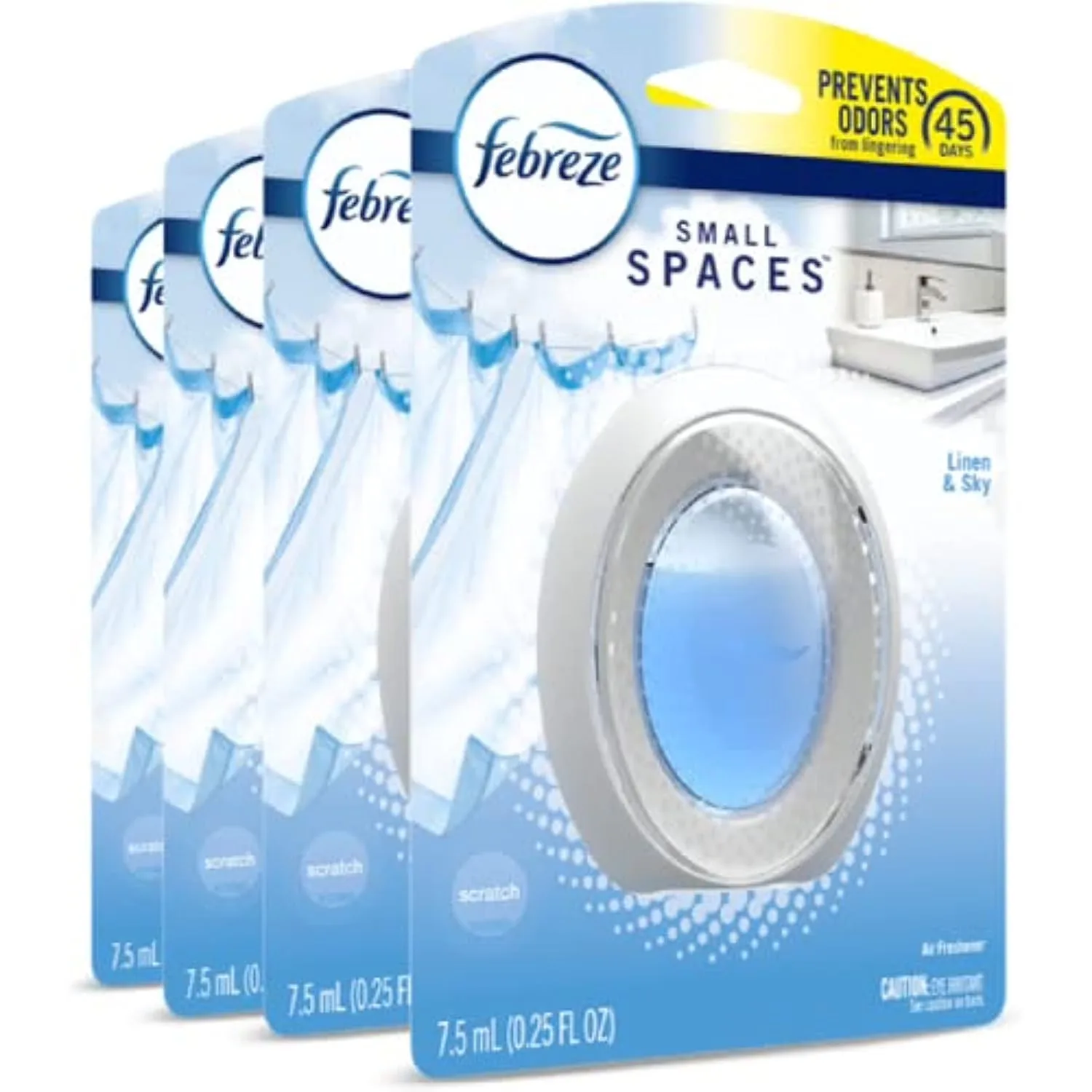
Febreze Small Spaces, Plug In Air Freshener Alternative For Home, Linen & Sky, Odor Eliminator For Strong Odor (4 Count)