Quick answer
A sting that fades within a minute usually means the lotion hit cracked, dehydrated skin, so apply a thin layer to damp skin and build up gradually. A sting that intensifies, lasts, or brings redness and swelling means stop and choose a simpler formula or see a clinician.
Why water loss, not the lotion, often causes the burn
When the skin barrier is compromised, the nerve endings sit closer to the surface and react to almost anything watery or scented. That is why the same lotion can feel fine on your arm and sting on your cheeks or shins. The problem is usually the state of the skin, not a sudden allergy to the product.
This also explains why a rich lotion can sting more than a light one: a higher water content and faster absorption can deliver a stronger tingle to raw skin. If the sensation is brief and settles, it is a signal to repair the barrier, not to abandon moisturizer entirely.
When the formula, not the skin, is the culprit
Fragrance, essential oils, alcohol denat, and some preservatives can trigger a sting even on intact skin. The pattern matters: if the burn starts immediately every time you use a specific product, but not with others, treat that product as the suspect. Stop it and test a bland lotion on a small area first.
A true allergy can also show up as itching, hives, or redness beyond the application site. Those are not barrier-repair signals, and no amount of layering will fix them. Switch to a product with a short, soothing ingredient list and seek medical advice if symptoms spread.
The exception: normal tingle versus warning sign
Not every sensation is a problem. A slight tingle that fades in under a minute, with no redness, is common when dehydrated skin first meets water-based lotion. A warning sign is pain that builds, lasts more than a few minutes, or leaves the area hot and red. That is your cue to stop, rinse with cool water, and choose another option rather than pushing through.
If you have eczema, rosacea, or broken skin, your threshold is lower. Patch test on the inner forearm for two nights before using a new lotion on the face or body, and keep a note of which products sting so you can spot the pattern.
Diagnose your sting before you reapply
- Symptom: brief tingle that fades in under a minute: Likely cause is a compromised barrier meeting water. Corrective action: apply a thin layer of soothing lotion to damp skin, wait two minutes, then add a second thin layer if needed. Do not rub hard or apply to broken skin. If the tingle shortens each time you use it, you are repairing the barrier; keep going.
- Symptom: sting that builds, lasts, or leaves redness: Likely cause is a reactive ingredient or true irritation. Corrective action: stop the product, rinse with cool water, and patch test a bland lotion on your forearm for two nights. Choose another option if the test stings. A sting that gets worse with each use is not a sign to layer more product.
- Symptom: itching, hives, or swelling beyond the application site: Likely cause is an allergic reaction. Corrective action: stop all new products and seek medical advice; do not try to mask it with more lotion. This is the point to stop self-treating and get a clinician involved.
Product facts
-
Codex Bia Ultra-Hydrating Soothing Lotion 100ml: Codex Bia Ultra-Hydrating Soothing Lotion 100ml is made with a patent-pending BiaComplex 2.0 formula and colloidal oatmeal, which forms a protective layer. Colloidal oatmeal is a known soothing ingredient, so this lotion is a reasonable first pick when the sting comes from a dry, cracked barrier rather than a fragrance reaction.
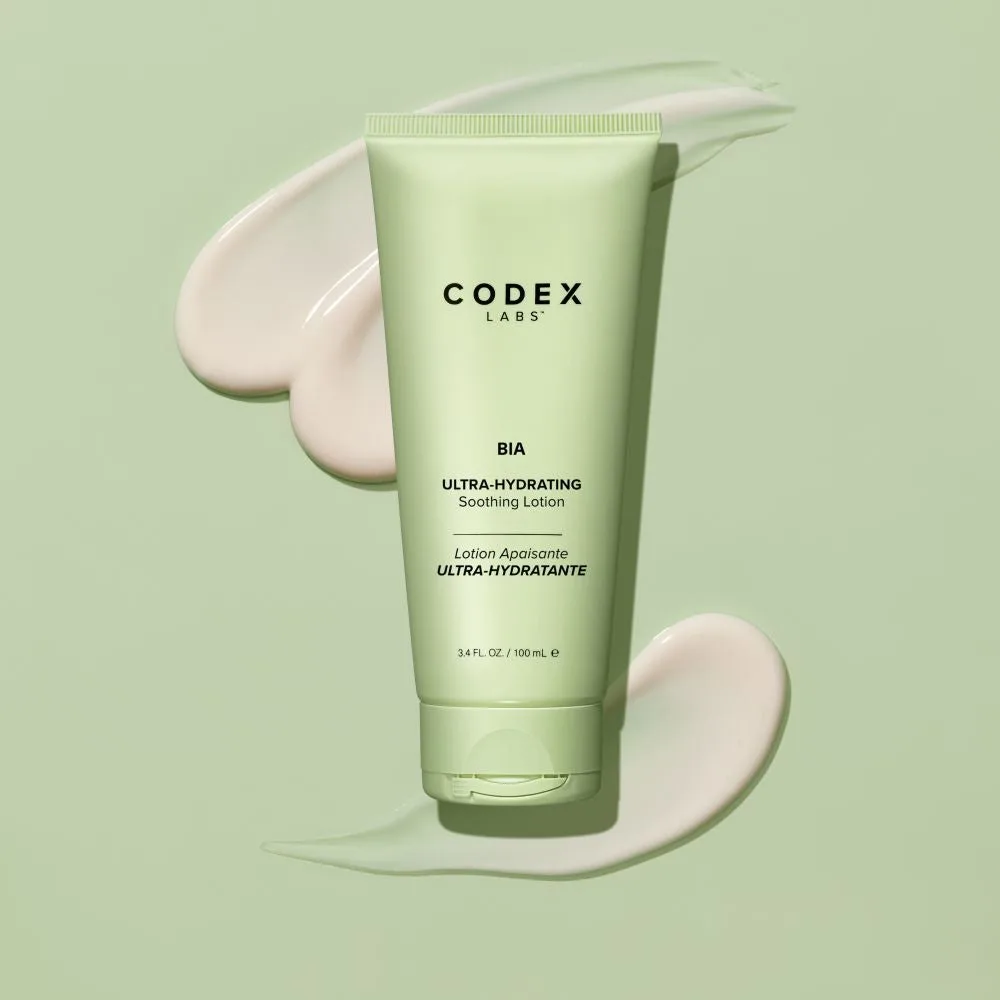
Codex Bia Ultra-Hydrating Soothing Lotion 100ml