Quick Answer
Patchy eyeshadow is almost always a base or tool problem, not a color problem. Let primer set until it feels dry to the touch, then use a dense paddle packer like the M303 Large Paddle Packer Eyeshadow Brush to press color on instead of sweeping it, and wait until the color is fully placed before you start blending.
Match the Fix to What You Actually See
Patchy eyeshadow does not have one cause, so the fix depends on the symptom. If color grabs in one spot and refuses to move, your base is too tacky. If color goes on unevenly from the first pass, your brush is too flimsy to place pigment. If the edge looks harsh or muddy rather than blended, you started blending before the color was fully laid down. Diagnose first, then act.
- Color sticks in a hard line or dot: base is too wet or too much primer.
- Color looks thin and uneven immediately: brush is not dense enough to pack pigment.
- Color looks muddy or has a harsh edge: you blended too early or with a dirty brush.
- Color fades in patches by midday: base was not set, or you applied too little pigment in thin layers.
Fix the Base Before You Touch the Brush
Primer that still feels wet or slippery will make any powder skip and grab. Apply a thin layer and wait until it feels dry to the touch, not tacky. If your primer stays tacky, set it with a light dusting of translucent powder or a skin-toned shade before adding color. On bare lids, a tiny amount of concealer works, but it must be set the same way. The goal is a dry, even surface that gives powder something to hold without grabbing it.
Pack First, Blend Second
Most patchiness happens because people blend before the color is placed. Press color onto the lid with a dense brush using a patting or stamping motion, building in thin layers until you get the intensity you want. Only then switch to a fluffier brush to soften the edges. If you are using a paddle packer, use the flat side to press color on and the edge to sweep a soft wash when you want something sheer. Keep the blending brush clean, because leftover pigment from a previous shade will transfer and make the new color look uneven.
When to Stop Adjusting and Change Tools
If you have set your base correctly and you are still getting patchy placement, the brush is the limiting factor. A loose, fluffy brush cannot pack color evenly because the bristles flex away from the lid instead of pressing pigment down. Switch to a dense packer for placement, then use the fluffy brush only for blending. If the color still skips after that, the formula itself may be too hard-pressed or too dry for your base. At that point, stop adding more primer or more layers, because you will only make the texture worse. Try a different shade from the same palette or a cream formula instead.
Patchy Eyeshadow Diagnosis
- Symptom: color grabs in one spot and will not move: Likely cause: primer or concealer is still tacky. Corrective action: let the base dry down fully or set it with a light powder before adding color. If it still grabs after setting, your base is too thick. Remove it and start with a thinner layer.
- Symptom: color goes on thin and uneven from the first pass: Likely cause: your brush is too fluffy to place pigment. Corrective action: switch to a dense packer and press color on with a patting motion, then blend the edges with a separate clean brush. If a dense packer still skips, the formula is too dry for your base. Try a cream shadow or a different shade.
- Symptom: edges look muddy or the color turns gray: Likely cause: you blended before the color was fully placed, or your blending brush still holds pigment from a previous shade. Corrective action: pack the color first, then blend with a clean brush using light pressure. If the muddiness stays, wipe the blending brush on a towel and blend again before adding more color.
Tools That Help With Patchy Application
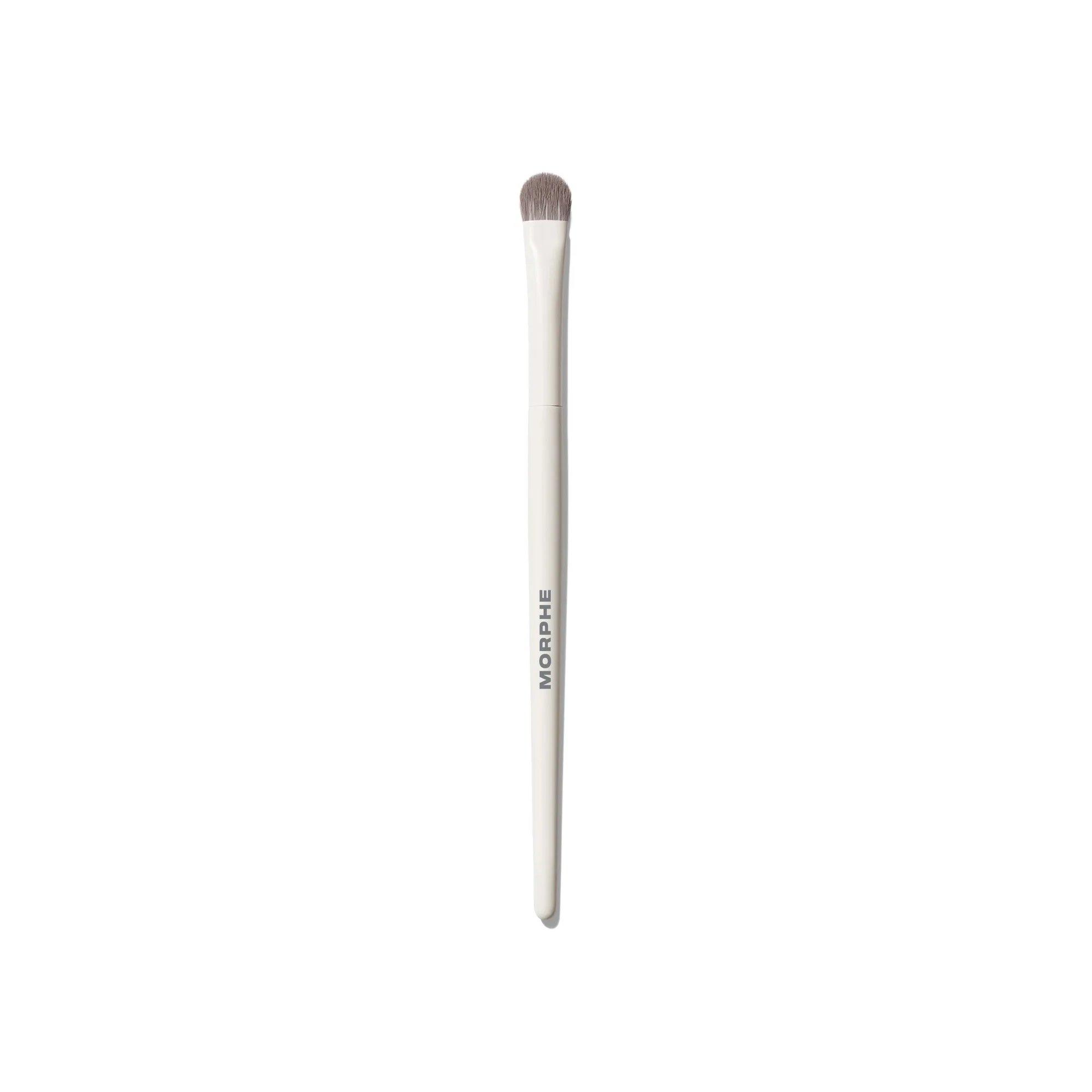
- M303 Large Paddle Packer Eyeshadow Brush: The M303 Large Paddle Packer Eyeshadow Brush is the largest of Morphe's packers, with very dense bristles. It is designed for stamping, packing, and patting powders, creams, and liquids, and can also sweep a soft wash of color. A dense packer presses pigment onto the lid instead of pushing it around, which is the most direct fix for color that goes on unevenly.
- M107 Paddle Cream & Liquid Foundation Brush: The M107 Paddle Cream & Liquid Foundation Brush is very dense and made for creams and liquids, with a precision laydown technique for targeted, concentrated coverage. If your patchiness starts with a cream base or cream shadow, a dense paddle brush gives you control to build only where you need it instead of spreading product unevenly.