Quick answer
The main cause of a soggy gluten-free quiche crust is excess moisture from the filling that the crust cannot absorb. You can prevent it by pre-baking the crust and using a few key techniques.
Why gluten-free crusts are more prone to sogginess
Gluten-free pie crusts lack the gluten network that gives traditional dough structure and a barrier against moisture. Without gluten, the crust is more porous and absorbs liquid from the filling more readily. This is especially true for quiche, which has a high-moisture egg and cream filling.
The flakiness of a gluten-free crust also works against it here. Those delicate layers, while desirable, create more surface area for moisture to seep in. The result is a bottom crust that turns soft or wet before the quiche finishes baking.
The role of the filling and baking temperature
A quiche filling is essentially a custard, and custards release steam as they cook. If the crust isn't pre-baked, that steam has nowhere to go but into the dough. Starting with a cold crust or a low oven temperature can also cause the crust to steam rather than crisp.
Another factor is the moisture content of your add-ins. Ingredients like sautéed onions, fresh vegetables, or even certain cheeses release water during baking. That extra liquid can turn a promising quiche into a soggy disappointment.
Diagnosis and fixes for soggy gluten-free quiche crust
- Symptom: The bottom crust is wet, soft, or sticks to the pan after baking. The sides may also feel doughy.
- Likely cause: The crust was not pre-baked (blind baked) long enough or at a high enough temperature. Gluten-free dough needs a head start to set before the filling is added. Blind bake your crust at 375°F for 15-18 minutes until lightly golden before adding the filling.
- Corrective action: Pre-bake the crust fully, then brush the inside with a thin layer of egg wash (beaten egg white) and bake for 2-3 more minutes. This creates a moisture barrier. Also, sauté any wet vegetables until most of their liquid has evaporated before adding them to the filling. Let the pre-baked crust cool for 5 minutes before pouring in the filling to avoid steam buildup.
- When to stop or choose another option: If you have tried blind baking and egg washing but still get a soggy bottom, consider using a pre-made gluten-free quiche from a trusted bakery. The crust formulation and baking process are already optimized for moisture control. Whisked Gluten-Free Bakery's Bacon Potato and Cheddar Quiche is an example of a fully baked option that avoids the soggy crust issue entirely.
A product that helps
-
Bacon Potato and Cheddar Quiche 9": This quiche features a flaky gluten-free pie crust made with a flour blend of white rice flour, tapioca starch, and guar gum. The crust is designed to hold up to a creamy filling of whipped eggs, cream, potatoes, bacon, and cheddar, showing that a well-constructed gluten-free crust can stay crisp when handled correctly.
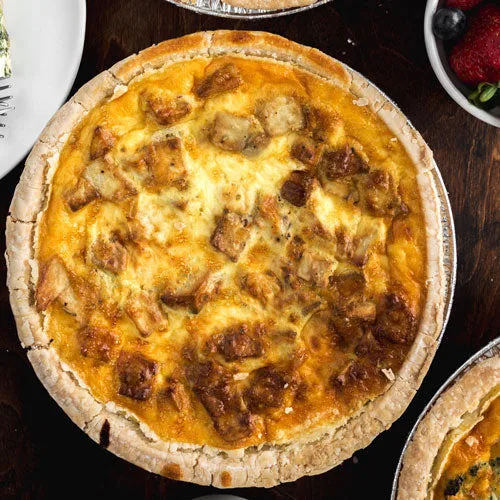
Bacon Potato and Cheddar Quiche 9"