Quick answer
Inclusion dice and sharp edge dice are popular because they offer visual storytelling and a tactile roll that standard opaque dice can't match. If you want dice that double as display pieces and feel distinct in hand, start with a resin inclusion set or a sharp edge silicone set and see which one suits your table.
Walk into any game store or scroll through a dice feed, and you'll notice the same thing: tables are filling up with dice that look less like game pieces and more like tiny artifacts. Inclusion dice popularity and the sharp edge dice trend are two of the biggest reasons why.
This FAQ breaks down what's actually driving the artisan dice trend, how resin dice popularity fits in, and what to check before you buy. The answers are short and standalone, so you can jump to the question that matters to you.
What makes inclusion dice so appealing?
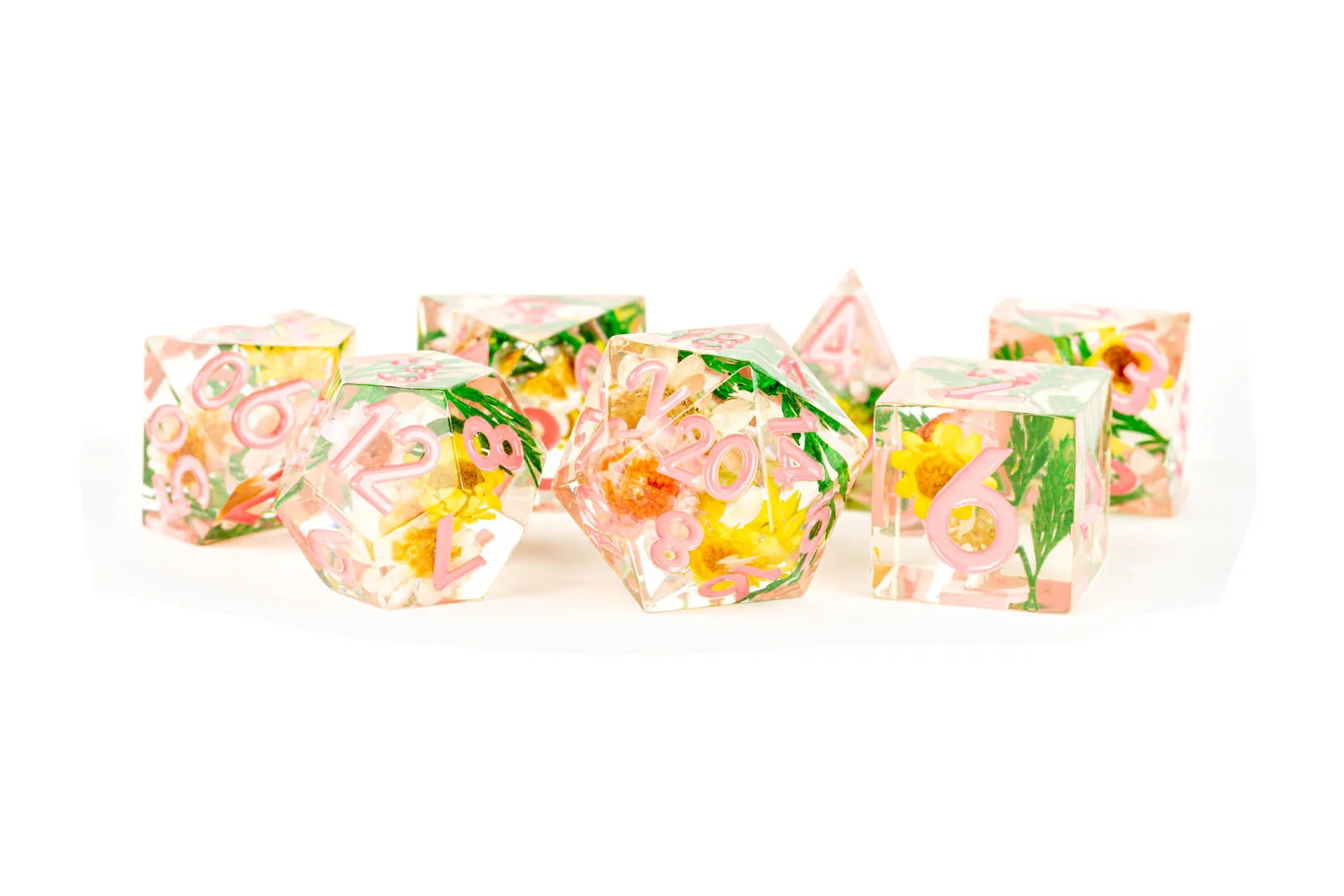
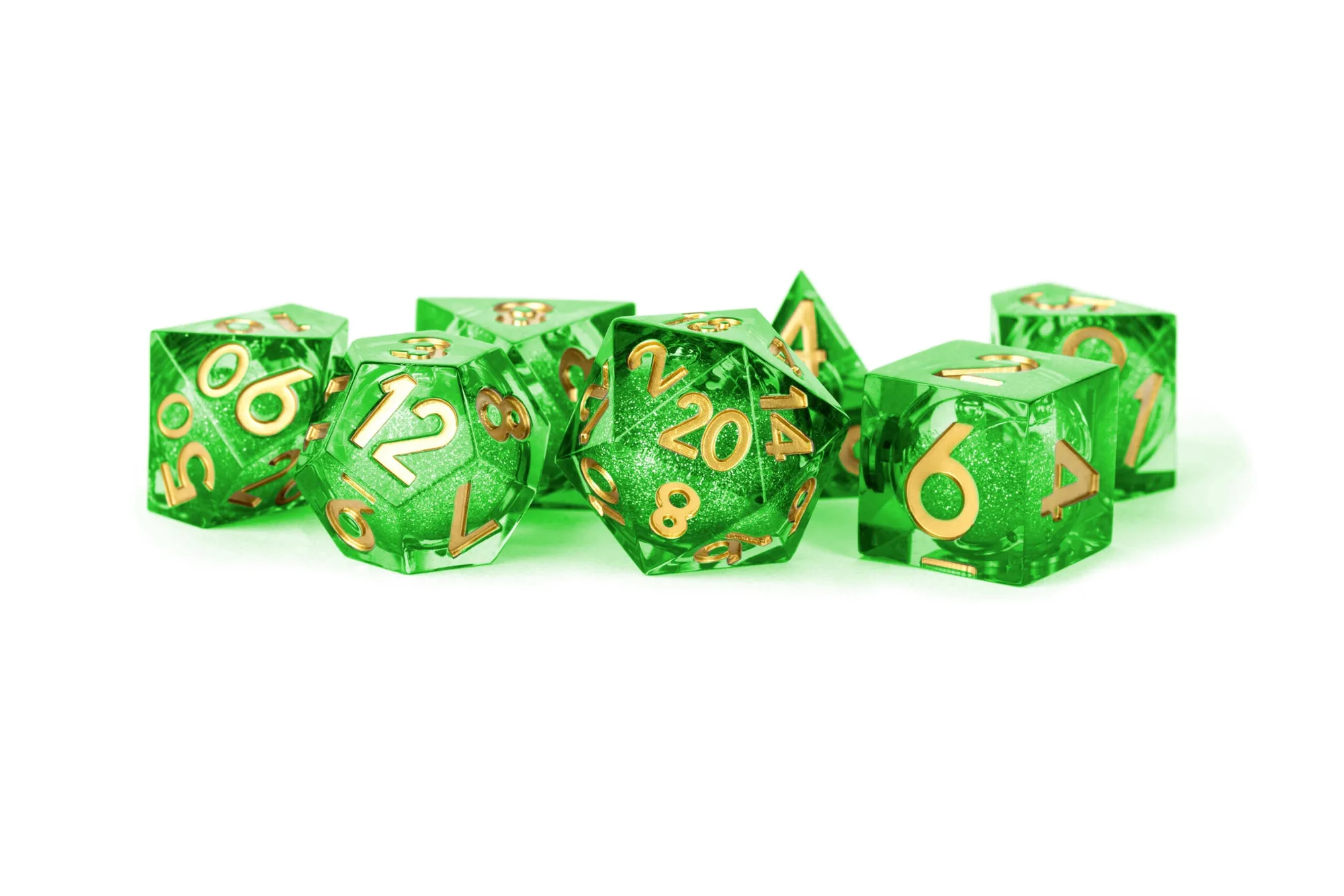
Inclusion dice embed an object inside the resin, so every roll reveals a small scene. A dragon head, a tiny turtle, or a swirl of glitter sits suspended in the die, which turns a standard d20 into a conversation piece. That visual payoff is the core of inclusion dice popularity: you get a functional game tool and a display object in one.
The appeal isn't only aesthetic. Because each set is cast rather than stamped, the inclusion placement can vary slightly from die to die, which gives collectors a reason to hunt for a favorite. For players, the object inside also makes it easy to spot your dice across a crowded table.
- Look for inclusions that sit fully inside the resin, not poking through a face.
- If you roll on a hard surface, check whether the set is resin or metal before you commit.
Why are sharp edge dice suddenly everywhere?
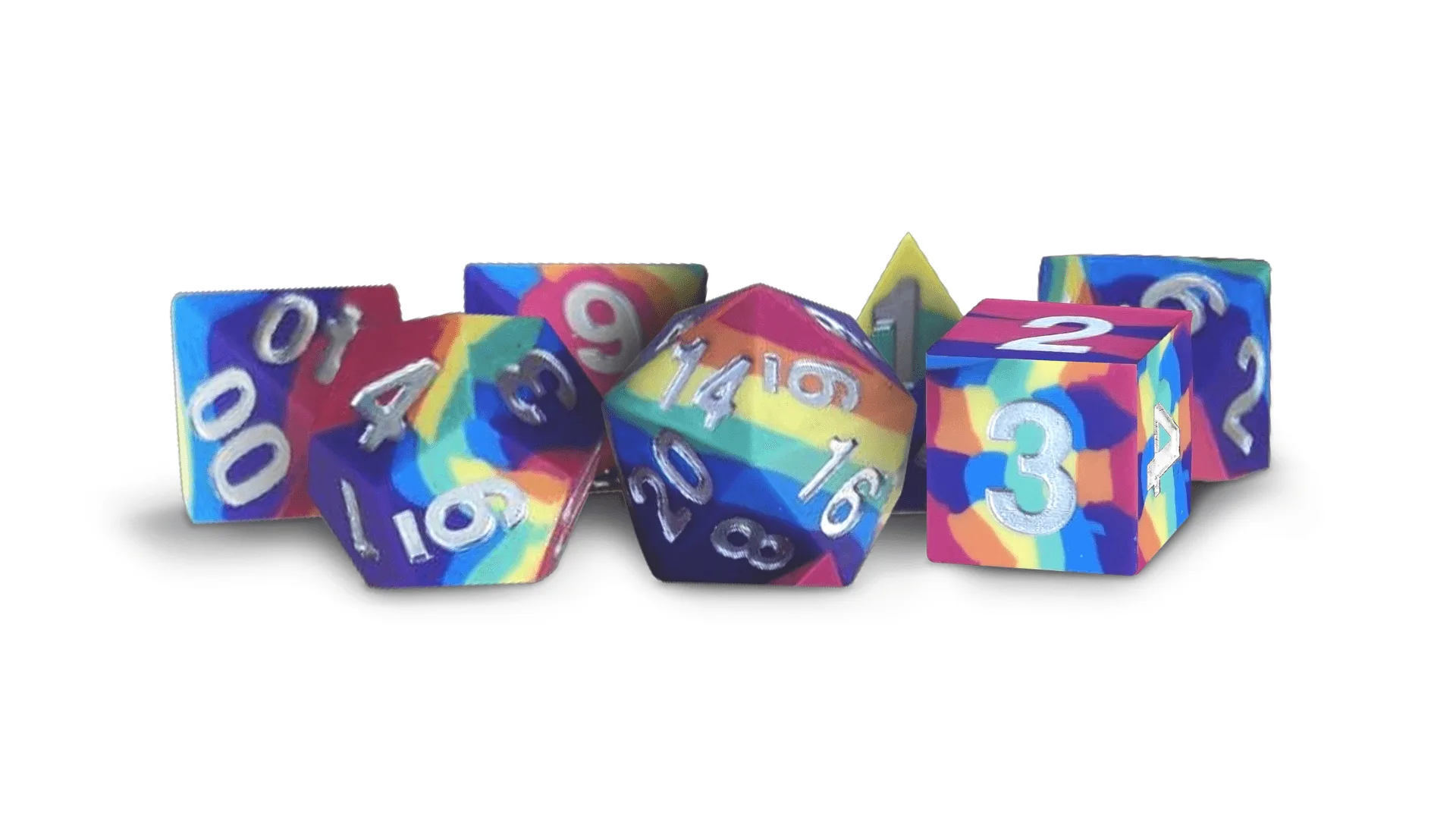
The sharp edge dice trend comes down to feel and precision. Unlike tumbled dice with rounded corners, sharp edge dice keep crisp angles, which many players say gives a more decisive roll and a cleaner read on the number. The edges also catch light differently, so the numbers and faces pop.
Sharp edge doesn't mean fragile by default, but the material matters. Silicone rubber sharp edge sets add a slight bounce that softens the landing, while resin sharp edge sets feel more rigid. Neither is better across the board; it depends on whether you want a quieter, more forgiving roll or a harder, more traditional one.
- Sharp edge dice show wear fastest on their corners, so roll them on a padded tray.
- If you play in a quiet room, silicone sharp edge dice land noticeably softer than resin.
Is the artisan dice trend just a fad?
The artisan dice trend looks more durable than a fad because it solves two problems at once: self-expression and table readability. Players want dice that match a character or a mood, and they want to find their dice quickly. Inclusion and sharp edge designs do both without changing how the game works.
There's also a collecting layer. Limited colorways, themed sets, and material experiments give collectors a reason to keep buying beyond replacing a lost d20. That combination of function and collectibility is what tends to keep a trend alive rather than letting it fade after one convention season.
- Buy the set you'll actually roll, not just the one that photographs best.
- If you're collecting, store sets separately so inclusions don't scratch against each other.
Does resin dice popularity mean other materials are fading?
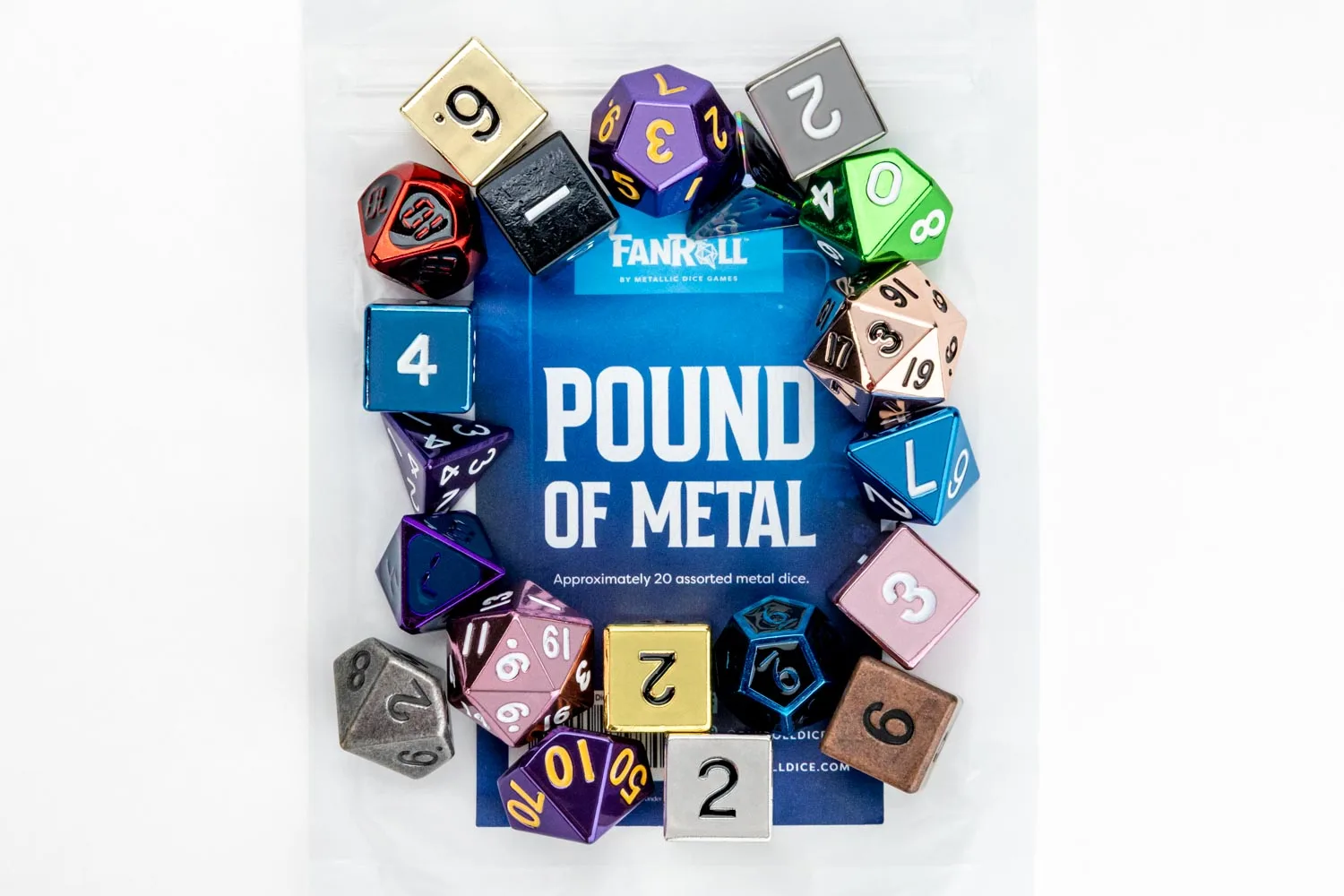
No. Resin dice popularity is rising because resin is the easiest material for inclusions and sharp edges, but metal and silicone are growing alongside it. Metal dice appeal to players who want weight and a premium feel, while silicone sharp edge dice appeal to players who want a softer landing and a grippier surface.
The practical takeaway is that material choice is now a real decision rather than a default. If you want a heavy, table-presence feel, metal is the pick. If you want a bouncy, quiet roll with sharp edges, silicone is the pick. If you want embedded art, resin is usually the pick.
- Match material to your table surface: metal on wood needs a padded tray.
- Resin and silicone are lighter to carry, which matters if you game on the move.
What should I check before buying into these trends?
First, confirm the set is full-sized if you play with standard miniatures and grids. Most polyhedral sets are 16mm, which matches the scale most players expect. Second, check the die list: a complete set should include d4, d6, d8, d10, d10% (00-90), d12, and d20.
Third, think about how you'll store and roll them. Inclusion dice and sharp edge dice both benefit from a padded tray, and metal dice essentially require one. If you're buying a gift, a set that comes with a tray or a matching bag removes the guesswork for the recipient.
- Verify the set includes all seven standard polyhedral dice.
- Budget for a padded tray if you're buying metal or sharp edge dice.
Quick checks before you buy
Confirm the die list
A complete polyhedral set should include d4, d6, d8, d10, d10% (00-90), d12, and d20. Missing a d10% is a common gap in cheaper sets.
Match material to your table
Metal needs a padded surface; resin and silicone are more forgiving but still benefit from a tray. A padded tray protects both the dice and the table.
Decide display vs. daily play
Inclusion dice are often bought for display, while sharp edge dice are bought for feel. If you want both, buy one of each. Buy the set you'll actually roll, not just the one that looks best in photos.
Sets that show these trends in practice
- Dragon Storm Inclusion Resin Dice Set: Green Dragon: Dragon Storm features dragon head inclusion dice that feature the head of a dragon perfectly captured in each of a set of 7 die, and these are full-sized 16mm polyhedral dice sets that come with 7 dice (d4, d6, d8, d10, d10%(00-90), d12, and d20). This is a clear example of inclusion dice popularity: the embedded dragon head makes each die a display piece, and the full 7-die set means it's ready for a standard tabletop game.
- Sharp Edge Silicone Rubber Dice Set: Volcanic Soot: Sharp Edge Silicone Rubber dice are fun and unique to roll, with sharp edges that provide a precise roll complemented with the slight bounce of silicone, and each full-sized, 16mm set comes with 7 dice (d4, d6, d8, d10, d10% (00-90), d12, and d20). This set shows the sharp edge dice trend in a softer material, so you get crisp edges and a quieter, bouncier roll than resin or metal.
- Turtle Dice 16mm Resin Poly Dice Set: MDG resin dice have unique inclusions that add flare to any gaming table, and these are full-sized 16mm polyhedral dice sets that come with 7 dice (d4, d6, d8, d10, d10%(00-90), d12, and d20). A good entry point if you want to test resin dice popularity without committing to a themed premium set; the inclusions add table presence at a standard size.
Inclusion dice and sharp edge dice are popular because they give players something standard dice can't: a roll that feels and looks distinct. Start with one set that matches how you actually play, and let the table decide the rest.