What Causes a Bloodstone Anklet to Change Color?
If you notice your bloodstone anklet looking different than when you first got it, you are not alone. Color changes in natural gemstones can happen for several reasons, and understanding them helps you decide whether it is normal or a sign that something needs attention.
Bloodstone is a variety of chalcedony with green and red spots. The green comes from chlorite or hornblende, and the red from iron oxide. Over time, exposure to sunlight, oils from skin, or cleaning products can subtly alter how those colors appear. The stone itself is stable, but surface oils or residue can make it look darker, duller, or even slightly yellowish.
The catalog describes this bloodstone anklet as a heart chakra stone that increases vital energy and courage. While its metaphysical properties are not affected by minor surface changes, the visual appearance can shift with wear.
What the Catalog Confirms About This Bloodstone Anklet
-
Bloodstone Bracelets, Anklets | Gemstone Therapy: Gemstone Therapy Bloodstone Bracelets and Anklets - Courage. Heart chakra gemstone. Increase vital energy, your will to keep going in tough times. Useful for women's monthly cycle, for men's core strength. This confirms the stone is meant for daily wear and energetic support, so any color change is likely from use rather than a defect.
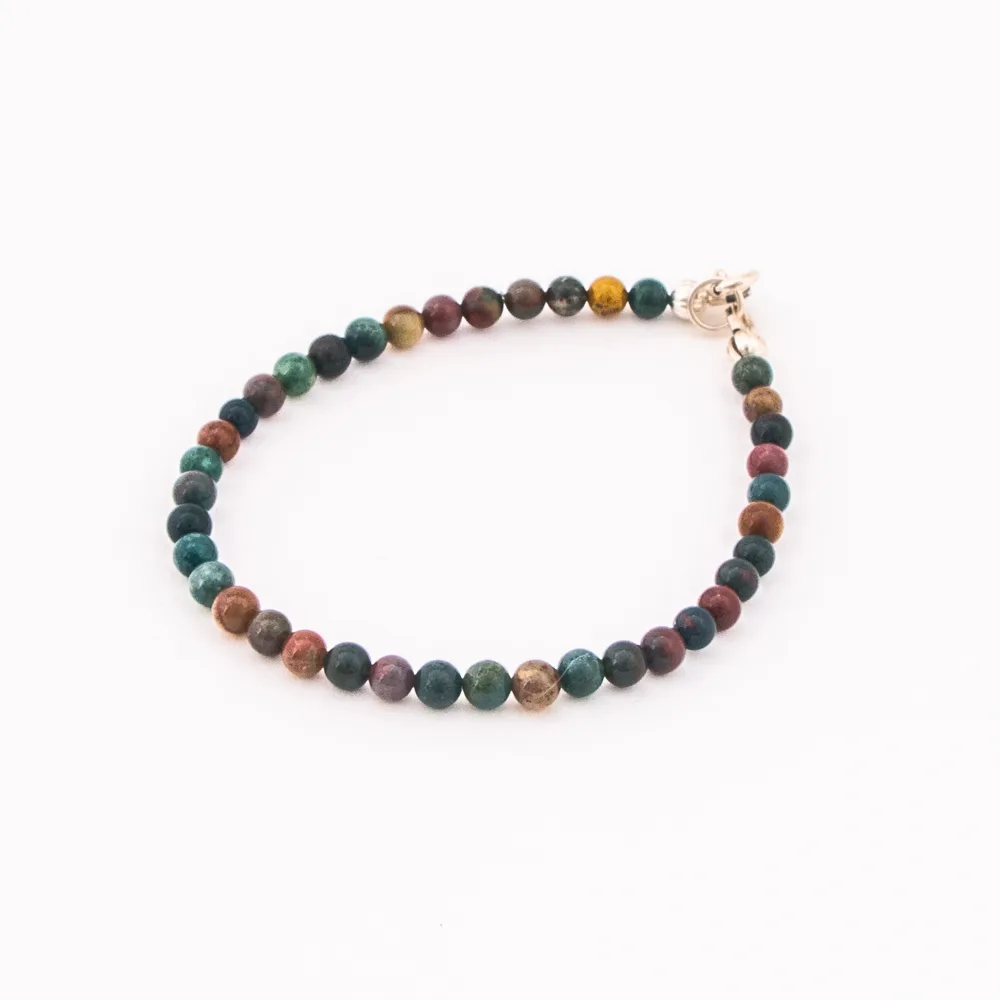
Bloodstone Bracelets, Anklets | Gemstone Therapy
Common Reasons for Apparent Discoloration
The most common cause is a buildup of oils, lotions, or soap residue. Over time, these can create a film that mutes the stone's natural green and red. Simple cleaning with mild soap and water often restores the original look.
Another factor is prolonged exposure to direct sunlight. While bloodstone is more lightfast than some stones, UV can slowly fade the green or yellow the red spots. Avoid leaving the anklet on a windowsill or in a hot car.
Chlorine from pools or hot tubs can also affect the stone. If you swim with the anklet, rinse it in fresh water afterward. The catalog does not specify water resistance, so it is best to remove it before swimming.
How to Clean Your Bloodstone Anklet Safely
Cleaning is straightforward and can often reverse surface discoloration. Use a soft cloth and lukewarm water with a drop of mild dish soap. Gently wipe the stones, rinse well, and pat dry. Avoid harsh chemicals, ultrasonic cleaners, or steam.
- 1. Prepare a gentle cleaning solution: Mix a few drops of mild dish soap into a bowl of lukewarm water.
- 2. Clean the stones: Dip a soft cloth or soft brush into the solution and gently wipe each stone. Pay attention to crevices where residue collects.
- 3. Rinse thoroughly: Hold the anklet under running lukewarm water to remove all soap residue. Do not use hot water.
- 4. Dry completely: Pat the anklet with a clean, soft cloth and let it air dry away from direct heat or sunlight before storing.
When to Accept Natural Variation
Sometimes a bloodstone anklet's color change is simply natural variation. Each stone is unique, and the red spots may become more or less prominent as the stone is worn. This is not a sign of damage. The catalog does not specify that color change indicates a problem, so if the stone still feels energetically right, you can continue using it without worry.
If the color change is accompanied by cracks, chips, or a rough surface, that could indicate physical damage. The catalog does not provide hardness or durability specs, so treat the stone with the same care you would any natural gemstone.