Quick Answer
Most slipping straps are a fit problem, not a garment defect. Shorten the slider until the strap sits flat without digging in, then check whether the band is riding up; if the band is loose, tightening the straps alone will not hold. If the strap still slides after both adjustments, the strap material or width is wrong for your shape and you should switch styles rather than keep tightening.
Symptom: The Strap Slides Down Your Shoulder
A strap that creeps down the shoulder within an hour of wearing is the most common complaint, and it rarely means the elastic has failed. Watch where the strap sits when it slips: if it has moved outward toward the arm, the band is probably too loose and the whole garment is shifting. If it stays in place on the shoulder but the slider has crept down the strap, the adjuster is simply not holding tension.
Cause: Band Fit, Strap Angle, or Material
Three causes account for nearly every slipping strap. First, a band that is too loose rides up in back, which pulls the straps outward and off the shoulder. Second, straps set too wide apart for your frame will never sit securely no matter how tight you make them. Third, smooth or satin-finish strap material slides more than textured elastic, especially on narrow shoulders or over silky clothing.
Strap width matters too. Very thin straps concentrate pressure and are more likely to shift, while wider elastic distributes tension and grips better. If your garment uses thin decorative straps, treat them as styling rather than support and plan accordingly.
Fix: Adjust in This Order
Start with the band, not the straps. Fasten on the loosest hook that stays snug, then tighten the straps until they lie flat against the shoulder without pressing into the skin. You should be able to slide one finger under a strap comfortably. If the band still rides up, move to a tighter hook before touching the straps again.
For straps that creep through the slider, a small fabric-safe fix helps: fold the strap tail back through the slider once more so friction holds it, or add a tiny stitch with matching thread if you are comfortable sewing. Never use tape, glue, or pins on sheer mesh or embroidered fabric, since these can snag or leave residue.
- Tighten the band first, then the straps, then recheck after five minutes of wear.
- Slide the adjuster to the top of the strap rather than the middle for better grip.
- If the strap crosses your shoulder bone rather than sitting in the hollow, the set is cut too wide for you.
When to Stop Adjusting and Choose Another Option
Stop adjusting if the strap leaves red marks, if you need to tighten it past the end of the slider, or if it slips again within minutes of a correct adjustment. At that point the problem is the cut or the strap material, and no amount of tightening will solve it. Look for a set with wider straps, a closer strap placement, or a different silhouette such as a strapless or halter design that removes the shoulder strap entirely.
Strappy and Bondage Styles Need a Different Approach
Multi-strap and bondage-inspired lingerie adds decorative straps that are not meant to carry weight, so they behave differently from support straps. These straps often sit loosely by design, and tightening them too much distorts the intended look and can dig into the skin. Adjust them for visual symmetry first, then adjust the main support points separately.
Because decorative straps are usually thinner and smoother, they slide more easily. If comfort matters more than the exact strap pattern, choose a set where the decorative straps are wide enough to stay put, or wear it for shorter periods.
Strap Slip Diagnosis
- Band rides up in back: The band is too loose, so it lifts and pulls the straps outward off the shoulder. Fasten on a tighter hook and recheck before adjusting straps. If the band stays level after tightening, the straps should stop sliding.
- Strap creeps through the slider: The adjuster is not holding tension, often because the strap material is smooth. Re-thread the tail through the slider once more or add a small stitch. If it still creeps after re-threading, the strap material is the limiting factor.
- Strap sits too far out on the shoulder: The strap placement is cut too wide for your frame, so it cannot sit in the hollow of the shoulder. No adjustment will fix this. Choose a closer-set strap or a strapless or halter silhouette instead.
- Red marks or digging after adjustment: You have tightened past the point of comfort to compensate for a fit problem elsewhere. Loosen the strap and address the band or the cut. Stop tightening. Discomfort means the set is the wrong shape for you.
Sets Worth Checking for Strap Fit
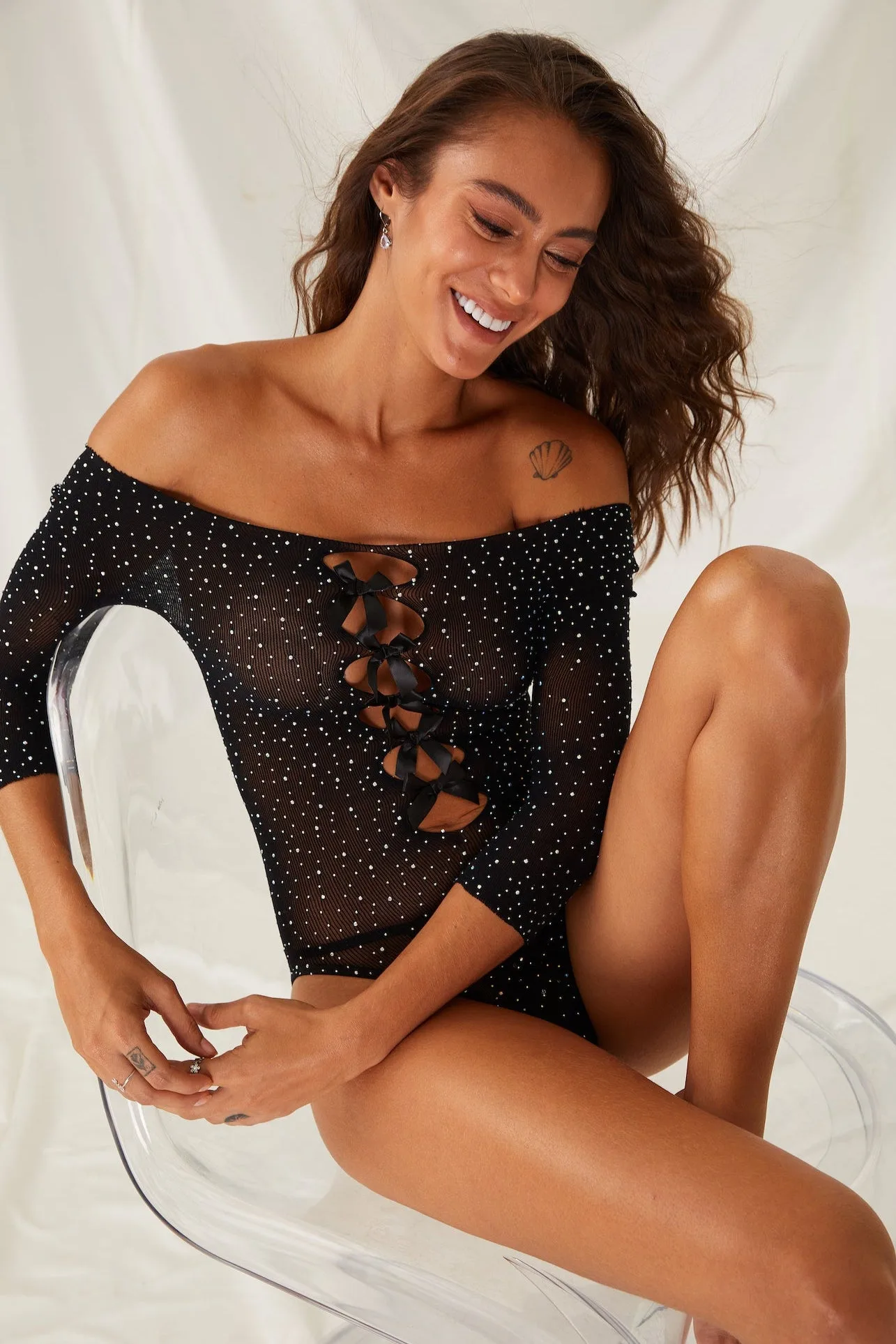
- Two Piece Black Bondage Lingerie with Straps: Two Piece Black Bondage Lingerie with Straps features strap details with mesh see-through fabric, in 90% polyester and 10% (blend as listed). The strap details are a design feature rather than load-bearing support, so adjust them for symmetry and comfort instead of tightening for lift.
- Floral Bridal Lingerie Set with Stockings: Floral Bridal Lingerie Set with Stockings includes a matching garter belt, thong, and knee-high stockings, with sheer white mesh and soft ruffle trim. The garter belt anchors the stockings separately from the shoulder straps, so strap tension is not carrying the whole look and is easier to keep in place.
- Royal Blue Sheer Lingerie: Royal Blue Sheer Lingerie uses sheer embroidered mesh with a wave pattern and an underwire bra. An underwire bra provides structured support at the bust, which reduces the amount of tension you need to put on the shoulder straps to keep the set in place.