Quick answer
Magic Puzzle pieces are die-cut from original hand-illustrated art, so small variations in fit are normal. If a piece feels loose or tight, check that the surrounding pieces are seated flat and that the artwork lines up before pressing. Only force a connection when the image and shape both match; otherwise, the piece likely belongs somewhere else.
Why do some pieces feel loose and others tight?
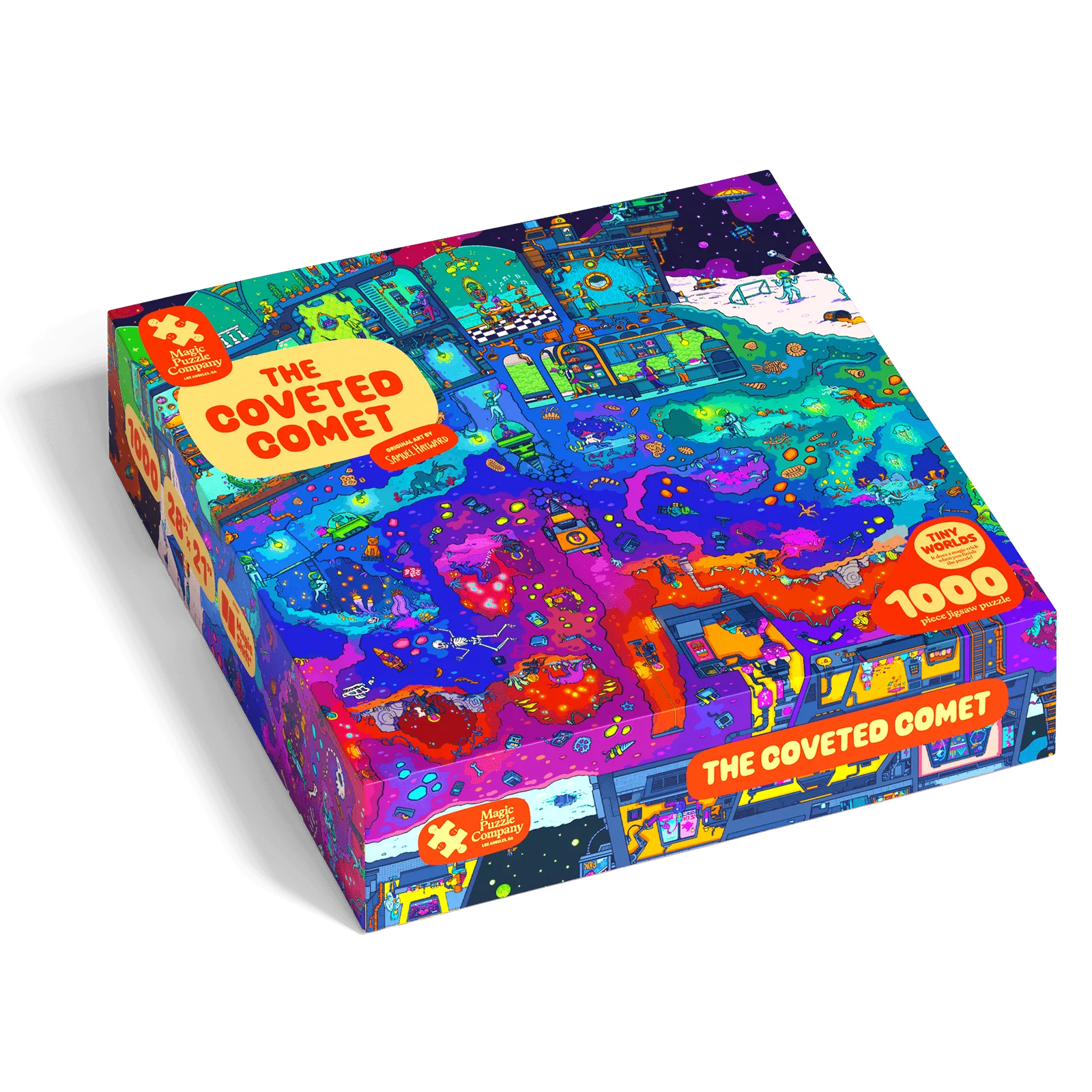
Each Magic Puzzle is cut from a single sheet, and the die can wear slightly across a production run. That means a piece from one area of the puzzle may sit a touch looser than a piece from another area. It is not a sign that you have the wrong piece. The same variability explains why one edge may need a gentle nudge while another drops in on its own. If you are assembling a puzzle like The Coveted Comet, which is designed to be solved rightside-up or upside-down, expect the fit to feel consistent in both orientations because the cut is the same; only your visual reference changes.
How can I tell if a piece is misaligned or just in the wrong spot?
Look at the printed lines, not just the shape. On a Magic Puzzle, the artwork is continuous, so a correct connection usually makes the illustration flow without a visible jump. If the image lines up but the piece still resists, check whether the surrounding pieces are pressed fully flat. A single unseated neighbor can make a correct piece feel wrong. If the image does not line up, the piece belongs elsewhere, even if the knob and hole seem to match. This is especially useful in puzzles with conjoined whimsy pieces, like The Coveted Comet, where two unique pieces bring details to life and can look like they should connect when they should not.
What should I do if a piece will not go in without force?
Stop pushing. Forcing a piece can bend the cardboard or damage the artwork. Instead, lift the piece and the surrounding pieces, then reseat them one at a time. If the fit is still tight, try rotating the piece slightly; sometimes a tiny shift in angle is all that is needed. If the piece is loose, do not glue it or add tape. A loose fit is normal and will often tighten once more of the puzzle is connected. If you are working on a larger build like the Series 5 Bundle, which includes The Drippy Trip, The Golden Goose, and The Coveted Comet, keep the sections separate until each one is stable, then join them.
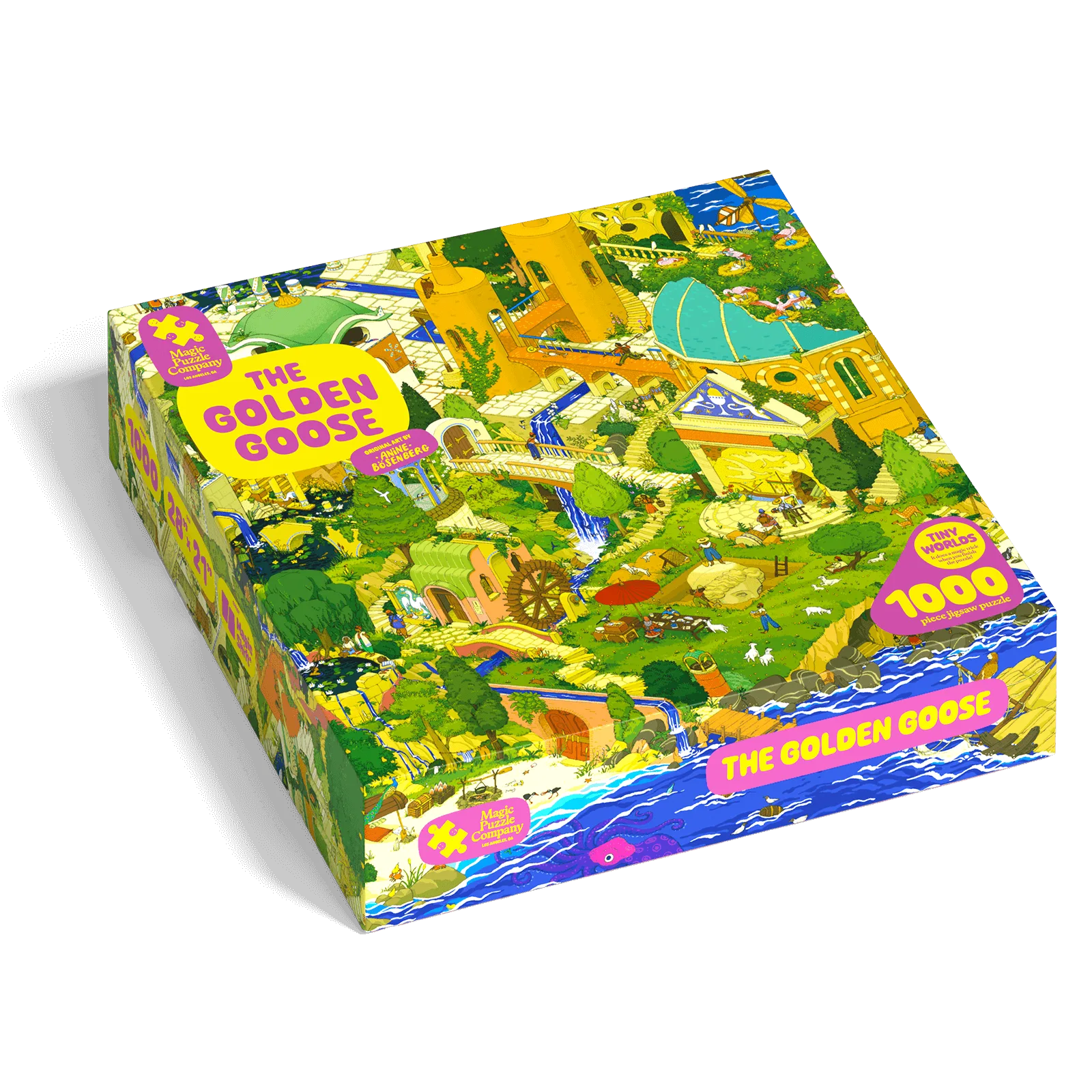
The Golden Goose
Magic Puzzle fit FAQ
Is it normal for pieces to fit loosely?
Yes. Die-cut cardboard varies slightly, and a loose piece often tightens once more of the puzzle is connected. Do not add glue or tape. If the image lines up, leave it.
Why does a piece fit in one spot but not another?
The cut is not perfectly uniform across the sheet, and your surrounding pieces may not be seated flat. Check the artwork first, then reseat neighbors. Image match beats shape match.
Can I force a tight piece?
No. Forcing can bend the cardboard or damage the print. Lift and reseat, or rotate the piece slightly. If it still resists, it likely belongs elsewhere. Stop before you bend.
Product facts
- The Coveted Comet: The Coveted Comet is our first ambidirectional puzzle that you can solve rightside-up or upside-down, and it introduces conjoined whimsy pieces. You can build it in either orientation, and the special paired pieces can make alignment checks more important because two pieces may look like they belong together when they do not.
- Series 5 Bundle: The Series 5 Bundle includes The Drippy Trip, The Golden Goose, and The Coveted Comet. If you are assembling multiple puzzles, keep each one in its own tray or section so pieces from different cuts do not get mixed up and cause false fit problems.
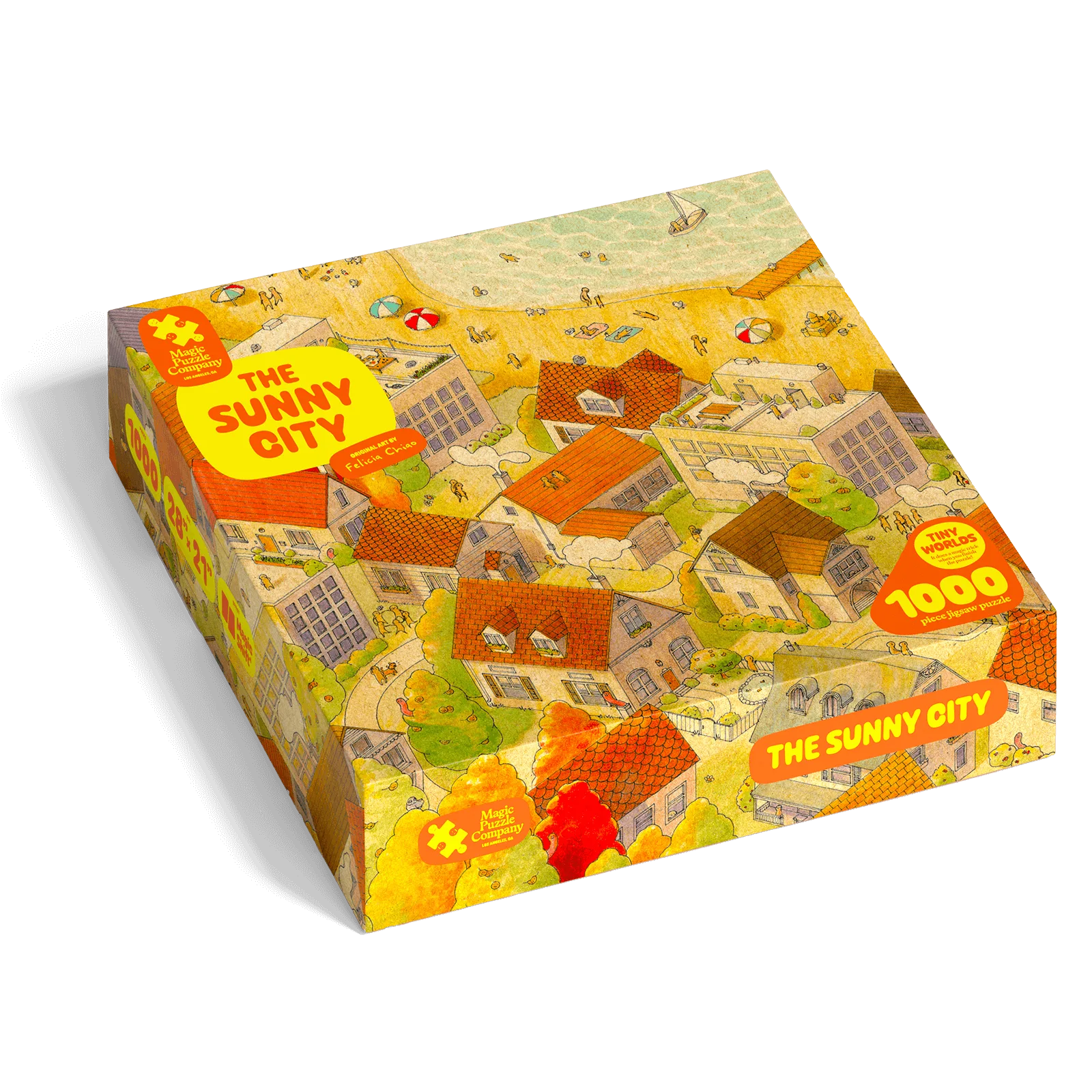
- The Sunny City: The Sunny City is part of Series 1 and features hand-illustrated scenes. Hand-illustrated art means the image is your best guide for alignment; rely on the artwork, not just the shape, when a piece feels off.