Start with the three usual suspects
If you wake up with damp sheets, the leak is rarely a mystery. In most cases it comes down to one of three things: the pad moved out of place, the pad reached its absorbency limit, or you wore it longer than your flow required. Before you buy anything new, check these in order. A quick adjustment often solves the problem without changing your whole routine.
Overnight leaks can also happen when your letdown is stronger at night, or when you go longer between feedings. The goal is to match your pad and your changing schedule to the reality of your flow, not to force a single pad to handle every night the same way.
A simple placement check for overnight wear
Placement is the first thing to rule out because it’s free to fix. These steps follow the product’s supplied instructions and apply to any disposable pad with adhesive strips.
- Remove the pad from its wrapper: Keep the wrapper away from your baby and dispose of it properly.
- Peel off the protective sheets from the two adhesive strips: Both strips need to be exposed so the pad can stick to your bra.
- Center the pad in your bra with the contoured edges at the sides: The contoured shape is designed to sit smoothly against your body; if the edges point up or down, the pad can bunch and leave gaps.
- Press the adhesive strips firmly onto the bra fabric: The strips hold the pad in place. If they don’t make solid contact, the pad can shift while you sleep.
When the pad itself is the limit
If placement is correct and you still leak, the pad may be saturated. Disposable pads are for one-time use and should be changed often to maintain healthy skin; a general guideline is after each feeding. At night, that might mean changing once during the night if you feed or pump. If you routinely wake up with a fully wet pad, your overnight flow may simply exceed what one pad can hold for that stretch.
Absorbency varies by product. Lansinoh Stay Dry Disposable Nursing Pads are described as absorbing 20 times their weight in liquid, with an InvisiLock core that captures and disperses moisture and a waterproof lining at the back. That combination is designed for day-and-night protection, but no disposable pad is meant to be worn indefinitely. The practical fix is to change the pad when it feels wet, not to stretch it further.
What the Stay Dry pad offers for overnight use
-
Stay Dry Disposable Nursing Pads: Absorbs 20 times its weight in liquid for maximum protection day and night. This gives you a concrete capacity benchmark when deciding whether a single pad can realistically last a full night for your flow.
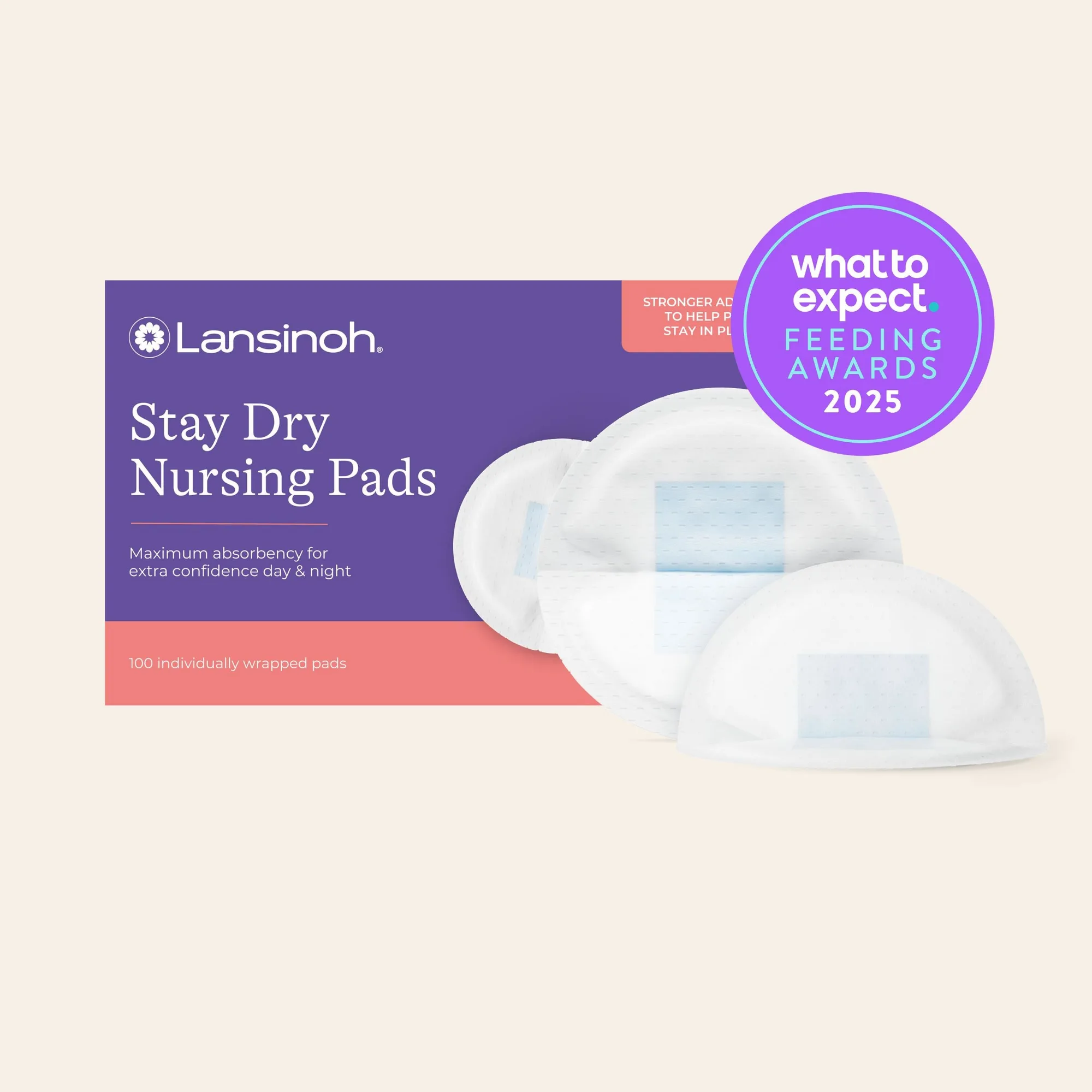
Stay Dry Disposable Nursing Pads
-
Stay Dry Disposable Nursing Pads: Features a waterproof lining at the back of the pad. The back lining is the barrier between moisture and your clothing; if the pad shifts and the lining no longer covers the leak point, wetness can escape.
-
Stay Dry Disposable Nursing Pads: Individually wrapped for convenience on the go. A spare wrapped pad in your nightstand or diaper bag makes middle-of-the-night changes quick and hygienic.
Heavy letdown at night: what you can and can’t control
A strong letdown can release more milk in a short burst than a pad can absorb instantly, especially if you’re lying down and the pad isn’t pressed firmly against your breast. The supplied information does not include specific guidance for heavy letdown, so treat this as a diagnosis point rather than a set of instructions. If you notice leaks happen right after letdown, try changing your pad just before that time or adding a fresh pad after your last evening feeding. Some parents also find that a combination of disposable and washable pads works well, using the disposable pad when maximum absorbency matters most.
What you shouldn’t do is assume the pad is faulty. Check placement and change timing first. If leaks persist with a correctly placed, freshly changed pad, your flow may be higher than the pad can handle for that duration, and a different pad or more frequent changes may be the answer.
Quick fixes to try tonight
- Re-seat the pad before bed: Peel and re-stick if the adhesive has loosened, or start with a fresh pad so the strips make full contact.
- Change once during the night if you feed or pump: A general guideline is to change after each feeding; at night, that may mean one change.
- Keep a wrapped spare within reach: Individually wrapped pads stay clean and make a 2 a.m. change faster.
- Store pads in a dry location: Moisture can weaken the adhesive before you even open the wrapper.
What this guide can’t tell you
The supplied information does not include a specific overnight wear time, a recommended number of pads per night, or guidance for medical conditions that cause excessive leaking. If you’re changing pads far more often than after each feeding and still soaking through, or if you have skin irritation, talk to a healthcare professional. This article is about matching your pad routine to your flow, not about diagnosing or treating any condition.