Quick Answer
If your extrait fades within a few hours, the fragrance is rarely the problem. Dry skin, spraying on fabric instead of pulse points, and applying right after a shower are the three most common culprits. Fix those first, and if the scent still vanishes, the formula itself may simply not project on your skin and it is time to choose a different extrait.
Symptom Check: Is It Fading or Are You Going Nose-Blind?
Before you blame the formula, rule out olfactory fatigue. Your nose adapts to constant scent signals within 20 to 30 minutes, so a fragrance that feels gone may still be fully present to everyone around you. Ask one person near you whether they can still smell it before you change anything. If they can, the problem is perception, not performance, and adding more sprays will only overwhelm them.
- Scent gone to you but noticed by others = nose-blindness, not fade.
- Scent gone to everyone within 2 hours = a real longevity problem worth fixing.
- Scent fades after 4 to 6 hours on extrait = normal for many skin types.
Cause 1: Dry Skin Releases Scent Faster
Fragrance molecules evaporate faster from dry, unmoisturized skin because there is less oil and water to hold them. This is the single most common reason an extrait de parfum underperforms. Apply an unscented moisturizer or a thin layer of petroleum-free balm to pulse points, let it absorb for a minute, then spray. You are not changing the perfume, you are giving it something to cling to.
Cause 2: Application Spots That Waste Extrait
Extrait is concentrated, so placement matters more than quantity. Spraying on clothing, hair, or the air in front of you wastes the most expensive part of the formula. Target warm, moving areas: inner wrists, the base of the throat, behind the ears, and the inner elbow. Do not rub your wrists together after spraying, as friction heats the oils and shortens the top notes.
Cause 3: Timing and Layering Mistakes
Applying immediately after a hot shower is a trap. Steam and residual moisture push the alcohol and top notes off your skin faster. Wait 10 to 15 minutes until your skin is fully dry and back to normal temperature. If you layer with a matching body product, apply the lotion first and the extrait second, never the reverse. Also avoid spraying over freshly applied sunscreen, which creates a barrier that traps and diffuses the scent.
When to Stop Adjusting and Switch Formulas
If you have moisturized, repositioned your sprays, and waited for dry skin, and the extrait still disappears in under two hours, your skin chemistry is simply not holding that particular composition. This is not a defect. Some resinous, spicy extraits cling to skin for 8 hours or more, while lighter floral or citrus-forward extraits naturally sit closer and fade sooner. Choose a base profile that matches how your skin behaves, not how long you want it to last.
Diagnosis: Match the Symptom to the Fix
- Fades within 1 hour on everyone: Skin is likely dry or the application area is wrong. Moisturize pulse points, wait 15 minutes after showering, and spray on inner wrists and throat instead of clothing. If it still fades in under 2 hours after these changes, switch to a resin or amber-based extrait.
- Fades on you but others still smell it: This is nose-blindness, not a longevity failure. Stop adding sprays, which only overwhelms people around you. Take a 24-hour break from the scent, then re-test on a single pulse point.
- Fades after 4 to 6 hours: This is normal extrait behavior for most skin types and does not need correction. Carry a travel spray for a single evening touch-up rather than reapplying heavily.
- Fades fast even on moisturized skin: Your skin chemistry does not hold that particular composition. Lighter floral or citrus-forward extraits naturally sit closer and disappear sooner than resinous ones. Choose a resin or amber-heavy extrait, or use the matching candle if you want the scent without depending on skin.
Extraits Built for Different Skin Behaviors
- Ambre Chromatique: Ambre Chromatique is an extrait de parfum built around vivid spices, liqueur-like notes, and colored amber resins, described as a fragrant trek toward benzoin resins. Resin-heavy extraits tend to cling longer on dry skin than citrus or light floral compositions, making this a practical choice if your usual scent fades within two hours.
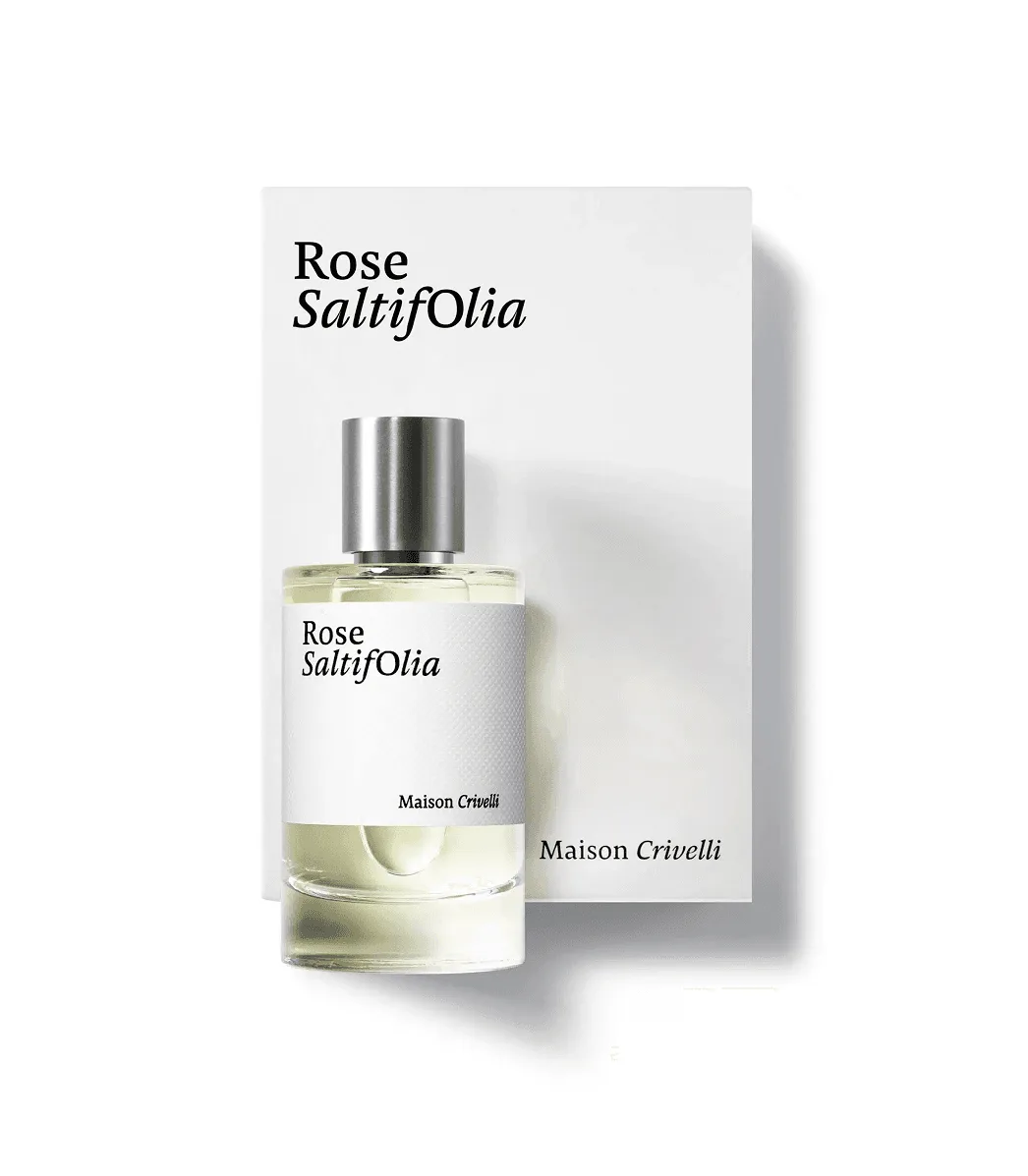
- Rose Saltifolia: Rose Saltifolia pairs a sparkling Centifolia rose with a salty, silky seaweed absolute, inspired by a seaside walk through rose fields. The fresh, crystalline character means it will sit closer to the skin by design; if you want projection, apply it to moisturized pulse points rather than expecting resin-level tenacity.
- Hibiscus Mahajád: Hibiscus Mahajád is a scented candle that reproduces the flamboyant, floral, and warm facets of the matching extrait de parfum. If your skin genuinely will not hold the extrait, the candle lets you keep the same scent profile in a room where longevity is not dependent on your skin chemistry.