Quick answer
Most loose or poorly fitting puzzle pieces are caused by paper dust, humidity swelling the cardboard, or a warped board, not by a manufacturing defect. Start by cleaning dust from the tabs and sockets, then check the room's humidity and your building surface. If pieces still won't hold after that, the puzzle is likely worn or damaged and is a better candidate for gluing and framing than for repeated rebuilding.
Symptom: Pieces fit loosely and pop out when you nudge the puzzle
If individual pieces slide apart with almost no resistance, or a completed section lifts when you shift it, the cause is usually dust or a slight size mismatch from moisture. Cardboard puzzle pieces rely on a snug friction fit, and even a thin film of paper dust on the tabs reduces that grip. Before you assume the puzzle is defective, run a dry, soft brush or a clean makeup brush along the tabs and sockets of a few loose pieces and try again. If the fit improves, the problem is surface contamination, not the cut.
Symptom: Pieces peel apart at the edges or leave dust on your fingers
Peeling layers and visible dust mean the printed paper is separating from the cardboard core. This happens with age, repeated assembly, or exposure to damp air followed by dry heat. Once the layers separate, no amount of pressing will restore a clean edge, because the adhesive bond is already broken. You can slow the damage by storing the puzzle flat in a dry place, but you cannot reverse it. If the peeling is widespread, plan to glue and frame the puzzle rather than rebuild it.
Symptom: The whole puzzle rocks or refuses to lie flat
A puzzle that rocks on the table usually has a warped board or is being built on an uneven surface. Test by moving the same section to a different table or a large cutting board. If it lies flat there, your building surface is the problem. If it still rocks, the puzzle board itself has absorbed moisture unevenly. You can sometimes flatten a mildly warped puzzle by placing it under heavy books for a few days in a dry room, but a severely warped puzzle will never sit perfectly flat.
How to glue a jigsaw puzzle when the fit is already compromised
Gluing is the right fix when you want to preserve a completed puzzle that no longer holds together on its own. Work on a sheet of wax paper or parchment, apply a thin layer of puzzle glue or clear-drying craft glue across the surface with a spreader, and let it cure fully before moving the puzzle. Glue seals the pieces together permanently, so do this only after you are certain you will not rebuild the puzzle. If you plan to frame it, glue first, then mount it on foam board or a rigid backing.
Diagnosis: match the symptom to the fix
- Loose fit with no visible damage: Brush dust from tabs and sockets, then rebuild on a hard, flat surface in a room with moderate humidity. If the fit tightens, the puzzle is fine and just needed cleaning.
- Peeling edges or dusty fingers: The paper layer has separated from the core. Store the puzzle flat and dry, but expect the damage to remain. Stop rebuilding and glue the puzzle if you want to keep it.
- Warped board or rocking sections: Move the puzzle to a different flat surface. If it still rocks, press it under heavy books in a dry room for a few days. If it stays warped, the puzzle is a candidate for gluing and framing, not repeated assembly.
Puzzles built for tighter fits
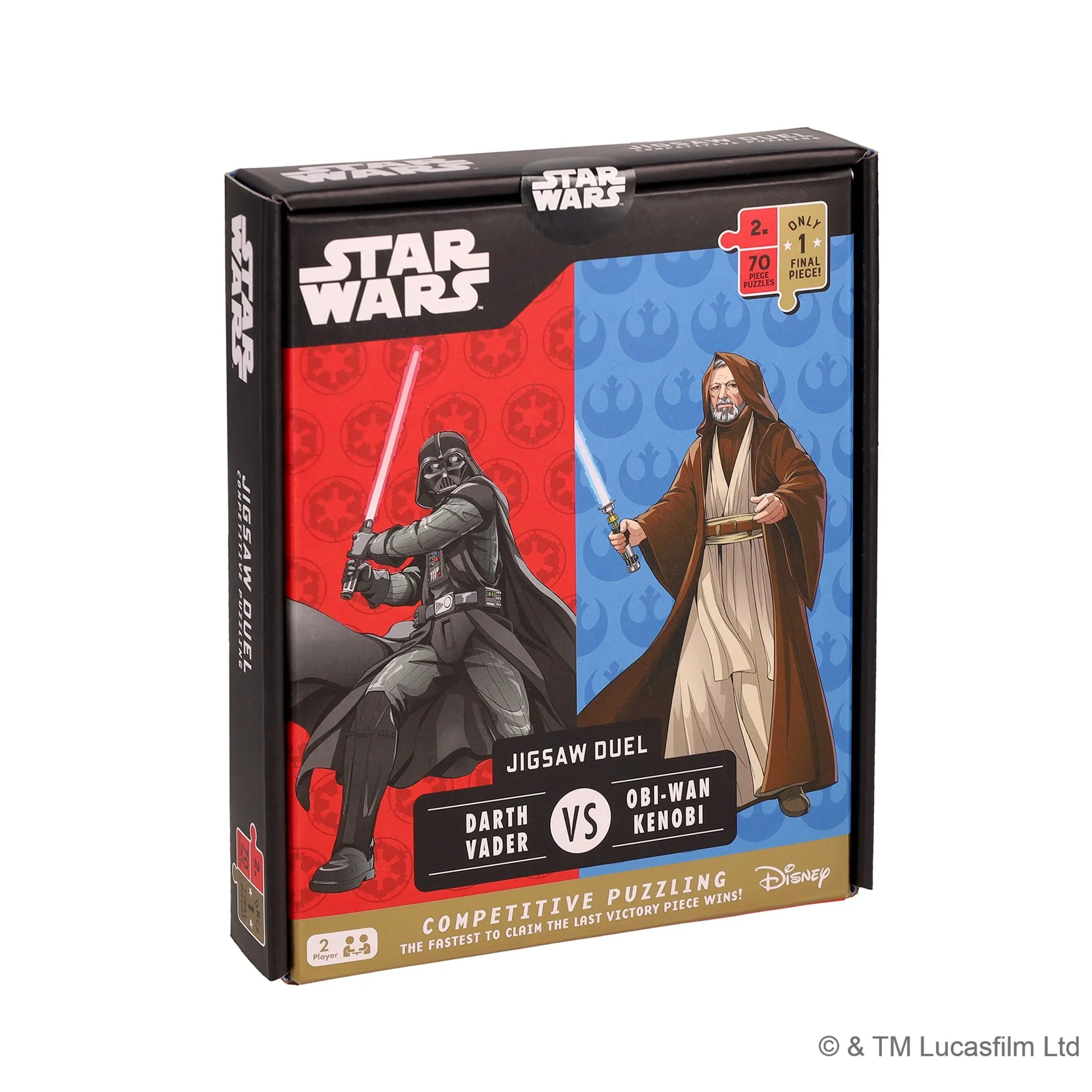
- Star Wars™ Obi-Wan Kenobi™ vs. Darth Vader™ Jigsaw Duel: Each side has a 70-piece jigsaw to complete, but there is only one final piece that fits both puzzles. A duel puzzle depends on a precise final-piece fit, so keeping the pieces clean and dry matters more than it does with a standard puzzle.
- Star Wars Millennium Falcon Jigsaw Puzzle and Trivia: Connect 1000 pieces to complete this legendary ship in two ways. On one side is the Millennium Falcon in all its glory, on the other side is a detailed schematic of the iconic vessel. A 1000-piece double-sided build has many more friction points, so dust and humidity will show up as loose sections long before the puzzle is finished.
- Cheese + Wine 500-Piece Jigsaw Puzzle: Fill the fridge and savor the moment as you connect the 500 pieces to reveal 15 ideal cheese and wine combinations. A 500-piece puzzle is a good size to glue and frame once completed, which is a practical option if the pieces have started to loosen.