Quick answer
If your Pyrex lid won't snap shut, stop forcing it. Check three things in order: whether food or a dried seal is trapped in the rim, whether the lid is the correct match for that container, and whether the lid itself has warped. Cleaning and drying the rim fixes most loose lids. A warped or cracked lid cannot be repaired and should be replaced with a lid rated for that exact container.
Start with the rim, not the lid
Before you blame the lid, run a finger around the glass rim and the inside groove of the lid. A single grain of rice, a smear of hardened sauce, or a bit of dried egg in the channel will hold the seal open just enough that the tabs never reach the click. This is the most common reason a Pyrex plastic lid feels loose even though nothing is wrong with it.
Wash both parts in warm soapy water, rinse, and dry the rim and the lid groove completely with a towel. Water alone can make a plastic seal slip instead of grip. Then set the lid on the container, press the center down, and work around the edge pressing each tab. If you hear and feel the snap, the lid was fine and the rim was the problem.
- Wipe the glass rim, not just the lid.
- Dry the seal groove before snapping.
- Press the center first, then the tabs.
Confirm the lid actually belongs to that container
Pyrex and Snapware lids are made in specific shapes and sizes, and a lid that is one size off can look close enough to try. Round lids will not seal a square container, and a lid made for a different capacity will not line up with the rim even if the shape matches. If the lid rocks, sits high on one side, or only two tabs reach, it is probably the wrong lid for that base.
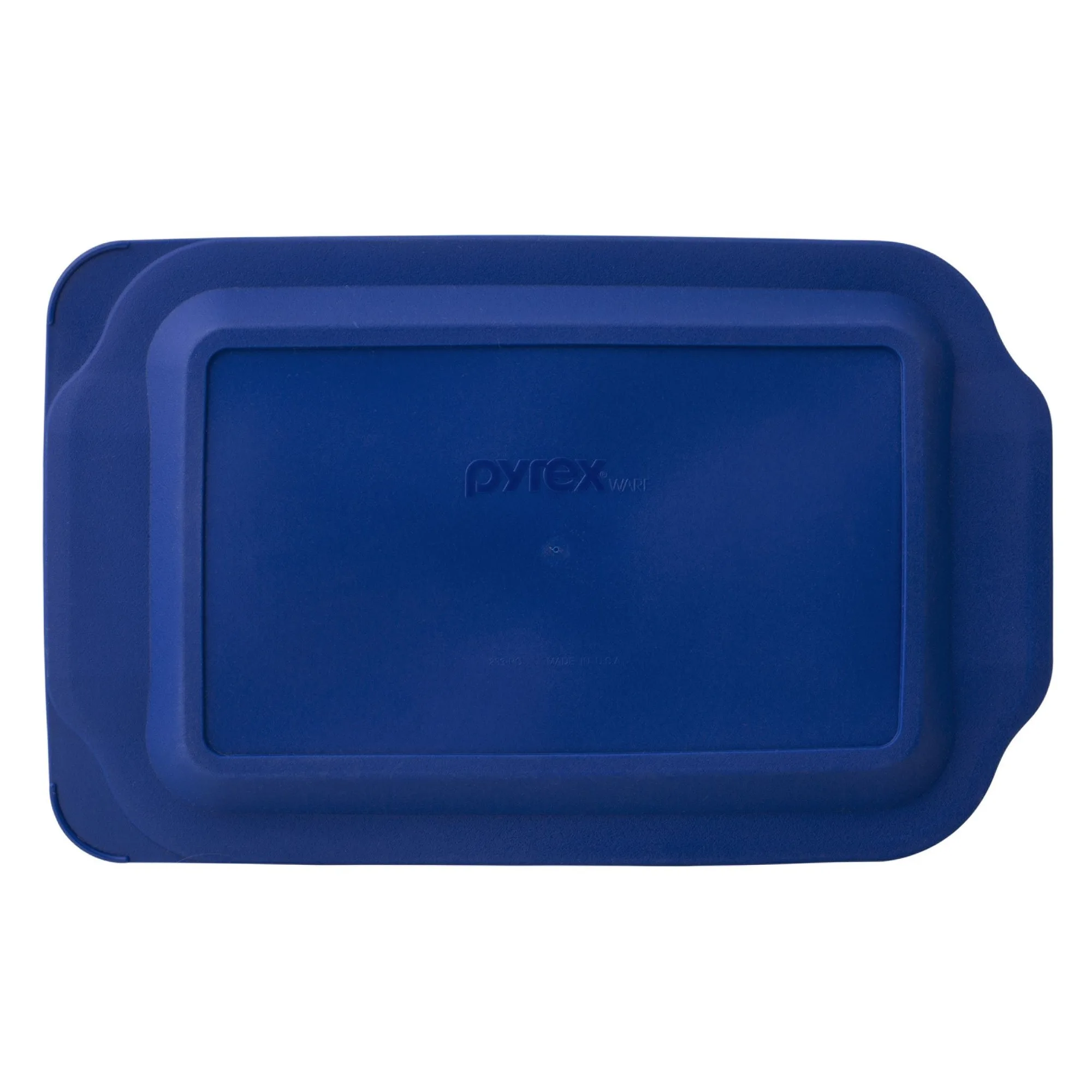
The reliable check is to match the lid to the container model rather than to the diameter. Pyrex lists compatible items for replacement lids, and using that list is faster than measuring. For example, the Pyrex Blue Plastic Lid for the Watercolor Collection 3-quart Rectangular Baking Dish is designed to fit the Pyrex 3-quart Rectangular Glass Baking Dish, model 233. That kind of model-level match is what you want, not a guess based on how the lid looks.
- Round lids do not fit square containers.
- Match by model number when the listing provides one.
- A lid that only partly engages is likely the wrong size.
How to tell if the lid is warped
If the rim is clean and the lid is the right match, look at the lid itself. Set it on a flat counter and press the corners or edges. A lid that rocks, shows a wavy edge, or has a seal that no longer sits in its channel has likely warped. Heat is the usual cause: dishwasher drying cycles, hot food sealed while still steaming, or a lid left near a hot pan.
Warping is not reversible. You can sometimes get a warped lid to close once by warming it gently, but it will not hold a seal and it will not stay closed in the fridge or freezer. Once a lid rocks on a flat surface, treat it as done and move to a replacement rather than continuing to force it.
- Lay the lid flat and press the edges.
- A rocking lid is a warped lid.
- Do not keep forcing a warped lid onto glass.
When to stop troubleshooting and replace
Stop and replace the lid if the seal is cracked, torn, or missing; if the lid is warped; if the plastic tabs are white or stressed at the hinge; or if you have cleaned and matched the lid and it still will not snap. Continuing to force a bad lid can chip the glass rim, which turns a cheap lid problem into a container problem.
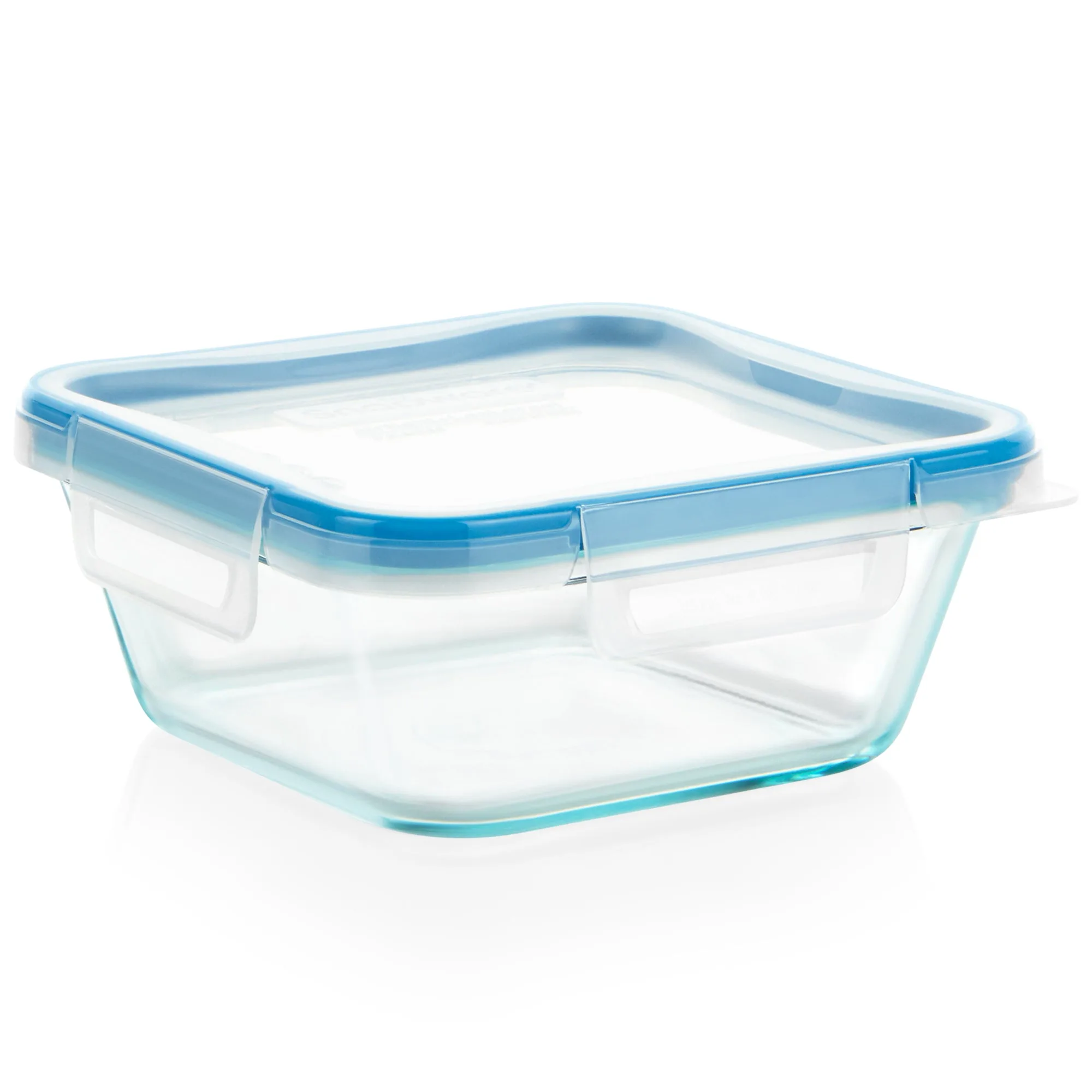
Replacement is also the better choice when the container is still in good shape. The Snapware Total Solution Pyrex Glass 4-cup Square Food Storage with Plastic Lid is compatible with the Snapware Total Solution Medium Square Plastic Lid with Light Blue Seal, so you can keep the glass and swap only the lid. That is usually less expensive than replacing a whole set.
- Cracked, torn, or missing seal: replace.
- Warped or rocking lid: replace.
- Stressed or whitened tabs: replace.
- Good glass plus a bad lid: buy the lid only.
Care habits that keep lids snapping
Most lid failures come down to heat and force. Let food cool slightly before sealing, and leave a little headroom so steam does not press against the lid from the inside. When you reheat, lift a corner or use a vent rather than sealing the container tight. Check your dishwasher's drying setting and place lids on the top rack away from the heating element.
Store lids flat or stacked loosely instead of jammed into a drawer where the seal can crease. When a lid is not in use, keep it with its matching container so you are not guessing later. These habits do not fix a lid that has already warped, but they are what keeps the replacement lid snapping for years.
- Cool food slightly before sealing.
- Vent the lid when reheating.
- Top rack, away from the drying element.
- Store lids flat, not folded.
Lid diagnosis: symptom, cause, action
- Lid rocks and never clicks: The lid is likely the wrong shape or size for the container, or the plastic has warped. Clean and dry the rim first, then lay the lid flat on the counter and press the edges. If it rocks, it is warped. Warped or mismatched: replace the lid. Do not force it.
- Lid snaps but pops open in the fridge: A cracked or stretched seal, or food trapped in the groove, is preventing a full seal. Inspect the seal for tears and clean the groove with a soft brush. Torn seal: replace. Clean groove: retest with a dry rim.
- Lid fits one container but not another: Pyrex and Snapware lids are model-specific. A lid made for one capacity or shape will not seal a different base even if it looks close. Match by model number, not by appearance.
- Lid was fine until the dishwasher: Heat from a drying cycle or a heating element can warp plastic lids. Move lids to the top rack and use a lower drying setting. Prevent the next failure; replace the warped lid.
- Tabs are white or cracked at the hinge: Stressed plastic will not hold tension. This is a material failure, not a cleaning problem. Stop using it and order a replacement lid.
Replacement options worth knowing
- Snapware® Total Solution® Pyrex® Glass 4-cup Square Food Storage with Plastic Lid: Snapware Total Solution Pyrex Glass 4-cup Square Food Storage with Plastic Lid is compatible with the Snapware Total Solution Medium Square Plastic Lid with Light Blue Seal. If your 4-cup square glass base is fine but the lid is warped or cracked, you can replace just the lid instead of buying a new container.
- Pyrex® Blue Plastic Lid for Watercolor Collection 3-quart Rectangular Baking Dish: Pyrex Blue Plastic Lid for the Watercolor Collection 3-quart Rectangular Baking Dish is designed to fit the Pyrex 3-quart Rectangular Glass Baking Dish, model 233. This is a model-specific lid, so it is the right choice only if you own that exact 3-quart rectangular baking dish. It will not fit a round or square container.
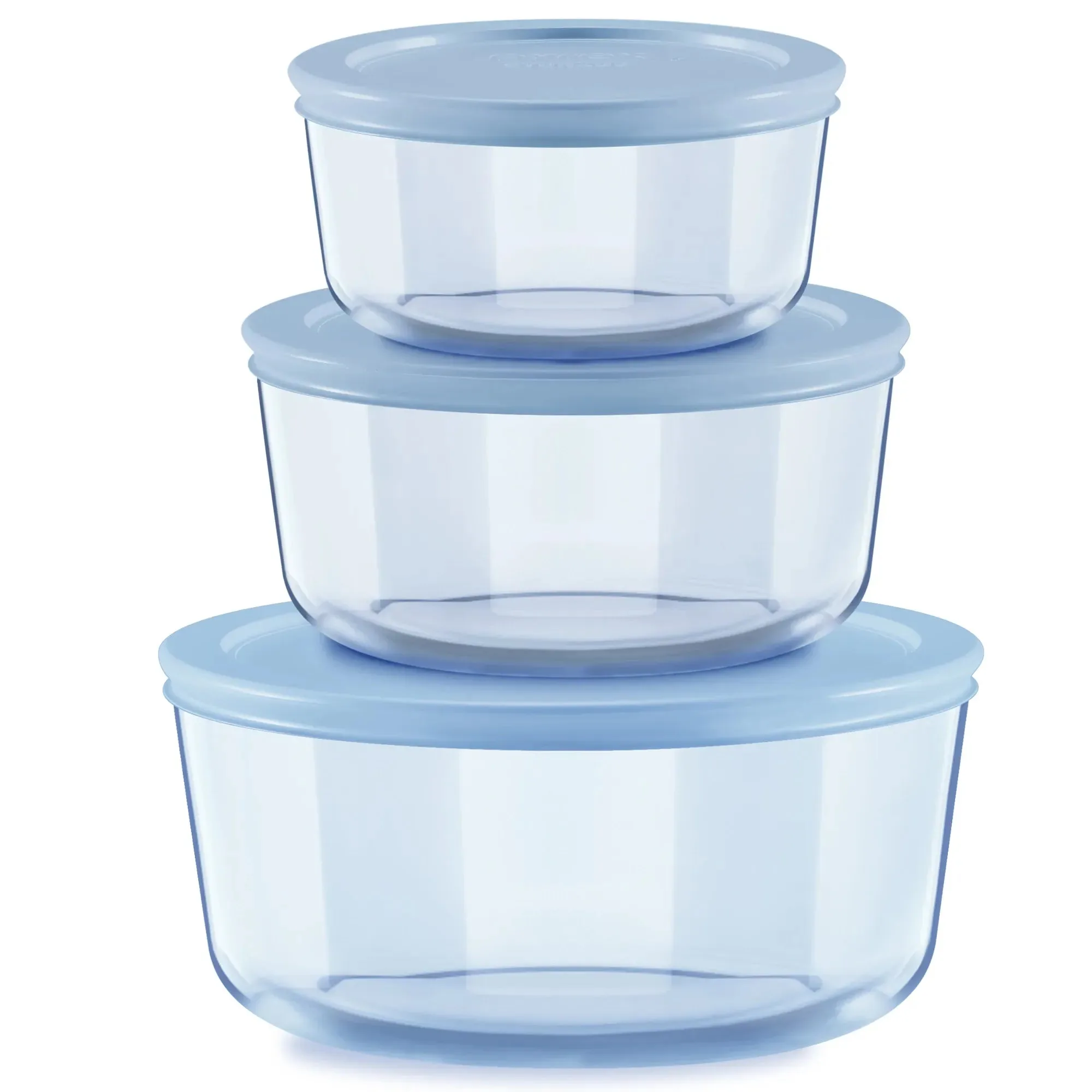
- Pyrex® Simply Store® Tinted 6-piece Round Storage Set with Blue Plastic Lids: Pyrex Simply Store Tinted 6-piece Round Storage Set with Blue Plastic Lids includes six round glass containers with matching blue plastic lids. If several lids in your kitchen have failed, a matched set gives you containers and lids that are guaranteed to pair with each other, which removes the guesswork that causes loose lids.