Quick answer
Most stickers not sticking comes down to the surface, not the sticker. Clean and fully dry the spot, press from the center outward for 10–20 seconds, and let the adhesive cure for a day before exposing it to heat, cold, or water. If the surface is textured, curved, or coated in release agent, no pressing will save it — move the sticker to a smooth, non-porous area or choose a smaller design that can follow the curve.
You peel the backing, line it up, press it down — and two days later a corner is lifting. Sticker sticking problems rarely mean the sticker is defective. They usually mean something happened between the factory and your water bottle: dust, oil, texture, temperature, or a curve that fights the vinyl.
This guide separates the symptom from the likely cause so you can fix sticker adhesion instead of guessing. You will also find the point where a sticker simply will not work on a given surface, and the smarter move is to change placement or switch to a design that suits the shape.
Start with the surface, because that is where most failures begin
Adhesive needs clean, dry, smooth, and slightly warm to bond. Skin oils, sunscreen, dishwasher residue, silicone spray, and even a fresh coat of car wax all act as a release layer. If the sticker went onto a bottle straight out of the dishwasher, the surface may look clean but still hold a film of detergent or moisture. Wipe the area with rubbing alcohol on a lint-free cloth, let it flash off completely, and do not touch the spot with your fingers afterward. Fingerprints alone can cut adhesion by a noticeable margin.
Temperature matters as much as cleanliness. Vinyl adhesive is pressure-sensitive, which means it flows and grips better when it is warm and gets stiff and grippy-poor when cold. Applying a sticker to a cold metal bottle in a garage in winter is a common cause of why stickers peel off within a day. Bring both the sticker and the object to room temperature, apply, then press firmly.
- Clean with isopropyl alcohol, not a household spray that leaves a scented film.
- Let the surface dry for a full minute before applying.
- Apply at room temperature, ideally above 65°F / 18°C.
- Press from the center outward to push trapped air to the edges.
Match the sticker to the shape and texture
Flat stickers on flat surfaces are easy. Problems start when you put a stiff vinyl sticker on a tightly curved bottle, a textured planner cover, or a powder-coated laptop lid. A 3-inch square sticker cannot wrap a 3-inch-diameter bottle without wrinkling or lifting at the edges. The fix is to size down: a smaller sticker, or one with a simpler silhouette, follows curvature with less stored tension. If the surface has a visible grain or matte powder coat, the adhesive only touches the peaks, so the bond is partial from the start.
Some surfaces are honest no-go zones for any pressure-sensitive sticker: silicone cases, fabric, unfinished wood, and heavily textured plastics. On those, a sticker may hold for a day and then slide or curl. That is not a sticker sticking problem you can solve with heat or pressure — it is a materials mismatch. Use a hard case, a notebook cover, or a smooth water bottle instead.
- Test on a small, low-visibility area first if the surface is unfamiliar.
- For curved bottles, choose stickers under about 2 inches wide.
- Avoid applying over seams, ridges, or existing stickers.
- If the surface is soft or silicone, skip the sticker and use a different item.
Apply and cure like you mean it
The single best trick for how to make stickers stick better is boring: pressure and time. After positioning, press firmly with your thumb or a credit card edge, working from the center to the edges. Then leave the item alone for 24 hours. Adhesive continues to wet out and bond during that window. If you immediately put the bottle in a dishwasher, a hot car, or an ice bath, you interrupt the cure and the sticker may never reach full grip.
For stickers on items that see water and heat, a thin layer of clear nail polish or a purpose-made vinyl sealant over the edges can extend the life. This is optional and changes the finish, so test on a less visible sticker first. Also avoid repositioning: once vinyl lifts, it picks up dust and loses tack. If you must move it, peel slowly and clean the surface again before reapplying.
- Press for 10–20 seconds, not one quick swipe.
- Wait 24 hours before washing, freezing, or heavy use.
- Hand wash sticker-decorated bottles; skip the dishwasher.
- Do not restick more than once if you can avoid it.
When the sticker itself is the limiting factor
Not every sticker is built for every environment. A paper sticker with a light adhesive is fine for a journal or planner but will fail on a water bottle. Waterproof vinyl is the right choice for laptops, bottles, and phone cases because it resists moisture and handling. If you are working with a paper sticker and it keeps peeling, the material is the cause, not your technique. Move that sticker to an indoor, dry, flat surface like a notebook or a greeting card.
Age also plays a role. Adhesive can degrade if stickers sit in a hot car or a humid drawer for years. If a sticker feels dry or the backing is unusually stiff, it may have lost tack before you ever applied it. In that case, no surface prep will bring it back. Use it as a decorative insert rather than an outdoor sticker, or replace it with a fresh one.
- Paper stickers: journals, planners, cards, indoor use.
- Vinyl stickers: laptops, bottles, phone cases, outdoor-friendly.
- Old or heat-exposed stickers may have lost adhesive strength.
- If the backing is hard to peel, the adhesive may already be compromised.
A quick diagnosis you can run in two minutes
Before you blame the sticker, run through the likely causes in order. If the corner lifts immediately, it is usually dust, oil, or a curved surface. If it lifts after a day or two, suspect temperature swings or moisture. If it slides or falls off entirely, the surface is probably too textured or non-stick. If only the edges curl, the sticker may be too large for the curve, or it was not pressed from the center out. Each symptom points to a different fix, so start with the most likely cause and work down.
If you have cleaned, dried, warmed, pressed, and cured the sticker and it still lifts, stop. Repeating the same steps on the same surface will not change the outcome. Either move the sticker to a compatible surface or accept that the item is not a sticker-friendly object. That is not a failure — it is useful information that saves you from ruining more stickers.
- Lifts immediately: clean and dry the surface, then reapply.
- Lifts in a day: check temperature and moisture exposure.
- Slides or falls: surface is too textured or non-stick.
- Edges curl: sticker is too large for the curve or not pressed enough.
Sticker adhesion diagnosis chart
- Corner lifts within minutes: Dust, oil, or a curved surface is preventing contact. Clean with isopropyl alcohol, dry fully, and press from the center outward. If the surface is curved, switch to a smaller sticker. If it lifts again after a proper clean and press, the surface is the problem — move the sticker.
- Edges curl after a day or two: Temperature swings or moisture are breaking the bond. Bring the item to room temperature, re-press the edges, and avoid dishwashers or hot cars. A thin sealant over the edges can help on bottles. If curling continues, the sticker is too large for the curve or the environment is too harsh.
- Sticker slides or falls off completely: The surface is likely textured, silicone, or coated with a release agent. No amount of pressure will fix a materials mismatch. Move the sticker to a smooth, non-porous surface. Stop reapplying on the same surface; choose a different item or a different sticker type.
- Sticker never bonds from the start: The adhesive may be old or heat-damaged. Check whether the backing is unusually stiff or the sticker feels dry. If so, the sticker has lost tack and should be used as a decorative insert instead. Replace it with a fresh vinyl sticker for any surface that sees handling or moisture.
Stickers built for the surfaces that usually fail
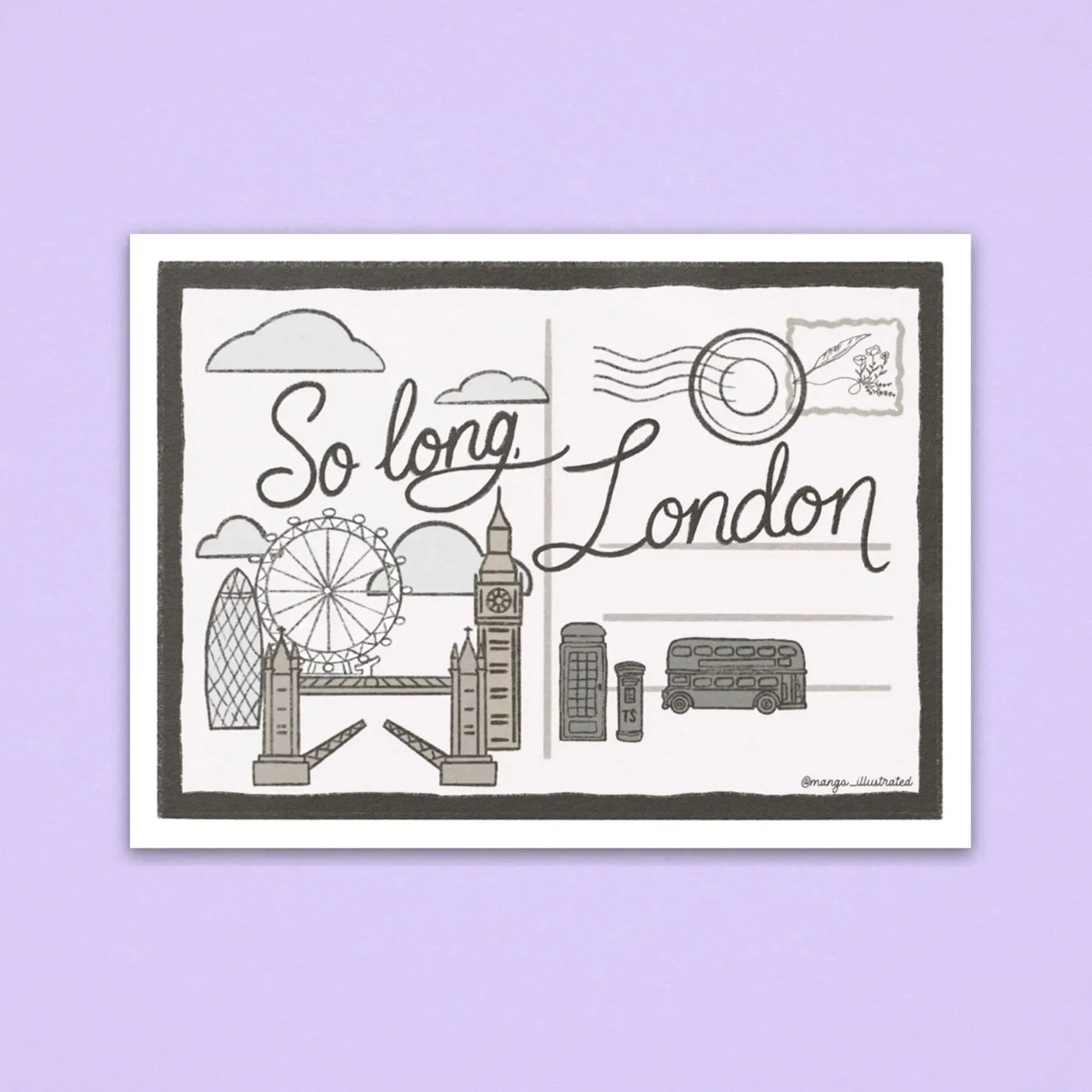
- So long, London sticker: Durable waterproof and weatherproof vinyl, illustrated by Katie Valentine, founder of MangoIllustrated. Weatherproof vinyl handles the temperature and moisture swings that make ordinary stickers peel off bottles and laptops.
- Supporting My Local Library One Late Fee at a Time sticker: Approximately 3 in x 3 in, made from high-quality waterproof and weatherproof vinyl, and suggested for laptops, water bottles, and phone cases. A 3-inch square is a good size for flat or gently curved surfaces, but it will fight a tight bottle curve — size down if the surface bends sharply.
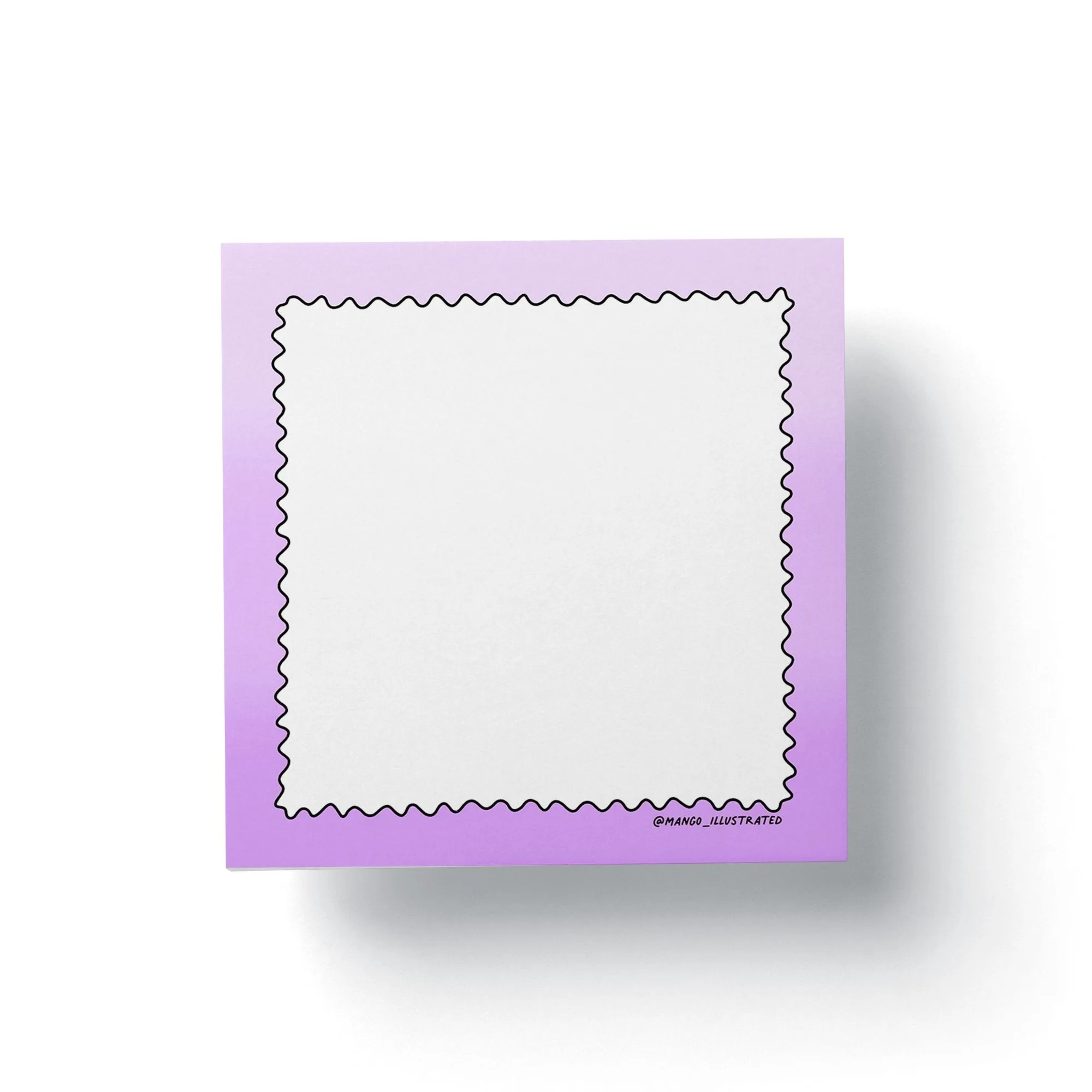
- Purple Gradient Squiggle Sticky Notes: A wiggly border with an ombre violet background and minimal design, intended for pastel stationery fans and gentle productivity. These are repositionable paper notes, not vinyl stickers. They are the right choice for planners and journals where a permanent adhesive would be a problem.
Stickers not sticking is almost always a surface, temperature, or size problem — not a mystery. Clean and dry the spot, apply at room temperature, press firmly, and give the adhesive a day to cure. When a surface is textured, silicone, or too curved, stop fighting it and move the sticker to a compatible home. That way your favorite designs stay put instead of curling up in a week.