Quick answer
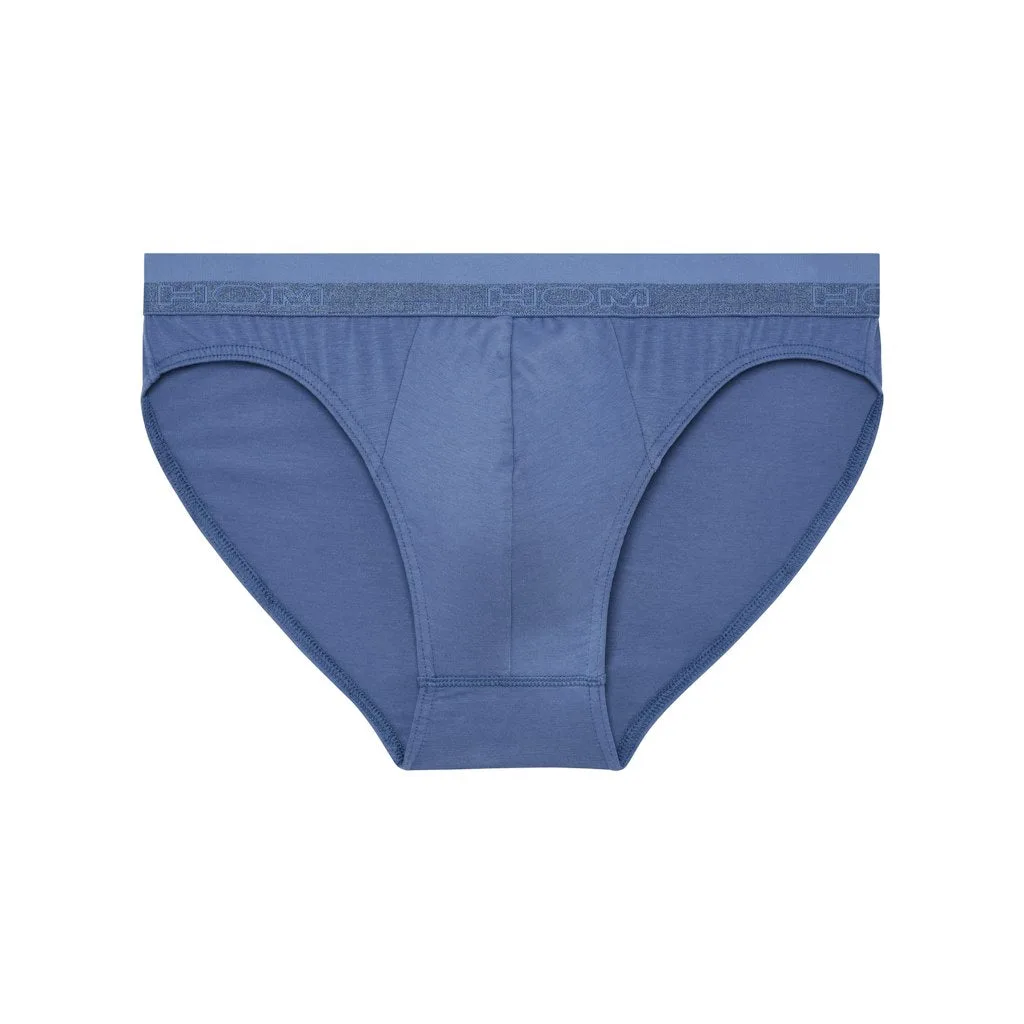
Swimwear fades because chlorine, salt, sunscreen, heat, and rough surfaces break down dye and stretch the fibers holding it. Rinse your swimwear in cool fresh water within 30 minutes of swimming, hand wash with a mild detergent, and dry it in the shade. That routine prevents most color loss, and it works on printed swim shorts and solid swim briefs alike.
A swimsuit that looked bright in June can look washed out by August, and it is rarely the fabric's fault. Most fading comes from what the suit touches and how long it stays there: pool chlorine, sea salt, sunscreen residue, hot water, and direct sun. The good news is that every one of those causes is manageable once you know which one is hitting your swimwear.
This guide separates the symptom from the cause so you can fix the right problem. It covers swim shorts and swim briefs from HOM, including printed styles where fading shows up fastest, and it tells you when a piece is past saving so you can stop treating it and replace it instead.
What fading actually looks like on swimwear
Fading is not one thing. On a solid-color swim brief, it usually appears as a dull, chalky surface and a slight lightening at the waistband and hips, where the fabric stretches most. On a printed swim short, the background color goes flat first, while white or light motifs stay bright, which makes the whole print look muddy rather than faded evenly.
Another common symptom is color transfer, where dye moves onto a towel, a white shirt, or a pool edge. That is different from fading, but it has the same root cause: dye that never fully bonded to the fiber, released by heat, chlorine, or prolonged moisture. If you see this, treat it as a care problem, not a defect.
- Dull, chalky surface with even lightening: usually chemical or heat damage.
- Patchy lightening at stretch points: fiber fatigue from repeated tension and chlorine.
- Dye on towels or skin: excess dye released by heat or long soaking.
The four causes behind most swimwear fading
Chlorine is the biggest offender. It is an oxidizing agent, so it attacks dye molecules directly, and it keeps working as long as the suit stays damp. Salt water is gentler but still abrasive over time, and it leaves mineral residue that dulls color if it is not rinsed out. Sunscreen and body oils are the third cause: they trap chlorine and salt against the fabric and can stain or lift dye, especially on lighter colors.
The fourth cause is mechanical. Hot tubs, hot washes, and hot dryers weaken elastane, the stretch fiber in most swimwear. Once elastane relaxes, the fabric sags, more surface area is exposed, and color looks thinner. Drying in direct sun adds UV damage on top of that, which is why a suit left on a balcony rail all afternoon fades faster than one dried indoors.
- Rinse within 30 minutes of leaving the water to stop chlorine from working.
- Never wash swimwear above 30°C (86°F) and never put it in a dryer.
- Keep swimwear out of direct sun while drying, even though it is made for the sun.
How to wash swimwear so color lasts
Fill a basin with cool water and a capful of mild liquid detergent, then press the suit through the water with your hands. Do not scrub, wring, or twist it; that stretches the knit and opens gaps where dye sits. Pay attention to the waistband and inner brief lining, which hold the most chlorine and sweat. Rinse until the water runs clear, then press the suit between two towels to remove excess water.
If you swim daily, a full wash every time is not necessary. A thorough cool rinse after every swim, plus a proper hand wash once a week, keeps most swimwear in good color. Skip fabric softener and bleach entirely; both leave residue or attack dye. For printed styles, turn the suit inside out before washing so the print rubs against less.
- Hand wash in cool water with mild detergent; skip the machine unless the label allows it.
- Press, do not wring, and dry flat or hang in shade.
- Wash printed swim shorts inside out to protect the print surface.
Everyday habits that protect swimwear fabric
Rinse before you swim as well as after. A quick soak in fresh water saturates the fibers so they absorb less chlorine and salt. If you sit on rough pool edges, concrete, or wooden loungers, put a towel down first; abrasion wears the surface where dye is most visible. Rotate between two suits so each one has a full day to dry completely, since damp storage is where odors and dullness start.
Sunscreen is necessary, but apply it before you dress and let it absorb. Spraying sunscreen directly onto a swimsuit, or sitting in a suit right after applying a thick layer, pushes oils and chemicals into the fabric. If you use a heavy sport sunscreen, rinse your suit sooner rather than later.
- Rinse before and after every swim.
- Rotate two swimsuits so each dries fully between wears.
- Apply sunscreen before putting on swimwear, not after.
When to stop treating and replace instead
If the fabric has gone thin, see-through when wet, or permanently stretched at the waist and hips, no care routine will bring the color back. Fading that comes with loss of stretch means the elastane is gone, and the suit will not hold its shape in the water. At that point, replacement is the practical choice, especially for a suit you swim in several times a week.
If the color is still even and the fit is still firm, keep going with the rinse-and-shade routine. Fading that is only slight and uniform is normal after a full season, and it is not a reason to throw away a suit that still performs well.
- Replace when the fabric is thin, sagging, or see-through when wet.
- Keep when color is slightly lighter but the fit and coverage still hold.
- Do not try dyeing swimwear at home; elastane and chlorine-treated fabric rarely take dye evenly.
Diagnose your swimwear fading
- Symptom: even, chalky lightening across the whole suit: Likely cause is chlorine or hot water exposure over many wears. Correct it by rinsing within 30 minutes of every swim and washing by hand in cool water with mild detergent. If color is even and stretch is intact, the suit is still usable.
- Symptom: print background dull, white motifs still bright: Likely cause is UV and chlorine attacking the dyed background. Dry in shade, wash printed styles inside out, and avoid leaving the suit on a sunny rail. Switch to shade drying now; further sun exposure will only widen the contrast.
- Symptom: dye transferring to towels or skin: Likely cause is heat or long soaking releasing excess dye. Rinse in cool water, wash separately the first few times, and never use hot water or a dryer. Stop washing it with light-colored laundry until transfer stops.
- Symptom: thin, sagging, or see-through fabric when wet: Likely cause is elastane breakdown, which no wash routine can reverse. Replace the suit rather than treating it. Choose a replacement and start the rinse-and-shade routine from day one.
HOM swimwear where care habits show up fast
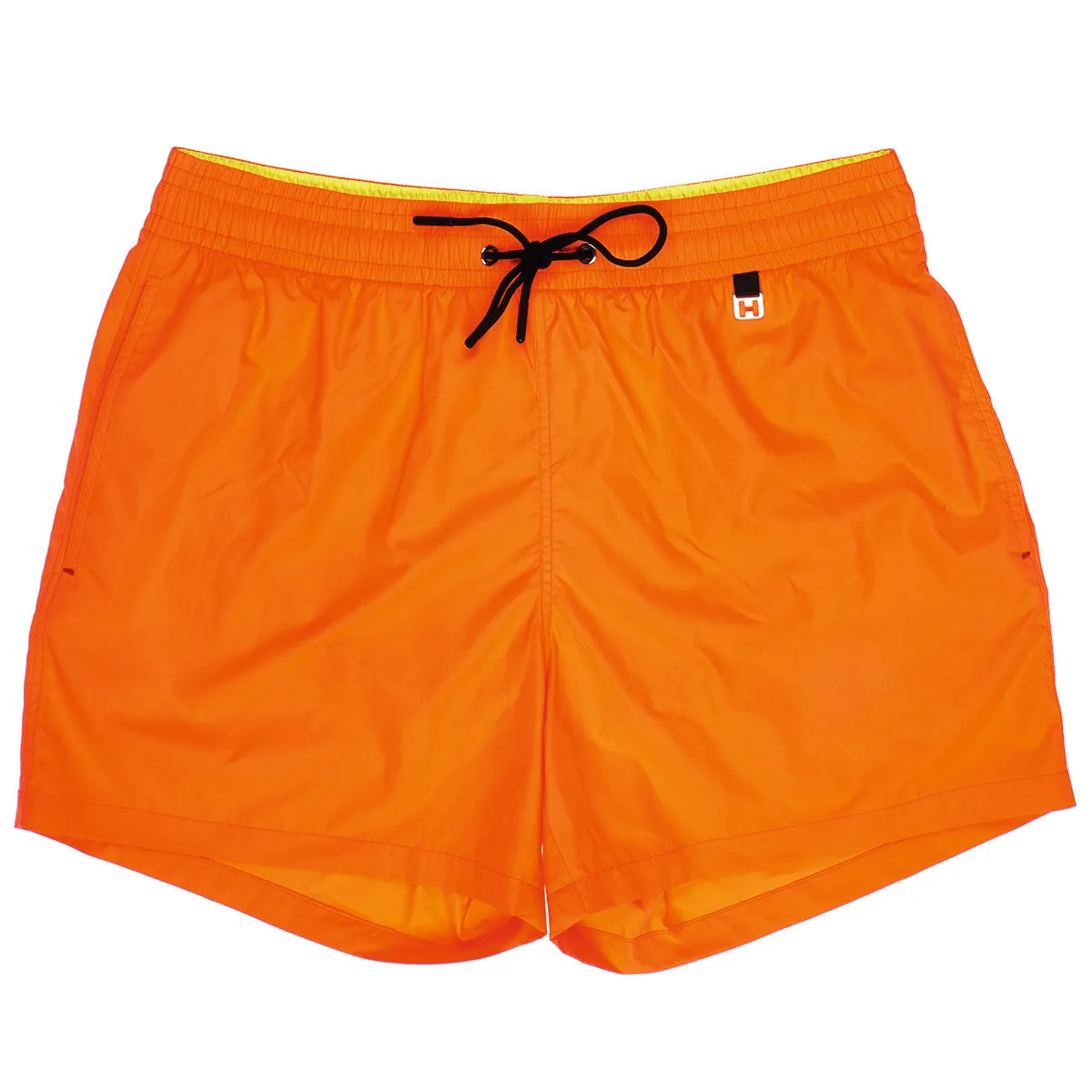
- Sunlight Beach Boxer | Orange 401415-00jx: Plain and multicolored polyamide beach shorts with an inner mesh brief, two side pockets, and a slightly fitted cut on the leg. Bright orange and multicolor polyamide show dullness quickly, so this is a good suit to rinse immediately after swimming and dry in shade.
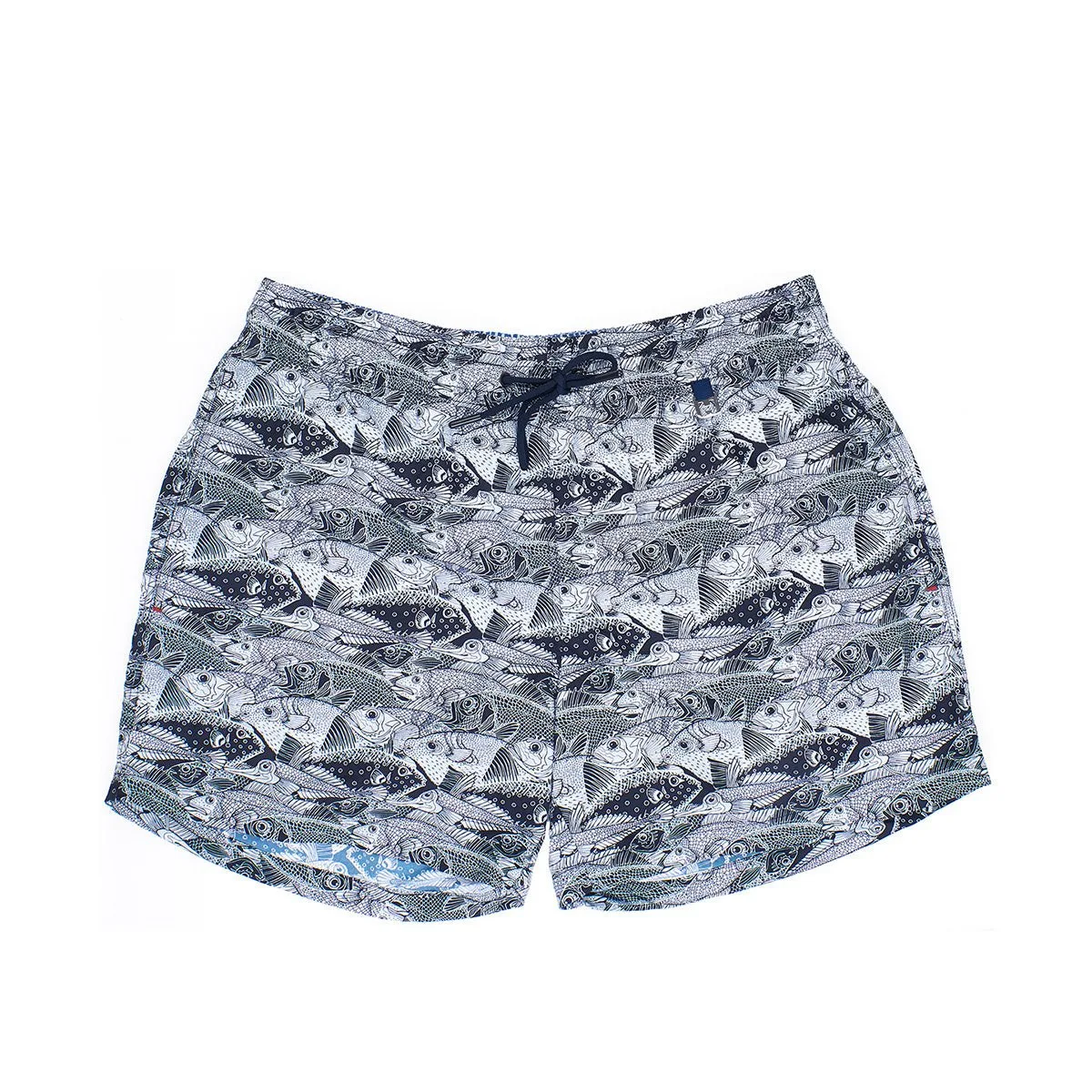
- Silversea Beach Boxer | Navy 401273-00ra: Polyamide beach shorts with a white fish print on navy, mesh inner briefs in 100% polyester, two side pockets, and a slightly fitted leg cut. The white-on-navy print is exactly the type that goes muddy when the navy background fades, so wash it inside out and keep it out of direct sun while drying.
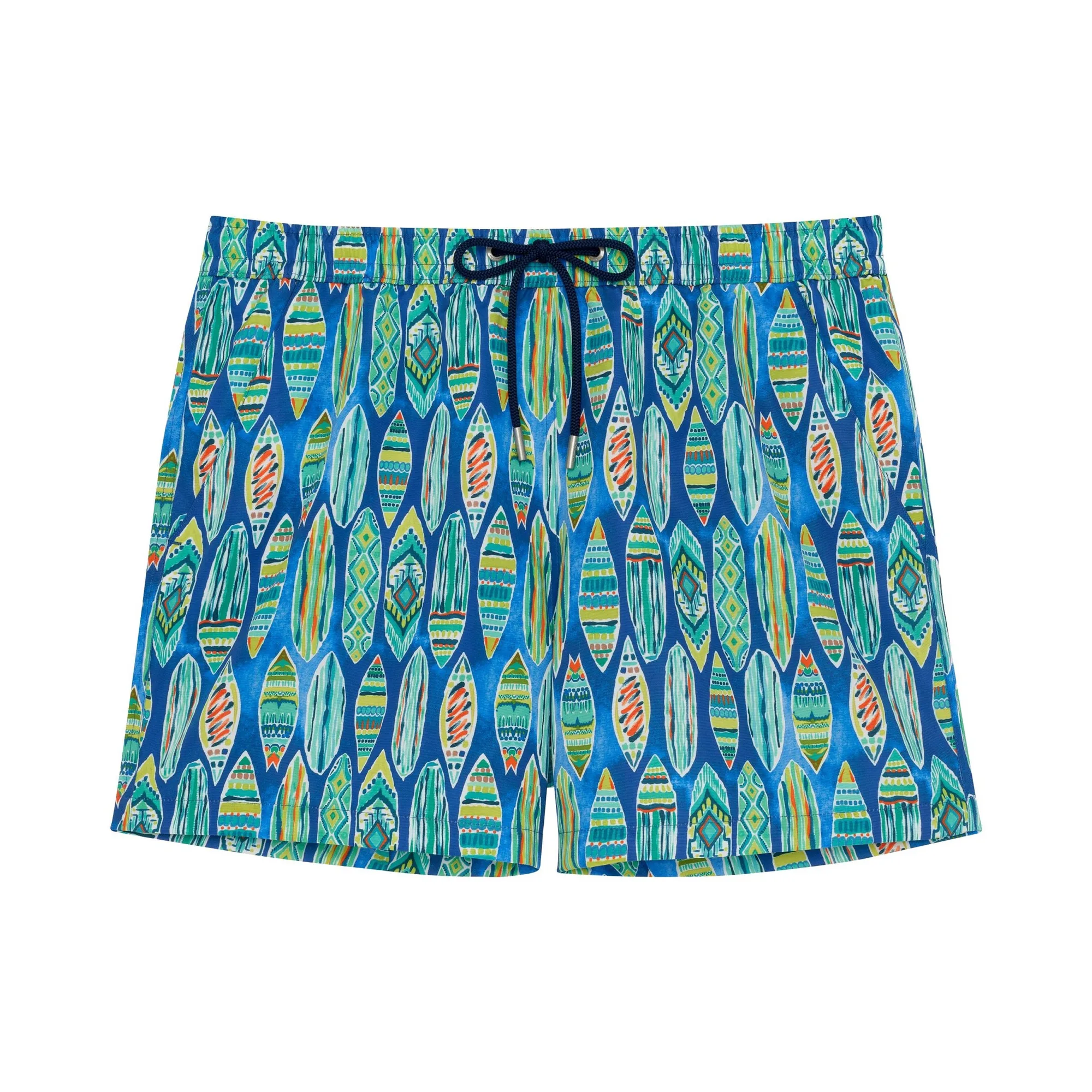
- Marbella Beach Boxer | Blue Print 402924-P0BI: A loose, straight, medium-length thigh-high swim boxer with mesh brief lining, a drawstring waist with branded metal ends, two side pockets, and a back welt pocket with Velcro fastening. The metal drawstring ends and Velcro pocket mean you should hand wash and avoid the dryer, which can snag fabric and warp hardware.
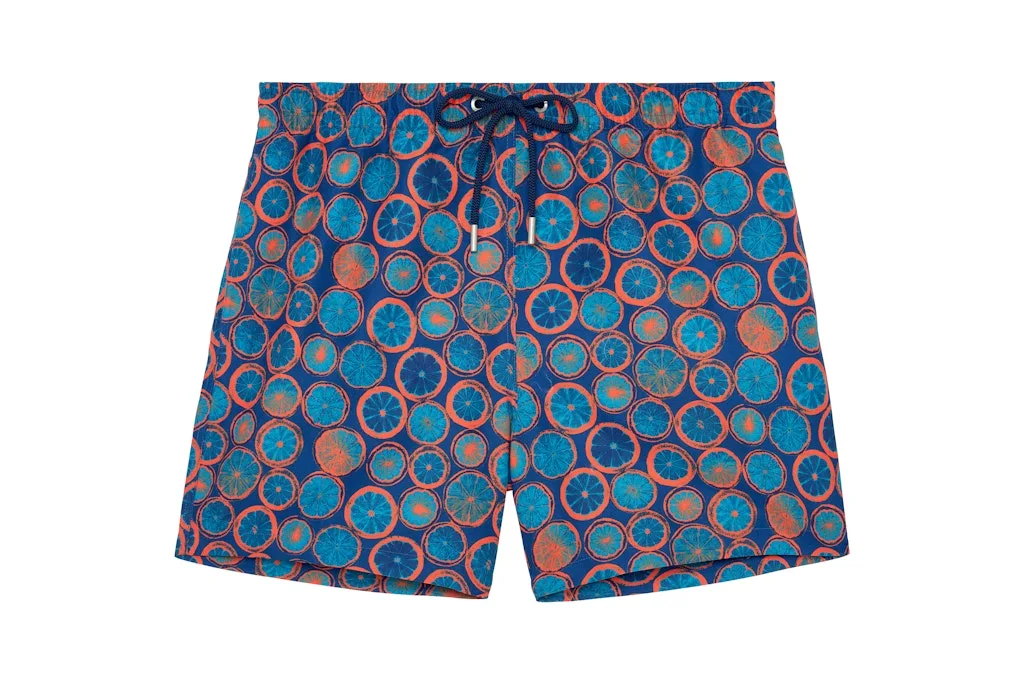
- Trapani Beach Boxer | Navy Print 403188-P0RA: Loose mid-thigh beach boxers with a bright orange print on indigo blue, a woven back label, and a soft mesh inner brief. A graphic print on indigo is most at risk from chlorine and sun, so a cool rinse after every swim protects both the background and the print detail.
Fading is almost always a care issue, not a fabric flaw. Rinse in cool water within 30 minutes, wash by hand with mild detergent, dry in shade, and rotate two suits so each one dries fully. Do that and a printed HOM beach boxer or a solid swim brief will hold its color through the season instead of dulling by midsummer.