Quick answer
Uneven marks from a texturing hammer usually stem from inconsistent strike angle, insufficient or uneven backing support, or using a hammer face that doesn't match your metal thickness. Correct your grip, use a proper anvil or sandbag, and match hammer face size to your workpiece.
Symptom: Inconsistent Depth and Pattern Across Strikes
You strike the metal and some impressions are deep while others barely register. The texture looks patchy rather than uniform. This is the most common complaint with flat-face hammers used for texturing sheet metal.
Likely Cause: Strike Angle and Hammer Face Contact
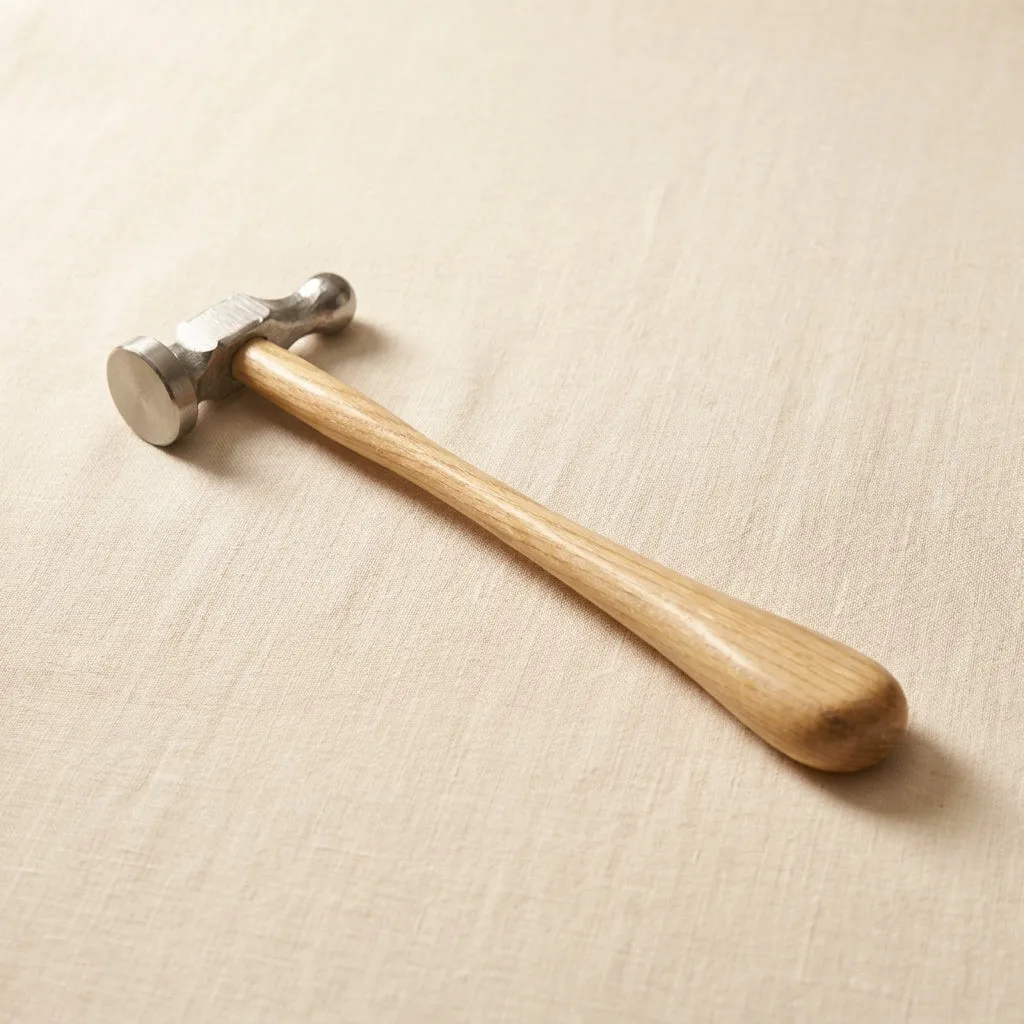
A flat-face hammer like the Texturing & Forming Hammer with its 32 mm face delivers broad coverage, but only when the face lands parallel to the metal surface. If your wrist is slightly tilted, one edge of the hammer face digs in deeper, creating uneven depth. The polished steel head also transmits every angle variation directly to the metal.
Corrective Action: Adjust Your Technique and Workholding
Hold the hammer handle near the end for a relaxed swing and focus on letting the hammer's own weight do the work. Practice striking with the face flat by watching the reflection on the polished steel—if the reflection distorts unevenly, your angle is off. For thin or soft metals, back the workpiece with a leather sandbag or a dense rubber block so the metal can deform evenly without bouncing. For thicker sheet, a steel anvil gives a crisp, consistent imprint.
When to Consider a Different Hammer
If you are working on small bezels or curved settings, the broad 32 mm face may be too large for precise control. A dedicated bezel and ring forming mallet, such as the 1 lb brass mallet, delivers controlled force without leaving deep marks because its smooth, machined faces spread impact evenly. For delicate work, switch to a hammer with a smaller or domed face.
Diagnosis: Why Your Hammer Marks Are Uneven
- Symptom check: Examine your last textured piece. Are marks deeper on one side? Do they fade in the centre? Is the pattern irregular across the sheet? If marks are deeper at the edges, your strike angle is off. If depth varies randomly, check your backing support.
- Likely cause: Three common culprits: (1) Hammer face not landing flat, (2) Metal not uniformly supported, (3) Hammer face too large or heavy for the metal thickness. Isolate the cause by testing on a scrap piece with a consistent backing.
- Corrective action: Adjust your grip to hold the handle loosely near the end. Use a sandbag or rubber block for thin metal. For thick sheet, use a steel anvil. Ensure each strike lands with the full face parallel to the metal. Practice 10 controlled strikes on scrap before returning to your workpiece.
- Alternative tool choice: If the problem persists despite correct technique, your hammer may be mismatched. Switch to a brass mallet or a hammer with a smaller, domed face for finer control. A 1 lb brass mallet is a safe next step for bezels and delicate forming.
Tools That Help You Diagnose and Fix the Problem
- Texturing & Forming Hammer — 32 mm Flat Face, Wooden Handle, for Metal & Jewellery Work: Master large-scale metal texturing and forming with this substantial 32mm flat-face hammer, designed for efficient bench work. Its generous 32mm flat face ensures broad coverage with each strike, ideal for planishing larger metal sheet or applying consistent textures across significant areas. The polished steel head is precisely balanced, offering the heft needed for effective metal manipulation. The broad face is excellent for large surfaces, but its flatness demands a perfectly parallel strike. If you see uneven marks, this hammer forces you to refine your angle control—or switch to a smaller face for detail work.
- Bezel & Ring Forming Mallet — 1 lb (1 Pound) Brass Head, Metalsmith Jewellery Hammer: This 1lb brass mallet is essential for precise metal forming and adjustment on your workbench. It delivers controlled force to shape precious metals without leaving unsightly marks. The substantial brass head provides the necessary weight for effective metal movement, whether you're closing bezels or sinking settings. Its smooth, flat striking faces are carefully machined to ensure even contact. Brass is softer than steel, so it reduces the risk of deep gouges. Use this mallet when your texturing hammer leaves marks that are too aggressive for the metal gauge you are working with.