Quick answer
If your toddler loses interest in puzzles, the usual cause is a mismatch between the puzzle and their current attention or motor skills. Switch to a chunky puzzle for toddlers with 2–6 large pieces, or a matching puzzle for toddlers with just a few pairs, and sit beside them for the first few tries. If they still walk away after two minutes, the puzzle is too hard or too easy—adjust the piece count or type before assuming they dislike puzzles.
Match the puzzle to your toddler's stage
Toddlers between 12 and 24 months typically handle 2–4 chunky pieces with knobs or thick bases. By age 2, many can manage 4–6 pieces if the pictures are simple and the pieces are distinct. If your child is still mouthing pieces or sweeping them off the table, they may not be ready for interlocking jigsaw puzzles—stick with chunky or peg puzzles.
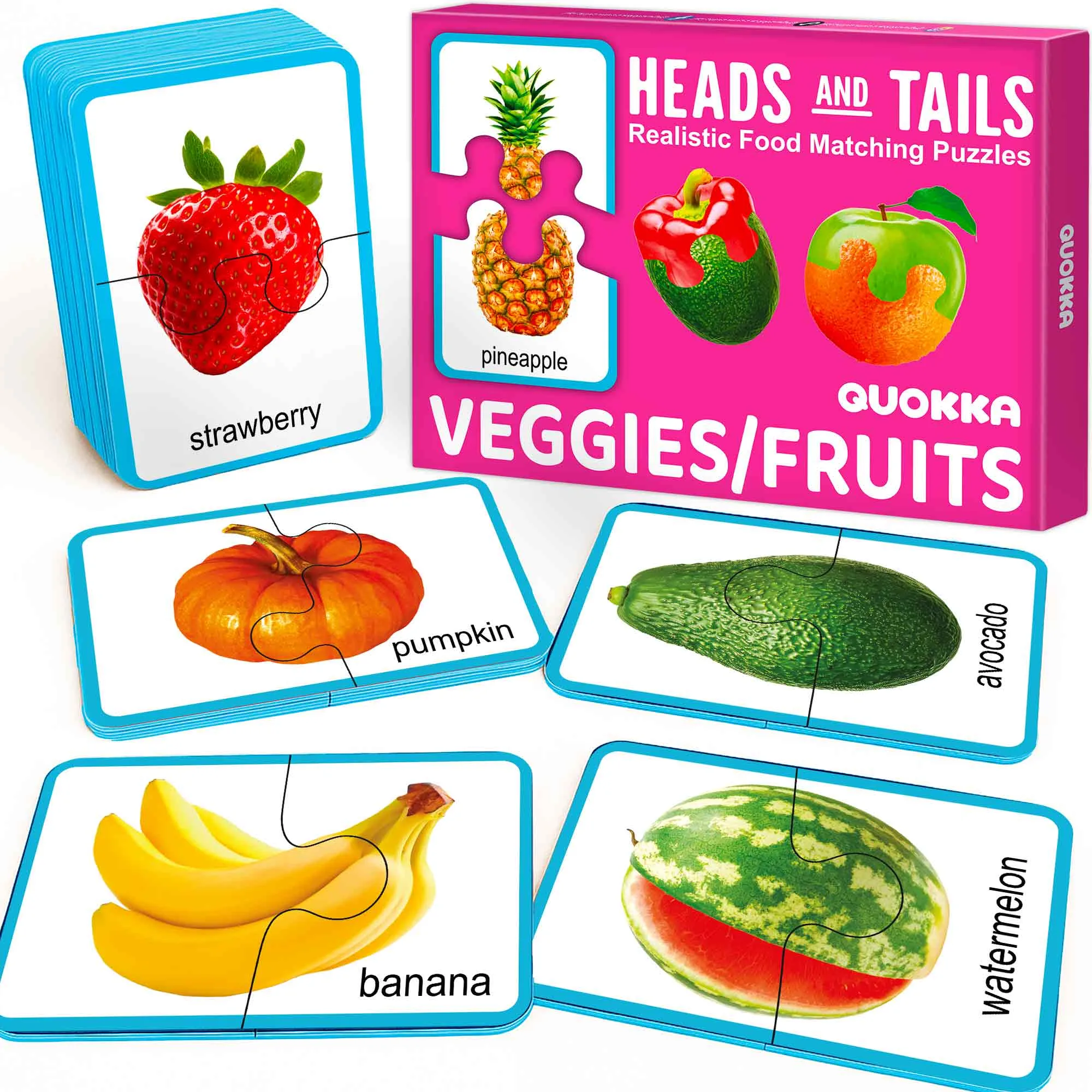
For a first puzzle for 2 year olds, choose themes they already recognize: animals, fruits, or familiar objects. A realistic matching puzzle for toddlers with two-piece pairs works well because each pair is a complete mini-task. Your child gets a finished win after just one connection, which builds the stamina for longer puzzles later.
Reduce the setup friction
A puzzle that slides around on a smooth table or has pieces mixed with a dozen others will frustrate any toddler. Use a non-slip mat or a felt placemat, and offer only the pieces needed for the current puzzle. Keep the rest in a small basket or bag out of sight. If the puzzle has a board, show your child how to orient it so the picture faces them.
Timing matters too. Right before nap, after a heavy meal, or during a noisy playdate is not the moment for a focused puzzle. Try a quiet ten-minute window when your toddler is fed and rested. If they are tired, even a familiar puzzle can feel impossible.
Coach without taking over
When puzzle frustration toddlers show—throwing pieces, whining, or pushing the board away—pause and name the feeling: "This piece is tricky. Let's turn it together." Then place your hand over theirs and guide the piece into the slot once. After that, let them try alone. If they succeed, celebrate the effort, not just the result.
Avoid correcting every wrong move. Toddlers learn by testing. If a piece almost fits, let them feel the resistance and adjust. If they try the same wrong spot three times, point to the correct area with one finger and say, "Try here." Then wait. If they still struggle, remove one piece from the puzzle so the remaining choices are fewer.
Know when to switch puzzles or stop
If your toddler consistently abandons a puzzle after two minutes for more than a week, it is too hard. Move down to a simpler format: a chunky puzzle with fewer pieces or a matching puzzle with only four pairs. If they finish a puzzle in under a minute and seem bored, it is too easy—add two more pieces or switch to a new theme.
Stop the session if your child is genuinely distressed, not just mildly frustrated. Crying, hitting, or running away means the challenge is beyond their current skills. Put the puzzle away and try again in a few days with a simpler option. Puzzles should feel like play, not a test.
Diagnosis: why your toddler leaves puzzles unfinished
- Symptom: walks away after 1–2 minutes: The puzzle is likely too hard or too easy for their current attention span. Switch to a chunky puzzle with 2–4 pieces or a matching puzzle with 4–6 pairs.
- Symptom: throws pieces or pushes the board: Frustration often comes from pieces that are hard to manipulate or a cluttered workspace. Use a non-slip mat, offer only the pieces needed, and guide their hand once.
- Symptom: finishes too fast, then ignores the puzzle: The challenge is below their skill level, so it stops being interesting. Add 2–3 pieces or introduce a new theme to keep it engaging.
- Symptom: cries or runs away: The puzzle is beyond their current ability and feels distressing, not fun. Stop, put it away, and try a simpler format in a few days.
Product facts that help
- 6 Chunky Puzzles for Toddlers - Animals, Numbers, Alphabet: 6 Chunky Puzzles for Toddlers - Animals, Numbers, Alphabet includes six chunky puzzles with themes like Animals, Shapes, Numbers, and Alphabet, designed for early puzzlers 12 months and up. Multiple themes let you rotate puzzles to match your toddler's current interest, and the chunky format is easier for small hands to grasp than standard jigsaw pieces.
- Matching Puzzle for Toddlers - 16 Realistic Pairs Fruits Veggies: Matching Puzzle for Toddlers - 16 Realistic Pairs Fruits Veggies has 16 sturdy two-piece puzzles with realistic fruits and veggies, suitable for ages 1–3 to explore matching and 3–5 to reinforce names and memory. Two-piece pairs give a quick win, which helps toddlers who lose interest in longer puzzles build confidence before moving to multi-piece jigsaws.
- 70 Piece Jigsaw Puzzles 50 Cards For Kids | USA: 70 Piece Jigsaw Puzzles 50 Cards For Kids | USA includes a 70-piece puzzle shaped like USA states plus 50 double-sided educational cards, and is built for repeated use. This is a better fit for older kids (4–8) who already finish smaller puzzles; it adds geography learning and card activities to extend play.