Quick answer
A bra band that rides up in the back is almost always too loose. Fasten it on the tightest hook and see if the back stays level; if it still climbs, the band size is too big or the cups are too small, pushing the band up. Fix the band first, then reassess cup fit.
Symptom: the back band climbs toward your shoulder blades
You notice it most when you raise your arms or sit for a while: the back of the band creeps upward while the front feels okay or even tight. This is a classic bra fit problem, and it is not about the straps. Straps only hold about 10 to 20 percent of the bra's support; the band does the rest. When the band is too loose, it cannot anchor to your ribcage, so it slides up the back, especially if the cups are also too small and the wires sit on breast tissue instead of flat against the chest.
Likely cause: band size too large or cups too small
Two fit errors create the same symptom. First, a band that is one or two sizes too big cannot grip your torso; it stays put only when new and then stretches with wear. Second, cups that are too small push the whole bra away from your body, which lifts the back band. To tell them apart, put the bra on and fasten it on the loosest hook. If you can pull the band more than an inch away from your back, the band is too loose. If the center gore does not lie flat against your sternum and the wires dig into the sides of your breasts, the cups are too small.
Corrective action: adjust the band first, then the cups
Start with the band. Fasten it on the tightest hook that still lets you breathe comfortably. If that keeps the back level, you have solved the immediate problem. A new bra should fasten on the loosest hook so you can tighten it as the elastic relaxes over time. If the tightest hook is still too loose, go down one band size, but go up one cup size to keep the same cup volume (this is called sister sizing). For example, if you wear a 34C, try a 32D. If the cups are the problem, keep the band size and go up one or two cup sizes. A bra with a firm, wide band and a leotard back (the U-shaped back) resists riding up better than a narrow, stretchy band.
When to stop adjusting and choose a different bra
If you have tried the tightest hook and the band still rides up, or if the band leaves red marks and feels painful, stop. The bra is the wrong size or the wrong shape for your body. Look for bras with a band that sits level all the way around, a center gore that tacks flat, and cups that contain all your breast tissue without spillage. If your band size is correct but the back still climbs, the bra may have lost its elasticity; replace it. As a general rule, a bra that is more than a year old and worn several times a week has likely stretched beyond a good fit.
Diagnosis: find your fix
- Band feels loose on the loosest hook: Fasten on the tightest hook. If the back stays level and you can still breathe, the band was simply too loose. Tighten as needed. If the tightest hook is still too loose, go down one band size and up one cup size.
- Center gore does not lie flat and wires dig in: This points to cups that are too small. Keep the band size and go up one or two cup sizes. A bra with a rigid center separator, like the Singuliere Half Cup Bra, can help the gore tack. If the gore still floats after sizing up, the cup shape may be wrong for you.
- Band leaves red marks and feels painful: The band is too tight, not too loose. Do not tighten further. Go up a band size and down a cup size to keep the same volume, or try a bra with a wider, softer band. Pain is a stop sign. Choose a different size or style.
- Band is correct but still rides up after a year: Elastic loses stretch over time. If the bra is more than a year old and worn often, replace it. Rotate between several bras to extend their life.
Bras that help prevent a riding-up band
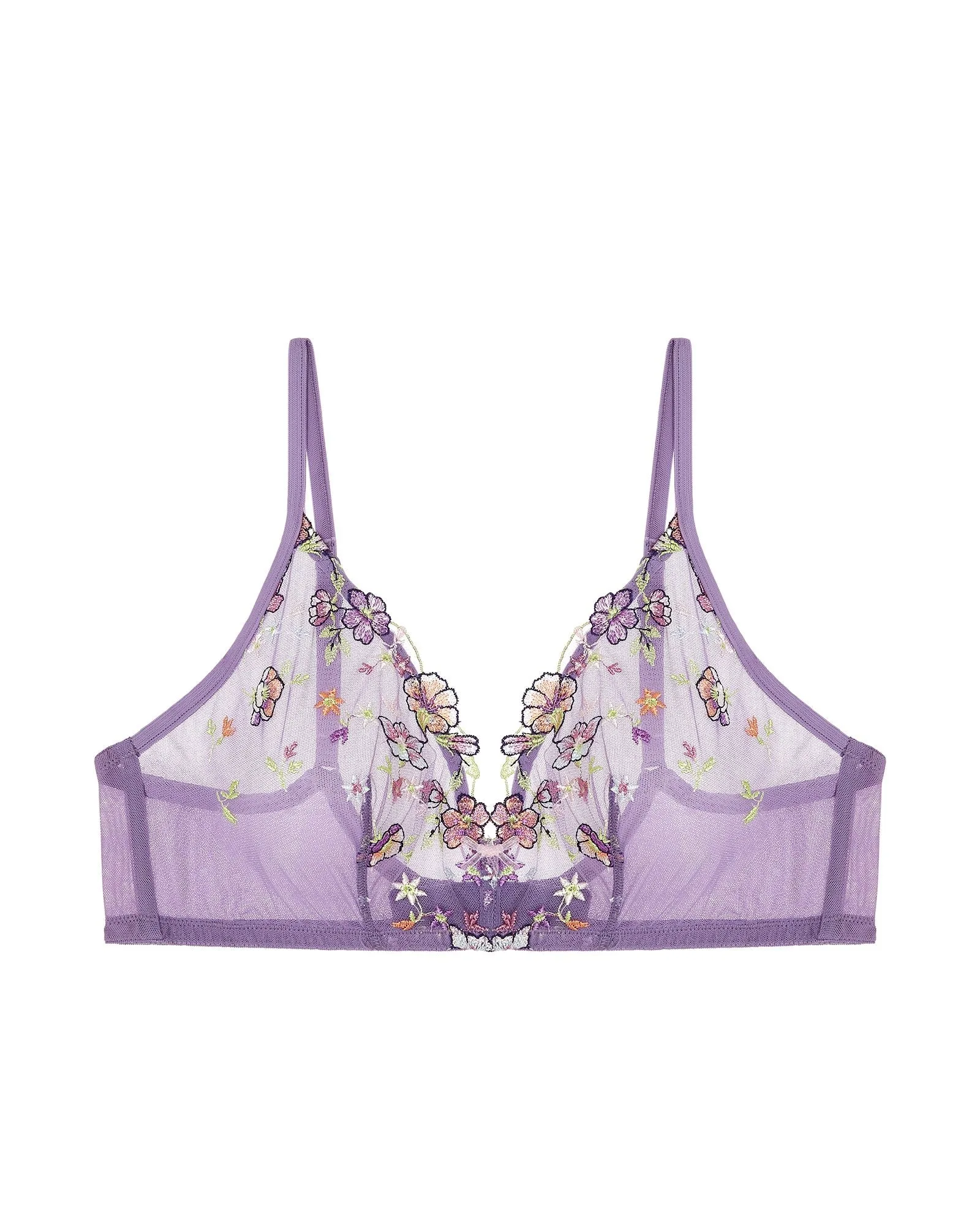
- Julie's Roses Underwire Bra: Underwire bra with delicate but sultry rose embroidered-mesh cups. Satin band and center bow, back cutouts. Adjustable straps and hook-and-eye closure. Journelle presents all bra sizes in Euro sizing. The maker of this bra originally sizes in UK sizing. The adjustable hook-and-eye closure lets you tighten the band as it relaxes, and the satin band provides a firm anchor. Because this bra is converted from UK sizing, check the size chart carefully to avoid ordering a band that is too large.
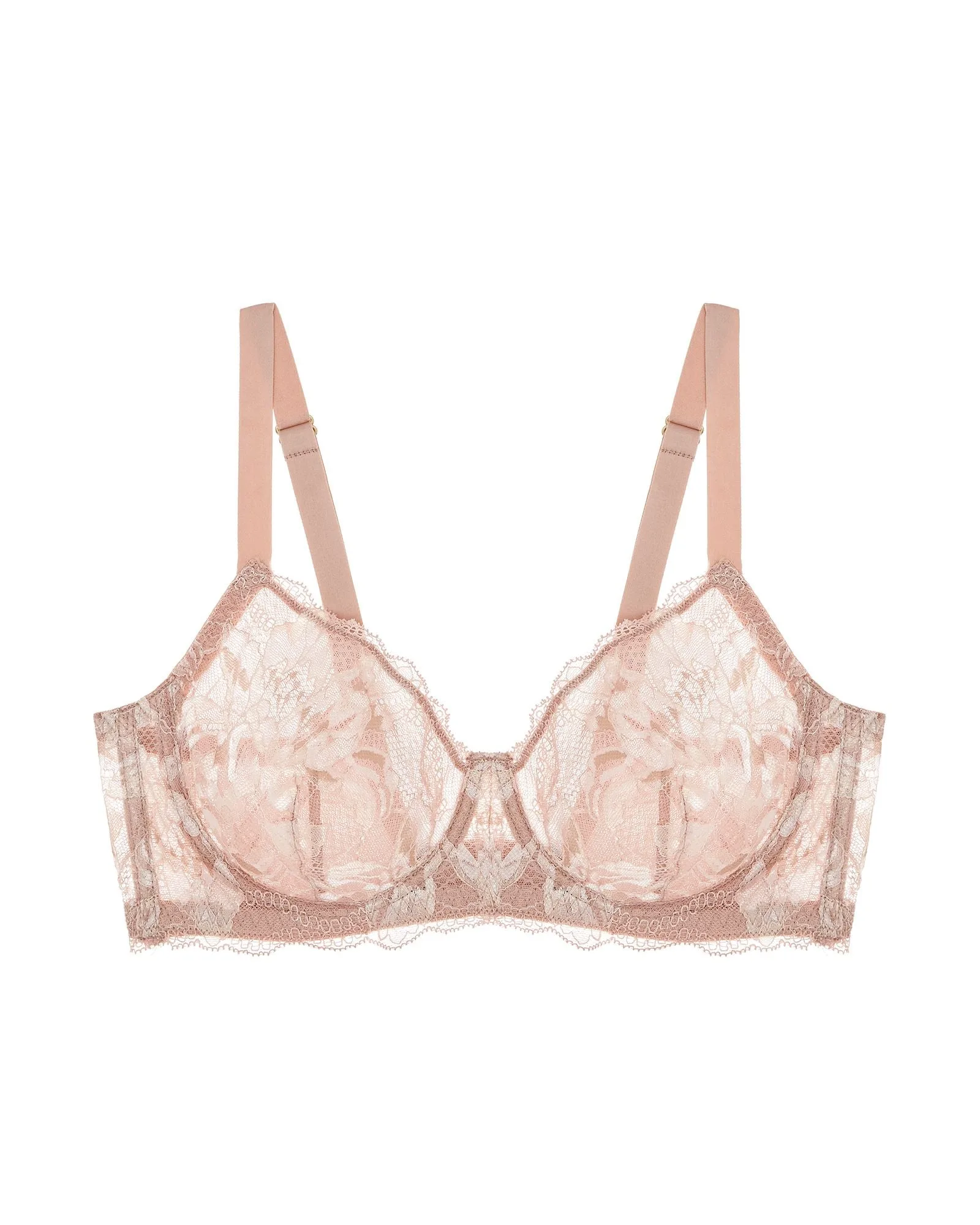
- Singuliere Half Cup Bra: This Simone Pérèle bra is an underwire, half-cup bra in a rich jewel color. The shape will give you a naturally enhanced look, featuring a straight neckline finished with a guipure braid. The separator in the center is in rigid tulle decorated with a bow and highlighted with a satin collage. The satin straps are also lined with a guipure braid and are adjustable and multi-positional: classic or crossed to fit all body types. The multi-positional straps can be crossed in the back, which adds stability and helps keep the band from sliding up. The rigid center separator also helps the gore lie flat, a sign that the cup size is correct.
- Never Say Never Tie Me Up Triangle Bralette: All eyes on you when you wear the Never Say Never Tie Me Up Triangle Bralette, made of signature Never Say Never lace from Cosabella. This wireless triangle bralette has lace cups, with thin adjustable straps and a silk self-tie in the back for a romantic look. Pair with the matching Brazilian Bottoms for a daring look or as the perfect set for a bride-to-be. Adjustable straps Silk back tie Triangle cups. The silk back tie lets you adjust the fit across your back, which can reduce riding up. However, a wireless bralette offers less band support than an underwire bra, so it may not solve a riding-up band if your band size is significantly off.