Quick answer
A bra band rides up because the band is too loose to anchor the bra, so the weight of the cups pulls the back upward. Fix it by fastening on a tighter hook, shortening the straps slightly, or sizing down in the band if the bra is already on the tightest hook. If the band still climbs after that, the bra has stretched out and needs replacing.
You put on a bra, adjust the straps, and within an hour the back band has crept up between your shoulder blades. It's one of the most common bra fit problems, and it's also one of the most fixable once you know what's causing it.
The good news is that a riding band rarely means you need a completely different style of bra. Most of the time it comes down to band tension, strap length, or a band that has simply worn out. Work through the causes below in order, and you'll usually find the fix before you need to buy anything new.
What a riding band is actually telling you
A bra band should sit level all the way around your ribcage, roughly parallel to the floor. When the back climbs higher than the front, the band has lost the tension it needs to stay put. The straps then take over the job of holding the cups up, which is why a riding band often comes with straps that dig in or slip off your shoulders.
This is a fit problem, not a body problem. If your band rides up, the bra is either too loose in the band, too long in the straps, or past its useful life. Each of those has a different fix, so it's worth identifying which one you're dealing with before you adjust anything.
- Check in a mirror: the back band should be level with the front, not higher.
- If the band lifts away from your back easily when you tug it, tension is the issue.
- If the band feels snug but the back still climbs, look at strap length next.
Cause 1: the band is too loose
The most common reason a bra band rides up is that the band is too big. A band that's too loose can't grip your ribcage, so the weight of the cups gradually pulls the back upward, especially when you raise your arms or move around. This is the classic bra band too loose scenario, and it often shows up as a band that starts level in the morning and has climbed by lunchtime.
Start by fastening the bra on a tighter hook. Most bras have three or four columns of hooks, and moving in one column gives you a noticeably firmer fit. If you're already on the tightest hook and the band still rides up, the bra is too big in the band and you should size down. A useful rule: a new bra should fit comfortably on the loosest hook, so you have room to tighten it as the elastic relaxes over time.
- Fasten on the middle or tightest hook and see if the band stays level.
- If the tightest hook is still loose, go down one band size and up one cup size to keep the cup volume similar.
- A band that leaves red marks but still rides up is usually too loose, not too tight.
Cause 2: the straps are doing too much work
Straps are meant to fine-tune the fit, not hold the bra up. If you've tightened the straps to get more lift, you've shifted the load onto them, and that upward pull is exactly what drags the back band higher. Over-tightened straps also dig into your shoulders and can cause the band to shift as you move.
Loosen the straps so they sit flat against your shoulders without pressing in, then check whether the band stays level. If the band drops into place once the straps are looser, strap tension was your problem. If the band still climbs, go back to the band size question above. On bras with back strap positioning, the straps are angled to stay on the shoulders without needing to be cranked tight, which makes this easier to get right.
- You should be able to slide one finger under a strap without it digging in.
- Loosen both straps evenly; adjusting one side only twists the band.
- If loosening the straps makes the cups gap, the band is too loose, not the straps.
Cause 3: the band has stretched out
Bra bands are elastic, and elastic relaxes with wear and washing. A bra that fit perfectly a year ago can gradually lose its grip, which is why a band that used to stay put now rides up even on the tightest hook. This is normal wear, not a sizing mistake, and no amount of adjusting will bring the elasticity back.
If your bra is already on the tightest hook and the band still climbs, the band has reached the end of its useful life. You can extend it slightly by washing in cool water and air drying to slow further stretch, but once the elastic is gone, replacing the bra is the practical fix. When you replace it, start the new bra on the loosest hook so you get the full range of adjustment over its lifetime.
- If a bra only fits on the tightest hook when new, it was too big to begin with.
- Cool washes and air drying help bands keep their stretch longer.
- A band that has visibly waved or rippled elastic is ready to retire.
When to stop adjusting and change the bra
There's a point where adjusting stops helping. If you've moved to the tightest hook, loosened the straps, and the band still rides up, the bra is the wrong size or worn out. Continuing to tighten things will only create new problems: straps that dig in, cups that gape, and a band that feels tight at the front but still climbs at the back.
At that point, choose a different option. Size down in the band, or switch to a style whose construction helps the band stay put. Bras with wide soft underbands and back strap positioning, like the Zhara Bralette, are designed to support without relying on strap tension. A lightly lined style with a firm band can also hold its position better than a soft, unstructured one. The goal is a band that stays level on its own, so the straps can just rest on your shoulders.
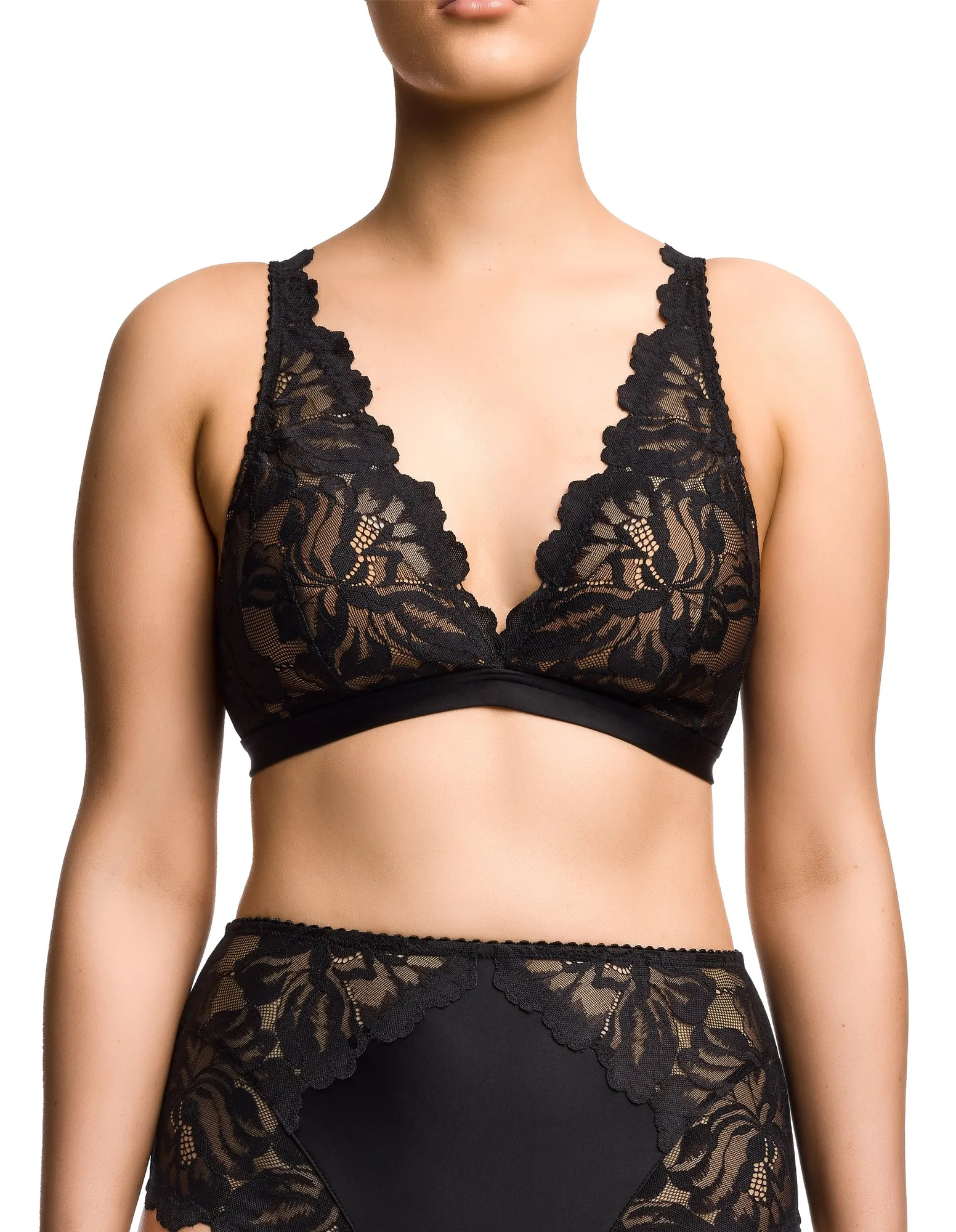
Zhara Bralette
- Stop adjusting when the tightest hook plus loosened straps still rides up.
- Size down in the band rather than tightening the straps further.
- Choose a style with a wide underband or back strap positioning for more stability.
Diagnose your riding band in three checks
- Band tension: Fasten the bra on the middle hook and tug the back band away from your body. If it lifts easily, the band is too loose. Move to a tighter hook or size down in the band if you're already on the tightest one.
- Strap length: Loosen the straps until they rest flat on your shoulders without pressing in, then check the back band in a mirror. If the band levels out, strap tension was the cause. If it still climbs, the band is the issue.
- Band condition: Check whether the band elastic looks waved or feels slack even on the tightest hook, and note how old the bra is. If the band is stretched out, replace the bra and start the new one on the loosest hook.
Bras built to keep the band in place
- Zhara Bralette: The Zhara Bralette is a wire free bra with a wide soft under band for support and comfort, and the floral lace extends high to the shoulder point to help support the bust. The bra strap positioning at the back helps prevent the straps from slipping from the shoulders. A wide underband spreads tension across your ribcage instead of concentrating it, which helps the band stay level, and the back strap positioning means you don't need to overtighten the straps to keep them in place.
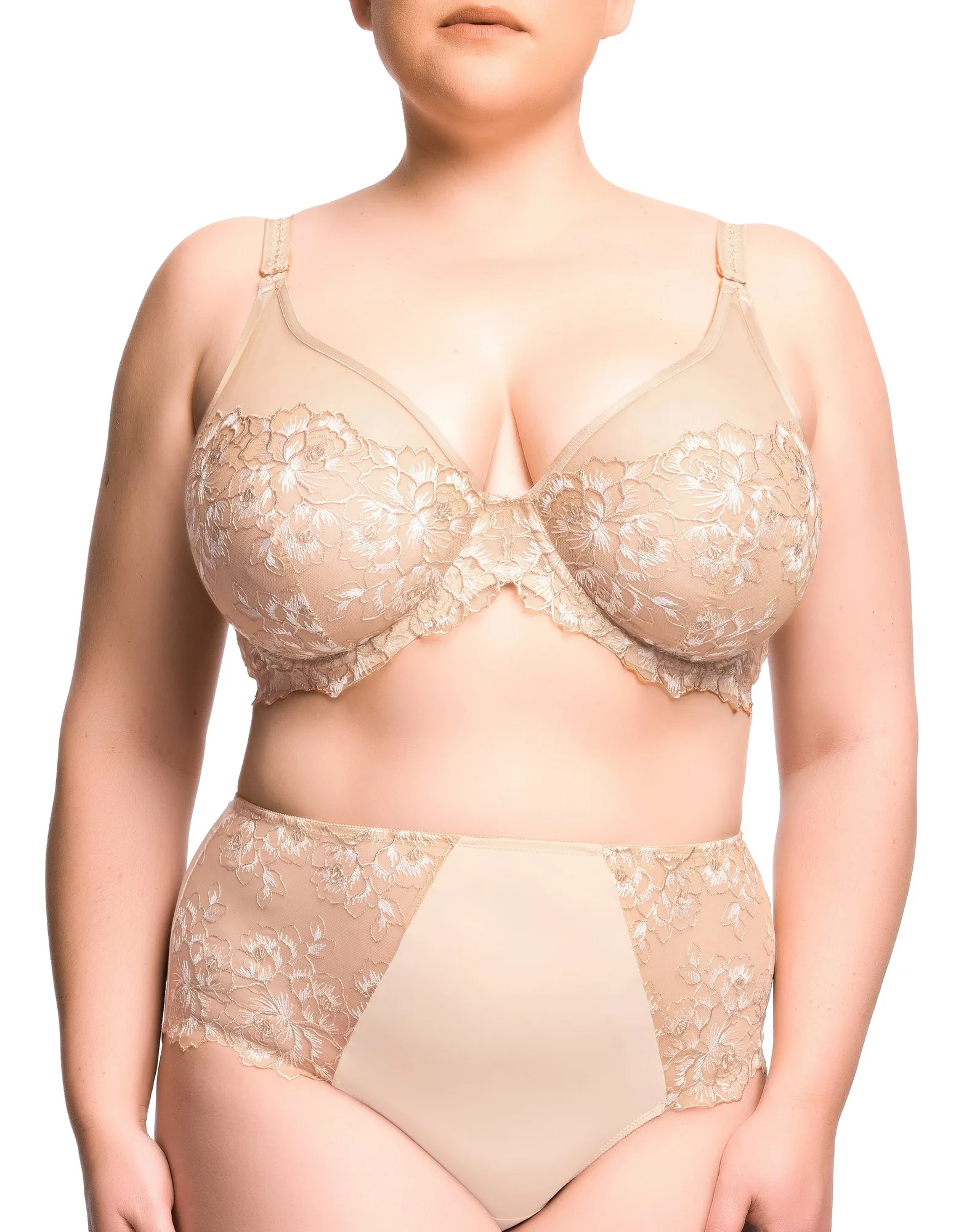
- Mila Curve Balconette Bra - Cappuccino: The Mila Curve Balconette Bra features a hidden mesh sling in the bottom of the cups for lift and shape, a four hook and eye closure, and bra strap positioning at the back that helps prevent the straps from slipping from the shoulders. The hidden sling provides lift from the cup rather than from tightened straps, and the four hook and eye closure gives you more room to adjust the band as it relaxes over time.
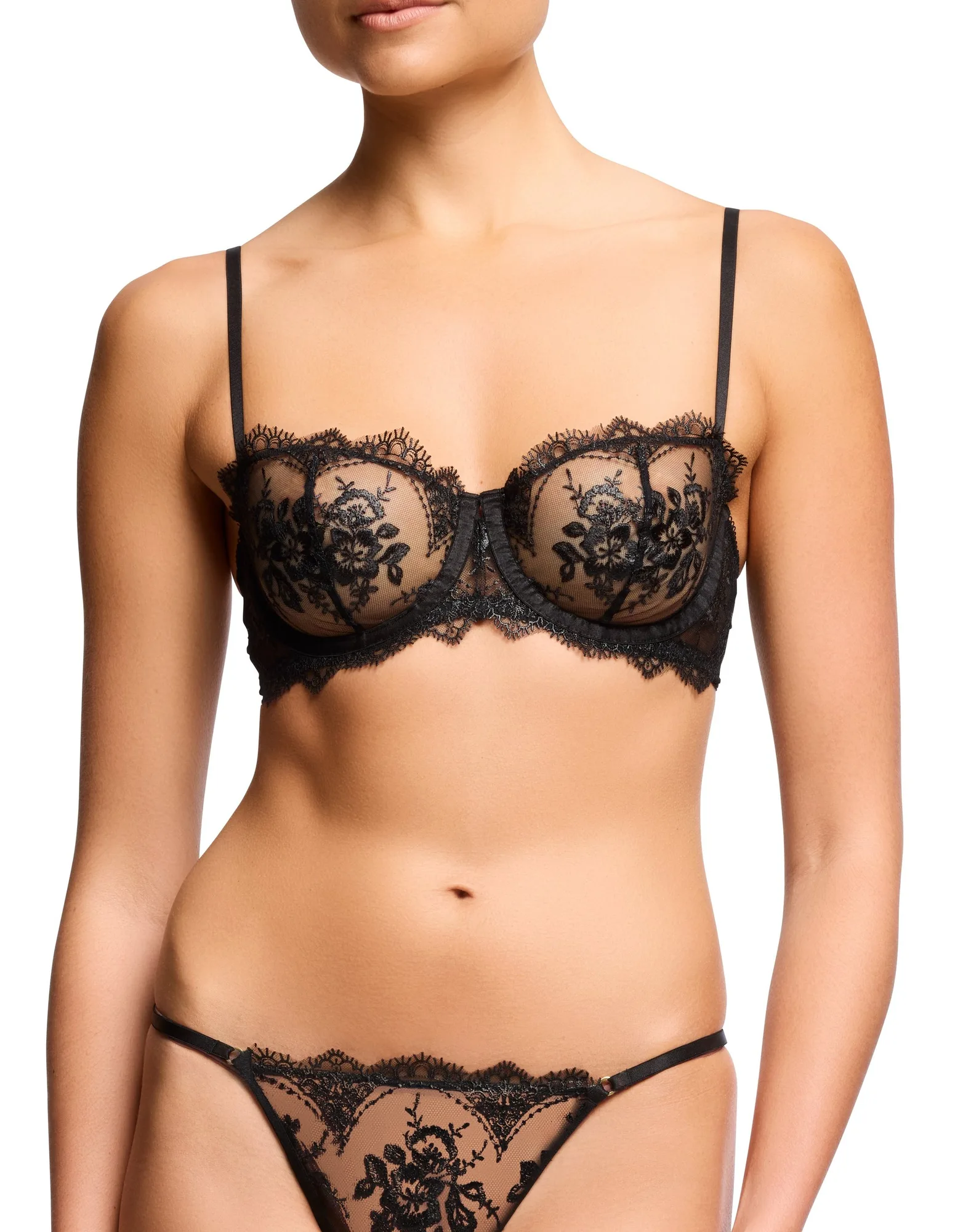
- Valencia Balconette Bra - Black: The Valencia Balconette Bra is a non padded bra with adjustable straps and a beautiful floral embroidery on soft, sheer tulle. Adjustable straps let you dial in the tension so the band, not the straps, does the supporting, which is the key to keeping a band from riding up.
A bra band rides up because it isn't holding its tension, and that almost always traces back to the band size, the strap length, or worn-out elastic. Work through the three checks in order, fix what you can, and replace the bra when the band has nothing left to give. A level band is the sign you've got it right.