Quick Answer
Most slipping straps are caused by a band that's too loose, not straps that are too long. Tighten the band to the loosest hook that still feels snug, then shorten the straps only enough to sit flat without digging in. If the band already sits level and snug and the straps still slide, the bra has stretched past saving and it's time to replace it.
You shrug your shoulder, the strap slides down again, and by lunchtime you've adjusted it six times. Slipping straps are one of the most common bra strap problems, and they're rarely solved by simply yanking the slider tighter. In fact, over-tightening is often what created the problem in the first place.
The good news: most slipping straps trace back to three fixable causes. Work through them in order and you'll usually stop the slide in under five minutes, no new purchase required.
Start With the Band, Not the Straps
About 80 percent of a bra's support should come from the band, with the straps doing the rest. When the band is too loose, it rides up at the back, the straps lose their anchor point, and gravity does the rest. Before you touch a strap slider, fasten the bra on the loosest hook that still feels snug, then check that the band sits level all the way around.
If the band climbs up your back when you raise your arms, it's too loose. Move to a tighter hook. If you're already on the tightest hook and the band still rides up, the bra has stretched out and no amount of strap adjusting will fix it.
- The band should sit level, not angled upward at the back.
- You should be able to slide two fingers under the band, but no more.
- If the tightest hook is your everyday setting, the bra is at the end of its life.
Check Strap Length and Elastic Condition
Once the band is snug, look at the straps. They should sit flat against your shoulder without pressing in or floating above the skin. If they're adjusted too short, they'll pull the band upward and create the exact looseness that makes straps slide. If they're too long, they simply fall off. Aim for flat contact, not tension.
Also check the elastic itself. Straps that have lost their snap, feel limp, or stay stretched after you release them won't hold position no matter how you adjust them. This is normal wear, and it's the point where replacement makes more sense than repair.
- Adjust both straps to the same length, then fine-tune one side at a time.
- If a strap stays stretched after you let it go, the elastic is spent.
- Never safety-pin a strap shorter as a permanent fix; it concentrates pressure on one point.
Match the Bra Style to the Neckline
Some slipping is simply a style mismatch. A balconette or strapless bra worn under a wide-neck top gives straps very little shoulder to grip. If you love a particular bra but it slides under one specific outfit, the fix may be choosing a different bra for that outfit rather than altering the one you have.
For everyday wear, a bra with a firm band and straps that sit closer to the neck tends to stay put better than a wide-set design. If you're between sizes or the band sits right at the edge of snug, sizing down in the band and up in the cup often solves persistent slipping.
- Wide-set straps slip more on narrow or sloped shoulders.
- Racerback conversion clips can help if the bra allows it.
- If a bra only slips under one top, it's an outfit problem, not a bra problem.
When to Stop Adjusting and Replace
If you've tightened the band, reset the straps, and the bra still slides, stop. Continuing to shorten the straps will only dig into your shoulders and pull the band up further. At that point the bra has either stretched beyond its useful fit or was never the right size for you.
A quick test: put the bra on, fasten it on the middle hook, and raise your arms overhead. If the band moves up more than an inch or the straps leave your shoulders, the fit is gone. Replace it rather than fight it.
- Replace when the tightest hook is your only snug option.
- Replace when straps stay stretched after release.
- If a new bra slips from day one, the size is wrong, not the adjustment.
Strap Slip Diagnosis: Cause, Fix, and Stop Point
- Band rides up at the back: The band is too loose, so the straps have nothing to anchor against. Fasten on a tighter hook until the band sits level and snug. If you're already on the tightest hook, stop adjusting and replace the bra.
- Straps sit flat but still slide off the shoulder: The straps may be too long or the elastic has lost its snap. Shorten them to flat contact, not tension, and check whether they stay stretched after release. Stretched-out elastic won't recover; replacement is the only real fix.
- One strap slips, the other doesn't: This usually means the straps are set at different lengths or one side has stretched more than the other. Match both sides, then fine-tune. If they still slip unevenly, the bra has worn asymmetrically and should be retired.
- Straps dig in and the band still rides up: You've over-tightened the straps to compensate for a loose band. Loosen the straps and tighten the band instead. If tightening the band isn't possible, the bra size is wrong, not the adjustment.
Bras Built to Stay Put
- Sophie Bra - Black: The Sophie Underwire Bra uses a soft power mesh lining with a stretch lace exterior, and the lace feature on the back straps adds a secure, adjustable touch. A power mesh lining gives the band more structure, which is the first line of defense against slipping straps.
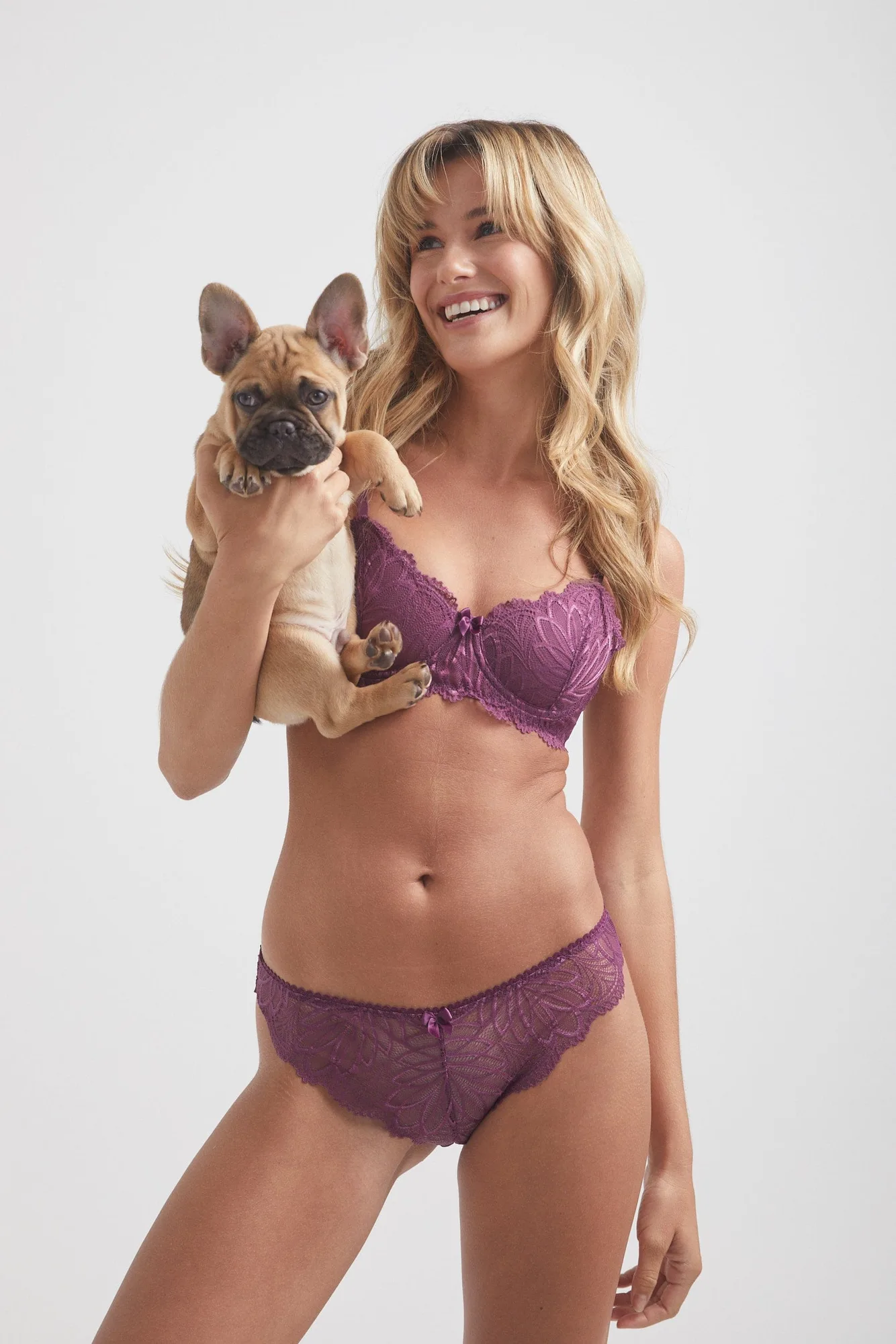
- Olivia Bra -Mulberry: The Olivia Underwire Bra has a soft power mesh lining that offers support without compromising on comfort. If your slipping is caused by a band that's too soft to hold its position, a lined band like this one is a practical upgrade.
- Amy Set - White: The Amy Set uses reinforced lace lined with power mesh for lift and comfortable support, and comes with three knicker style options. Reinforced lace holds its shape better over time, so the band is less likely to stretch out and let straps slide.
Slipping straps are almost always a band problem wearing a strap costume. Fix the band first, adjust the straps second, and replace the bra when the elastic gives out. That order solves most bra fit strap issues without spending a cent.