Quick answer
Frizzy Dinkum Doll hair is almost always caused by friction, moisture, or brushing from the ends upward. Start by separating tangles with your fingers, then work from the tips to the roots with a wide-tooth comb. If the frizz is heat or friction damage, stop brushing and smooth the fibres with a tiny amount of water and a soft cloth. Do not use hot tools, boiling water, or heavy products.
Symptom: What frizzy Dinkum Doll hair actually looks like
Frizzy hair on a Dinkum Doll shows up as a halo of flyaway fibres, rough texture, or tangles that feel stiff rather than soft. It is different from normal play-worn fluffiness. If the hair looks dull, feels dry, or snaps when you pull, the fibres are stressed rather than simply messy. The doll's hair is part of its soft cotton outer, so it responds to friction and moisture much like fabric does.
Likely cause: Friction, moisture, and brushing the wrong way
The most common cause is brushing from the top down. That pushes tangles toward the ends and stretches the fibres. Sleeping with the doll, stuffing it into bags, or washing it without protecting the hair also creates friction. Moisture is another factor: damp hair that is left to dry in a clump can dry rough. Finally, using human hair products or hot tools can coat or melt the fibres, which is not reversible at home.
Corrective action: A gentle step-by-step detangling routine
Work on a dry doll in good light. Start at the ends and use your fingers to tease out small knots. Then switch to a wide-tooth comb and hold the hair near the roots so you are not pulling on the doll's head. Move up in small sections. If the hair still feels rough, dampen a soft cloth with a little cool water and smooth the surface, then let it air-dry away from direct heat. For dolls with longer hair, a small amount of leave-in conditioner made for doll hair can help, but test on a hidden strand first.
When to stop and choose another option
Stop if the hair is matted into a solid clump, if fibres come away in your hand, or if the frizz returns immediately after smoothing. These signs mean the fibres are damaged rather than tangled. In that case, do not keep brushing. Instead, trim the damaged ends with small sharp scissors, or accept the textured look as part of play. If the doll is a favourite and the hair cannot be restored, a gentle restyle or a new doll may be the better choice.
Diagnosis: Is it frizz or fibre damage?
- Flyaway halo, still soft to touch: Light friction or static. Mist a soft cloth with cool water and smooth the surface, then finger-comb from the ends up. If it settles within a few minutes, the fibres are fine.
- Tangles that feel stiff or crunchy: Product buildup or dried moisture. Dampen and comb gently from the tips, then air-dry away from heat. If the stiffness remains after drying, stop and do not add more water.
- Fibres snap or shed when combed: The hair is damaged, not just tangled. Trim the worst ends with small scissors or restyle the doll. Do not keep brushing. Choose a trim or a new doll instead.
Dinkum Dolls with hair to care for
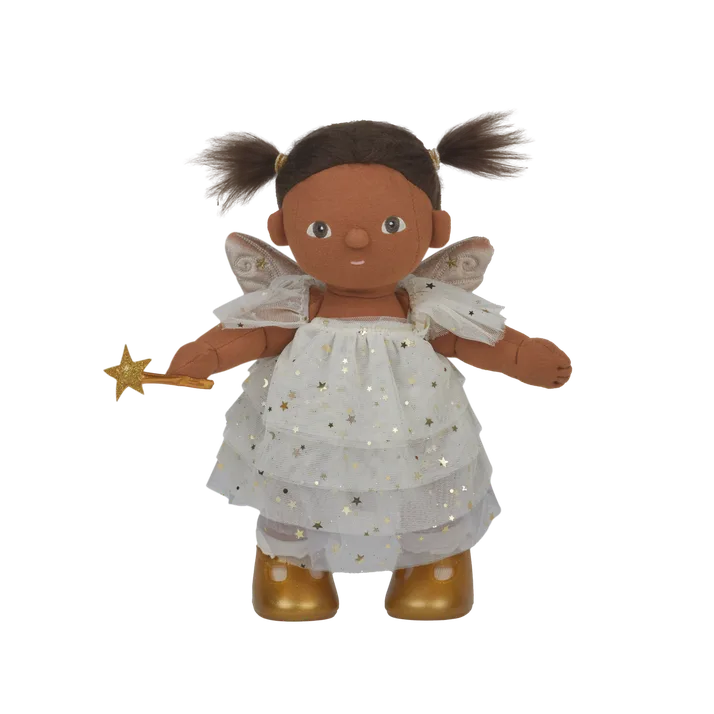
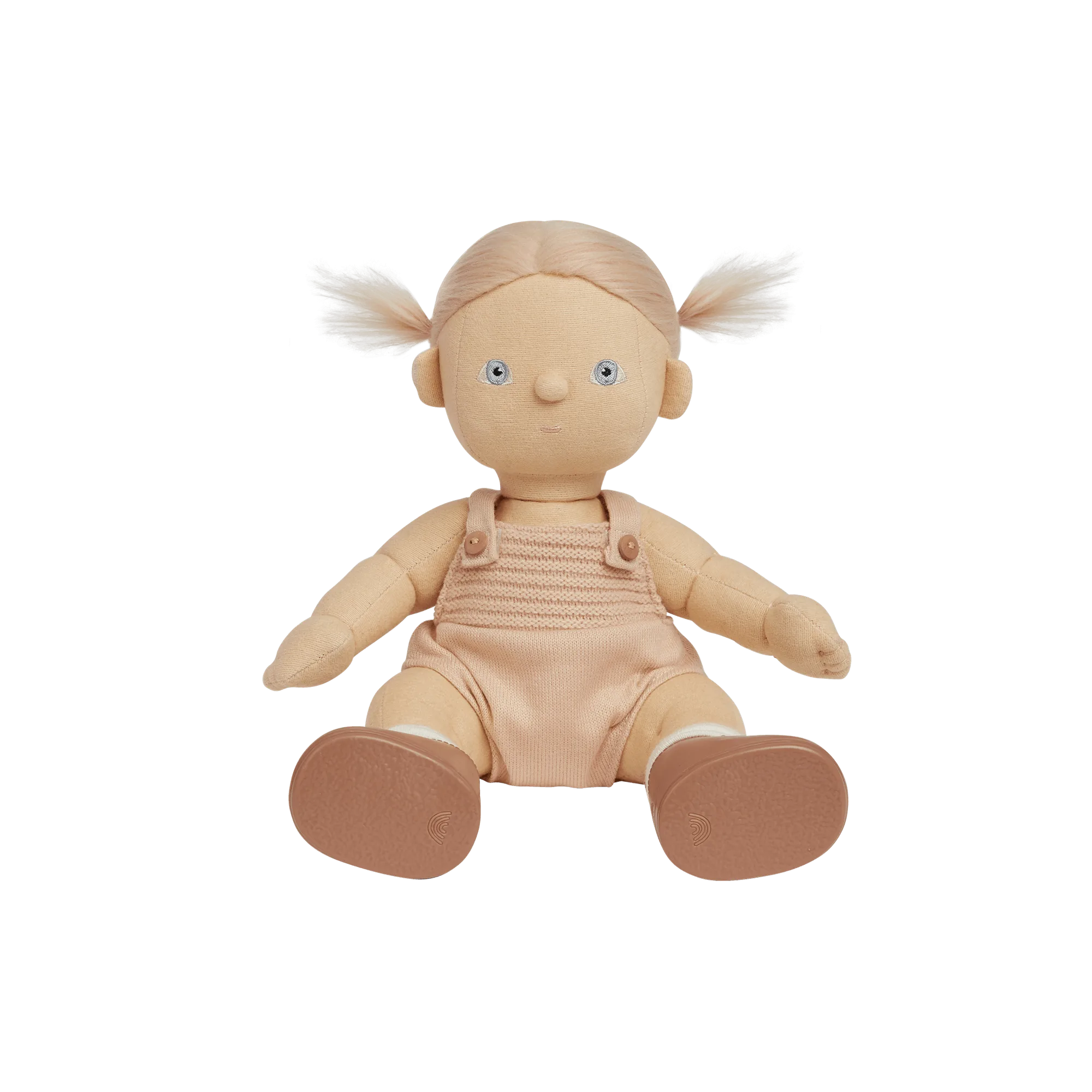
- Dinkum Dolls - Button: Dinkum Dolls - Button has posable arms, legs, and head, and can sit and stand tall when wearing shoes. Posability makes hair play easier, but it also means more friction points where hair can tangle around joints.
- Binky Kittycorn - Bonbon: Binky Kittycorn - Bonbon is softly weighted and perfectly floppy. Floppy companions are more likely to be carried and cuddled, so their surface fibres need gentle smoothing rather than harsh brushing.
- Dinky Dinkum - Yara Unicorn: Dinky Dinkum - Yara Unicorn is a limited edition Dinky Dinkum. Limited edition dolls may be harder to replace, so it is worth stopping before heavy detangling causes permanent damage.