Quick Answer
A hammock sags because the hang angle is too shallow, the suspension is too loose, or the fabric and straps are stretching under load. Aim for roughly a 30-degree hang angle, raise your anchor points rather than cranking the suspension tighter, and re-check tension after the first 20 minutes of use. If the hammock still bottoms out, the problem is usually the stand or anchor spacing, not the hammock itself.
You hang your hammock, sit down, and the whole thing drops until your backside is scraping the ground. That is not a defective hammock. It is almost always one of three things: hang angle, suspension tension, or material stretch. Each has a different fix, and tightening everything as hard as you can usually makes it worse.
This guide walks through the symptoms so you can tell which cause you are dealing with, what to adjust first, and the point where you should stop fiddling and change your setup instead. It applies whether you are hanging from trees, a stand, or a pair of posts in the backyard.
Start With the Hang Angle, Not the Tension
The most common cause of a hammock that sits too low is a hang angle that is too shallow. When the suspension runs nearly horizontal, the hammock becomes a tight, flat line, and the moment you add body weight it stretches downward. A steeper angle gives the hammock room to curve and keeps your body higher off the ground.
A practical target is about 30 degrees from horizontal, which you can eyeball by making a relaxed L with your thumb and forefinger. If your straps look almost flat, raise your anchor points or shorten the distance between them before you touch anything else. This one change fixes most sagging complaints.
- Check the angle before adjusting straps: flat suspension equals a low hammock.
- Raise anchor points if you cannot shorten the span between them.
- Re-hang and sit in it before deciding the angle is wrong.
Suspension Tension: Tight Is Not the Same as Stable
Over-tightening is a hammock setup mistake that mimics sagging. A drum-tight suspension leaves no curve, so the fabric has nowhere to go but down when loaded. It also puts unnecessary strain on straps, trees, and hardware. You want the suspension snug and even, not guitar-string tight.
Check that both sides are at the same height and roughly the same tension. An uneven hang makes one side dip, which reads as sagging even when the angle is correct. If you are using tree straps, make sure they are not slipping down the trunk, since a slow slide will drop your hammock over the course of an afternoon.
- Compare both ends: an uneven hang looks like sag even when it is not.
- Re-tighten tree straps that have slid down the trunk.
- Snug, not rigid, is the goal for hammock suspension tension.
Fabric and Strap Stretch: The First-Hang Drop
Some drop on the first hang is normal. Fabrics and webbing settle under load, and a brand-new hammock often sits lower after 20 minutes than it did when you first climbed in. This is not a defect, and it is why you should hang slightly higher than feels necessary at the start.
If the sag continues every time you use it, check for worn or stretched straps, or a suspension that is too long for the span. A very long suspension has more material to stretch. Shortening the span or using a stand that matches your hammock length removes that variable entirely.
- Hang a little higher on the first setup and expect a small settle.
- Inspect straps for wear if sag gets worse over time.
- Shorter suspension spans stretch less than long ones.
When the Problem Is the Stand or Anchor Spacing
If you have corrected the angle and tension and the hammock still bottoms out, the issue is likely the frame or the distance between anchors. A stand that is too short for your hammock forces a shallow angle, and anchors spaced too far apart do the same thing. No amount of strap adjustment fixes geometry.
This is where you stop tightening and change the setup. A stand designed for the hammock you own, or a shorter span between trees, will solve the problem more reliably than any suspension tweak. Continuing to crank tension onto a mismatched setup risks damaging straps and hardware.
- Measure your span before blaming the hammock.
- A stand that fits your hammock length prevents forced shallow angles.
- Stop adjusting once angle and tension are correct and sag remains.
Sag Diagnosis: Match the Symptom to the Fix
- Symptom: hammock sits low immediately on first sit: Your hang angle is likely too shallow. Raise anchor points or shorten the span so the suspension sits closer to 30 degrees. Fix the angle before touching tension.
- Symptom: one side dips lower than the other: The suspension is uneven, or a tree strap has slid down the trunk. Level both ends and re-seat the straps. Even hang, even comfort.
- Symptom: hammock drops gradually over an afternoon: Fabric and webbing are settling under load, or straps are worn. Hang slightly higher at the start and inspect straps for wear. Some first-hang drop is normal; ongoing drop is not.
- Symptom: sag remains after angle and tension are correct: The stand or anchor spacing does not match your hammock. Stop tightening and change the frame or span instead. Geometry beats tension every time.
Gear That Helps Prevent Sag
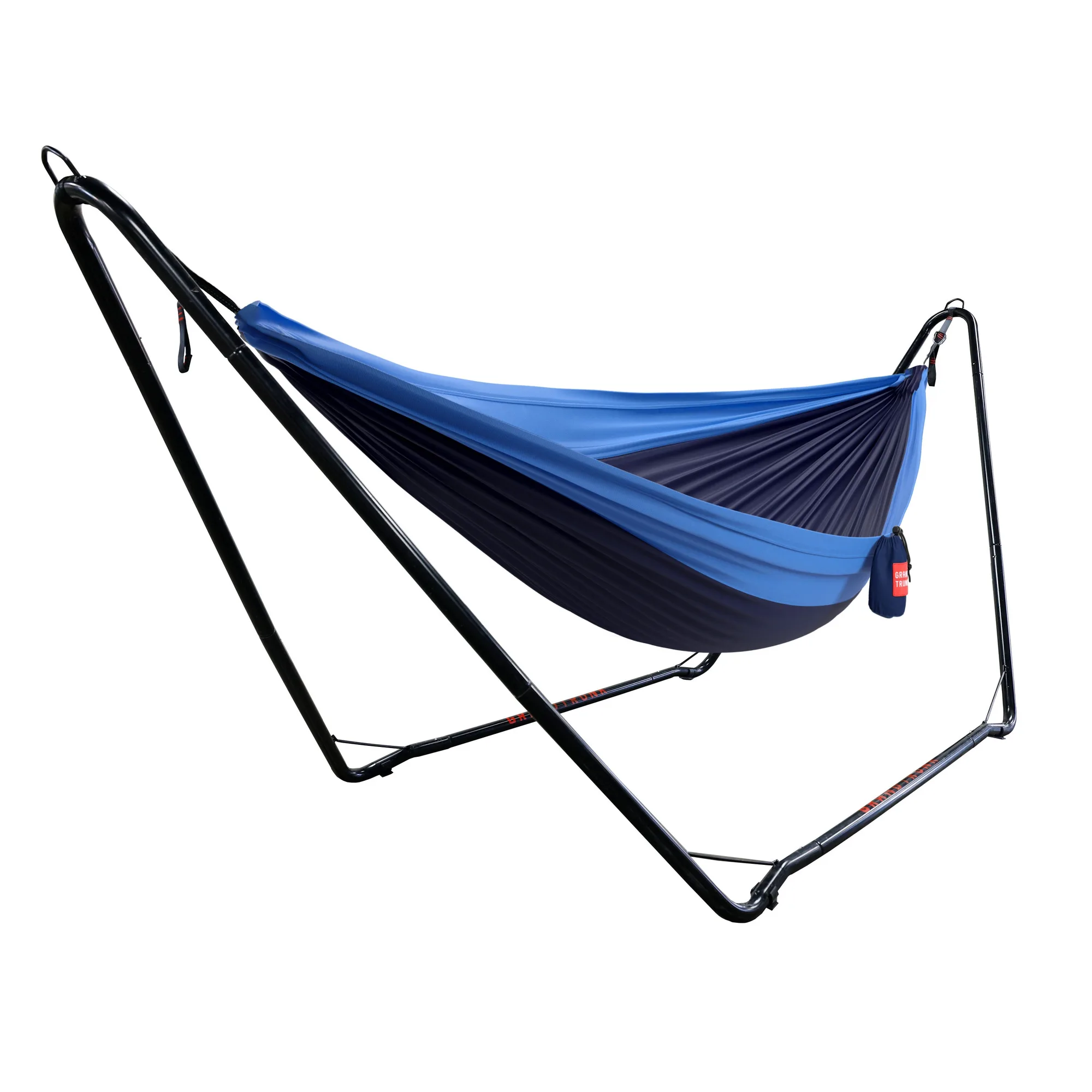
- Hangout Hammock Stand: The Hangout Hammock Stand is built for camping in your car or on the beach, or even glamping, and Grand Trunk recommends pairing it with the TrunkTech Double Hammock. If your sag comes from anchor spacing rather than your hammock, a stand removes the guesswork and gives you a consistent hang every time.
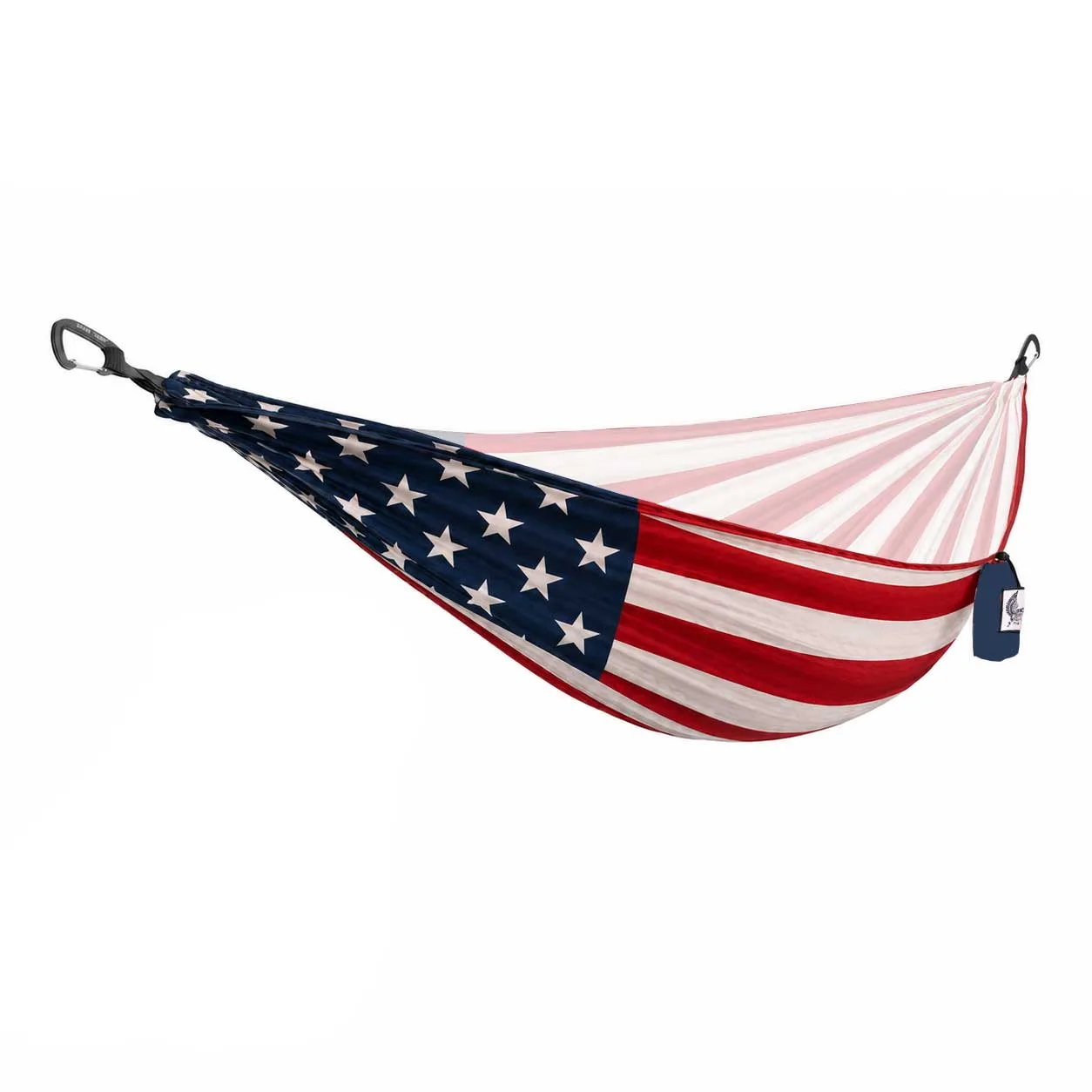
- USA Flag Double Hammock with Straps | 250th Anniversary Edition: This limited edition hammock includes straps and is built from durable 240T polyester pongee fabric, supporting up to 400 lbs. A complete hammock-and-strap kit means one less variable when you are diagnosing sag, since the suspension is matched to the hammock.
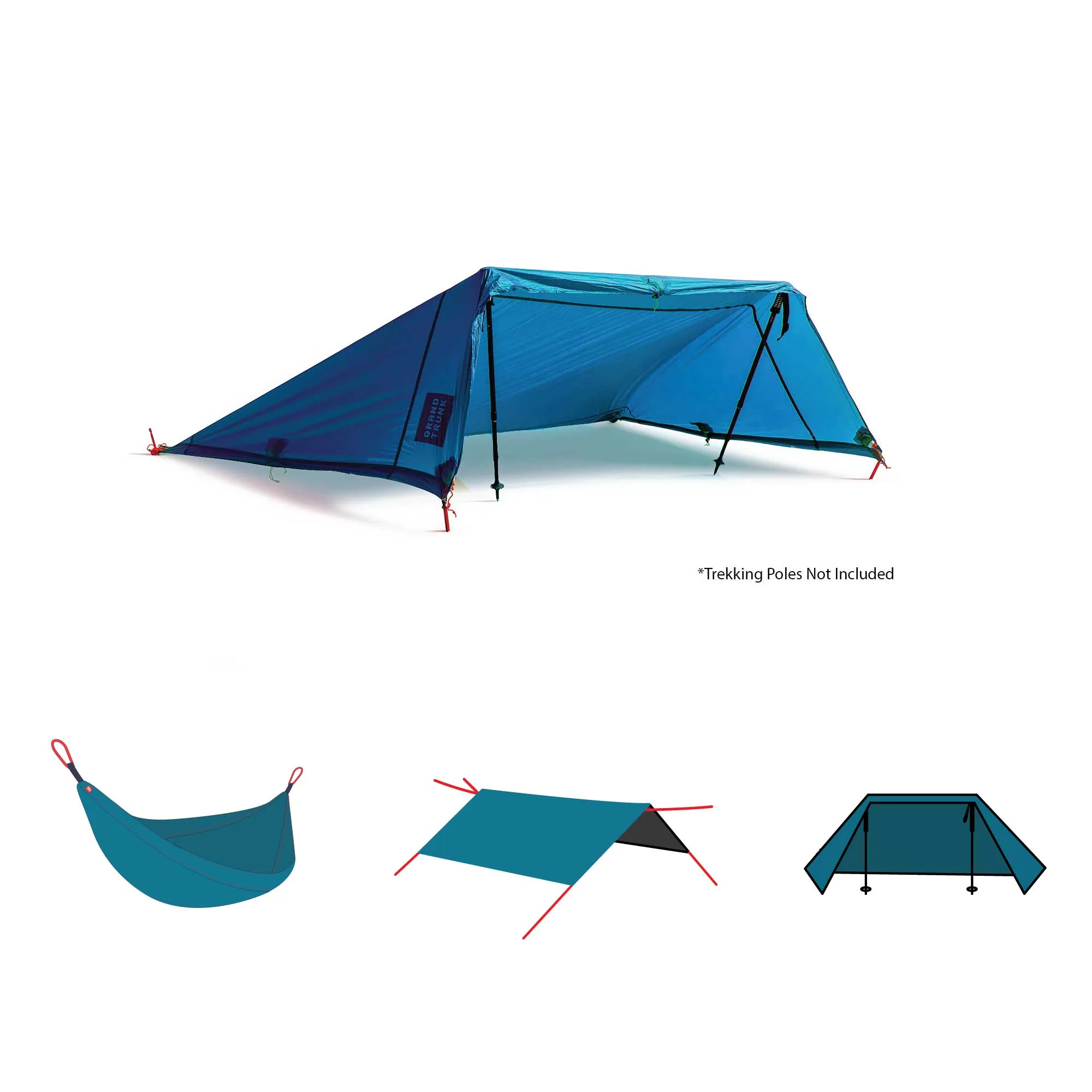
- Moab All-In-One Shelter Hammock: The MOAB can be used as a hammock, canopy, A-frame bivvy, lean-to shelter, tent footprint, or sunshade, and converts between forms while packing down light and space-efficient. If you switch between hammock and shelter modes, expect to re-check your hang angle each time, because the setup changes with the configuration.
Most hammock sag comes down to angle, tension, or stretch, and the fix is usually to raise your hang rather than crank your straps. Work through the diagnosis in order, and if the sag survives a correct angle and even tension, change the stand or span instead of fighting it.