Why Taps Break During Hand-Tapping
Breaking a miniature tap is frustrating, especially when you're working on a delicate model, clock part, or instrument repair. The most common cause is applying too much torque or side pressure for the tap's small diameter. Miniature taps are brittle by design—they need to cut clean threads in hard materials without deforming, which means they snap under misalignment or excessive force.
Another frequent culprit is using the wrong tap wrench for the job. A wrench that doesn't grip the tap squarely or that is too large for the tap size can cause the tap to wobble, leading to uneven cutting and eventual breakage. Proper tool fit and controlled technique are essential.
Miniature Tap Wrench at a Glance
-
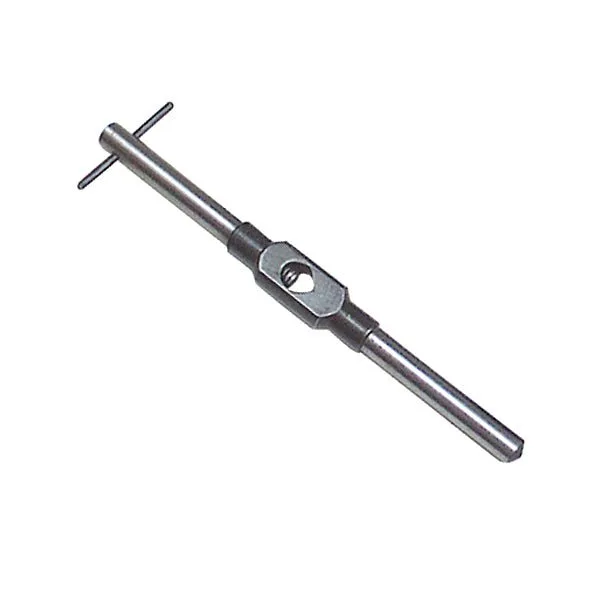
Miniature Tap Wrench: The Miniature Tap Wrench holds all our miniature taps up to 1/4" x 1/4" and has a 4-1/2" overall length. Its compact size provides excellent control for hand-tapping, reducing the risk of breaking small taps by allowing precise, gentle rotation.
Miniature Tap Wrench
-
Miniature Tap Wrench: Made from carbon steel with a brushed finish, it is designed for model building, clock-making, instrument repair, and other precision work. The durable construction and finish ensure a secure grip on the tap, minimizing slippage that can cause breakage.
How to Prevent Broken Taps
Follow these steps to reduce the risk of breaking taps when using a miniature tap wrench.
- Use the correct tap wrench size: Ensure the tap wrench is designed for the tap's shank size. The Miniature Tap Wrench from Micro-Mark holds square drive taps up to 1/4 inch x 1/4 inch, which covers most miniature tap sizes.
- Align the tap squarely: Start the tap straight into the hole. Even a slight angle increases stress on the tap. Use a tap guide or start with a few gentle turns to establish the thread.
- Apply steady, gentle pressure: Turn the wrench smoothly without forcing. Let the tap cut at its own pace. For hard materials, back the tap out occasionally to clear chips.
- Lubricate the tap: Use a suitable cutting fluid or lubricant to reduce friction and heat. This helps the tap cut more easily and reduces the chance of breakage.
- Avoid excessive torque: If the tap becomes hard to turn, stop and check for chips or misalignment. Forcing the tap is the fastest way to snap it.
What to Do If a Tap Breaks
If a tap breaks inside your workpiece, stop immediately. Do not try to force the broken piece out with the tap wrench—this can damage the threads or the workpiece. Instead, use a tap extractor or carefully drill out the broken tap with a small bit. In some cases, you may need to start a new hole nearby and re-tap. Prevention is always better than extraction, so focus on proper technique and tool selection from the start.
Choosing the Right Tool for the Job
The Miniature Tap Wrench from Micro-Mark is specifically designed for miniature taps used in model building, clock-making, instrument repair, and similar precision work. Its small size (4-1/2 inches overall) gives you the control needed to avoid the common mistakes that break taps. By matching the wrench to your tap size and following the steps above, you can achieve clean threads without the frustration of broken tools.