Quick answer
Most mass-produced polyhedral dice are not perfectly balanced, but the imbalance is usually too small to notice in normal play. The bigger reasons a die seems to have a favorite number are randomness, selective memory, and rolling conditions. If you want the best odds of fair-feeling rolls, choose sharp-edged dice and roll them on a padded surface.
You have rolled your d20 twenty times and seen three 20s and four 1s. Your polyhedral set clearly loves the number 20 and hates you. Or does it? The feeling that a die has a favorite number is one of the most common dnd dice questions, and the answer is more interesting than a simple yes or no.
This explainer walks through what dice balance actually means, why some dice roll badly, and how to tell the difference between a real manufacturing flaw and normal random chance. Along the way, we will look at how sharp-edged dice are made and which dice rolling myths you can safely ignore.
What does dice balance actually mean?
A perfectly balanced die has its center of mass exactly in the middle, so every face has an equal chance of landing up. In practice, most polymer dice are close but not perfect. Tiny air bubbles, uneven resin density, or a slightly heavy number can shift the odds by a fraction of a percent.
That fraction is almost never enough to notice across a single session. To detect a real bias, you would need hundreds or thousands of rolls and a controlled surface. So when your d20 lands on 1 three times in a row, that is usually randomness, not a cursed die.
- A die does not need to be perfectly balanced to be fair enough for tabletop play.
- Real bias is small and only shows up over a large number of rolls.
- If a die feels off, test it with a saltwater float before blaming the dice gods.
Why does my polyhedral set seem to favor one number?
Your brain is a pattern-finding machine, and it remembers the dramatic rolls. You notice the natural 20 that saved the party and the natural 1 that killed your character. You do not remember the twelve rolls that landed on 8, 11, or 14 because those are boring.
This is called confirmation bias, and it is the main reason a die appears to have a favorite number. Add in the fact that some numbers are simply more memorable, and you get a strong but false sense of a pattern. The fix is simple: write down every roll for one session and look at the actual spread.
- Track 50 or more rolls before deciding a die is biased.
- Remember that a fair d20 still has a 5% chance of any given face.
- Do not trust your memory of a session; trust a written log.
How does sharp-edged construction affect fairness?
Traditional rounded-edge dice tumble more before settling, which can make them feel more random but also makes them harder to read. Sharp-edged dice, like the ones in many modern polyhedral sets, have flat faces and crisp corners. That construction allows for more randomized rolls when compared to traditional rounded-edge RPG dice, because the die cannot roll as far after it stops.
Sharp edges also mean the die is more sensitive to the surface you roll on. A soft, padded dice tray absorbs impact and lets the die settle quickly. A hard table can cause more bouncing and sliding, which adds chaos but also more wear on the corners.
- Sharp-edged dice are designed to stop faster and show a clear result.
- Use a padded tray to protect edges and get consistent rolls.
- Rounded dice are not unfair, just different in feel and read.
Do dice rolling myths hold up?
One common myth is that you can charge a die by rolling it a certain way or storing it with a specific number up. Resin does not remember which face was down, and gravity does not care about your intentions. Another myth says that clear dice are more fair because you can see bubbles, but bubbles are not automatically a problem unless they are large and off-center.
A more useful approach is to treat dice like any other tool. Clean them, store them properly, and replace them if they develop visible cracks or chips. A chipped corner can change how a die rolls far more than any manufacturing bias.
- Storing a die with a number up does not train it.
- Small bubbles are normal in resin dice and usually harmless.
- Chips and cracks matter more than myths; inspect your dice occasionally.
How can I test my own dice at home?
The saltwater float test is the classic home method. Mix enough salt into a glass of water that the die floats, then tap it to spin. If the same face keeps coming up, the die may be weighted toward that side. This test works best for resin dice and is not perfect, but it can reveal a gross imbalance.
For a more practical check, roll your die 100 times on a padded surface and record the results. If one number appears far more often than expected, set that die aside for casual play. If it is within a few rolls of average, it is fine for your table.
- Saltwater float test: good for spotting a heavy side.
- 100-roll log: good for spotting a real pattern.
- Do not obsess over small deviations; no die is perfectly random.
Quick FAQ: dice balance and fairness
Are dnd dice balanced?
Most are close enough for normal play, but no mass-produced die is perfectly balanced. The imbalance is usually too small to affect a session. Do not replace a die unless you have logged a clear pattern over many rolls.
Why does my die keep landing on the same number?
Randomness plus confirmation bias. You remember the repeats and forget the spread. A written roll log will show whether there is a real problem. Track 100 rolls before you blame the die.
Do sharp-edged dice roll more fairly?
Sharp-edged construction allows for more randomized rolls when compared to traditional rounded-edge RPG dice, because the die stops faster and tumbles less. Pair sharp-edged dice with a padded tray for the most consistent results.
Dice sets that roll well and look good
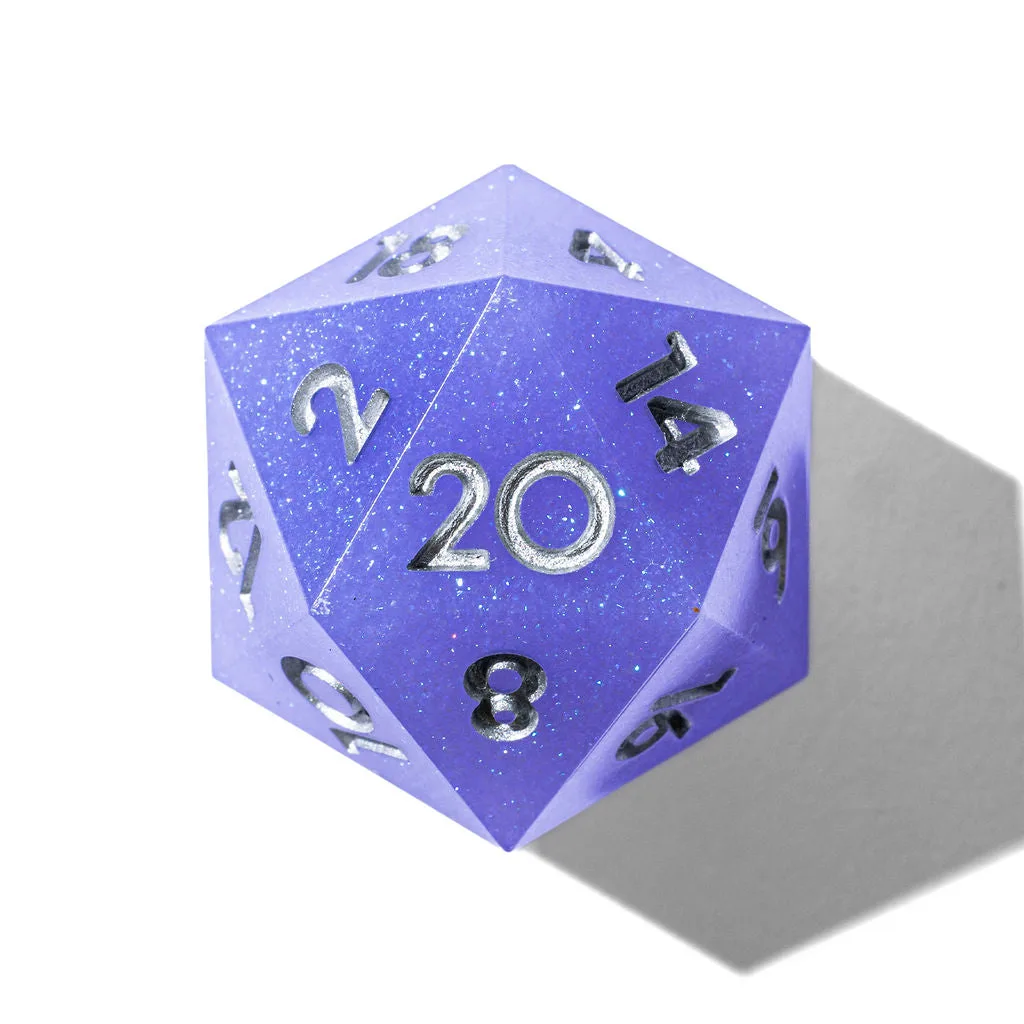
- Celestia 7-Piece Polyhedral Dice Set: Sharp-edged construction allows for more randomized rolls when compared to traditional rounded-edge RPG dice. If you want a set that settles quickly and gives a clear result, sharp edges help reduce the tumbling that can make rolls feel inconsistent.
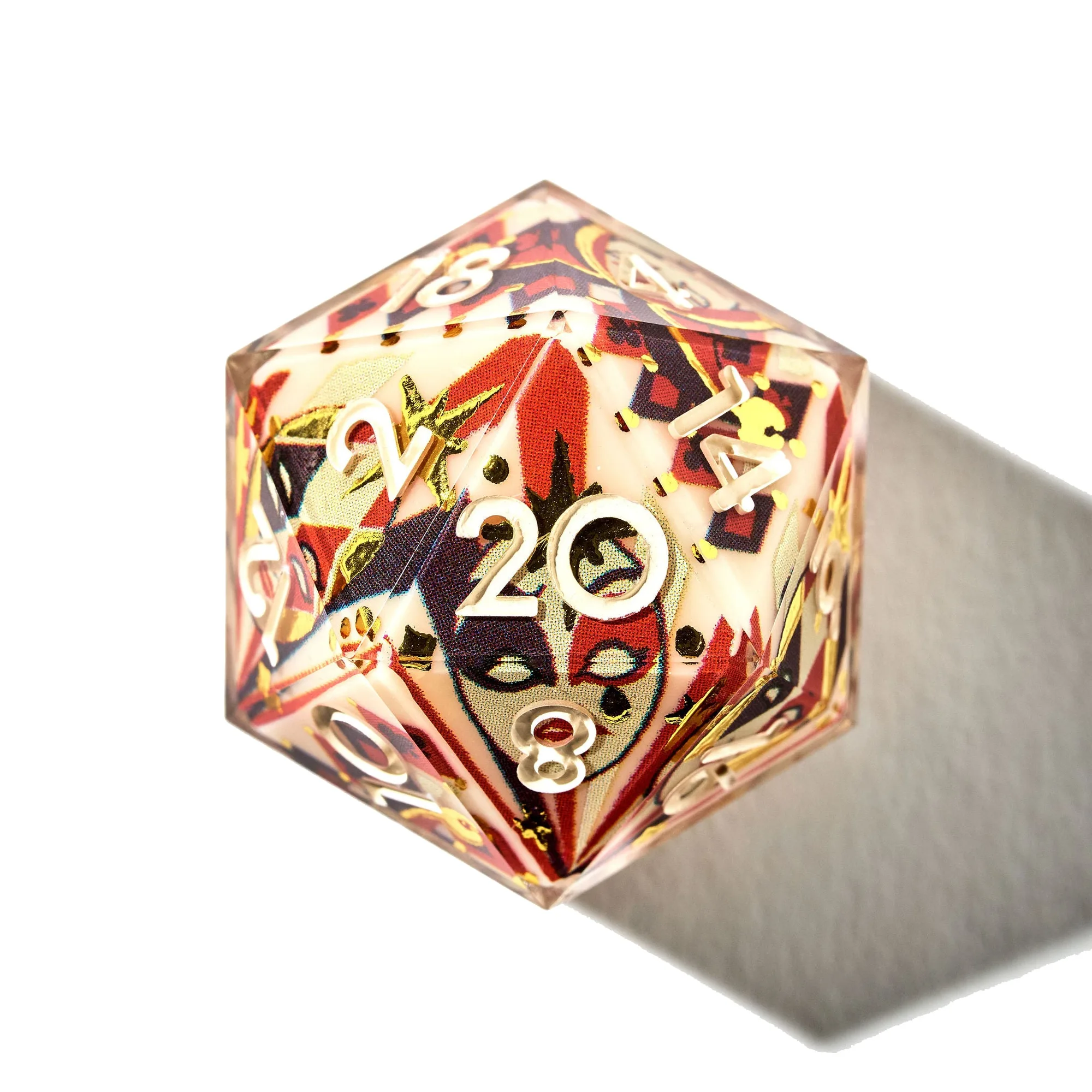
- Harlequin 7-Piece Iconic Dice Set: Each 7-piece set of gaming dice includes one D4, D6, D8, D10, D%, D12, and D20. A full polyhedral set means you have the right die for every roll, so you are not substituting a d6 for a d8 and skewing your own game.
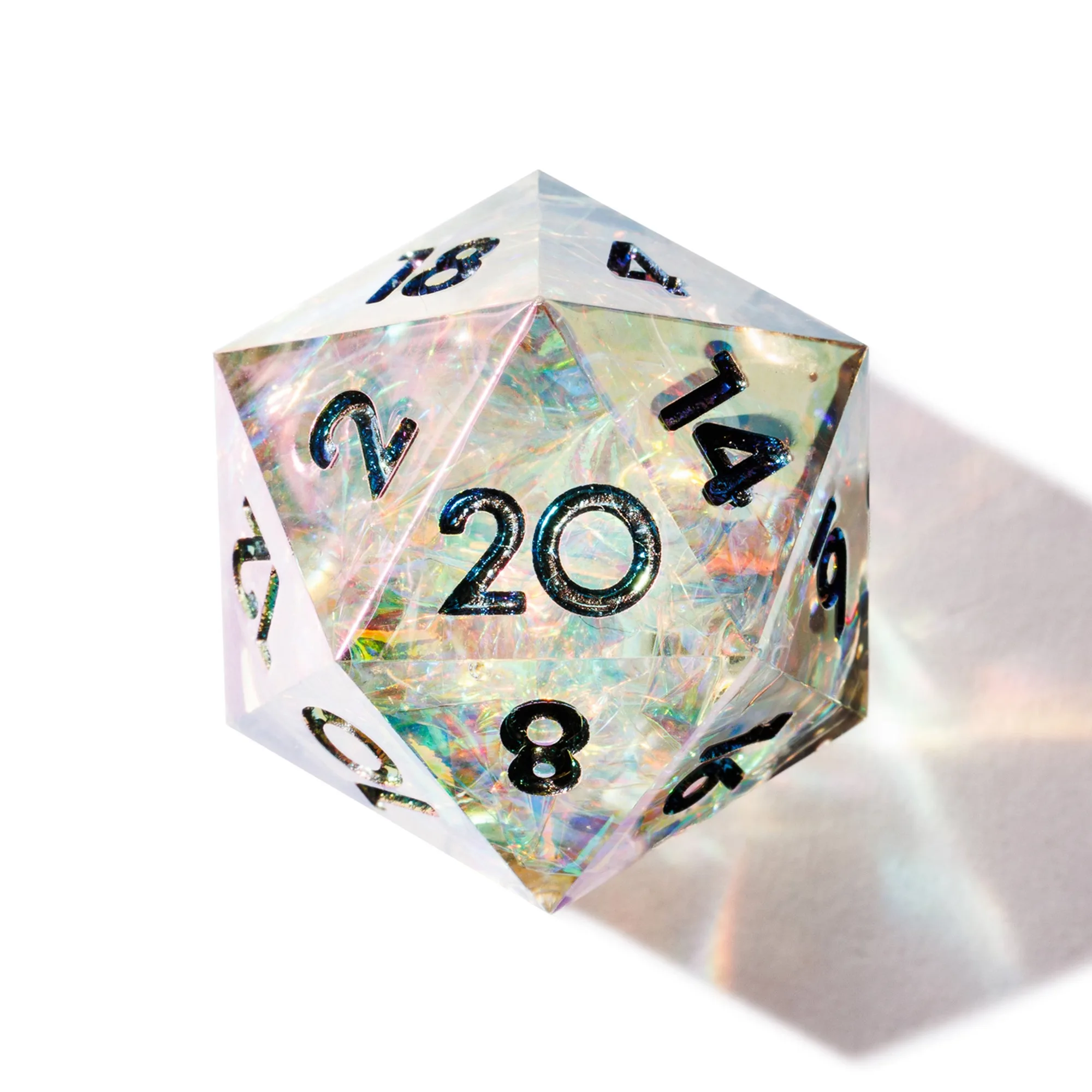
- Aurora Borealis 7-Piece Iridescent Dice Set: Each gaming dice features a transparent, iridescent shell, with warm mylar. Transparent shells let you inspect the interior for large bubbles or debris, which is useful if you like to check your dice for obvious flaws.
Your polyhedral set probably does not have a favorite number. It has physics, and you have a memory that loves a good story. Roll on a padded surface, keep a simple log if you are curious, and save your suspicion for dice that are visibly chipped or cracked. The rest is just the game.