Quick answer
Most tarp sagging overnight comes from three things: fabric stretching when it absorbs moisture, guy lines creeping through knots or slipping on smooth pegs, and wind working the whole pitch loose. Re-tension the guy lines first, then check peg angle and fabric moisture. If the tarp still sags after a full re-tension, the pitch angle or anchor points are wrong and you should re-pitch rather than keep tightening.
You pitched a taut tarp before dinner. By morning it's drooping, flapping, or pooling water in the middle. That's not bad luck, and it's rarely a defective tarp. Overnight sag is a predictable result of moisture, wind, and how tension is stored in your guy lines.
This guide separates the symptom from the cause so you can fix the right thing at camp instead of tightening everything and hoping. It covers what you can correct in two minutes, what needs a re-pitch, and when to stop adjusting and change your setup instead.
Symptom: the tarp is looser than when you pitched it
A tarp that was drum-tight at 6 p.m. and slack at 6 a.m. has lost tension somewhere in the system. Check in this order: guy lines, pegs, then fabric. Run a hand along each guy line. If it moves easily or hangs with a curve, that line has lost tension. Look at the pegs. A peg pulled halfway out, or tilted toward the tarp, is a failed anchor, not a failed tarp.
If the lines are tight and the pegs are seated but the fabric still sags between anchor points, the material itself has changed shape. That usually points to moisture or to a pitch that was never under even tension to begin with.
- Walk the perimeter once and touch every guy line before adjusting anything.
- Mark the worst sag point so you can tell whether your fix actually worked.
Cause 1: fabric takes on moisture and stretches
Many tarp fabrics relax slightly when they absorb moisture from rain, dew, or overnight humidity. The weave or coating isn't failing; it's responding to water. This is the classic reason a tarp sags in rain, and it's why the sag often appears on the wettest nights rather than the windiest ones.
The fix is re-tensioning, not re-pitching. Once the fabric has taken on what moisture it will hold, tightening the guy lines restores the pitch. Expect to do this once after the first serious rain or heavy dew, then leave it alone. Over-tightening wet fabric can stress seams and stake loops, so tighten to taut, not to drum-skin.
- Re-tension after the first rain or heavy dew, not repeatedly through the night.
- If water pools in a low spot, fix the pitch angle rather than cranking the lines tighter.
Cause 2: guy lines creep and knots slip
Tarp guy line tension depends on friction. Smooth cord slides through some knots under steady load, and wind adds a pulsing load that speeds up the creep. A line that was tight at bedtime can lose several centimeters of tension by morning without anything breaking.
Use a tensioning knot or a line-lock tensioner that grips under load, and add a small drip loop so water runs off the line instead of traveling into the tarp. If you're using smooth cord and simple knots, that combination is a common source of tarp pitching problems. Switch the knot or add a tensioner before you blame the tarp.
- Test each knot by hand-loading it before you walk away from the pitch.
- A drip loop near the anchor keeps water from wicking along the line.
Cause 3: pegs and anchors move under load
A peg holds by friction with the ground. In soft soil, sand, or loose duff, a peg can rotate or rise overnight, especially when wind loads the tarp from a different direction than it did at setup. Once one anchor moves, tension redistributes and other lines go slack.
Drive pegs at an angle away from the tarp's pull direction, not straight down. If the ground is loose, use wider pegs, add a second peg behind the first, or weight the anchor with a rock. If anchors keep pulling out no matter what you do, the ground, not the tarp, is the limiting factor.
- Angle pegs away from the load so the tarp pulls them deeper, not out.
- Re-check anchors after the first hour of wind, then again before sleeping.
When to stop adjusting and re-pitch
If you've re-tensioned the lines, re-seated the pegs, and the tarp still sags, stop tightening. At that point the geometry is wrong: the pitch angle is too flat, the anchor points are too far apart, or the tarp is simply too small for the span you're asking it to cover. More tension won't fix a bad layout.
Re-pitch with a steeper angle so water and wind shed instead of collecting. Move anchors closer together if the span is too wide, and use a ridgeline that keeps the fabric under even tension. If the tarp still can't hold shape, switch to a different shelter option for that trip rather than fighting the same setup all night.
- Steeper pitch angles shed water and reduce flapping.
- If the tarp is undersized for the span, no amount of tension will fix it.
Sag diagnosis: match the symptom to the fix
- Sag after rain or heavy dew: Fabric has absorbed moisture and relaxed. Re-tension guy lines once, to taut rather than drum-tight, and check that water isn't pooling in a low spot. If it sags again the same night, the pitch angle is too flat.
- Sag on a dry, windy night: Guy lines are creeping through knots or slipping on smooth pegs. Switch to a gripping knot or tensioner and re-seat pegs angled away from the load. If lines stay tight but the tarp still flaps, the span between anchors is too wide.
- Sag returns within an hour of re-tensioning: The layout is the problem, not the tension. Re-pitch with a steeper angle and closer anchors instead of tightening further. If a re-pitch still won't hold, the tarp is undersized for the span or the ground won't hold pegs.
DOD gear that helps with tarp pitching
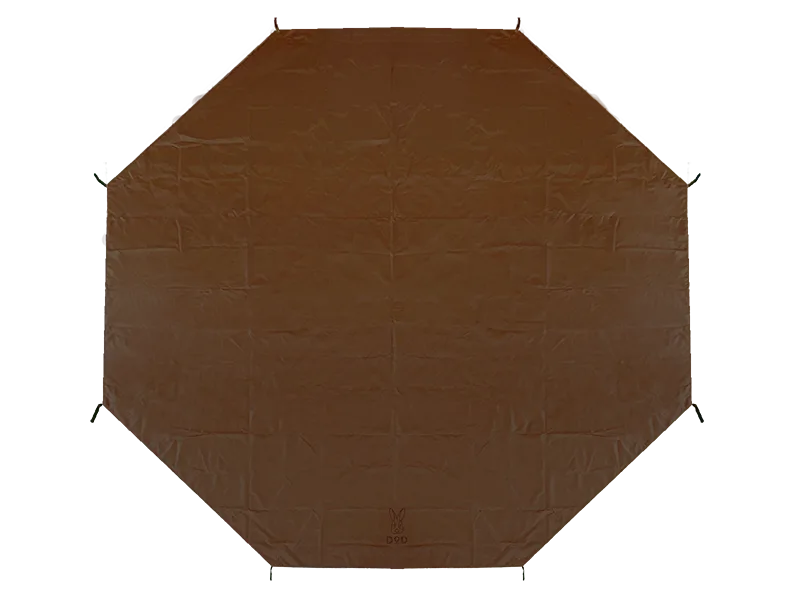
- Takenoko Ground Sheet: The loops on the ground sheet are designed to be in the same position as the pegs on the Takenoko Tent, so you peg the ground sheet first, then spread the tent on top and hook the loops. A ground sheet that shares peg positions with the tent reduces anchor confusion and helps the whole pitch sit evenly, which lowers the chance of one corner pulling loose overnight.
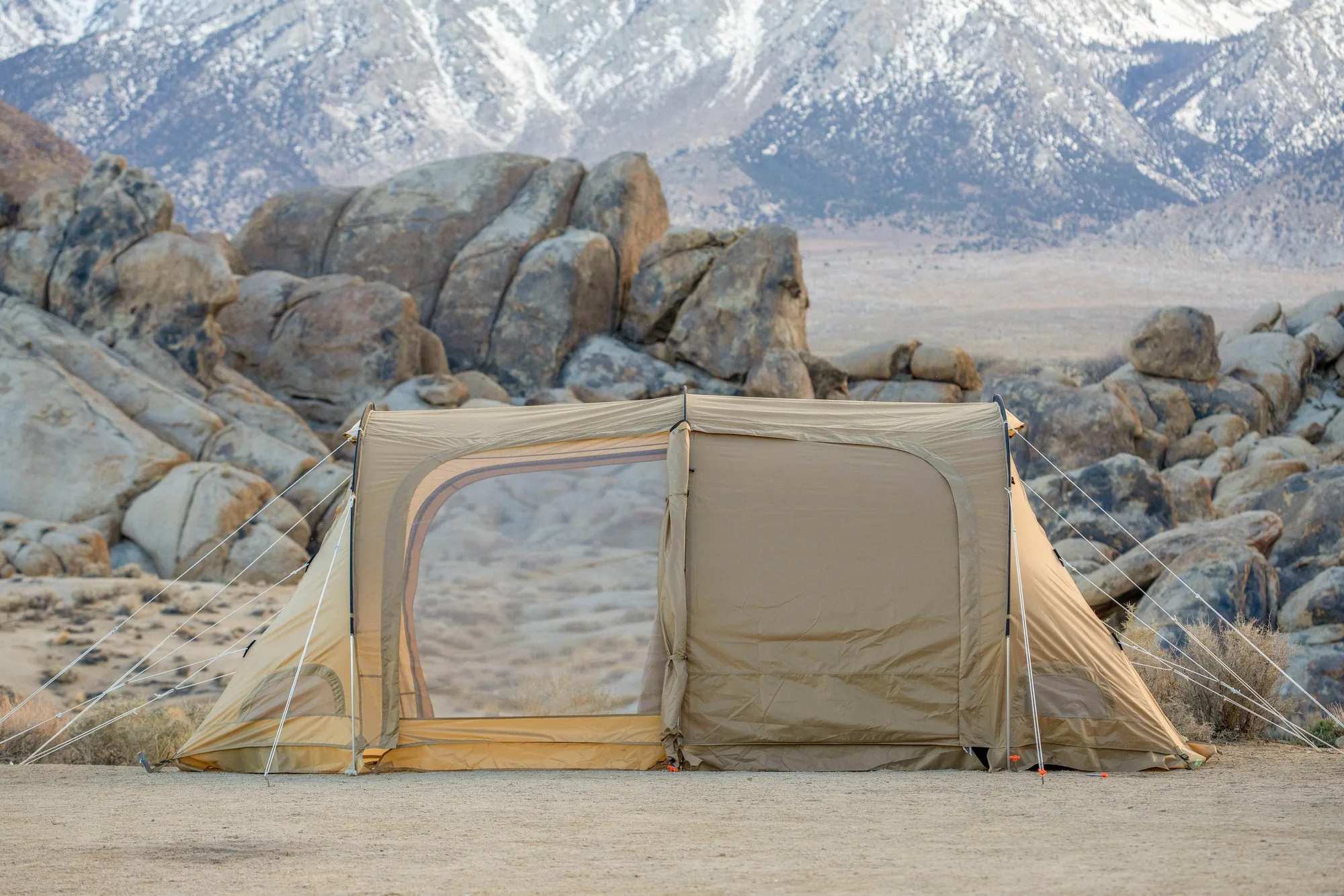
- Kamaboko Super Tent (S): The Kamaboko is a multi-functional super tent designed as a base camp centerpiece, with a range of accessories sold separately to customize it. If tarp sagging keeps ruining your sleep, a structured shelter with dedicated accessory options may be a more stable long-term choice than repeatedly re-tensioning a tarp.
Tarp sagging overnight is usually a tension problem, not a tarp problem. Check guy lines, pegs, and fabric moisture in that order, fix the actual cause, and re-pitch when the geometry is wrong. A few minutes of diagnosis beats a night of re-tightening.