Quick Answer
Most wall lamp uneven light comes from one of three things: the fixture is mounted too high, too low, or too close to a corner; the shade throws light in a narrow or lopsided pattern; or the bulb is the wrong shape, wattage, or quality. Start by checking mounting height and bulb type before you consider moving the fixture or replacing it.
Symptom: Bright Pool of Light, Dark Surroundings
If your wall lamp creates a harsh circle of light with dark walls around it, the fixture is probably too close to the wall or the shade is too narrow. A sconce mounted flush against the wall with a shallow shade will push light straight up and down, leaving the rest of the wall in shadow. Moving the fixture out from the wall by even an inch or two can widen the spread, but only if the mounting bracket allows it. If the shade is the problem, a wider or more open shade will soften and spread the beam. Check whether your fixture has a diffuser or opal glass—those even out the light and reduce hot spots.
Symptom: Light Leans to One Side
A wall lamp that throws more light to the left or right usually has an asymmetric shade or a bulb that isn't centered. Screw the bulb in fully and check that it sits straight. If the shade is tilted, tighten the collar or retaining ring. On double sconces, one arm may be angled differently—compare both sides and adjust until they match. If the fixture is mounted near a corner or a doorway, the wall itself cuts the light on one side; in that case, repositioning the fixture is the only real fix.
Symptom: Dim or Yellowish Light
Dim sconce light often traces back to the bulb. A bulb with too low a wattage or too few lumens will underperform, especially if the shade is opaque. Swap in a bulb that matches the fixture's rating—most wall lamps list a maximum wattage, and exceeding it is a safety risk. Also check the color temperature: a 2700K bulb will look warmer and dimmer than a 3000K or 4000K bulb at the same brightness. If the fixture is on a dimmer, make sure the bulb is dimmable; non-dimmable bulbs can flicker or refuse to dim smoothly.
Symptom: Glare or Harsh Shadows on the Wall
Shaded wall lamp glare usually means the bulb is visible below or above the shade, or the shade material is too translucent. A shade that's open at the bottom will show the bright bulb and create glare. Look for a sconce with a closed top or a bottom diffuser if glare bothers you. For wall lamps with exposed bulbs, a lower-lumen bulb or a frosted finish can cut glare without killing the light. If the fixture is in a hallway or beside a bed, aim for a shade that directs light up and down rather than straight out into the room.
Diagnosis: Match the Symptom to the Fix
- Bright pool, dark walls: Fixture too close to the wall or shade too narrow. Try a wider shade or move the fixture out slightly if the bracket allows. If the shade is fixed and the wall is still dark, a fixture with a deeper projection or a diffuser will help.
- Light leans to one side: Bulb not centered, shade tilted, or fixture mounted near a corner. Straighten the bulb and shade; if the wall is the cause, reposition the fixture. Stop adjusting if the wall itself blocks the light—relocation is the only fix.
- Dim or yellowish light: Bulb wattage or lumens too low, or color temperature too warm. Match the bulb to the fixture's rating and try a higher Kelvin if you want whiter light. Never exceed the fixture's maximum wattage; if you need more light, add a second sconce instead.
- Glare or harsh shadows: Bulb visible below or above the shade, or shade too translucent. Use a frosted bulb, lower lumens, or a shade with a bottom diffuser. If glare persists, choose a sconce with an opal glass or closed shade.
Wall Lamps That Address Common Light Distribution Issues
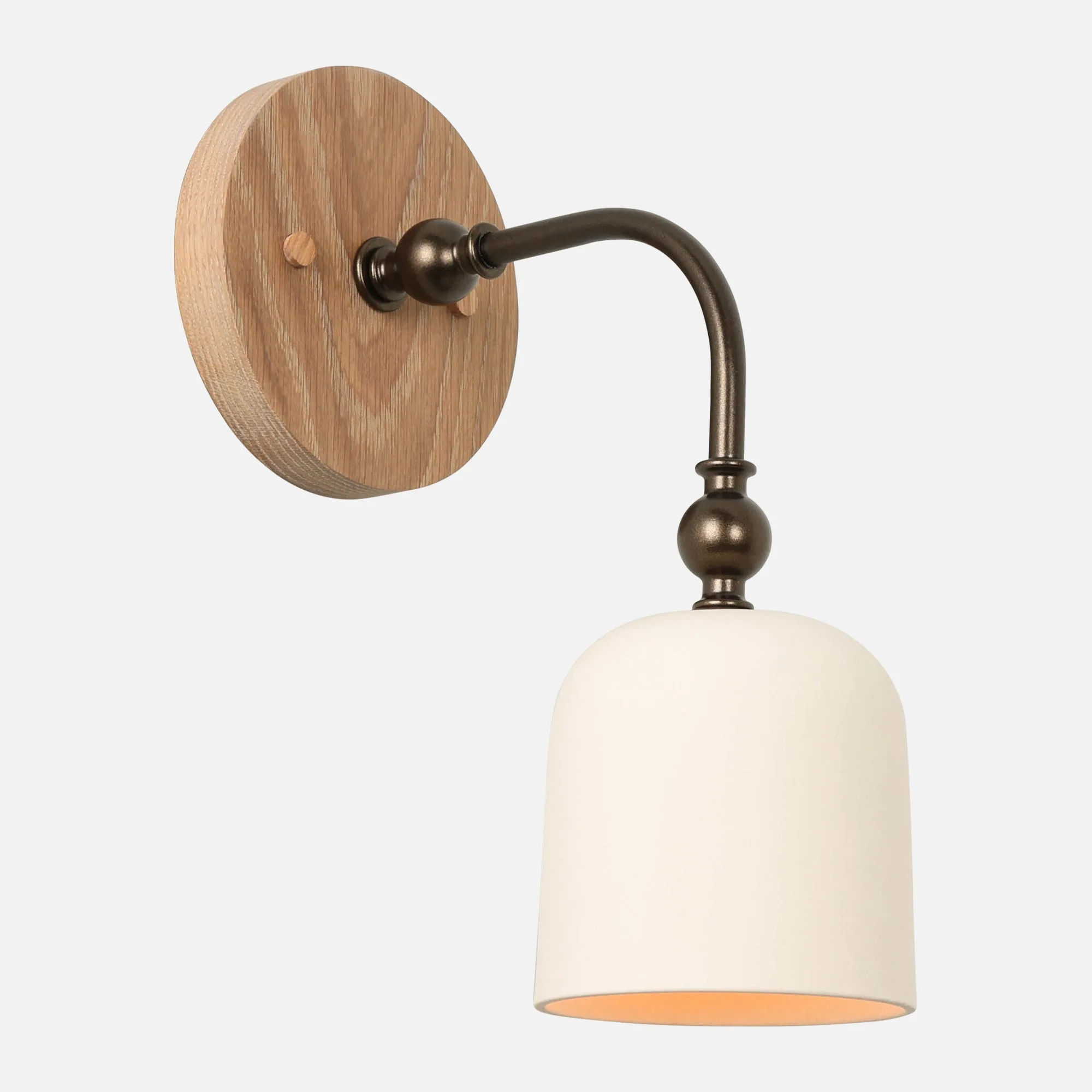
- Davidson Sconce: Handmade porcelain shade and wooden canopy; UL and cUL listed for damp locations; includes one E26 bulb at 550 lumens; 7.25-inch depth, 5-inch width, 10.75-inch height. The porcelain shade diffuses light more evenly than a bare bulb or thin shade, which helps reduce hot spots and glare. The 550-lumen bulb gives a moderate, even glow for hallways or bedrooms.
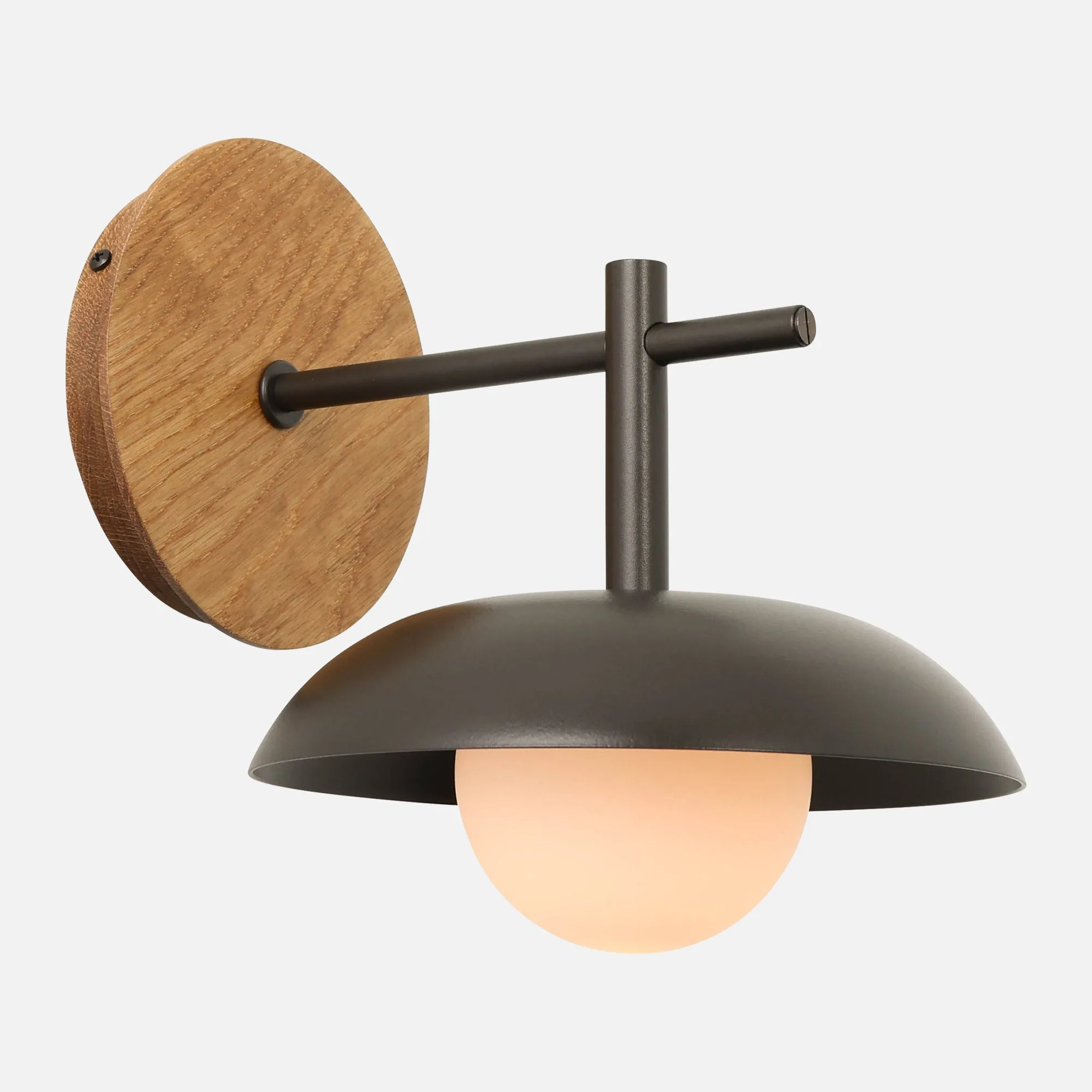
- Jessamine Sconce: Spun metal shade with petite opal glass globe; UL and cUL listed for damp locations; includes one E26 bulb at 550 lumens; 11-inch depth, 9-inch width. The opal glass globe softens the bulb's output, cutting glare while still spreading light. The deeper 11-inch projection moves the light source away from the wall, which can widen coverage.
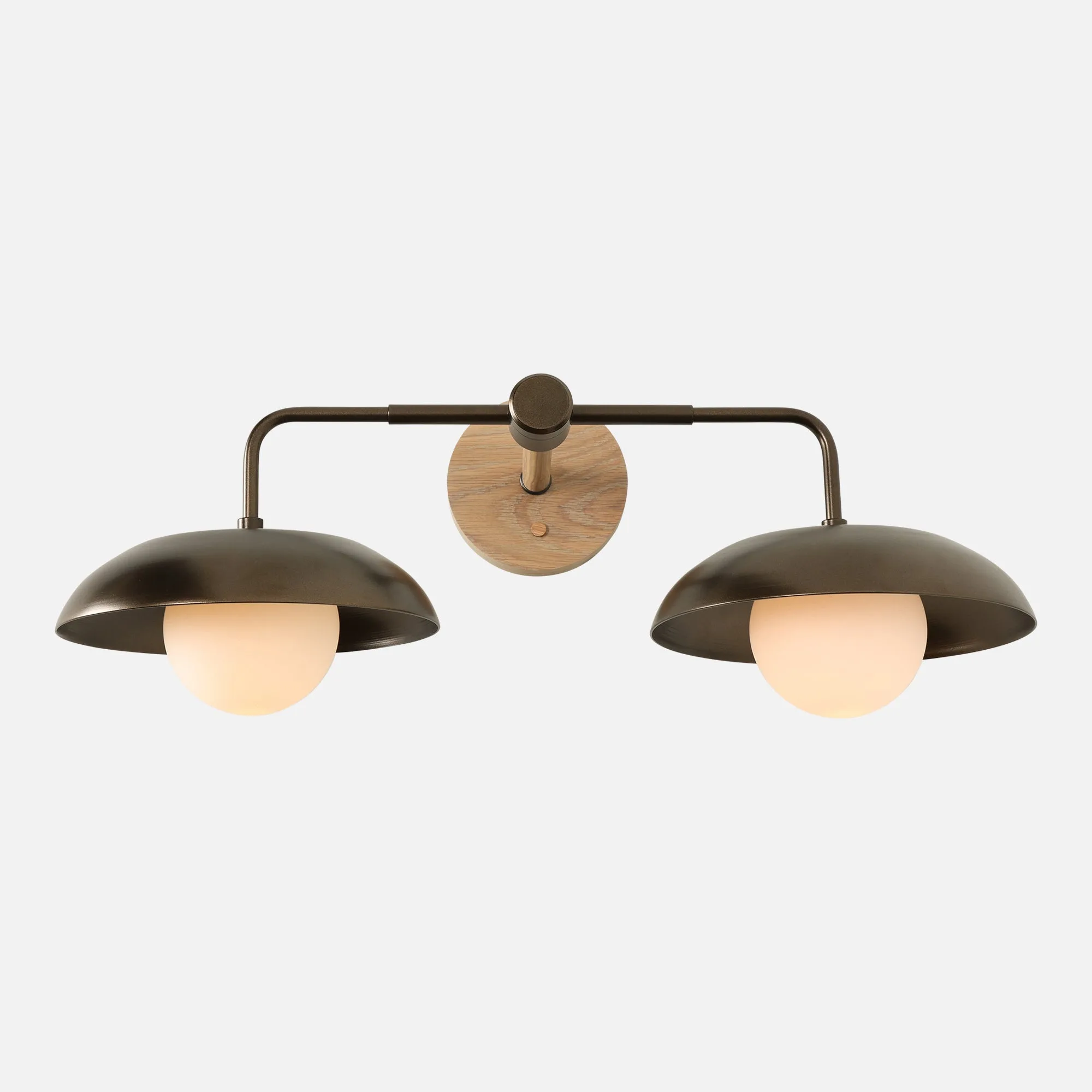
- Boone Double Sconce: Double wall light with two petite glass globes and two E26 bulbs at 550 lumens each; UL and cUL listed for damp locations; 11.25-inch height, 22.5-inch width, 7.5-inch depth. Two globes spread light across a wider area than a single sconce, which helps eliminate dark gaps on long walls. The 22.5-inch width suits larger spaces where one lamp would look uneven.