Common questions about Wie kommt der Popel in die Nase?
What age is this book for?
The publisher recommends it for children aged 5 and up. The text is pitched as a first non-fiction body book for preschoolers, with short chunks of explanation and comic-style illustrations.
What body topics does it actually cover?
It answers questions like why the heart beats, what bones are for, and how digestion works. The circulatory system is explained with a bicycle-ride analogy where red blood cells carry oxygen and carbon dioxide on the luggage rack. Cells, bones, and organs are introduced page by page.
Is it funny or gross?
The title is cheeky, and the illustrations are described as cheerful and comic-style, but the content is factual. It uses everyday examples and fun facts rather than shock humor. If your child likes a little silliness with their science, this fits.
What language is it in?
The book is in German. The translation is by Birgit Reit. If you are raising a bilingual child or are comfortable reading German aloud, it works well; otherwise, you may want a translation or a different title.
How long is it, and what format?
It is a 48-page hardcover. The size is 25.8 x 30.4 cm, so it is a larger-format picture book that lies open well for shared reading.
What is the paper like?
The paper is FSC-certified. That is a useful detail if you care about responsible sourcing, though it does not say anything about durability.
Can I use it to answer a toddler's endless body questions?
Yes, but note the age recommendation of 5+. Younger children may enjoy the pictures and the silly title, but the explanations are written for the 5-and-up crowd. For a toddler, you might paraphrase or just talk about the illustrations.
Is it a storybook or a reference book?
It is a non-fiction book, not a story. It is organized around questions and answers, so you can dip in and out rather than read it cover to cover.
How to use it for read-aloud and body curiosity
Because the book is question-led, it works well as a read-aloud where you pause and let your child guess the answer first. The comic-style illustrations give plenty to point at, and the bicycle analogy for circulation is a natural conversation starter.
If your child is younger than 5, you can still use the pictures to talk about bodies, but keep explanations short and follow their interest. The book is designed for children to explore at their own pace, so there is no need to read it in order.
Product facts at a glance
-
Wie kommt der Popel in die Nase? Book, 5 Years +: Age recommendation: 5 years + Helps you decide if it matches your child's current questions and reading level.
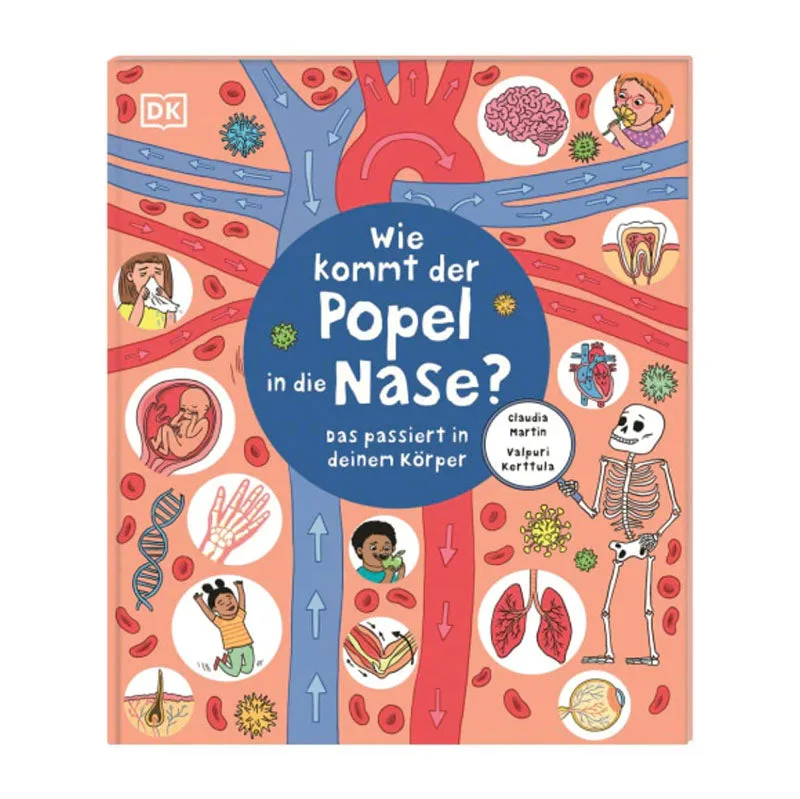
Wie kommt der Popel in die Nase? Book, 5 Years +
-
Wie kommt der Popel in die Nase? Book, 5 Years +: 48 pages, hardcover, 25.8 x 30.4 cm A substantial but not overwhelming read; the large format is good for shared viewing.
-
Wie kommt der Popel in die Nase? Book, 5 Years +: Language: German; translation by Birgit Reit Important if you are choosing a book for a bilingual household or language learner.
-
Wie kommt der Popel in die Nase? Book, 5 Years +: FSC-certified paper A sourcing detail some parents look for, though it does not indicate tear-resistance.