Quick answer
Choose the Wilbur Curtis G4 Single 1.0 Gal. Coffee Brewer if you need one reliable gallon batch at a time and want to keep your counter footprint and budget smaller. Choose the G4 Twin 1.0 Gal. Coffee Brewer (Sky White) if you regularly serve two different coffees or need back-to-back gallons during peak hours without waiting for a single brewer to recover.
Where the single brewer wins
The single brewer keeps your workflow simple: one batch, one place to clean, and fewer decisions for staff during a rush. Its smaller footprint also matters in tight service counters or satellite stations where you only need a steady supply of one coffee.
The trade-off is throughput. When that one batch runs out, you wait for the next brew cycle. If your morning rush regularly empties a gallon before the next one is ready, the single will feel like a bottleneck.
Where the twin brewer earns its space
The twin gives you two independent 1.0-gallon brewing positions, so you can hold regular and decaf at the same time or stagger batches to keep up with demand. That flexibility is why twin brewers are common in cafes and restaurants with varied menus.
The trade-off is cost and counter space. The twin costs more upfront and takes up more room, so it only pays off if you actually need two simultaneous batches or two coffee types on tap.
Temperature consistency matters more than the model name
Both G4 brewers use precision water temperature control and saturator technology to deliver consistent extraction batch after batch. The single adds a rapid recovery heating system that maintains target water temperature through consecutive batches, which helps when you brew back-to-back on one side.
The twin’s advantage is parallel brewing: two batches can proceed without one waiting on the other. If your volume is high but steady, the single’s recovery heating may be enough; if your volume is bursty or split between two coffees, the twin’s two positions are the practical answer.
Trade-offs to weigh before you buy
- Batch capacity vs. counter space: The single brews one 1.0-gallon batch at a time and takes up less counter space; the twin brews two 1.0-gallon batches simultaneously but needs a larger footprint. Measure your counter and decide whether two simultaneous batches are worth the extra space. If you cannot spare the counter length, the single is the practical choice.
- Upfront cost vs. peak-hour throughput: The twin costs more upfront than the single. That premium only makes sense if you regularly need two coffees on tap or need to brew two gallons back-to-back without waiting for a single brewer to recover. Estimate your busiest hour’s gallon demand before paying for the twin.
- Menu variety vs. simplicity: The twin lets you hold regular and decaf (or two roasts) at the same time, which suits cafes with varied menus. The single keeps operations simple with one batch and one cleanup point, which suits single-coffee service. If your menu rarely offers two coffees at once, the single’s simplicity is an advantage, not a compromise.
Product facts
-
Wilbur Curtis G4 Single 1.0 Gal. Coffee Brewer: Rapid recovery heating system maintains target water temperature through consecutive batches. This helps the single brewer keep temperature stable when you brew one gallon after another during a rush.
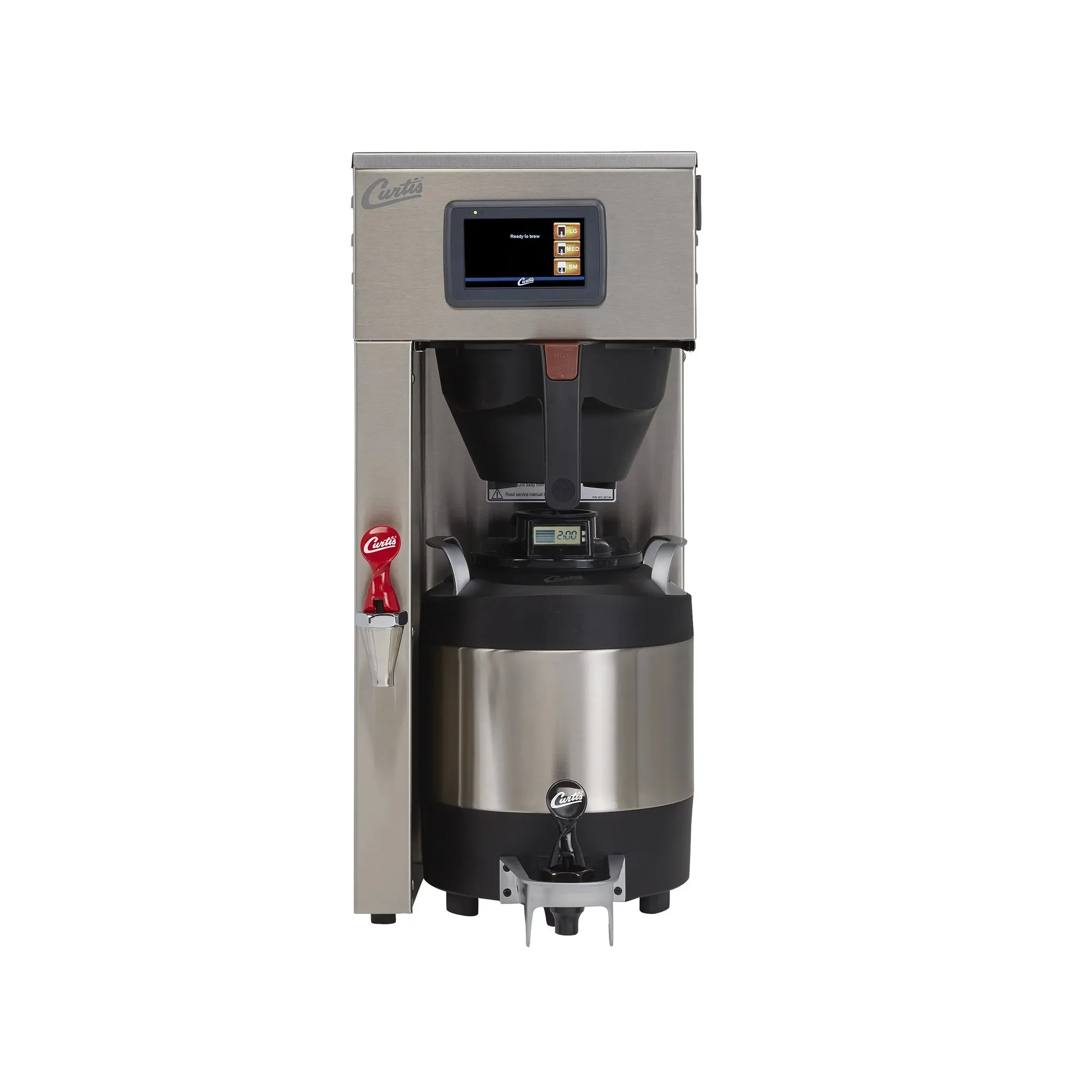
Wilbur Curtis G4 Single 1.0 Gal. Coffee Brewer
-
Wilbur Curtis G4 Twin 1.0 Gal. Coffee Brewer (Sky White): Precision water temperature held at the exact target throughout the brew cycle for consistent extraction. Consistent extraction means each of the twin’s two batches tastes the same, which matters when you serve regular and decaf side by side.
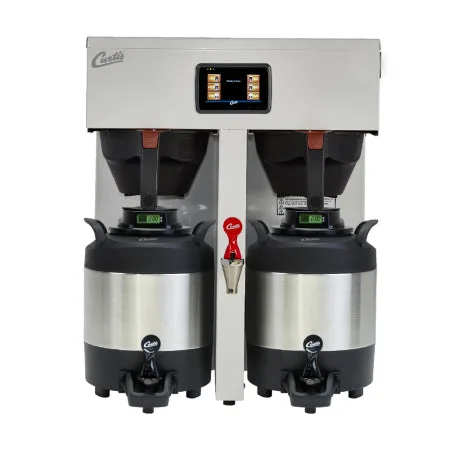
Wilbur Curtis G4 Twin 1.0 Gal. Coffee Brewer (Sky White)
Which G4 brewer fits your service?
Best for
- Cafes or restaurants that serve one coffee type and need a reliable gallon batch with a smaller counter footprint.
- Satellite stations or back-of-house setups where simplicity and lower upfront cost matter more than simultaneous brewing.
Not for
- High-volume operations that regularly need two different coffees on tap at the same time.
- Peak-hour service where a single gallon runs out before the next batch is ready.