Quick answer
A window air circulator like the Transom® AE is better for bringing in fresh air or exhausting stale air with quiet, whole-room circulation. An exhaust fan is better for spot-venting moisture and odors directly outside, but it doesn't move air around the room.
Airflow direction and coverage
A window air circulator can both intake fresh outdoor air and exhaust indoor air, often with reversible airflow. It also circulates the air around the room, reducing hot or cold spots. An exhaust fan only pulls air out of a single point—typically a window or wall—and does not distribute air throughout the space.
If your goal is whole-room air movement and temperature equalization, a window air circulator is more effective. For targeted removal of steam, smoke, or odors, an exhaust fan is sufficient.
Noise and energy considerations
Window air circulators are engineered to move air quietly and efficiently, often using less energy than a traditional exhaust fan running at high speed. Exhaust fans can be noisier, especially when moving large volumes of air against wind pressure.
However, exhaust fans are typically simpler and cheaper to install, and they consume no standby power for smart features. Choose based on whether you prioritize quiet, energy-efficient circulation or low upfront cost.
Smart features and convenience
Some window air circulators, like the Transom® AE, offer voice control via Alexa, allowing you to adjust airflow without getting up. This is convenient for frequent changes or when your hands are full. Exhaust fans rarely include smart features.
If you value remote or voice control and seamless integration with a smart home, a window air circulator with Alexa is a clear advantage. If you just need a basic on/off vent, an exhaust fan is simpler.
Trade-offs at a glance
- Air circulation: Window air circulators move air throughout the room, reducing hot and cold spots. Exhaust fans only remove air at one point.
- Ventilation control: Window air circulators can intake fresh air or exhaust stale air, often with reversible airflow. Exhaust fans only push air out.
- Noise and energy: Window air circulators are quieter and more energy-efficient for continuous use. Exhaust fans can be louder and less efficient at high speeds.
- Smart features: Window air circulators like the Transom® AE offer Alexa voice control. Exhaust fans typically have no smart integration.
- Installation and cost: Exhaust fans are simpler and cheaper to install. Window air circulators may require a secure window mount but offer more versatility.
Product facts
-
Transom® AE Window Air Circulator: Transom® AE comes equipped with Alexa-enabled features that allow you to use your voice to take control of your home comfort via the Amazon Echo device, or through the Alexa app. You can change fan speed or direction without leaving your seat, which is especially handy when you're in bed or on the couch.
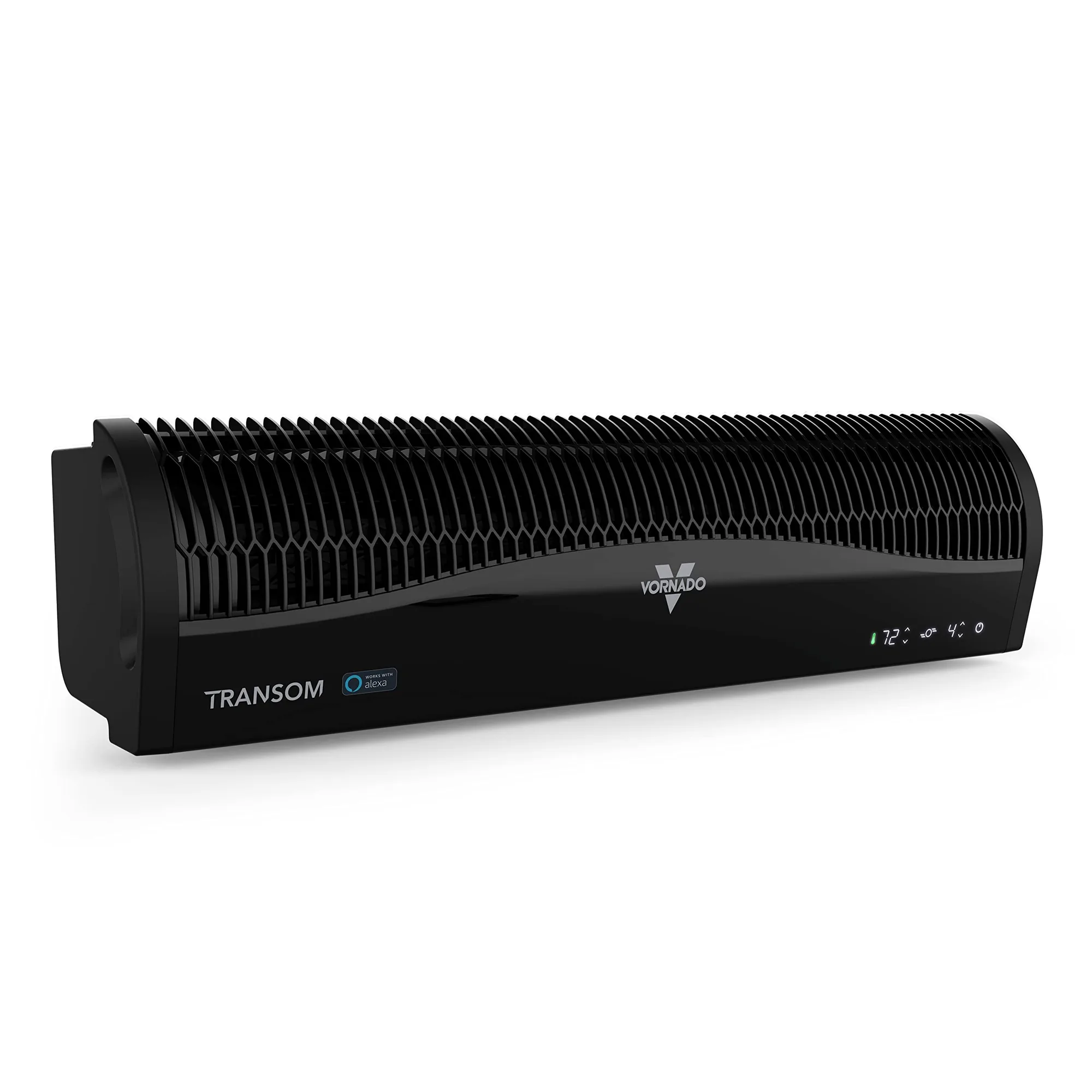
Transom® AE Window Air Circulator
-
Transom® AE Window Air Circulator: At half the height of conventional window fans, it fits in windows with minimal obstruction of your view. It preserves natural light and sightlines while still providing powerful air exchange and circulation.
Which should you choose?
Best for
- People who want whole-room air circulation plus the ability to bring in fresh outdoor air or exhaust stale air.
- Smart-home users who value voice control and quiet, energy-efficient operation.
Not ideal for
- Simple spot ventilation of a bathroom or kitchen where only moisture or odors need to be removed.
- Budget-focused installations where a basic on/off exhaust fan is sufficient.