Quick answer
Most outdoor play kitchens survive winter if they are cleaned, dried, and stored or covered before the first hard freeze. If your kitchen shows rust, soft wood, or cracked plastic now, winter will make it worse. Plan to move it into a shed, garage, or covered spot, or use a breathable cover that lets moisture escape.
Why winter is hard on outdoor play kitchens
Cold alone rarely ruins a play kitchen. The damage comes from water that gets into seams, hinges, and wood grain, then freezes and expands. That freeze-thaw cycle pries apart joints, lifts paint, and rusts screws. Wind-driven rain and snow also push moisture into places a gentle summer shower never reaches.
UV exposure matters less in winter, but temperature swings do the most harm. A sunny afternoon can warm a dark plastic panel enough to soften it, then a cold night makes it brittle. Repeated cycles leave hairline cracks that let in more water next season.
Step-by-step winter prep that actually works
Start with a full clean while the weather is still mild. Wash the play kitchen with warm water and mild dish soap, then rinse and dry every surface with a towel. Pay attention to the underside of the counter, inside the cabinet, and around the ice maker or sink area where water collects. A soft brush reaches hinge crevices without scratching.
After cleaning, check every screw and bolt. Tighten loose hardware, and replace any screw that is rusted or stripped. A dab of food-safe wax on wood edges and a thin coat of clear sealant on exposed metal can slow moisture damage, but only if the surface is completely dry first.
Decide where the kitchen will spend winter. A dry, covered location is best. If you must leave it outside, raise it off the ground on a pallet or bricks so water does not pool underneath, and secure a breathable cover that ties down. Never wrap it in a tarp that traps condensation.
Storage and cleaning routines for cold months
If you bring the kitchen indoors, store it in a dry spot away from direct heat or damp concrete. A garage corner or shed shelf works if the space stays dry. Stack removable parts like bins and play food separately so air can circulate around each piece.
For a kitchen that stays outside, do a monthly check on mild winter days. Brush off snow instead of letting it pile up, and wipe down any condensation inside the cabinet. If you see water droplets under a cover, swap to a more breathable cover or leave one side open on dry days.
Come spring, clean the kitchen again before the kids use it. Look for soft spots in wood, bubbling paint, or stiff hinges. A little maintenance now prevents a full replacement later.
Winter damage diagnosis: symptom, cause, fix, and when to stop
- Rust on screws or hinges: Small orange or brown spots appear on metal hardware after wet weather. Cause: moisture sitting on unprotected metal, often from rain or snow that never dried. Fix: remove rust with a wire brush, dry the area, and apply a thin coat of clear sealant or replace the screw with a stainless-steel one. If rust has eaten into the metal and the screw no longer holds, stop and replace the hardware or the part. Catch rust early; once metal is pitted, replacement is the only reliable fix.
- Soft or spongy wood: Wood feels soft when you press it, or a screw pulls out easily. Cause: prolonged moisture exposure and freeze-thaw cycles breaking down wood fibers. Fix: dry the area completely, then apply a wood hardener if the soft spot is small. If the wood is soft across a large panel or a structural joint, stop trying to repair it. That piece is no longer safe for play. Small soft spots can be hardened; large ones mean the wood is failing.
- Cracked or brittle plastic: Plastic panels or parts crack easily or feel brittle in cold weather. Cause: repeated freeze-thaw cycles and UV exposure make plastic less flexible. Fix: if the crack is minor, you can reinforce it with a plastic-safe adhesive and keep the kitchen out of direct sun. If cracks run through a load-bearing area or a part breaks off, stop using that part. Replace it or retire the kitchen. Minor cracks can be patched; structural cracks are a safety risk.
Products that help with winter storage and play
- EdQ Kitchen Refrigerator: The EdQ Kitchen Refrigerator has a mirrored temperature screen and a built-in ice maker, with three shelves inside the cabinet. The ice maker and shelves create small crevices where water can sit. Dry these areas thoroughly before winter storage to prevent rust or mold.
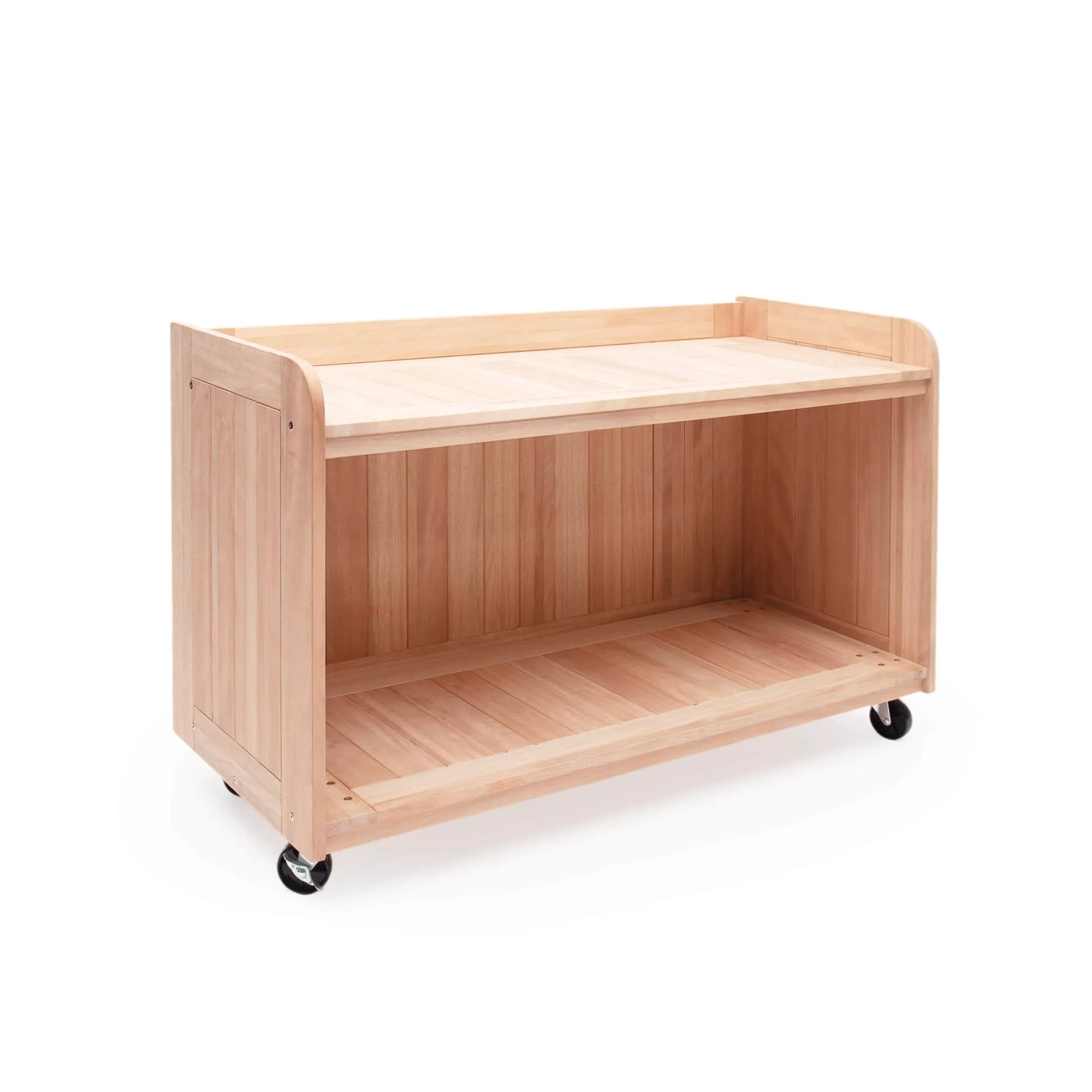
- Outdoor Hollow Blocks Storage Cart: The Outdoor Hollow Blocks Storage Cart is made of eucalyptus wood and has 4-inch locking swivel casters. It is designed to store and transport Guidecraft Outdoor Hollow Blocks, which are sold separately. If you keep hollow blocks outside, this cart keeps them together and off the ground. Its wood construction still needs a dry, covered location for winter, just like any outdoor wooden furniture.