Quick answer
Use the Winter Village Notebook as a single winter-season journal: reserve the first pages for a seasonal journaling layout, then add weekly winter bullet journal pages and a small holiday spread. Keep the setup light so you can keep writing through December and January.
Why a separate winter notebook works better than squeezing winter into your main journal
A dedicated winter notebook keeps seasonal lists, holiday planning, and quiet reflections in one place, so your everyday bullet journal stays focused on tasks. It also gives you a clear start and end point: the season itself.
The trade-off is that you commit a whole notebook to roughly three months. If you prefer one continuous journal, use the same setup below but limit it to a short seasonal section instead of the whole book.
Plan for the paper you actually have
The Winter Village Notebook uses 160gsm paper, which is thick enough for markers, pens, and light watercolor without ghosting or bleeding. That makes it a good fit for layered seasonal layouts, but it is still paper: test any wet medium on a back page before using it across a spread.
If you plan to paint or use heavy ink washes, keep those experiments on a few pages rather than every spread. The notebook’s size and paper type are selectable options, so check the listing details before you buy if you need a specific page size for your layout.
Your winter notebook setup, step by step
- Choose your winter window: Decide which months the notebook will cover, for example December through February, and write that range on the inside cover. Common mistake: leaving the dates open and then losing track of which winter a page belongs to. A fixed date range keeps the notebook from becoming an endless seasonal catch-all.
- Reserve the first spread for a seasonal journaling layout: Use the first two pages for a simple winter overview: a short list of what you want to notice, one or two cozy journaling prompts, and a small calendar of key dates. Checkpoint: if the spread feels crowded, cut it to one page and start the calendar on the next.
- Set up weekly winter bullet journal pages: Give each week a single page with a small weather or mood tracker at the top and space for notes below. Common mistake: drawing elaborate weekly layouts before you know how much you actually write. Start plain and decorate later. One page per week is easier to keep up with than a full monthly grid.
- Add one small holiday planner spread: Create a single spread for holiday planner spreads you actually need: gift ideas, a short menu, and a card list. Keep it to one spread so it does not take over the notebook. Checkpoint: if you need more space, add a second spread only after the first is full.
- Write a cozy prompt each week: At the start of each week, write one cozy journaling prompt at the top of the page, such as a small winter memory or something you are looking forward to. Common mistake: saving prompts for later and never returning to them. Write the answer in the same sitting. A prompt you answer immediately is worth more than a list you never use.
- Test wet media before committing: On a back page, test any marker, ink, or light watercolor you plan to use. Let it dry fully and check the reverse side. Checkpoint: if you see ghosting, keep that medium for accents rather than full backgrounds.
- Close the season with a review page: At the end of your date range, use the last page to note what you want to repeat next winter and what you would skip. Common mistake: leaving the final pages blank and losing the lessons of the season. A short review makes next year’s winter notebook setup faster.
Product facts
-
Winter Village: Notebook: 160gsm ultra-thick paper designed for markers, pens, and light watercolor with no ghosting or bleeding. You can build layered winter bullet journal pages with confidence, but still test wet media first.
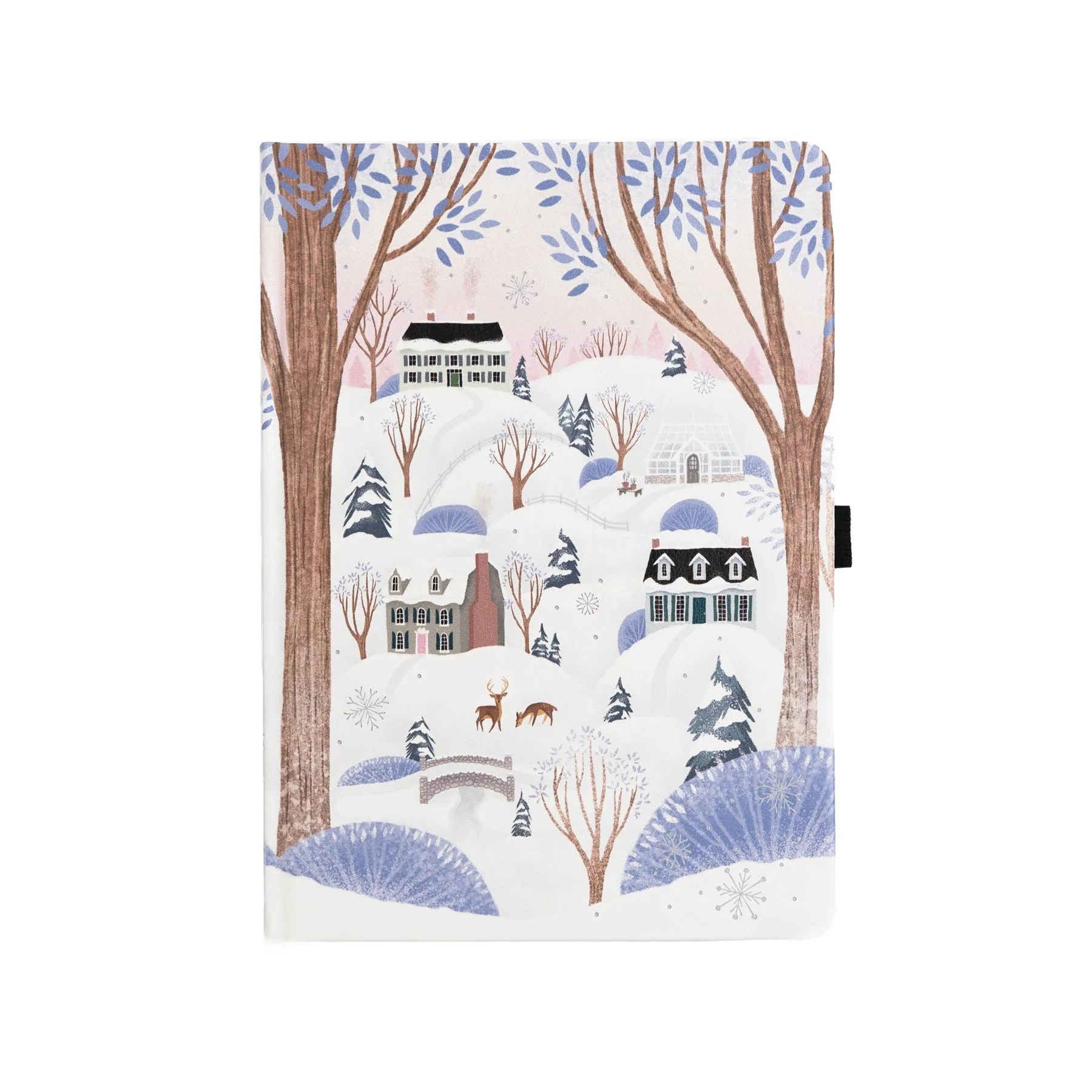
Winter Village: Notebook
-
Winter Village: Notebook: Sturdy vegan cover with a Winter Village scene of glowing windows and peaceful rooftops. The cover sets a cozy tone, so your inside pages can stay simple and still feel seasonal.