Quick Answer
For competitive play or long PC sessions, a wired controller is the safer pick: no battery to manage, no pairing drops, and consistently low latency. A wireless controller is better if you play from the couch or want a cleaner setup. If you want both worlds, look for a controller with Hall effect sticks and a reliable wired fallback, like the Snakebyte Gamepad Pro X.
Latency: Does Wired Actually Beat Wireless?
In a controller input lag comparison, wired almost always wins on paper. A wired connection sends inputs directly over USB, eliminating the radio transmission and pairing overhead that wireless adds. In practice, modern wireless controllers are fast enough for most games, but if you play fighting games, rhythm games, or competitive shooters, every millisecond counts. Wired is the predictable choice.
Battery and Charging: The Hidden Cost of Wireless
A wired controller is battery free, which means it never dies mid-match and never needs a charging dock or spare AAs. Wireless controllers trade that freedom for a charging routine. If you often forget to plug in, a wired controller removes that failure point entirely. If you already have a charging station and don't mind the habit, wireless is fine.
Connection Issues: When Wireless Gets Annoying
Wireless controller connection issues usually come from interference, distance, or low battery. If your console or PC sits behind a TV or metal desk, the signal can stutter. Wired avoids all of that. But wireless wins on cable clutter and lets you sit back without a tether. Consider your room layout before deciding.
PC Gaming: Which Controller Works Best?
For the best controller for PC gaming, wired is often plug-and-play with no adapter or Bluetooth dongle needed. Many wireless PC controllers require Bluetooth or a proprietary receiver, which can add setup steps. If you want fewer variables, go wired. If you value a clean desk, a wireless controller with a stable 2.4GHz connection is worth it.
Trade-Offs at a Glance
- Wired: Latency and Reliability: No battery, no pairing, no interference. You trade cable freedom for consistent performance. Pick wired if you sit close to your screen and hate charging.
- Wireless: Freedom and Clean Setup: No cable to trip over, but you must manage battery life and possible connection drops. Pick wireless if you play from a couch and keep a charging routine.
- Hybrid: Best of Both: Some controllers, like the Snakebyte Gamepad Pro X, offer wired and wireless modes plus advanced features like Hall effect sticks. Choose hybrid if you want flexibility and drift resistance.
Two Controllers That Show the Trade-Off
- PDP Switch Rematch Wired Controller - Warrior Link (Switch): PDP Switch Rematch Wired Controller - Warrior Link (Switch) has a built-in 3.5mm jack for USB-chat in compatible titles and immersive audio in all games. Wired doesn't mean losing headset audio; you get chat and game sound without pairing a separate headset.
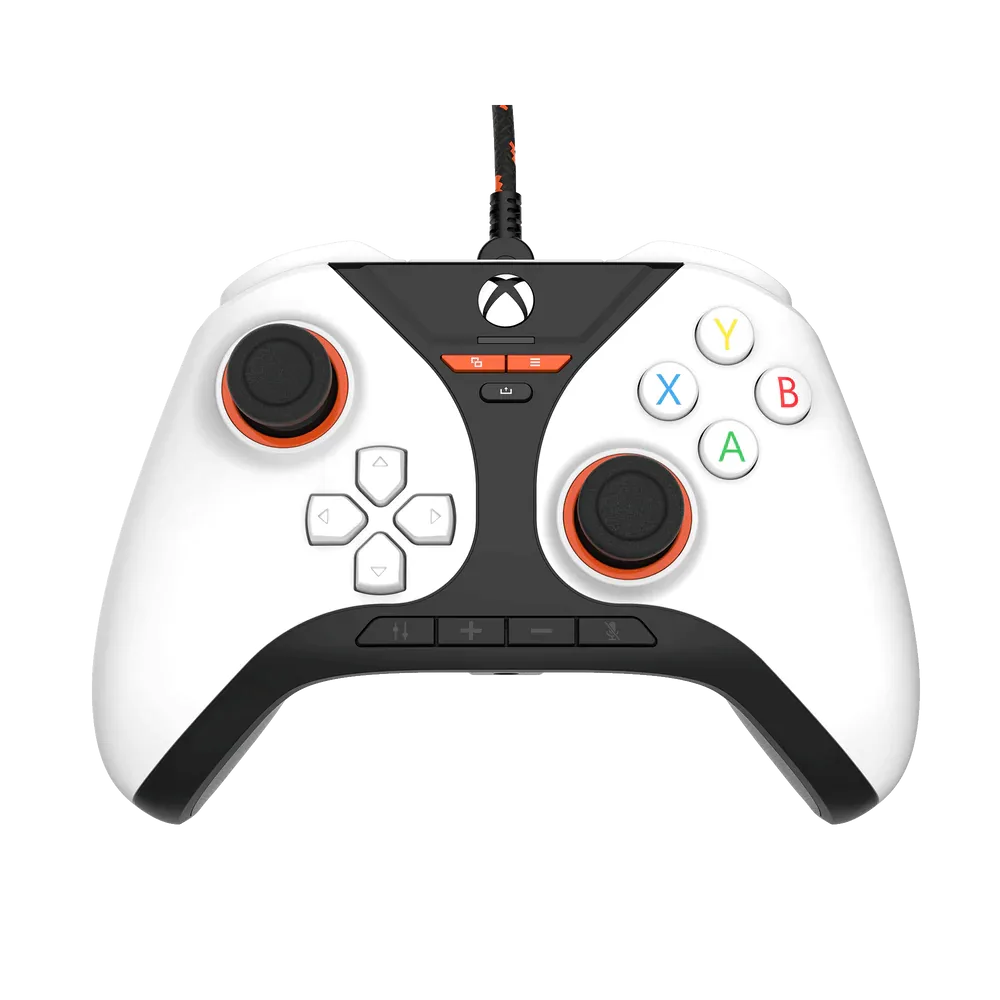
- Snakebyte Gamepad Pro X controller for Xbox Series S|X - White: Snakebyte Gamepad Pro X controller for Xbox Series S|X - White has Hall effect sensors for analogue sticks and triggers, patented back button mapping without interrupting gameplay, and an audio panel for quick settings. Hall effect sticks resist drift over time, and back buttons give you an edge in competitive games without needing a separate pro controller.
Which Should You Buy?
Best for
- Competitive players who need the lowest possible input lag
- PC gamers who want plug-and-play without Bluetooth setup
- Anyone who forgets to charge and hates mid-game battery deaths
Not for
- Players who sit far from the screen and want zero cables
- Those who prefer a completely clean, cable-free living room setup