Quick answer
Choose a wireless bra when all-day comfort and a softer feel matter more than maximum lift, and treat the band as the support system: it should sit level and stay put when you lift your arms. If you want a deep neckline with a wireless feel, start with a plunge or demi shape in your true band size, then adjust straps last. If you need firm separation or heavy lift, an underwire style will usually serve you better.
Wireless bras get sold as the comfortable option, but comfort is not the same as support. The difference comes down to how the bra is built: without an underwire, the band and cup construction do the work, so a loose band or a cup that floats will feel unstable no matter how soft the fabric is.
This guide gives you decision rules for choosing a no underwire bra, checking wireless bra fit before you commit, and knowing when to keep an underwire in rotation. The goal is a bra you forget you are wearing, not one you keep tugging back into place.
What a wireless bra can and cannot do
A wireless bra can give gentle lift, smooth coverage, and a natural shape, especially in demi and plunge silhouettes where the cup is cut to sit close to the body. What it cannot do is create the same firm shelf or separation as an underwire, because there is no rigid frame holding the cup away from the ribcage. If your main goal is a rounded, lifted look under a fitted top, expect a softer result.
That trade-off is usually worth it for long days, travel, and anyone who finds wires dig in by late afternoon. The trick is matching the cup shape to your neckline and keeping the band snug enough to anchor the bra. A wireless bra that fits well feels secure without pressure; one that fits poorly slides, gaps, or rides up in back.
- Choose wireless for softness and low-pressure wear; choose underwire when you want firm lift or clear separation.
- Judge support by the band first, then the cup, then the straps.
How to choose a wireless bra by neckline and outfit
Start with the neckline you are dressing, not the bra style you usually buy. Low-cut tops and wrap dresses need a plunge or demi cup that stays hidden at the center front. A plunge shape is engineered to center the bust and create a smooth, natural cleavage, which is why it disappears under deep V necklines. A demi focuses on a balcony-style shelf lift, so it suits wider necklines and square or scoop tops.
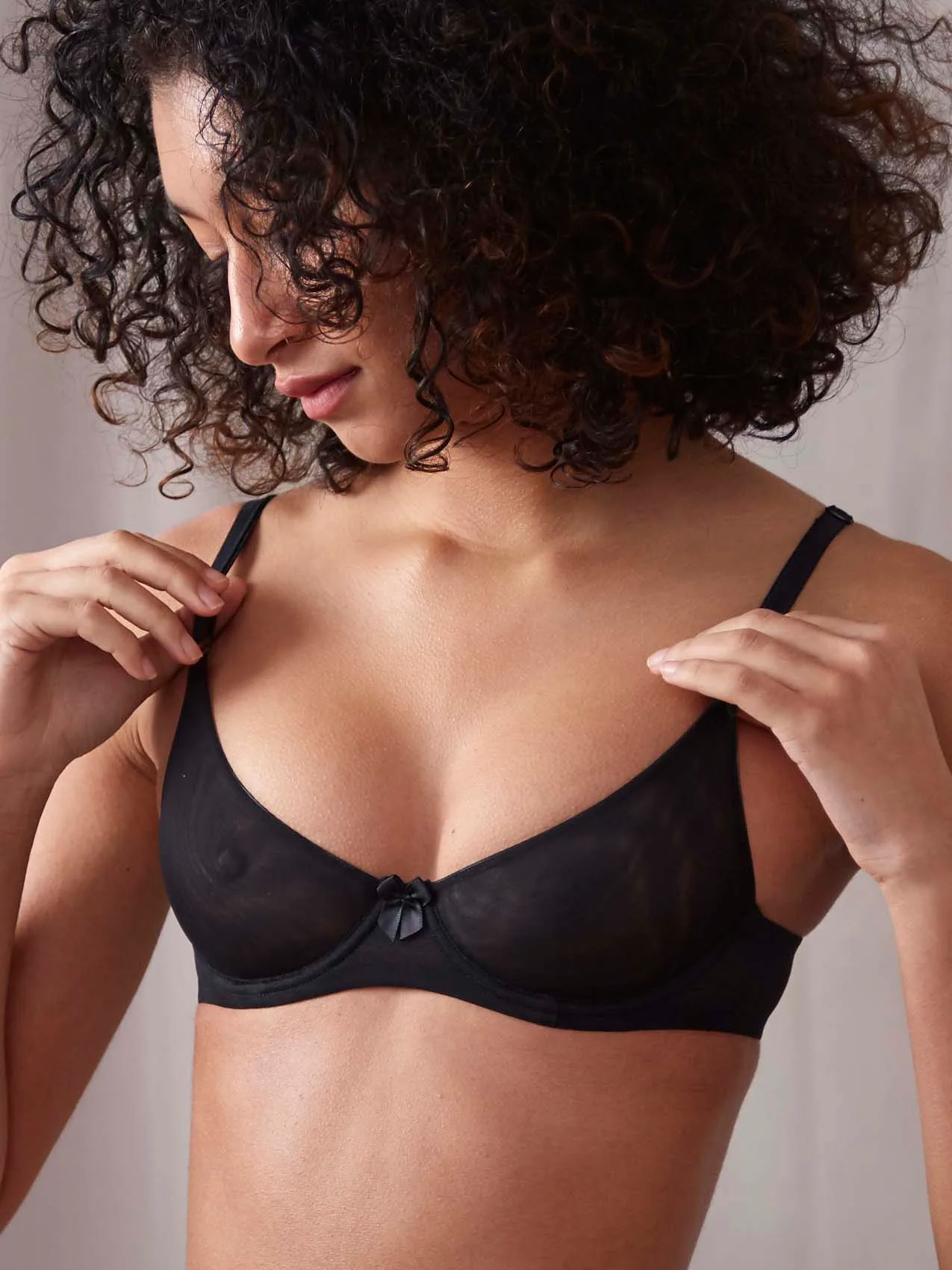
If you want a smoother surface under thin knits, look for cups without lace texture or heavy seams. If you want a lighter, more modern look, sheer mesh styles can feel cooler while still holding shape. Neither option is better in the abstract; the right one is the cup that stays covered and comfortable under the clothes you actually wear.
- Deep V or wrap top: choose a plunge cup that sits flat at the center.
- Scoop or square neckline: a demi cut usually stays hidden better.
- Thin knits: prioritize smooth cup surfaces over decorative texture.
Wireless bra fit checks you can do in the fitting room
Fasten the bra on the loosest hook and check the band first. It should sit level all the way around, not climbing up your back, and you should be able to slide two fingers under it without pulling it away from your body. Lift your arms overhead and lower them; if the band shifts up or the cups gap, the band is too loose or the cup is the wrong shape.
Next, check the center front. In a plunge or demi wireless bra, the center should rest close to your sternum without digging. Then check the straps: they should hold the cup edge flat, not carry the weight of your bust. If you need to tighten straps hard to stop gaping, the cup size or shape is the issue, not the strap tension.
- Band level and snug on the loosest hook: correct starting point.
- Straps adjusted last, only enough to keep the cup edge flat.
- If the band rides up, size down in the band before changing cup size.
When to keep an underwire instead
Some bodies and some outfits simply work better with a wire. If you have a fuller bust, want strong forward projection, or need clear separation under a tailored shirt, an underwire bra will usually give you a more predictable shape. The same is true if you dislike the feeling of fabric resting against your ribcage all day and prefer a structured frame.
A practical compromise is to split your drawer by purpose: wireless for weekends, travel, and long workdays, underwire for fitted dresses and events. That way you are not asking one bra to solve every problem, and you can judge each style on what it is actually designed to do.
- Keep at least one underwire style for structured clothing and events.
- Rotate wireless bras for low-pressure days rather than replacing everything.
Decision rules for buying a wireless bra
- Rule 1: Band before cup: If the band rides up or shifts when you raise your arms, fix the band size first. A wireless bra depends on a level, snug band for support, so a loose band will make even a well-shaped cup feel unstable. Checkpoint: band sits level on the loosest hook with room for two fingers.
- Rule 2: Match cup shape to neckline: Choose a plunge cup for deep V and wrap necklines, and a demi cut for scoop, square, or wider necklines. The cup should stay hidden and flat at the edge without strap tension doing the work. Checkpoint: no gaping at the cup edge when you move your arms.
- Rule 3: Accept the lift trade-off: Wireless bras give gentle lift and a natural shape rather than a firm shelf. If you need strong projection or clear separation under tailored clothing, keep an underwire style for those outfits. Verdict: buy wireless for comfort-first days, keep underwire for structured looks.
Timpa styles that show the wireless trade-off
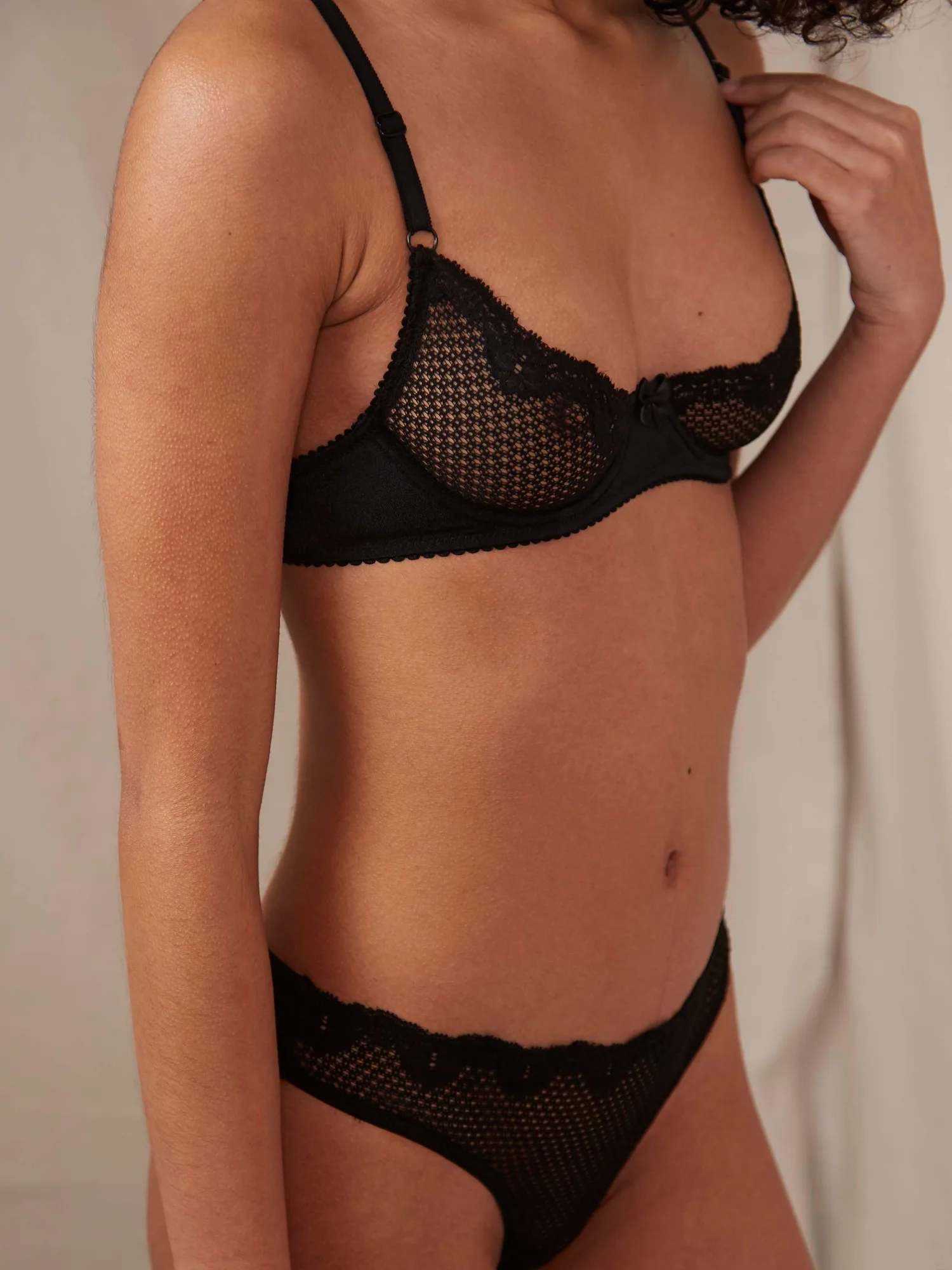
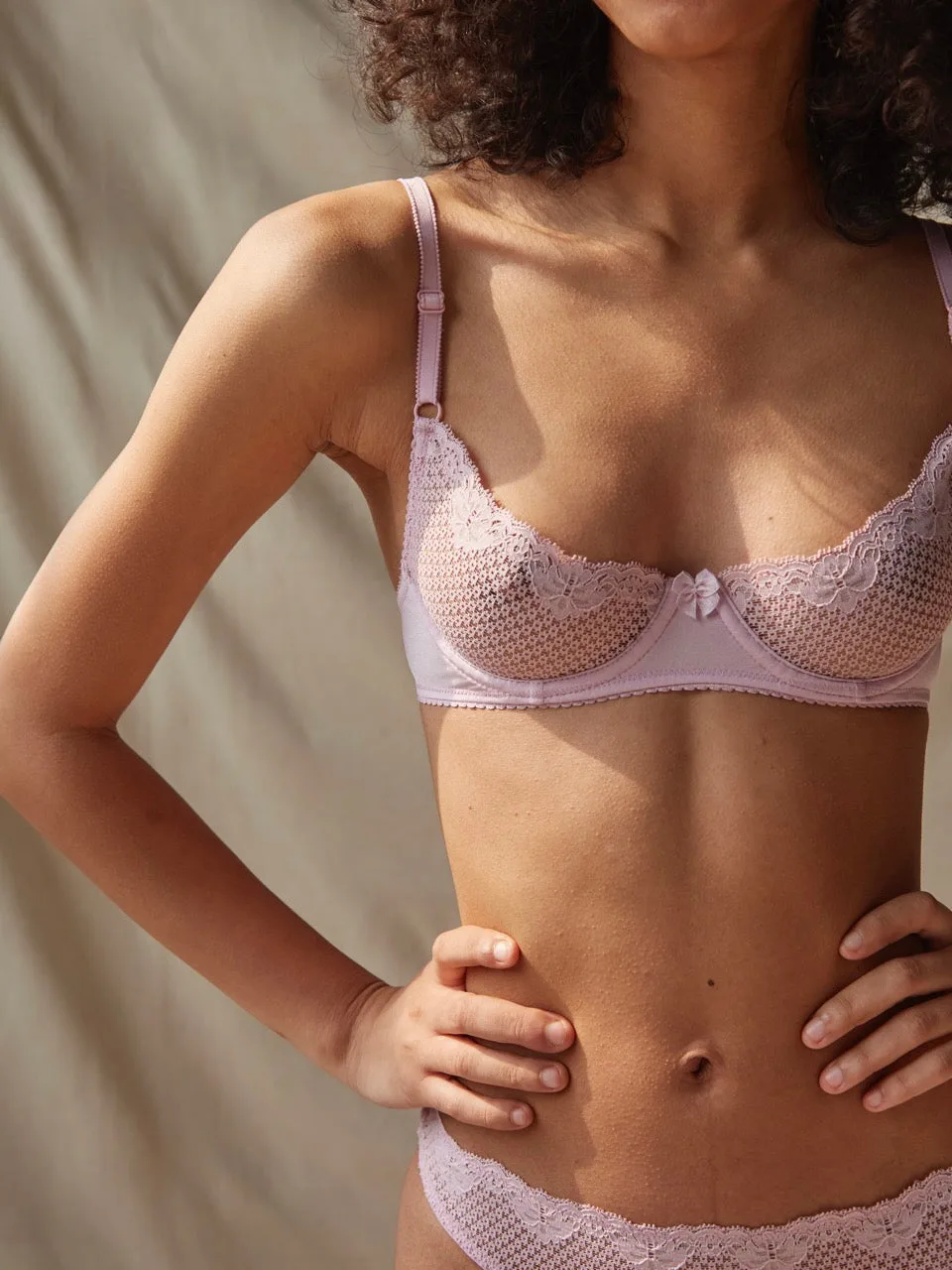
- https://timpalingeriecn.com/products/alice-demi-bra-classic-455b5fee92a8684fa62536f1-1422753Alice Demi Bra - Classic: Features a soft, supportive underwire and delicate lace with stretch, giving gentle lift without padding, with cups cut from a single panel of lace to eliminate middle seams. A useful benchmark if you are deciding between wireless softness and underwire structure, since the single-panel cup removes the seam that can show under thin tops.
- Natacha Demi bra: Swaps lace for double-layered lightweight mesh, creating a moiré visual effect with serious strength and the Timpa swoop and lift without foam padding. Shows how a demi shape can stay smooth and unpadded for everyday wear, which suits shoppers who want a softer surface than lace under knits.
Who a wireless bra suits, and who should choose something else
Best for
- Shoppers who want a comfortable wireless bra for long days, travel, or low-pressure wear
- Anyone dressing deep V, wrap, or scoop necklines who wants a softer feel than an underwire
- People who prefer a natural, unpadded shape and dislike wires digging in by afternoon
Not for
- Shoppers who need maximum lift, firm separation, or strong forward projection under tailored clothing
- Anyone who prefers a structured frame against the ribcage and finds wireless cups feel too soft
Buy the wireless bra that fits your band first and your neckline second, and judge it on comfort plus coverage rather than lift alone. If you want a softer everyday option, start with a demi or plunge shape in your true band size, then keep one underwire style for the outfits that need more structure.