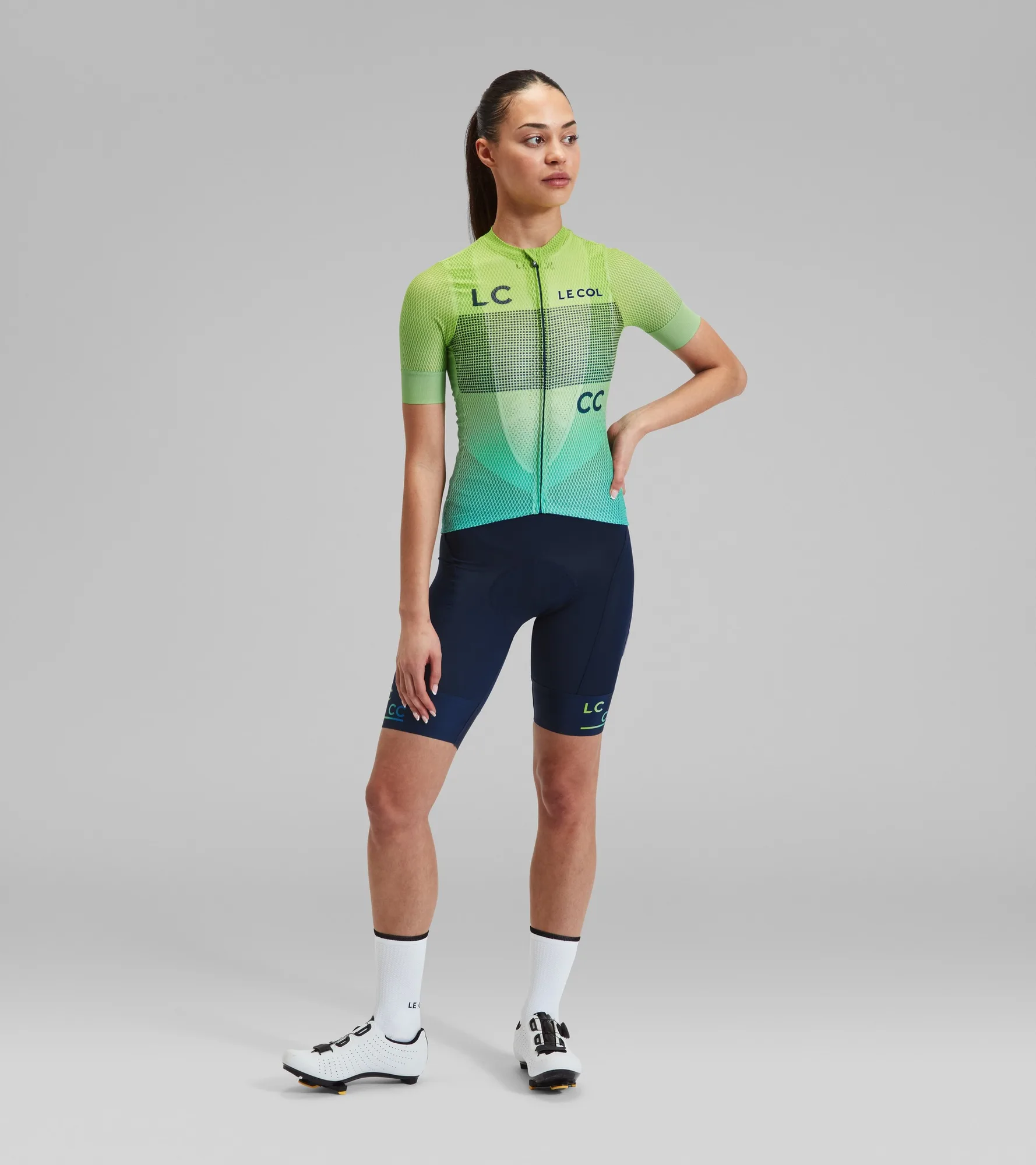
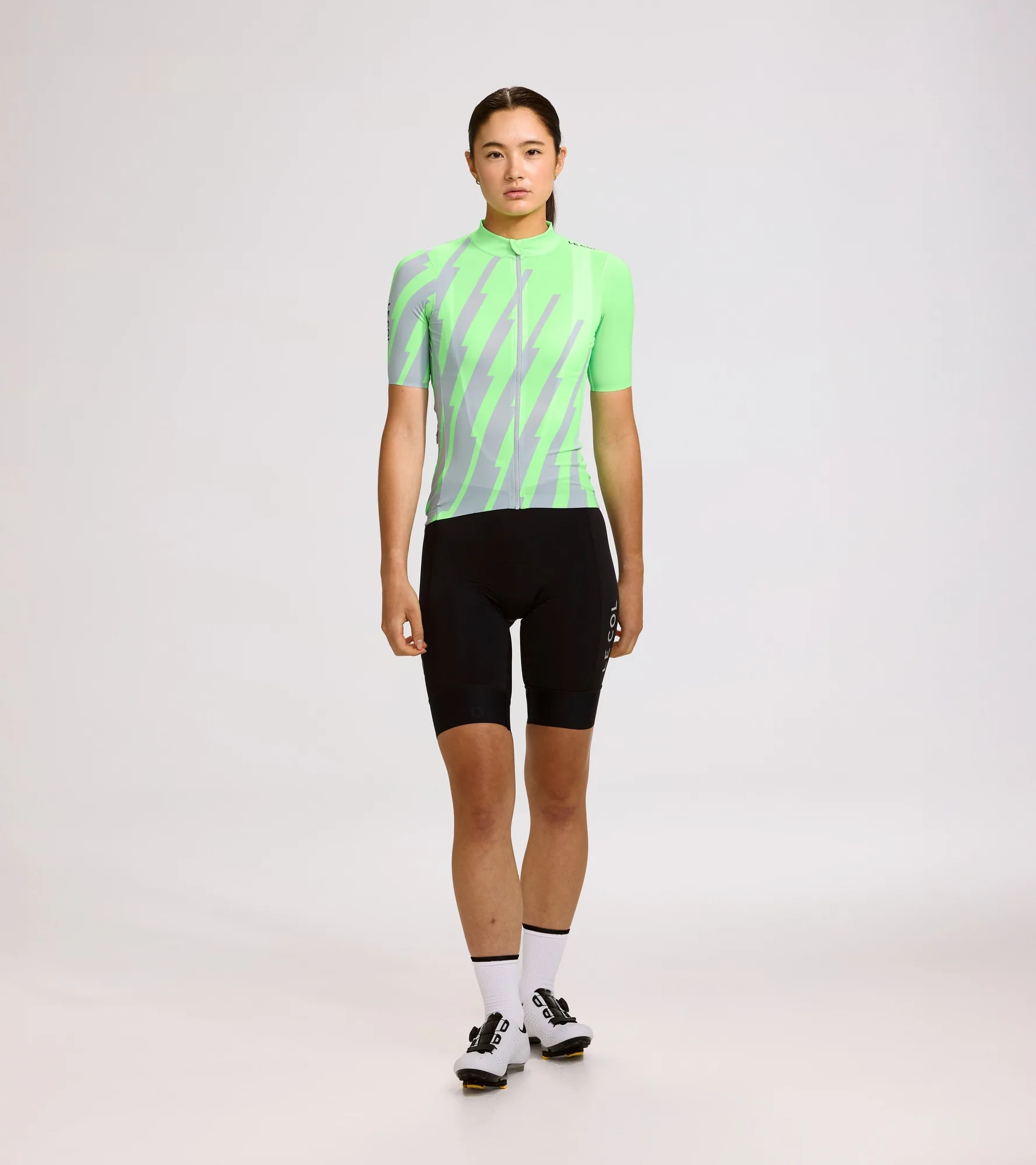
What the Lightweight Jersey II Offers for Summer Riding
For hot days and long climbs, a jersey that prioritises airflow without sacrificing storage or visibility can make a real difference. The Women's Hors Categorie Lightweight Jersey II is designed with a semi-mesh grid fabric that aims to maximise airflow and wick moisture, keeping you focused when the pace rises or the road tilts upward.
This review covers the key features that matter for summer riding: the fabric's cooling performance, the fit profile, pocket layout, and visibility details. If you're deciding whether this jersey suits your hot-weather needs, these are the aspects to consider.
Fabric and Cooling Performance
-
Womens Hors Categorie Lightweight Jersey II: The all-new lightweight semi-mesh grid fabric maximises airflow and wicks moisture efficiently, helping you stay focused as the pace rises or climbs extend. This directly addresses the main challenge of summer riding: staying cool when heat and effort combine. The semi-mesh structure allows air to pass through, while moisture-wicking helps keep sweat from clinging to your skin.
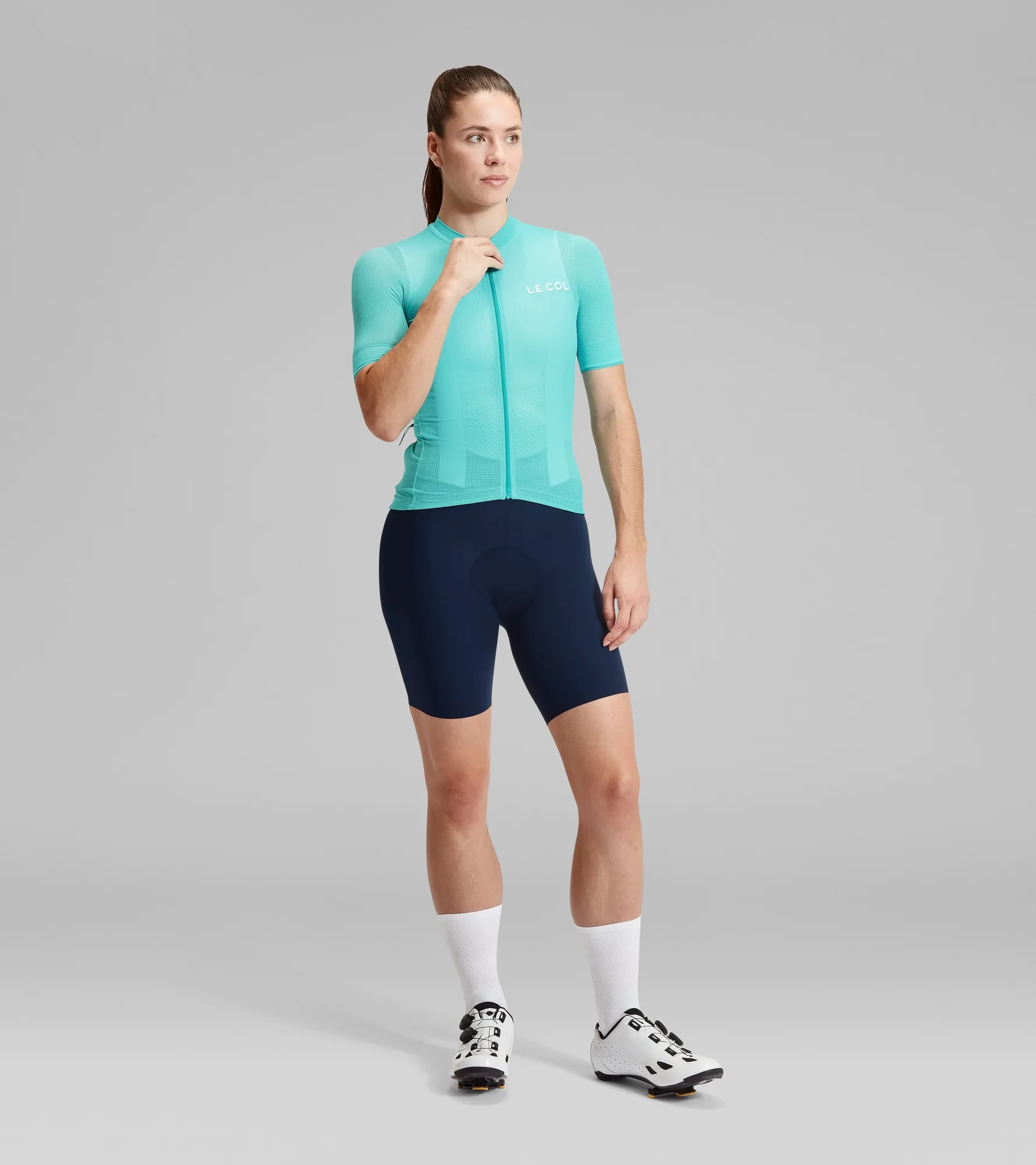
Womens Hors Categorie Lightweight Jersey II
-
Womens Hors Categorie Lightweight Jersey II: The fabric feels smooth, technical, and light against the skin, offering a relaxed, performance-led fit that never feels restrictive. A lightweight, non-restrictive feel is important for long rides in high temperatures. The fabric's smooth texture reduces irritation, and the relaxed fit allows for natural movement and airflow.
Fit and Comfort for Hot Weather
The jersey is described as having a 'relaxed, performance-led fit' — a balance between a race cut and a more casual shape. This means it should sit close enough to avoid flapping in the wind, but without the compression of a dedicated aero jersey. For summer riders who want to stay aerodynamic yet comfortable during long efforts, this fit profile is a practical middle ground.
The super-light cuff trim is listed as an updated detail for enhanced comfort. While the catalog doesn't specify cuff width or grip, a lighter trim typically reduces pressure points on the arms, which can be a welcome feature on hot days when you're less likely to wear arm warmers.
Pocket System and Storage
Storage is a practical concern for any long ride, and the Lightweight Jersey II addresses this with a four-pocket system that includes a waterproof zipped pocket. Three standard rear pockets provide space for nutrition, phone, and tools, while the zipped waterproof pocket offers a secure place for valuables or items that need protection from sweat or rain.
The catalog doesn't detail the pocket depth or elastic tension, so you may want to check whether your typical carry items fit securely. For most summer rides, this pocket configuration should handle essentials without requiring a separate saddle bag.
Visibility and Safety Details
Summer riding often extends into early mornings or late evenings to avoid peak heat. The jersey includes a refined reflective strip on the rear for increased visibility. While the catalog doesn't specify the strip's size or placement, any reflective element is a useful addition for low-light conditions.
The clean, modern logo is also noted as an updated premium detail — it may be reflective or simply aesthetic, but the catalog doesn't confirm either way. For riders who prioritise visibility, the reflective strip is the confirmed safety feature to rely on.
What the Evidence Doesn't Tell You
The catalog confirms the fabric's moisture-wicking and airflow properties, but it doesn't provide specific UPF ratings, so you won't know the exact sun protection level. The jersey is described as lightweight, but there's no gram weight listed, which makes it hard to compare directly with other lightweight jerseys on the market.
Care instructions are also absent from the supplied information. For a lightweight technical fabric, gentle washing and air drying are typical, but you should check the care label on the garment for the manufacturer's recommendations. These gaps don't diminish the jersey's stated strengths, but they are worth considering if you need precise data for your decision.