Start with the label, not the marketing
A menopause probiotic should tell you what is inside before it tells you how it will feel. The most useful buying guide is the supplement facts panel and the ingredient list. Look for strain diversity, prebiotic fiber, and any herbal ingredients. Then check the serving size and storage instructions. These details determine whether the product fits your daily routine and whether you can evaluate it honestly.
This checklist focuses on what the label can confirm. It does not replace advice from your healthcare provider, especially if you take medication or have a medical condition.
Five label checks before you buy
- 1. Strain count and diversity: A multi-strain formula gives you more than one type of bacteria. The number of strains is not a guarantee of effectiveness, but it is a transparent starting point. If a product lists 14 diverse probiotic strains, as Women's Menopause Probiotic Capsules does, you can compare that number with other options.
- 2. Prebiotic fiber: Prebiotics feed the probiotics in your gut. Organic prebiotic fiber is a useful label detail because it shows the formula includes a fuel source, not just live cultures.
- 3. Herbal blend and your medications: Some menopause formulas include herbs such as chasteberry, dong quai, turmeric, black cohosh, red clover extract, and astragalus. These are traditional botanical ingredients, not proven treatments. If you take prescription medication or have a hormone-sensitive condition, review the full ingredient list with your healthcare provider before adding a herbal blend.
- 4. Serving size and capsule count: A one-capsule serving is easier to keep up with than a multi-capsule regimen. Check the count options too. Women's Menopause Probiotic Capsules come in 30-count and 60-count bottles, so you can match the supply to your routine.
- 5. Storage and shelf stability: Refrigeration can be a barrier. A shelf-stable probiotic that needs no refrigeration is simpler to travel with and store. Confirm this on the label rather than assuming it.
What the Women's Menopause Probiotic Capsules label confirms
-
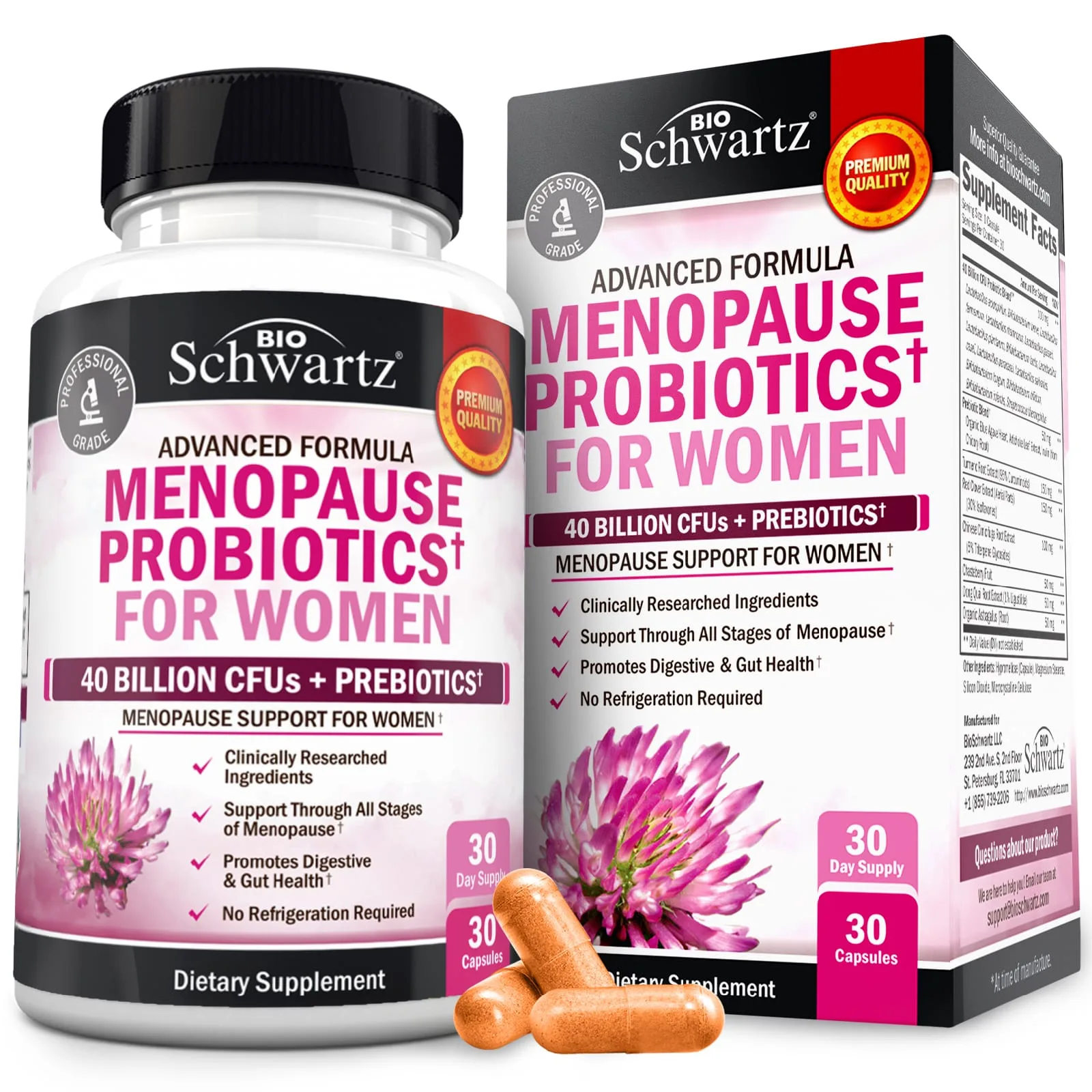
Women's Menopause Probiotic Capsules: The formula includes 14 diverse probiotic strains plus organic prebiotic fiber and a natural herbal blend with chasteberry, dong quai, turmeric, black cohosh, red clover extract, astragalus, and more. This gives you the strain count, prebiotic support, and herbal ingredients to review against your own needs and medication list.
Women's Menopause Probiotic Capsules
-
Women's Menopause Probiotic Capsules: A full serving is packed into one capsule, and the product is shelf stable with no refrigeration required. A single-capsule serving and shelf stability make the daily routine simpler, especially for travel or busy mornings.
-
Women's Menopause Probiotic Capsules: The product is non-GMO and free of soy, gluten, and dairy, and it is made in the USA using premium quality globally sourced ingredients. These details help you screen for common dietary preferences and allergens before you buy.
Where a menopause probiotic fits—and where it doesn't
A probiotic is a supplement, not a treatment for menopause symptoms. The Women's Menopause Probiotic Capsules are formulated for digestive health support and hormone balance, according to the label, but those statements describe intended support, not guaranteed outcomes. If your main goal is managing hot flashes, sleep disruption, or mood changes, a probiotic may be one part of a broader plan that you discuss with your clinician.
The herbal blend is the main trade-off. It adds botanical ingredients that some women want and others need to avoid. The label does not provide a full safety review or interaction check, so treat the ingredient list as a conversation starter with your healthcare provider, not a green light.
Menopause probiotic vs. a general probiotic
The right choice depends on whether you want a formula built around menopause or a simpler daily probiotic.
- Menopause-focused formula: Includes a multi-strain probiotic plus prebiotic fiber and a herbal blend. Women's Menopause Probiotic Capsules fit this category. Choose it if you want one product that combines these elements and you have reviewed the herbs with your provider.
- General probiotic: Usually focuses on live cultures and may skip the herbal blend. Choose it if you prefer a simpler ingredient list or your clinician has advised against botanical ingredients.
- Serving and storage: Compare capsule count, servings per bottle, and refrigeration needs. A shelf-stable one-capsule serving is easier to maintain, but confirm the label rather than assuming.
A simple decision path
If you want a multi-strain probiotic with prebiotic fiber and a menopause-oriented herbal blend, and you have checked the herbs against your medications, Women's Menopause Probiotic Capsules are a reasonable option to compare. Start with the 30-count if you are trying it for the first time, or the 60-count if you already know it fits your routine. If you prefer a shorter ingredient list or your provider has flagged any of the herbs, look for a simpler probiotic instead.
Whichever you choose, give it a fair trial only after confirming the label directions and talking with your healthcare provider about how it fits your overall plan.