Two Paths from Woo Audio
The Woo Audio WA6 (2nd gen) and WA22 (2nd gen) are both all-tube, Class-A amplifiers handcrafted in New York, but they serve different priorities. The WA6 is a single-ended triode (SET) design, while the WA22 is fully balanced and also functions as a preamplifier. Understanding their core differences helps you match the amplifier to your headphones and system.
Single-Ended vs Fully Balanced
The most fundamental difference is the amplifier topology.
- WA6 (2nd gen): Single-Ended Triode (SET): A classic single-ended design with a 1/4" (6.3mm) stereo headphone output. It drives headphones from 8 to 600 ohms and includes a HI/LO impedance switch. This is a straightforward, proven circuit for a wide range of headphones.
- WA22 (2nd gen): Fully Balanced: A fully balanced design offering dual 3-pin XLR, 4-pin XLR, and 1/4" (6.3mm) outputs. The balanced topology provides improved channel separation and a more precise soundstage. It also includes XLR balanced preamp outputs for integration with a Hi-Fi system.
Power and Output Specifications
-
Woo Audio WA6 (2nd gen) Headphone Amplifier: WA6 (2nd gen): Maximum volts out is 1.7V unbalanced or 3.4V balanced (via Phantom DAC cable). Impedance range: 8–600 ohms. The WA6 is well-suited for most dynamic and planar headphones within this impedance range, but its maximum output voltage is lower than the WA22's power stage.
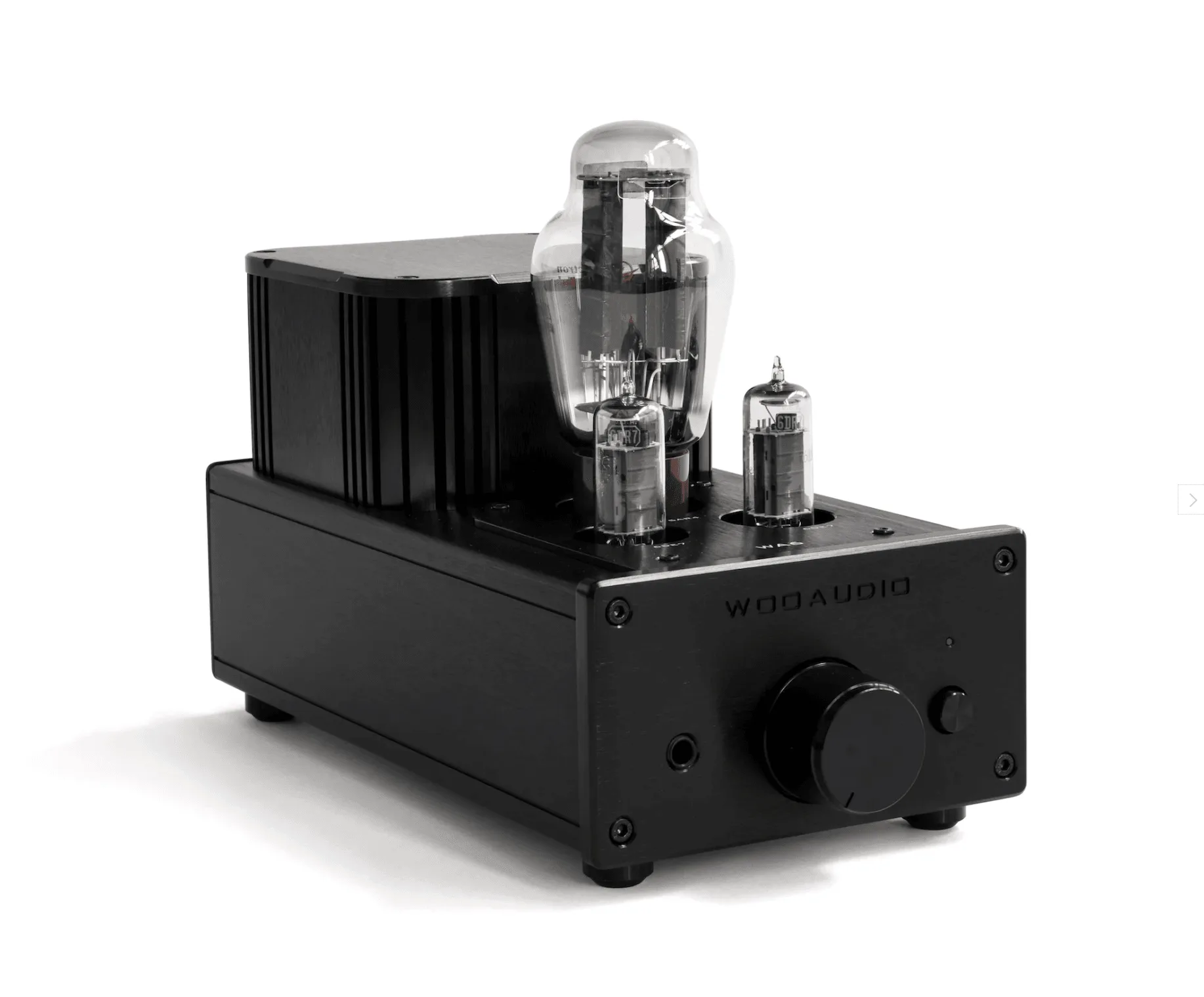
Woo Audio WA6 (2nd gen) Headphone Amplifier
-
Woo Audio WA22 (2nd gen) Fully-balanced Headphone Amplifier / Preamplifier: WA22 (2nd gen): Power output up to 1.5 watts per channel @32 ohms. Recommended for power-demanding headphones. The WA22 delivers significantly more current, making it a better match for low-impedance, low-sensitivity headphones that need substantial power.
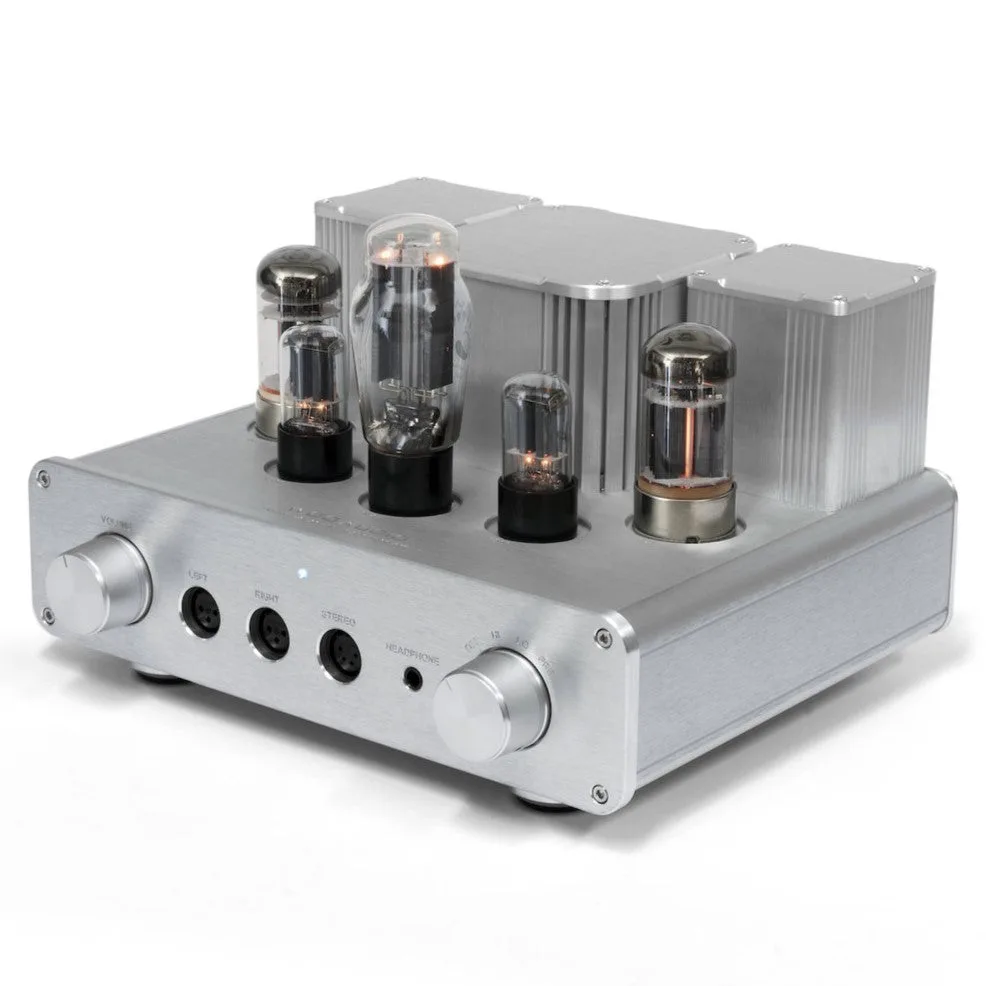
Woo Audio WA22 (2nd gen) Fully-balanced Headphone Amplifier / Preamplifier
Tube Complement and Self-Biasing
Both amplifiers are self-biasing with compatible tubes, so you can swap tubes without manual adjustments. The WA6 uses 13DE7 driver/power tubes (x2) and a 5U4G rectifier (x1). The WA22 uses 6SN7 drivers (x2), 6080 power tubes (x2), and a 5U4G rectifier (x1). The WA22's separate driver and power tubes allow for more tube rolling possibilities.
Connectivity and Inputs
- Woo Audio WA6 (2nd gen) Headphone Amplifier: WA6 (2nd gen): RCA input x 1. Headphone output: 1/4" (6.3mm) stereo. No balanced input or preamp output in stock configuration. The WA6 is a pure headphone amplifier with a single RCA input. If you need balanced input or preamp functionality, this is not the model.
- Woo Audio WA22 (2nd gen) Fully-balanced Headphone Amplifier / Preamplifier: WA22 (2nd gen): XLR input x 1, RCA input x 1. Headphone outputs: dual 3-pin XLR, 4-pin XLR, 1/4" (6.3mm). XLR balanced preamp output (<50 ohms). The WA22 offers far more connectivity, including balanced inputs and outputs, plus a preamp output for powered speakers or a power amplifier.
Physical Size and Weight
The WA6 is more compact at 6"(H) x 5.5"(W) x 13"(D) and weighs 13 lbs. The WA22 is larger at 7"(H) x 12"(W) x 10.5"(D) and weighs 25 lbs. The WA22 requires more desk or shelf space and is significantly heavier, which may affect placement options.
Built-In DAC Option
The WA6 can be ordered with a Woo Audio PHANTOM DAC cable (1m, 2m, or 3m unbalanced RCA) for an additional cost. This cable integrates a DAC into the interconnect, supporting lossless audio up to 24-bit/384 kHz PCM and DSD128. The WA22 does not have a built-in DAC option from the supplied information; it relies on an external DAC.
Which One Should You Choose?
Your choice depends on your headphones and system goals.
- Choose the WA6 (2nd gen) if:: You want a compact, single-ended tube amp with a built-in DAC option. It's a great match for most dynamic and planar headphones from 8 to 600 ohms, especially if you don't need balanced outputs or preamp functionality.
- Choose the WA22 (2nd gen) if:: You need a fully balanced amplifier with more power for demanding headphones, plus balanced inputs and preamp outputs. It's ideal for experienced audiophiles integrating a headphone amp into a larger Hi-Fi system.