Quick answer
Wash your wood serving board by hand with mild soap and warm water, dry it immediately, and re-oil it when the surface looks dry or feels rough. Never soak it, never put it in the dishwasher, and store it upright so air reaches both sides. Those four habits prevent most cracks, stains, and odors.
Why wood boards crack, stain, and hold odors
Wood is porous. It expands when it absorbs water and shrinks as it dries. When one side dries faster than the other, or when a board sits in a puddle, the uneven movement pulls the grain apart and creates cracks. Stains and odors come from the same porosity: liquids and food particles settle into the grain, and if the board stays damp, bacteria and trapped oils produce a sour smell. The fix is not a single deep clean. It is keeping moisture levels stable and the surface sealed with a food-safe oil.
Daily washing without damaging the wood
Scrape food residue into the trash, then wash the board with a soft sponge, mild dish soap, and warm water. Rinse quickly and dry both sides with a towel. Do not let it air-dry flat on the counter, where the bottom stays wet while the top dries. For heavier messes, sprinkle coarse salt on the board, rub it with a lemon half, rinse, and dry. That lifts surface stains and odors without soaking the wood.
How to oil a wooden serving board
Oil when water stops beading on the surface or the wood looks pale and dry. Use a food-safe oil such as mineral oil or a board cream. Apply a thin coat with a lint-free cloth, let it sit for at least 20 minutes, then wipe off the excess. For a very dry board, repeat the next day. Do not use olive oil, vegetable oil, or any cooking oil that can turn rancid in the grain. Frequency depends on use: a board used daily may need oiling monthly, while a display board may need it only a few times a year.
Storage and handling that prevent cracks
Store the board upright on its edge, not flat, so air circulates around both faces. Keep it away from the dishwasher, the microwave, and direct stovetop heat. Do not leave it soaking in the sink. If you use a board for raw meat, dedicate a separate board for produce and bread, or wash the meat board thoroughly with hot soapy water and dry it immediately. A board that is already cracked can sometimes be saved with food-safe wood glue and clamping, but deep cracks that harbor moisture or food are a sign to replace it.
Diagnosis: match the symptom to the fix
- Symptom: fine cracks along the grain: Likely cause: the board dried unevenly after washing or sat in water. Corrective action: oil both sides, store upright, and never soak it again. Checkpoint: if cracks are hairline and closed, oiling can stabilize them; if they are open and dark, replace the board.
- Symptom: dark stain or sour smell: Likely cause: food or liquid absorbed into the grain and stayed damp. Corrective action: scrub with coarse salt and lemon, rinse, dry thoroughly, then oil. Checkpoint: if the odor returns after one full dry-and-oil cycle, the contamination is deep and the board should be retired from food use.
- Symptom: sticky or gummy surface: Likely cause: too much oil was applied and not wiped off, or a rancid cooking oil was used. Corrective action: wash with mild soap and warm water, dry completely, then apply a thin coat of food-safe mineral oil and wipe off the excess. Checkpoint: if the surface stays tacky after a proper thin coat, the wood may be over-oiled; stop oiling and let it dry for a few days.
Product facts
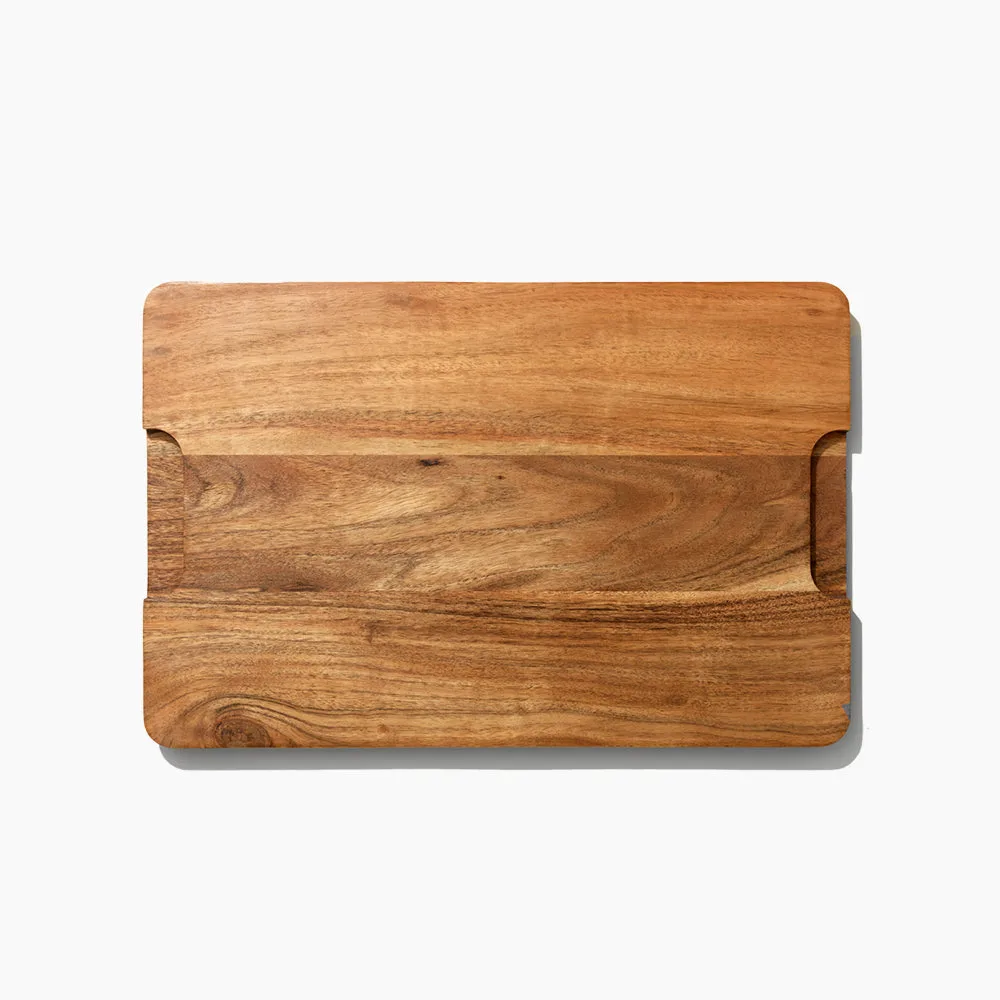
- Wood Serving Board: Handcrafted from sustainably grown acacia wood, with built-in handles and natural grain. Acacia is dense and takes oil well, so it responds to the care routine above. The handles make it easy to carry from kitchen to table, but they also mean you should dry around the handle joints so water does not sit there.
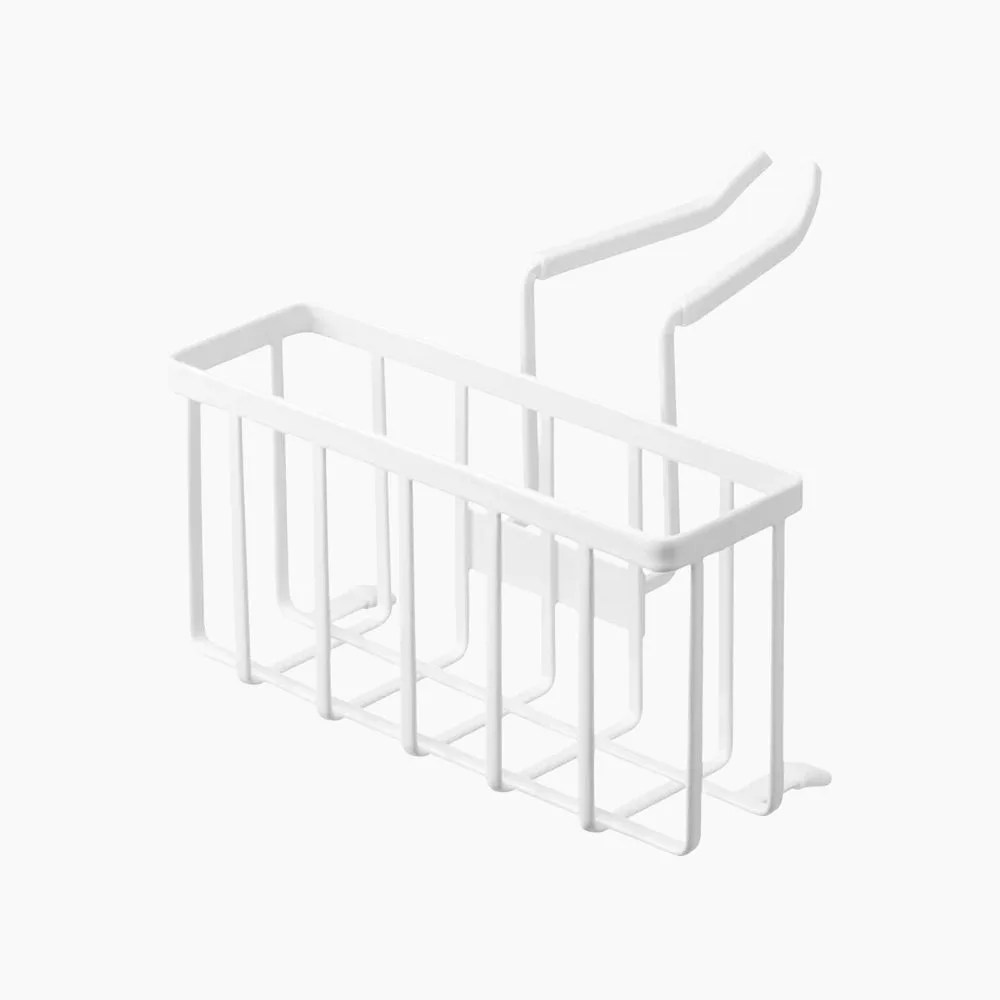
- Yamazaki Faucet-Hanging Sponge Caddy: Yamazaki faucet-hanging sponge caddy holds sink-side tools and drains and dries them quickly. It is certified BPA-free. A wet sponge left on the counter keeps moisture near your board and sink area. Hanging the sponge to drain keeps the surrounding workspace drier, which indirectly helps your wood board stay dry between uses.