Quick answer
Match the tray to its main job first: a tray with a raised rim and a sturdy handle suits carrying drinks and appetizers, while a flat tray with a low edge suits cheese, candles, or a decorative tray for an ottoman. Choose acacia when you want pronounced grain and a warmer tone, and pick a food-safe oil finish if the tray will touch food directly. Buy the size that leaves 4-6 inches of table space on each side.
Start with the job, not the look
A tray that lives on an ottoman and a tray that carries four mugs across a room need different shapes. For carrying, prioritize a raised rim and a handle you can grip with one hand while the other steadies the load. For staging, prioritize a flat surface and a low edge so plates, candles, or a small vase sit level. If you want one tray to do both, choose a mid-depth rim and a handle that does not protrude far past the tray edge, so it still sits neatly on a table.
Serving tray size guide: measure the landing zone
Measure the table, ottoman, or counter where the tray will rest, then subtract 4-6 inches per side. That leftover space keeps the tray from looking wedged in and gives guests room to set down a glass. For a coffee table, a tray that covers roughly one third of the surface reads as intentional; for a dining table, a tray used as a centerpiece should leave room for at least two place settings on either side. For an ottoman, keep the tray narrower than the cushion so it does not overhang when someone sits down.
- Drinks for two: a small tray with a rim deep enough to catch condensation.
- Appetizers for four: a medium tray with a handle and enough flat area for two small bowls.
- Ottoman centerpiece: a low-rim tray that stays within the cushion footprint.
- Countertop catch-all: a tray with a rim high enough to keep keys and mail from sliding off.
Tray with handles vs without: the honest trade-off
Handles make a loaded tray easier to lift, but they also take up surface area and can catch on nearby objects when the tray is stored. A tray with handles is the better choice if you regularly move food or drinks from kitchen to table. A tray without handles gives you a cleaner line for display and lets you stack it flat against a wall or in a cabinet. If you only carry a tray occasionally, a low rim without handles is often the more versatile pick.
Best wood tray finish: what to look for
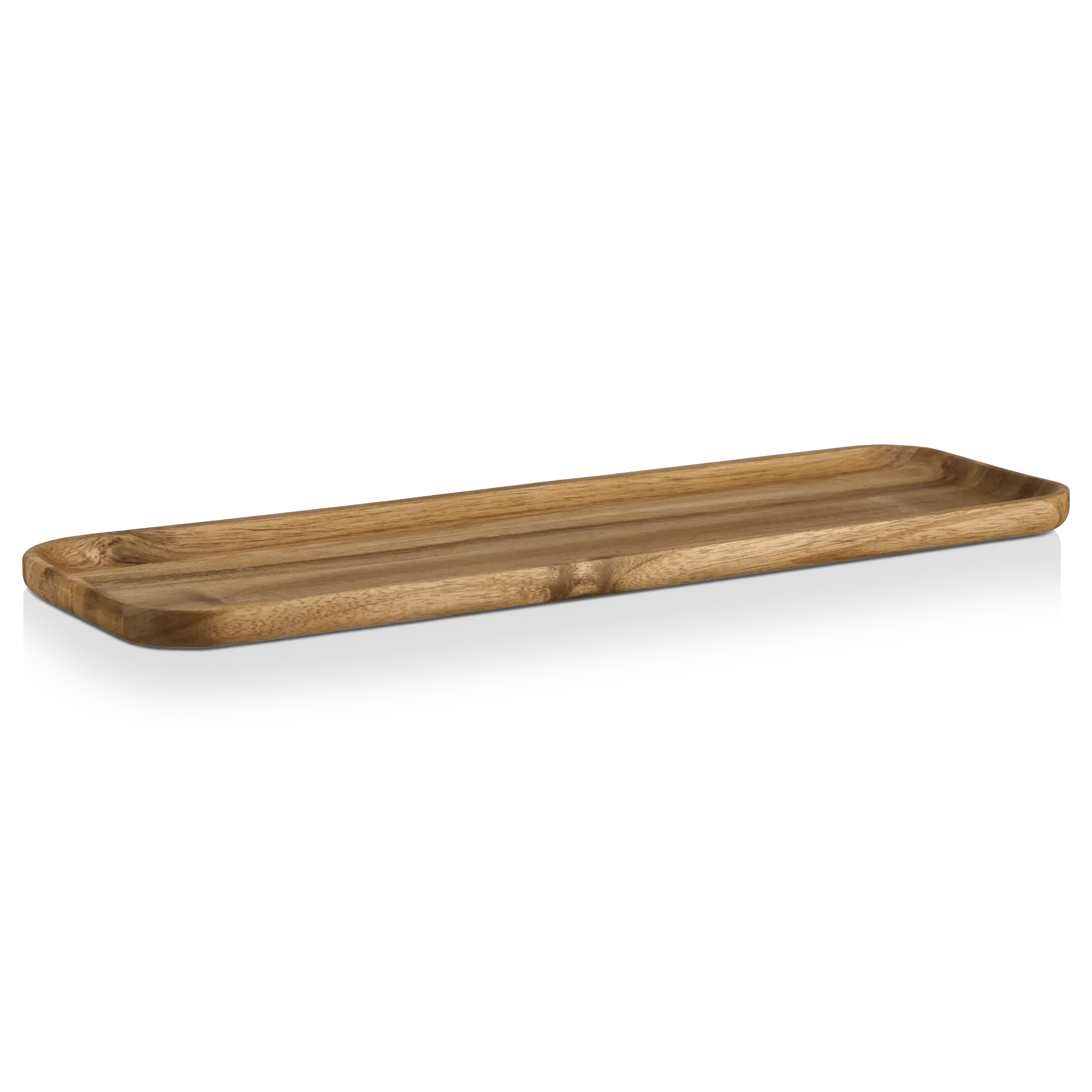
wood tray
The finish decides whether the tray is practical for food and how it ages. A food-safe oil finish penetrates the wood and can be refreshed, but it needs occasional re-oiling and is not fully waterproof. A lacquer or varnish finish seals the surface and wipes clean easily, but it can chip if the tray is dropped or scrubbed hard. If the tray will hold unwrapped cheese, bread, or fruit, choose a finish labeled food-safe. If it will mostly hold candles, remotes, or plants, a sealed decorative finish is fine. Avoid guessing: if the listing does not state the finish, treat the tray as decorative rather than a cutting or direct-food surface.
Acacia vs mango wood tray: grain, tone, and weight
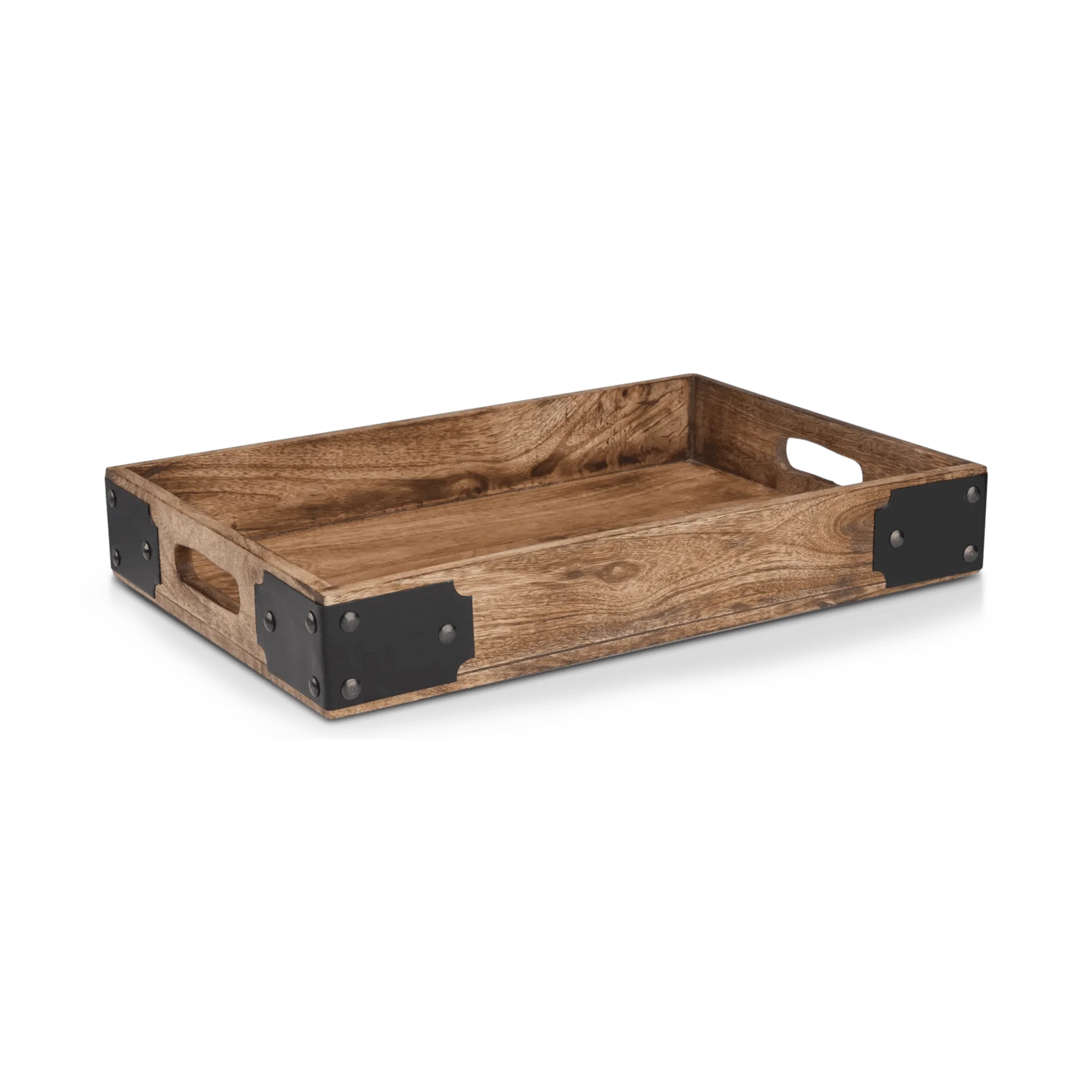
mango wood tray
Acacia and mango are both common tray woods, but they read differently. Acacia tends to show pronounced, high-contrast grain and a warm brown tone, which suits rustic and modern-farmhouse rooms. Mango wood is generally lighter and more uniform in color, so it blends into calm, neutral palettes. Weight matters too: a denser tray feels sturdier when loaded but is harder to carry one-handed. If you plan to move the tray often, pick the lighter option; if it will stay in place, the heavier one adds stability.
Decorative tray for an ottoman: three fit checks
An ottoman tray has to survive being sat next to, so stability beats size. First, check the tray base against the cushion: a tray that sits on a soft cushion can tip if the rim is shallow and the load is tall. Second, check height: a tray with a tall candle or vase can block sightlines in a small room. Third, check the rim: a raised rim keeps remotes, books, and a mug from sliding when someone shifts on the ottoman. If your ottoman doubles as seating, choose a tray you can lift off easily rather than one that stays permanently.
Decision rules for buying a wood serving tray
- If you carry drinks or food regularly: Choose a tray with a raised rim and a sturdy handle, and check that the handle is wide enough for a full hand grip. Prioritize carry comfort over a perfectly flat display surface.
- If the tray stays in one place: Choose a low-rim or handle-free tray so the surface reads clean and stacks easily when stored. A flat tray is easier to style and store, but harder to carry when loaded.
- If the tray will touch food directly: Confirm the finish is labeled food-safe; if the listing does not say, use the tray for wrapped or plated food only. Never assume a decorative finish is food-safe.
- If you are buying for an ottoman: Measure the cushion and keep the tray narrower than the cushion so it does not overhang when someone sits down. Stability and removable weight matter more than surface area here.
Product facts
- Wood Serving Tray: Crafted from 100% acacia wood with a spacious surface and a sturdy handle. Acacia gives the pronounced grain and warm tone described above, while the handle supports carrying appetizers or cheese from kitchen to table.
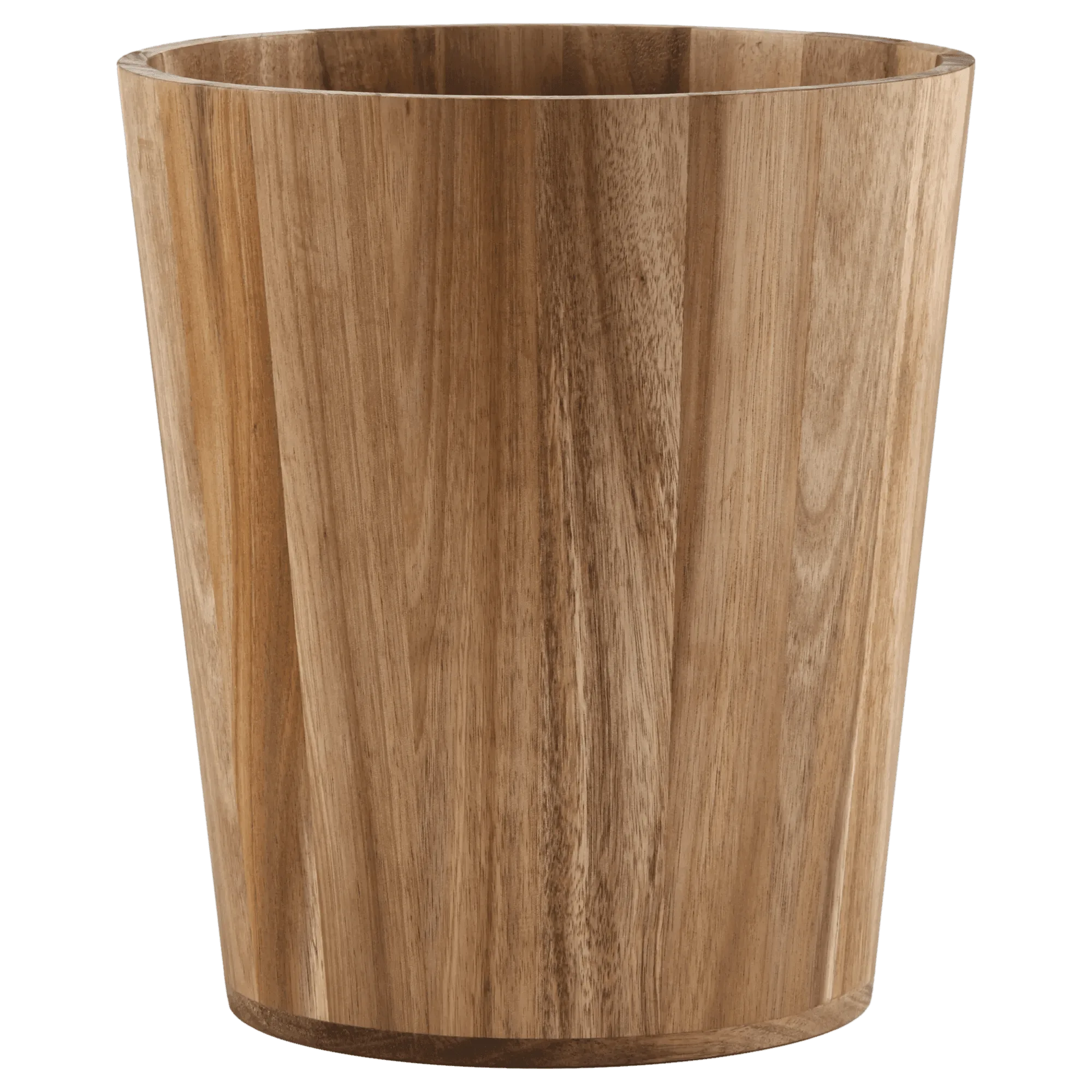
- Wood Waste Bin: A beige wood waste bin with a simple, elegant design intended to add style to any room. If you want the same wood tone to carry through a room beyond the tray, this bin is a coordinated option rather than a mismatched plastic container.
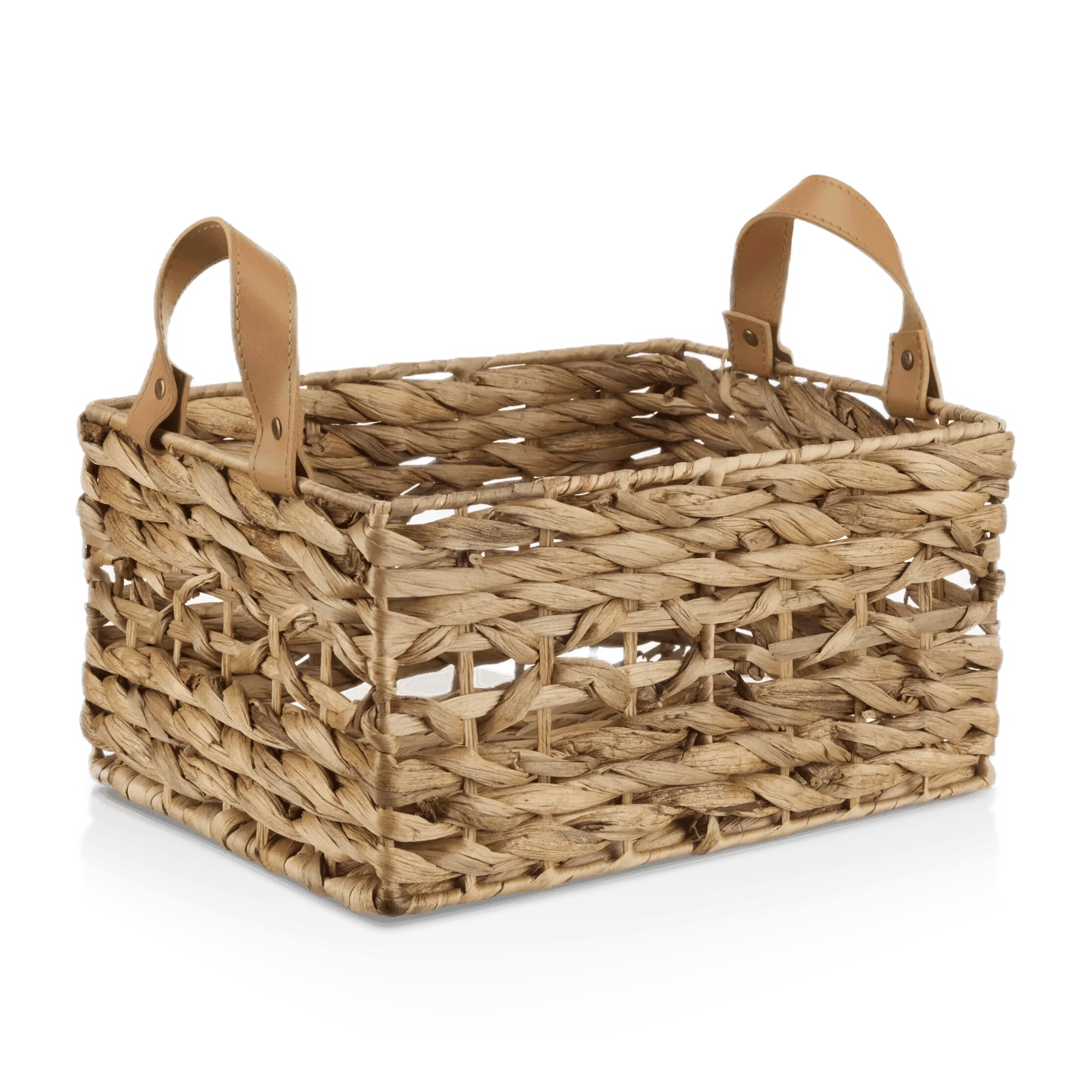
- Water Hyacinth Crate with Faux Leather Handles: A woven water hyacinth crate with faux leather tan handles, available in beige and sized for storage. A useful companion for tray storage or ottoman clutter, and the handles show how a soft material can solve the same carrying problem as a wood handle.
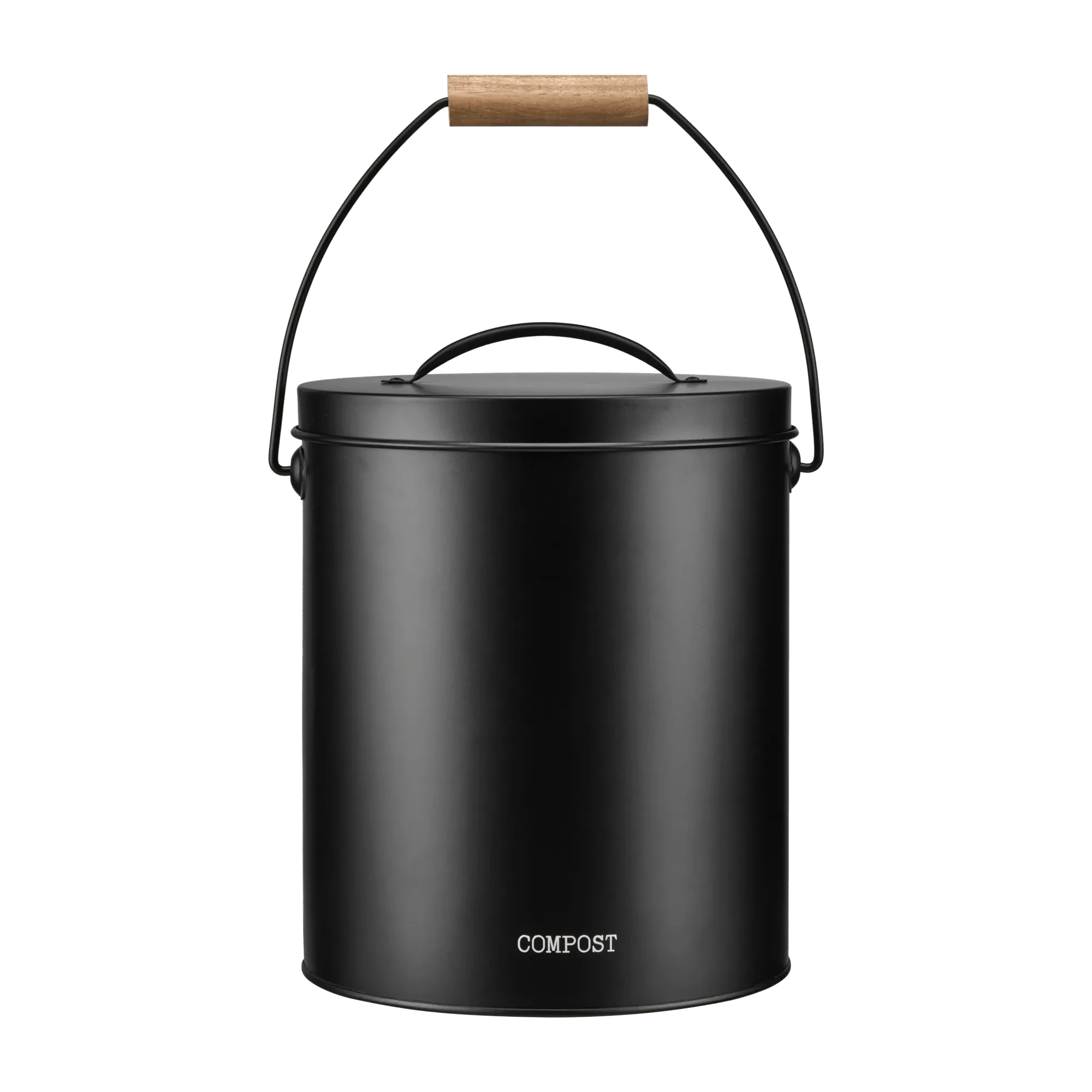
- Black Compost Bin with Wooden Handle: A compost bin with a wooden handle and a secure lid designed for everyday countertop use. Demonstrates that a wooden handle can be practical on a working kitchen item, not just a decorative tray.
Who should buy which tray
Best for
- Hosts who carry appetizers or drinks and need a handle and raised rim
- Shoppers who want a decorative tray for an ottoman or coffee table
- Anyone matching a tray to an existing acacia or warm wood room palette
Not for
- Buyers who need a fully waterproof tray for wet, unplated food
- Anyone who wants a tray that stacks completely flat and has no protruding parts
- Shoppers who cannot confirm the finish and need a guaranteed food-safe surface