Quick answer
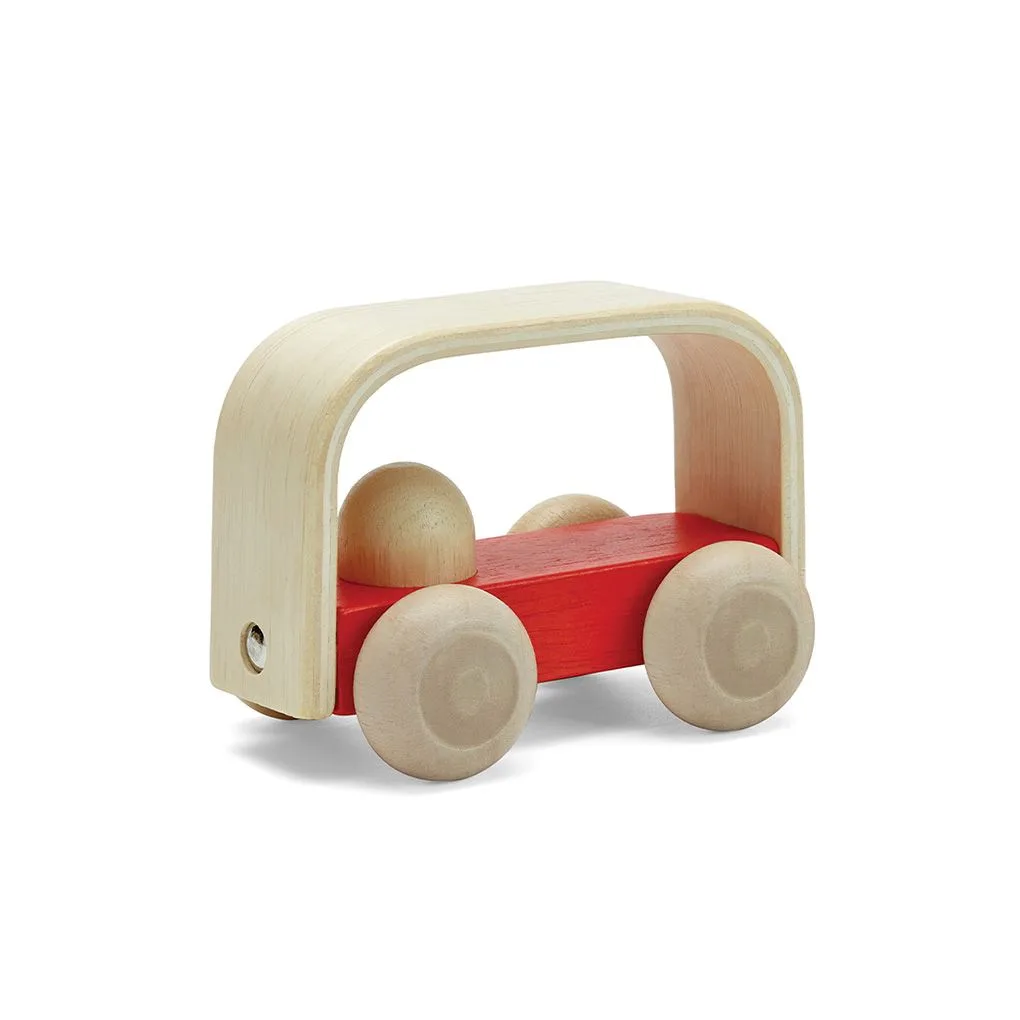
Pick the wooden ambulance toy if your child gravitates toward rescue and emergency pretend play; pick the wooden school bus toy if they are drawn to group travel and city routines. Both are durable wood vehicles from the same City & Building collection, so either works as a first wooden vehicle—the choice comes down to which story your toddler wants to act out.
Size and handling: a small but real difference
The ambulance measures 12.5 cm long, while the school bus is 15 cm long. That 2.5 cm gap matters for smaller hands: the ambulance is slightly easier to grip and maneuver in tight spaces, while the school bus offers a longer body that some toddlers find more satisfying to push along a floor. Neither is large enough to be unwieldy, but if your child is still developing a pincer grip, the shorter vehicle may feel more controllable.
Play scenarios: rescue vs routine
The ambulance naturally invites rescue stories—rushing to help, loading a patient, making siren sounds. The school bus leans toward everyday city life: picking up passengers, stopping at corners, dropping off at school. Both encourage open-ended, creative play, but they prompt different vocabulary and narratives. If your toddler is fascinated by emergency vehicles, the ambulance will get more use; if they are more interested in people and daily routines, the bus is the stronger hook.
Collection fit and expansion
Both vehicles belong to a set of six City & Building vehicles, so they are designed to be played together rather than chosen exclusively. If you plan to build a small fleet over time, starting with either one works—but the school bus is often the more natural anchor for a city scene because it implies passengers and stops. The ambulance pairs well with other rescue-themed vehicles if your child likes that angle. Keep in mind that the collection is designed to expand a child's urban world, so mixing both eventually gives more story options than picking just one.
Decision rules for choosing your first wooden vehicle
- If your child is new to pretend play: Choose the school bus. Its familiar routine of picking up and dropping off passengers gives toddlers an easy script to follow, which builds confidence before they invent their own stories. A familiar daily routine is often the easiest entry point for a first pretend-play vehicle.
- If your child already loves rescue themes: Choose the ambulance. Children who already make siren sounds or pretend to help will get more immediate play value from a rescue vehicle than from a bus.
- If you want to build a collection: Start with either vehicle, but plan to add the other later—both are part of the same six-vehicle City & Building set and are designed to be played together. Buying one now and one later spreads cost and keeps the play set growing with your child.
- If storage space is tight: The ambulance is slightly shorter (12.5 cm vs 15 cm), so it takes up marginally less room in a toy bin or shelf.
Product facts at a glance
-
Wooden Vehicle - School Bus: Measures 15 cm x 5.6 cm x 5 cm and is made from durable wood. The longer body gives toddlers a substantial vehicle to push, and the wood construction stands up to daily play.
Wooden Vehicle - School Bus
-
Wooden Vehicle - Ambulance: Measures 12.5 cm x 5.7 cm x 5 cm and is made from durable wood. The shorter length makes it easier for small hands to grip and turn, which helps younger toddlers stay engaged.
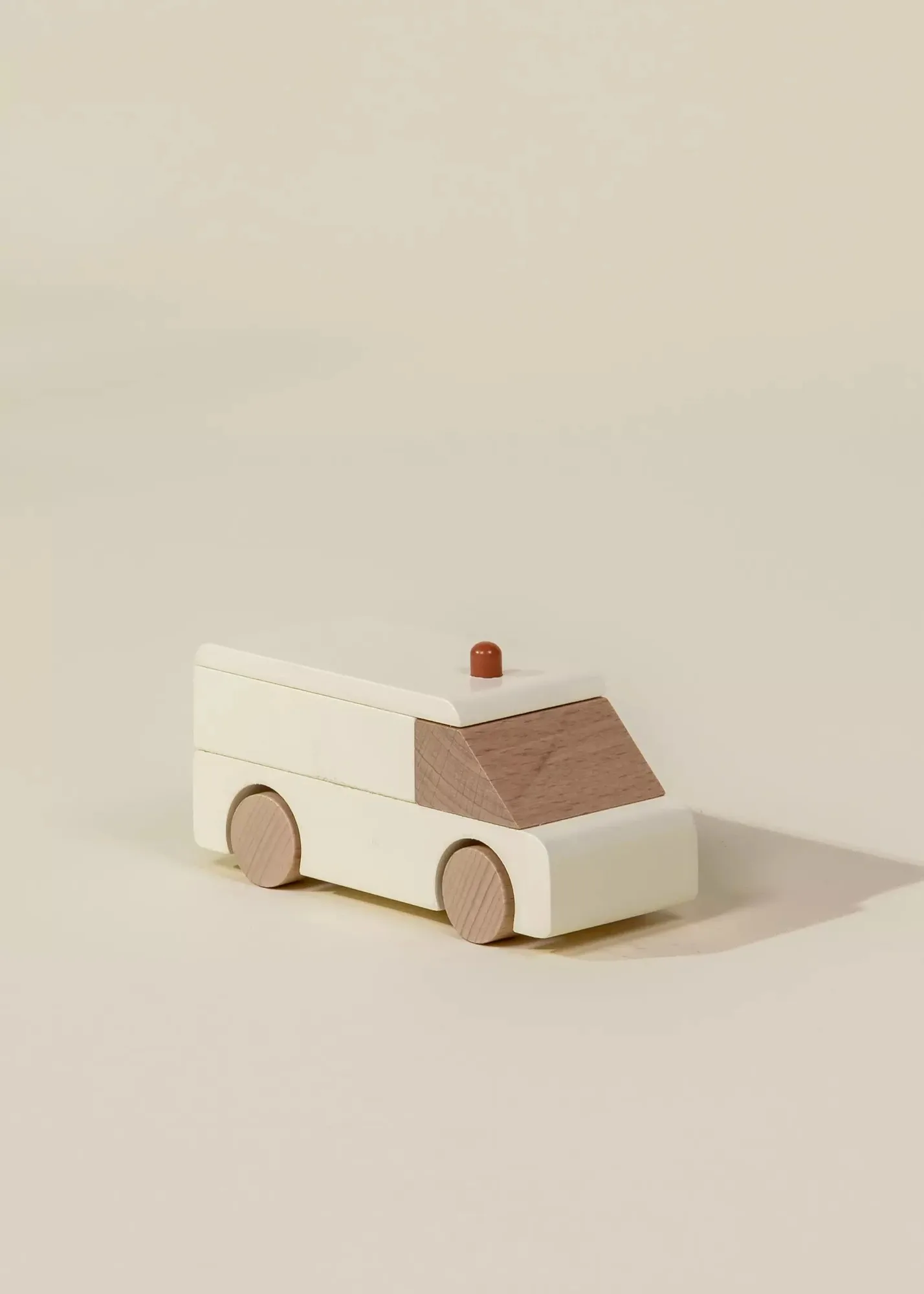
Wooden Vehicle - Ambulance
Who should choose which
Best for
- Toddlers who are drawn to rescue and emergency pretend play (ambulance)
- Children who enjoy group travel and city routines (school bus)
- Families starting a City & Building vehicle collection
Not for
- Children who prefer animal figurines or building blocks over vehicles
- Toddlers who still mouth toys heavily and need larger, single-piece designs