Quick answer
If your toddler is under three and still building fine motor skills, start with the Pixie/Dragon stacking boxes; once they begin pretend play with stories and roles, the wooden cash register becomes the more engaging choice.
Why age and play stage matter
Young toddlers explore the world through their senses and movement. Stacking boxes offer immediate, hands-on play: building towers, nesting, and knocking down. These actions strengthen hand-eye coordination and spatial awareness, skills that form the foundation for later problem-solving.
As children approach three and four, their play becomes more social and imaginative. They start assigning roles, mimicking adult activities, and creating scenarios. A cash register taps into this natural progression, turning simple play into lessons about numbers, money, and social interaction.
What each toy teaches
The stacking boxes from Sebra Play are more than just building blocks. Each box features illustrations from the Dragon Tales and Pixie Land themes, inviting children to create stories while they play. The varying sizes also introduce concepts like big and small, and ordering by size.
The wooden cash register, on the other hand, is designed to strengthen mathematical and social skills. Through pretend shop and grocery games, children practice counting, paying, and interacting with a 'customer.' This kind of play helps them grasp the function and value of money in a hands-on way.
Trade-offs to consider
- Age and developmental stage: Choose stacking boxes for children under three who are still developing fine motor skills. Choose the cash register for older toddlers (three and up) who are starting to engage in pretend play with roles and scenarios.
- Play value over time: Stacking boxes offer immediate, open-ended play that evolves with your child's imagination. The cash register is more structured and may have a shorter attention span if your child isn't yet interested in role play. If you want a toy that will last through multiple stages, stacking boxes are the safer first choice.
- Learning focus: Stacking boxes primarily build motor skills and spatial awareness. The cash register emphasizes math and social skills. Decide which area you want to encourage first. Both toys complement each other; if budget allows, consider getting both to cover different learning areas.
Product facts at a glance
-
Pixie/Dragon, Stabelkasser - Sebra Play - Multi: The Pixie/Dragon stacking boxes come in different sizes and feature illustrations from the Dragon Tales and Pixie Land themes, including pixies, bumblebees, berries, knights, and dragons. The themed illustrations encourage storytelling alongside stacking, so the toy grows with your child from a motor-skill builder to a story starter.
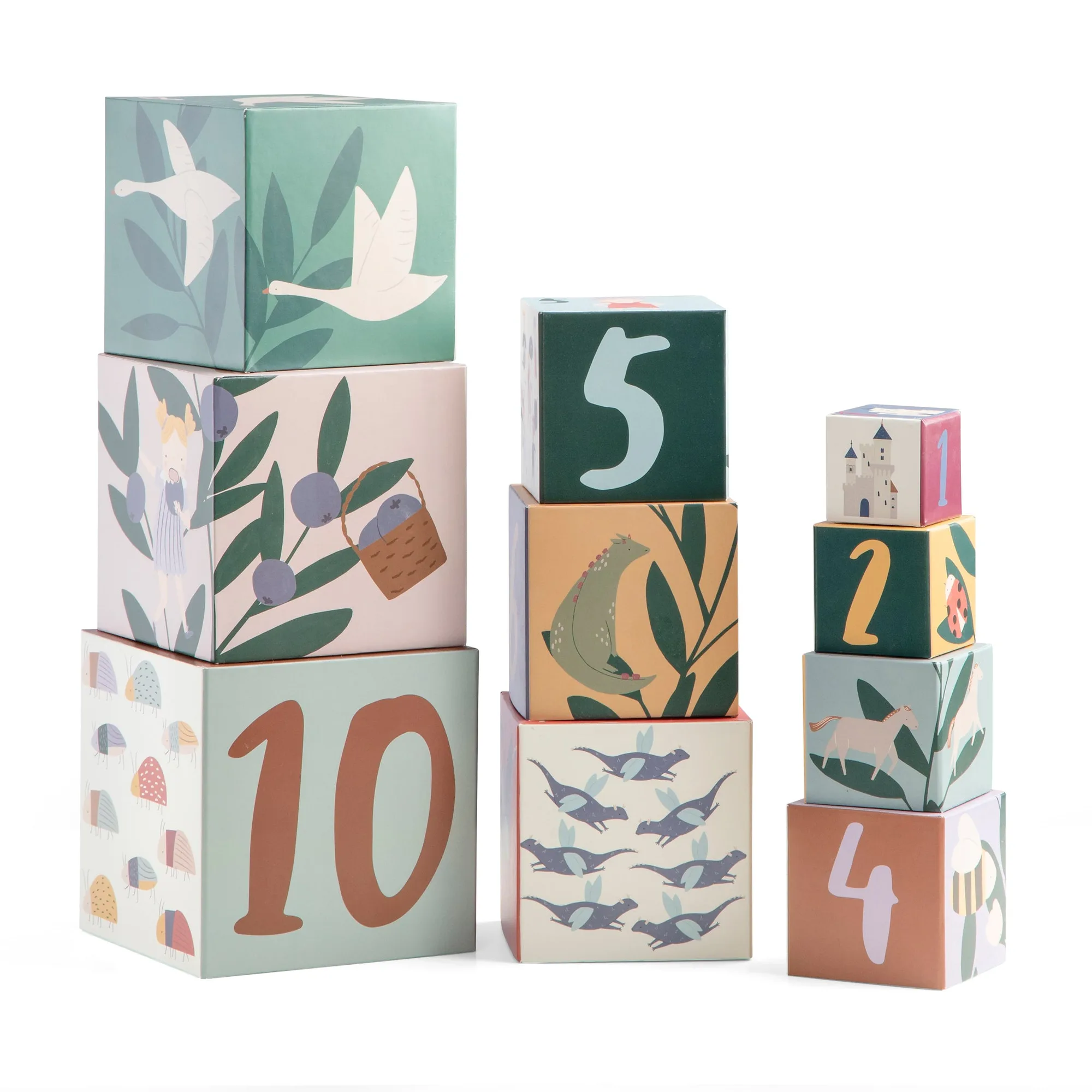
Pixie/Dragon, Stabelkasser - Sebra Play - Multi
-
Sebra Kasseapparat - Sebra Play - Flerfarvet: The Sebra cash register is made of certified wood and is designed to strengthen both mathematical and social skills through pretend shop and grocery play. It turns everyday role play into a learning moment, helping your child understand numbers and money while practicing social interaction.
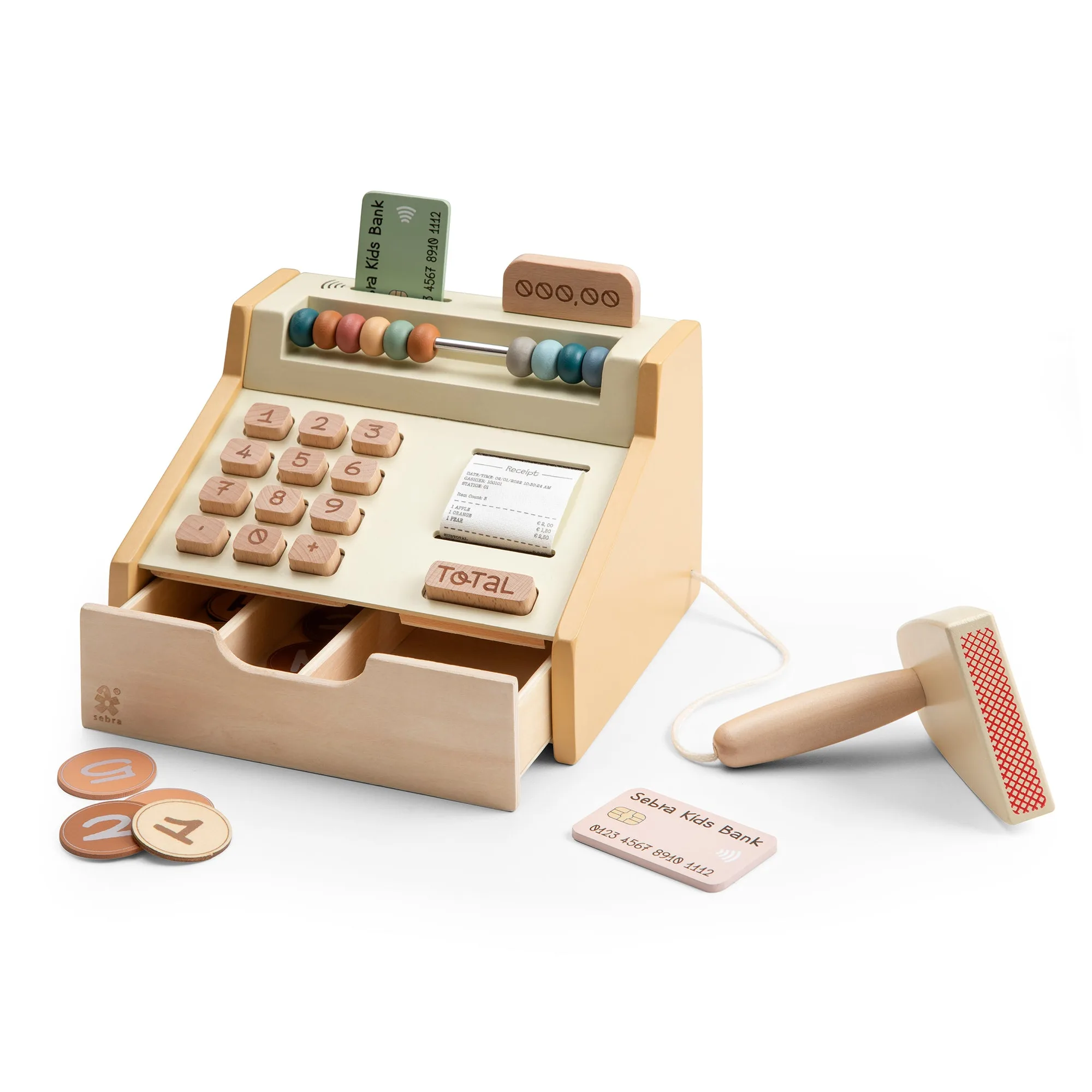
Sebra Kasseapparat - Sebra Play - Flerfarvet
Which toy fits your child?
Best for
- Toddlers under three who are still mastering stacking and nesting
- Children who enjoy building and knocking down towers, and who respond to colorful illustrations and themes
Not ideal for
- Older preschoolers (3+) who are already deep into pretend play and would benefit more from the social and math skills of a cash register